We visited Spain in September 2017. It was a trip that was long in the making in my head and heart so it turned out to be extra special that I could share it with my husband.
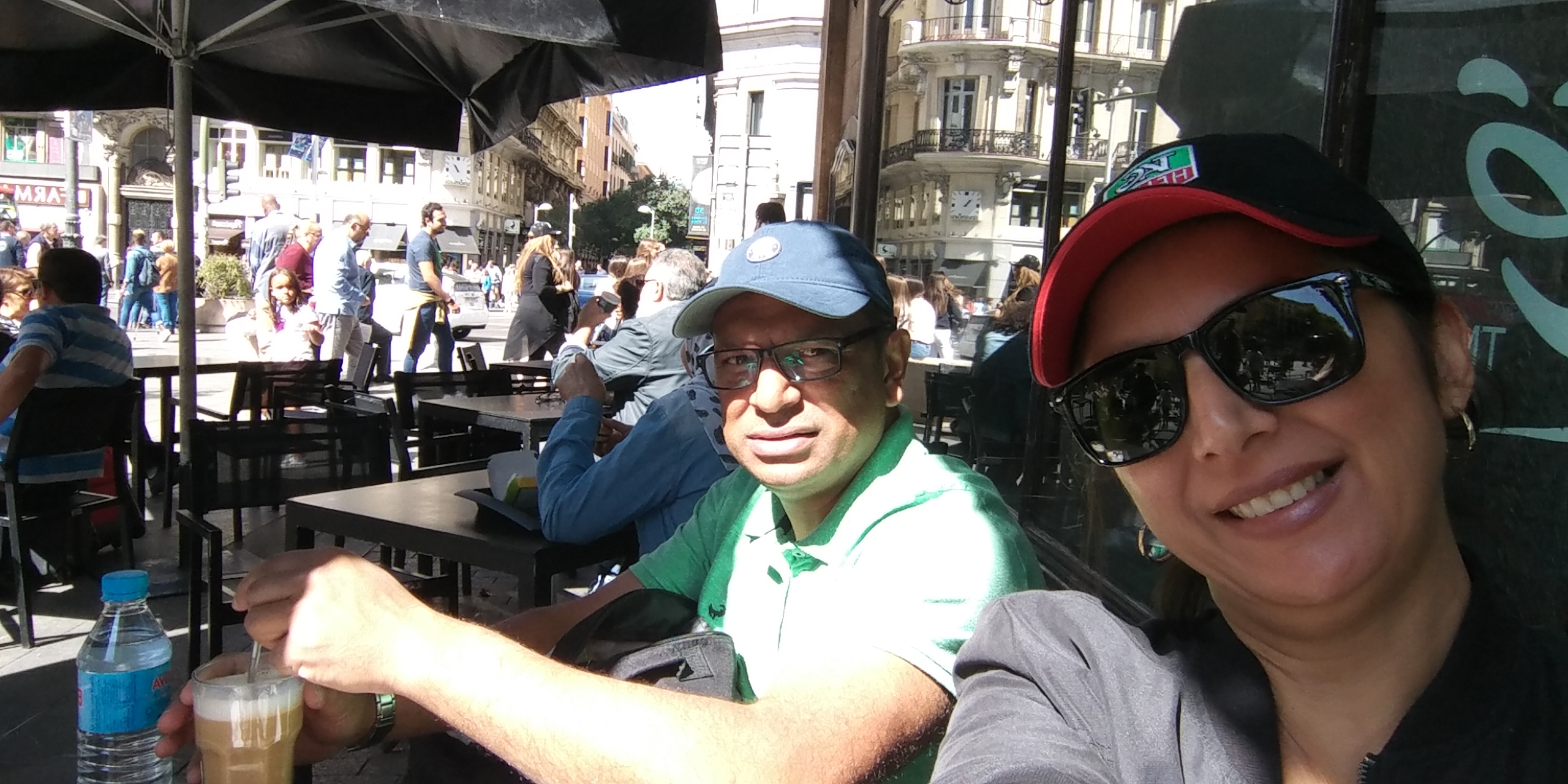
Our first day in Spain
Spanish history is rich with Islamic influence and I was looking forward to visiting historic sites where I could see first hand what has been left of Islam in this European country.
We decided to spend much of our planned visit, in Andalusia, an autonomous community in the south of Spain. Andalusia territory is divided into eight provinces of which Cordoba, Granada, Malaga and Seville are the most popular for tourist visits.
On this visit we spent time in Cordoba and Granada. I fell in love with Cordoba from the moment I breathed its air and smelled its orange fragrance drifting from the many orange trees that lines their walkways and streets.
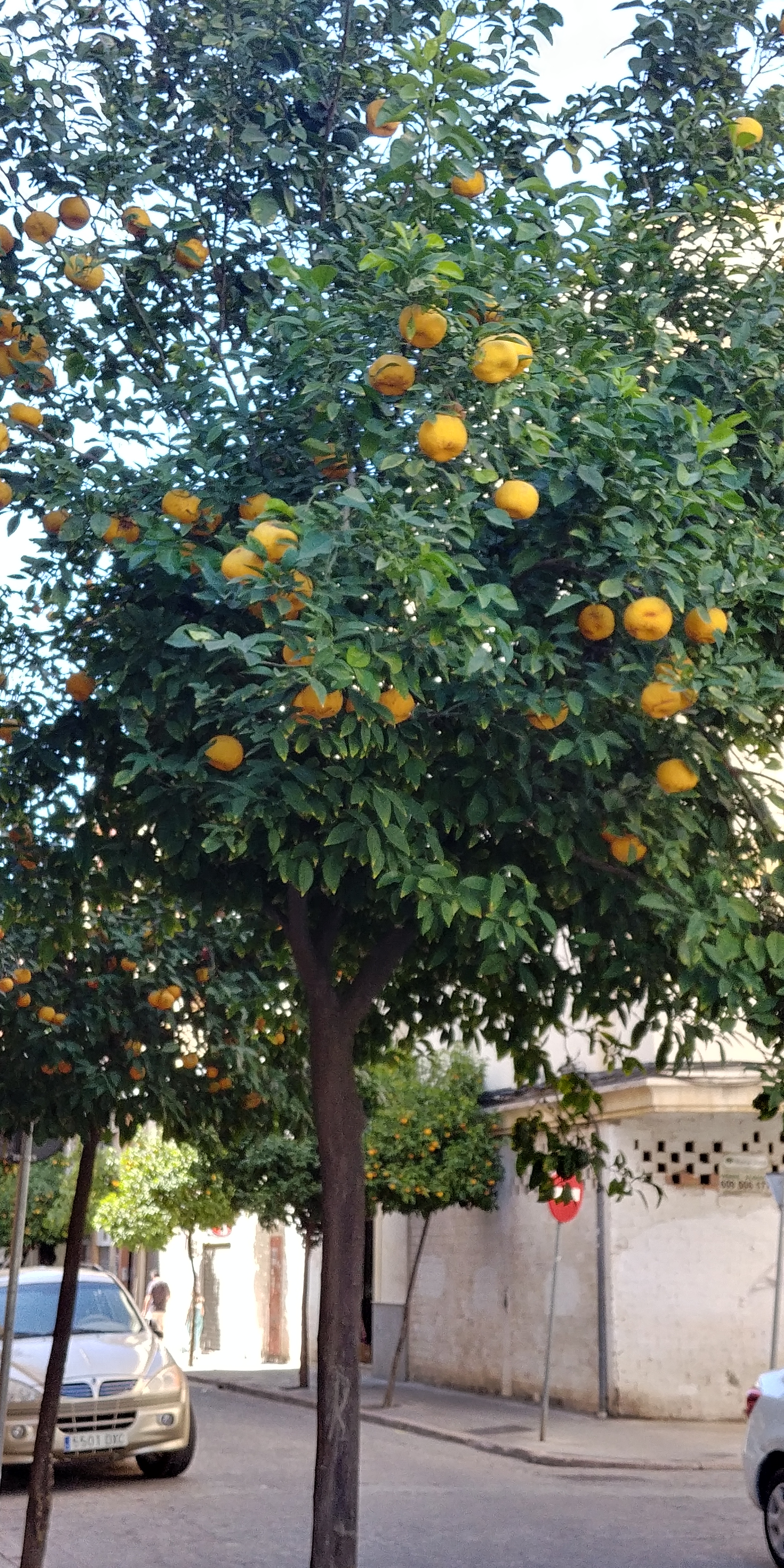
Orange trees on the streets in Cordoba
We arrived in Cordoba on the Monday, after we had spent the weekend in Madrid. The train ride from Madrid Atocha station to Cordoba takes a little over two hours depending on the route you choose.
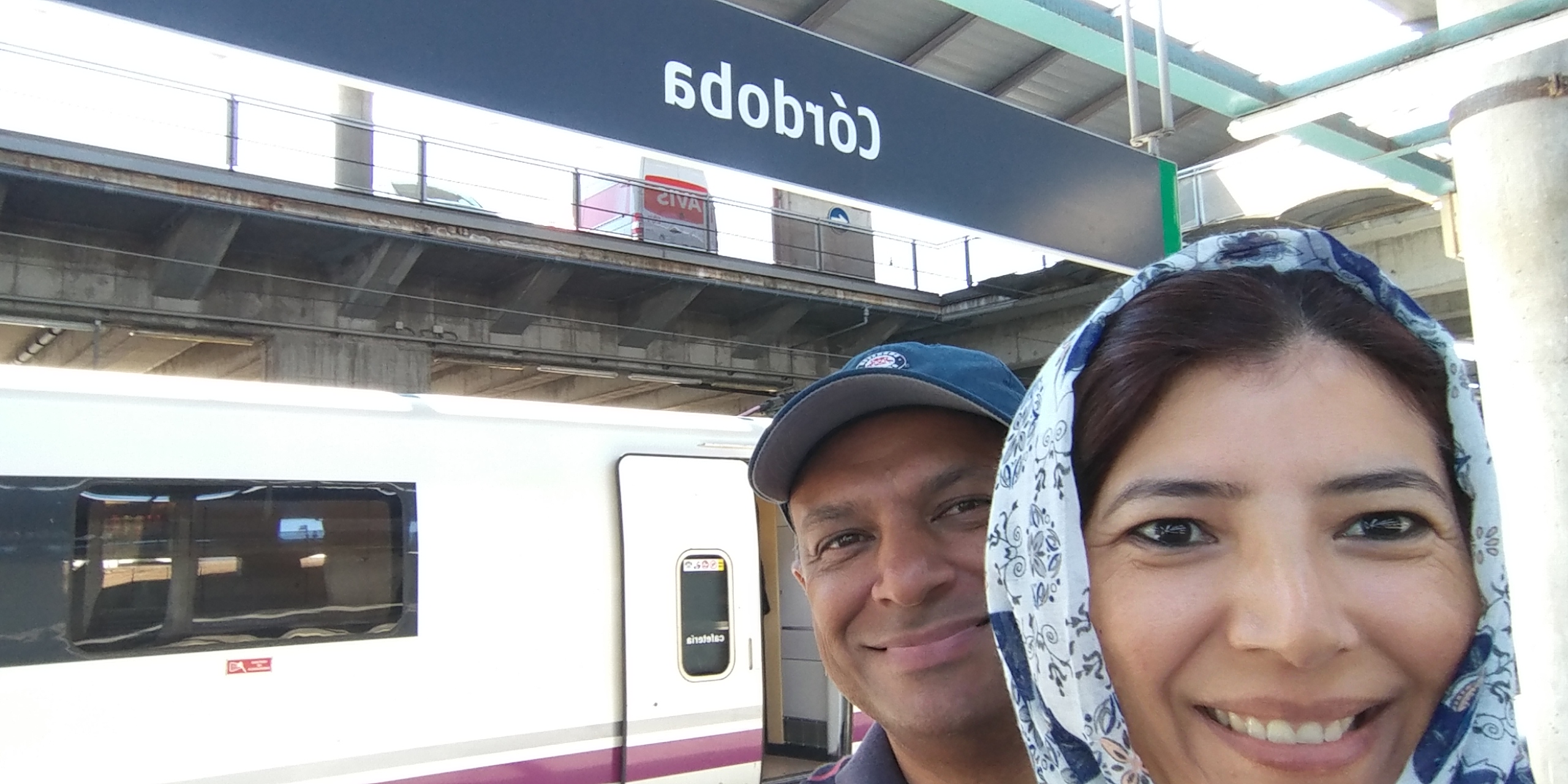
Cordoba Train Station
I remember arriving at Cordoba station not sure about what to expect. At first glance it looks like any other European town but as you walk further from the train station into the centre of Cordoba, you notice the change in the architecture of the buildings from modern to medieval Roman with a hint of Moorish influence.
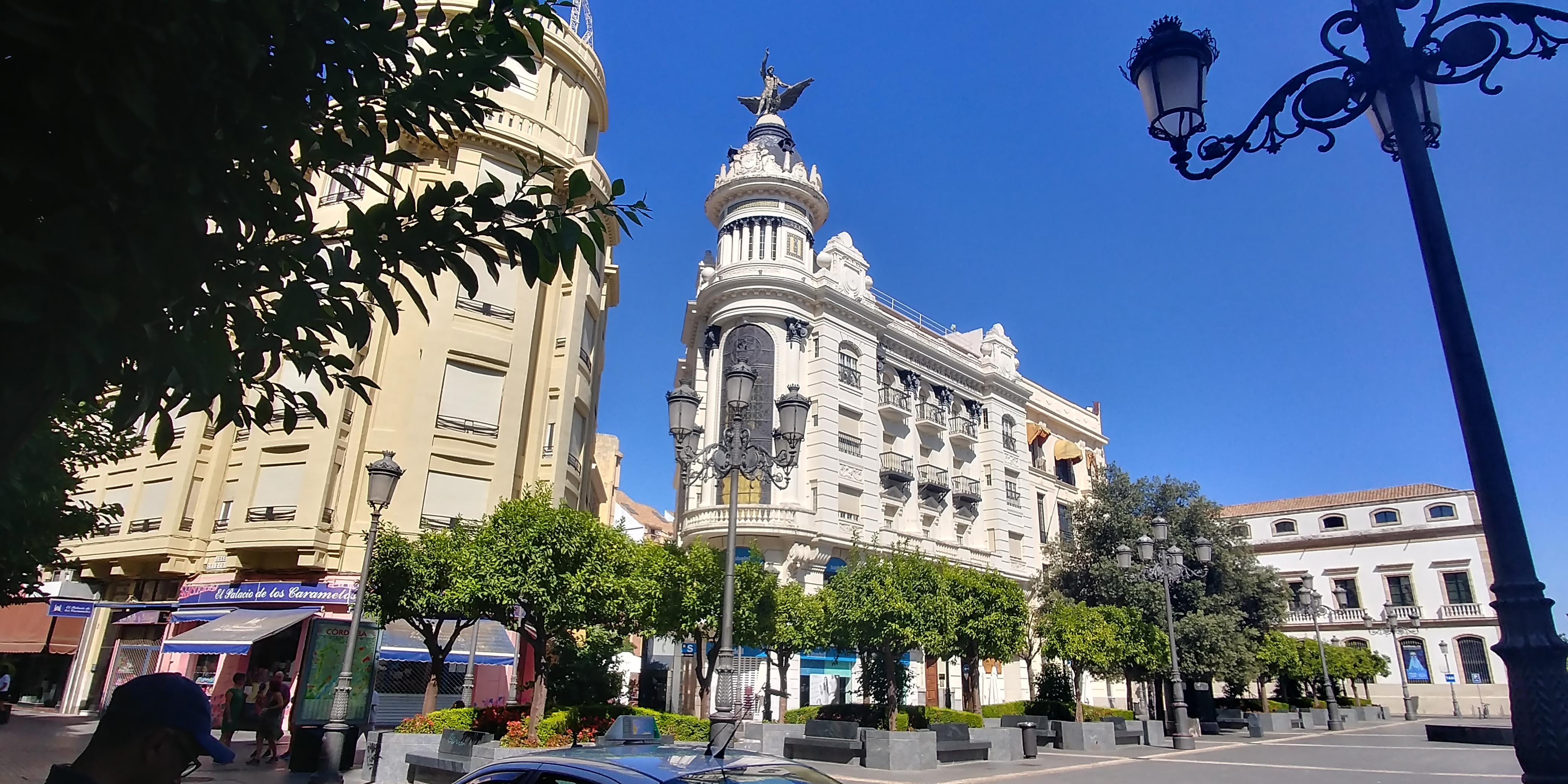
On our walk from the Station to our Hotel
The city of Cordoba was a Roman settlement until it was invaded and conquered by the Umayyad Caliphate in the eighth century. There is a distinct visibility of Islamic remnants in this quaint town.
In another blog I will tell you more about some must-do’s in Cordoba, in this blog I want to draw your attention to the main attraction :
Mosque–Cathedral of Córdoba
The Great Mosque of Cordoba – La Mezquita- was built in 786 and expanded several times until the Christian Reconquesta when a Cathedral was built right in the centre of the mosque area. Most Spanish people still refer to it as the Mezquita, but its official name is now the Mosque-Cathedral.
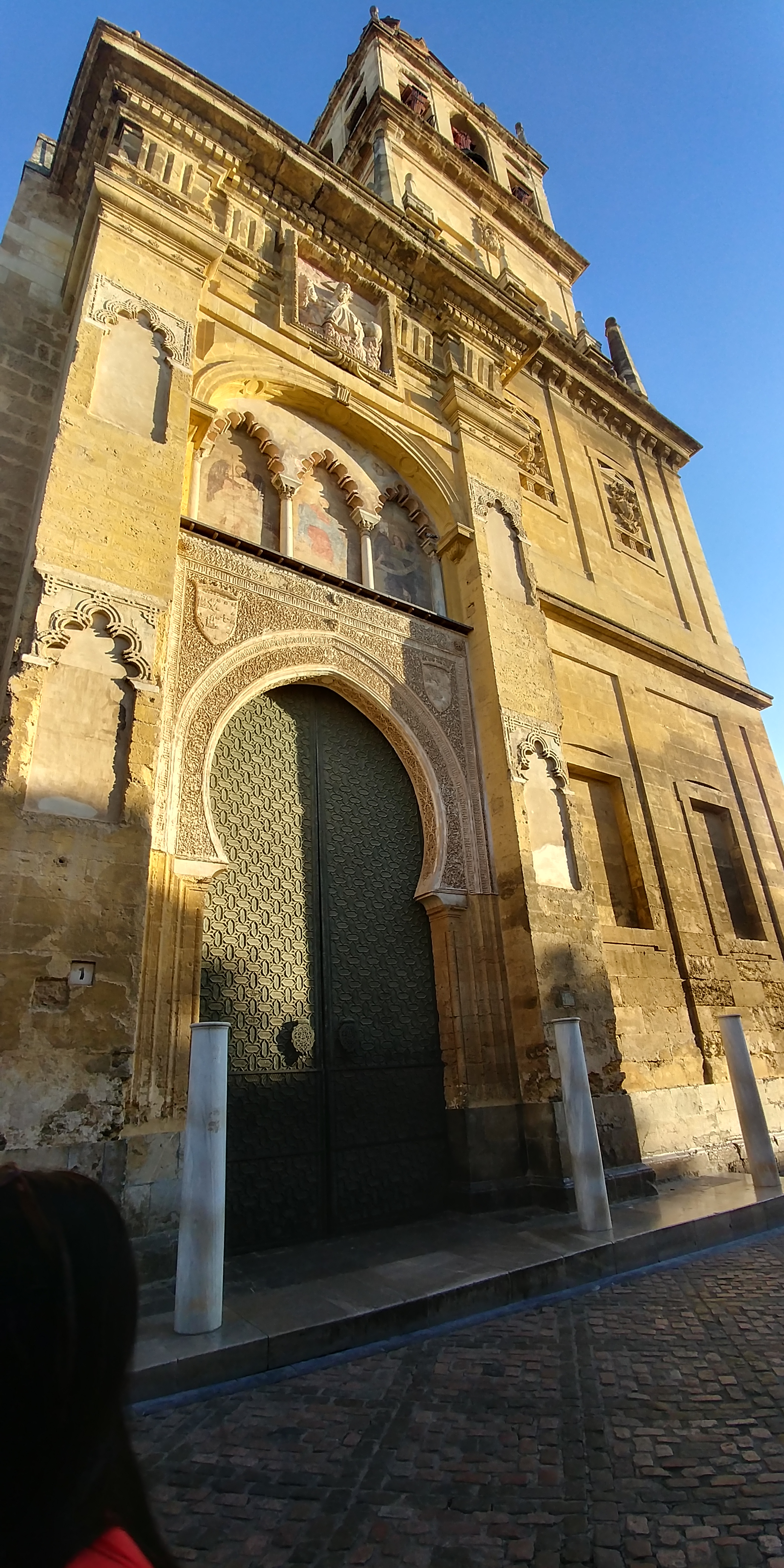
As you walk through the entrance to this magnificent architectural gem, you step into a courtyard, Patio De Los Naranjos, which has at its centre a fountain, an orange grove with a covered walkway circling the Mosque.
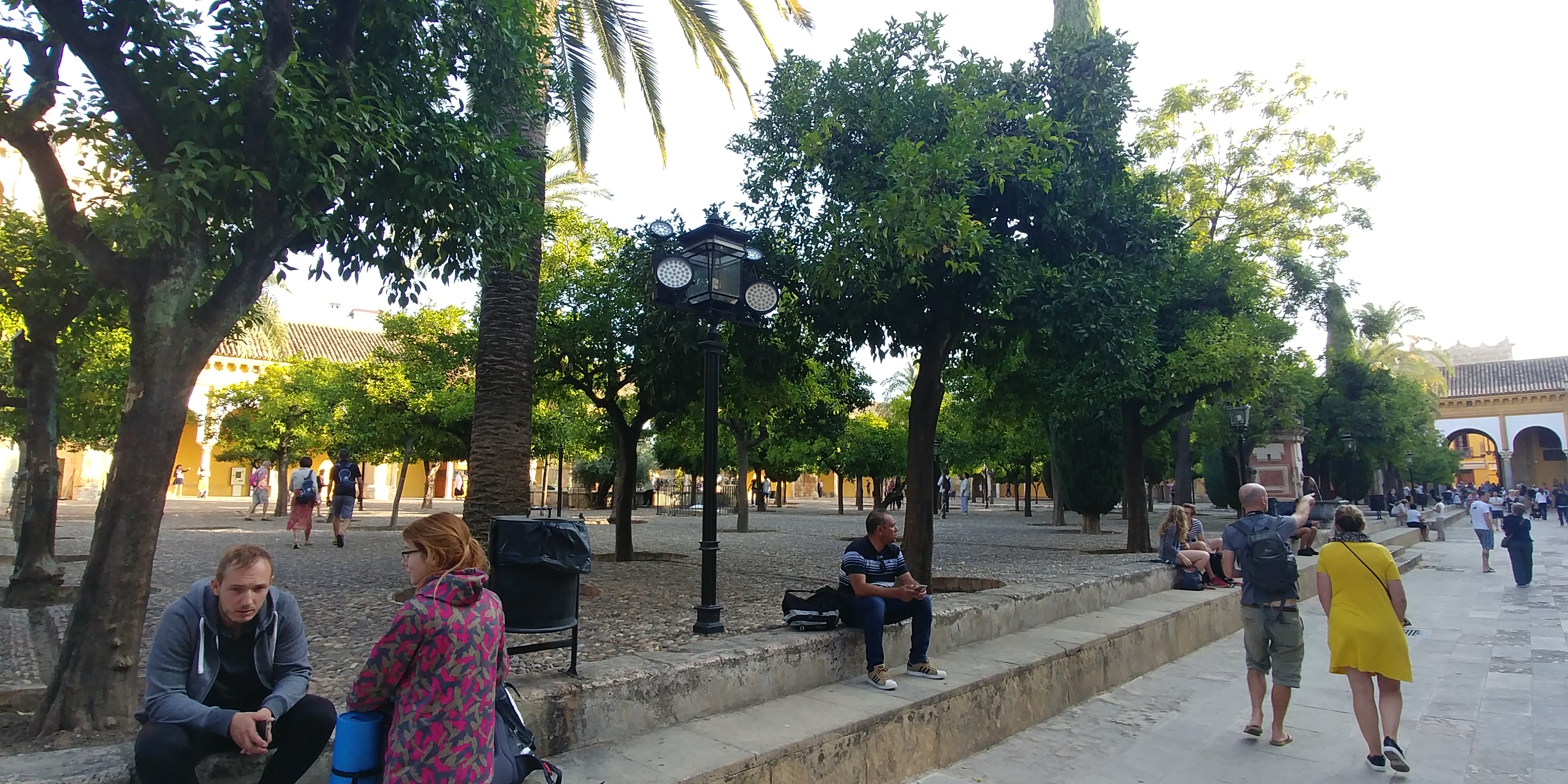
Courtyard of Mezquita with its orange grove
To the right you will see the foundation of a minaret which has now been converted into a bell tower.
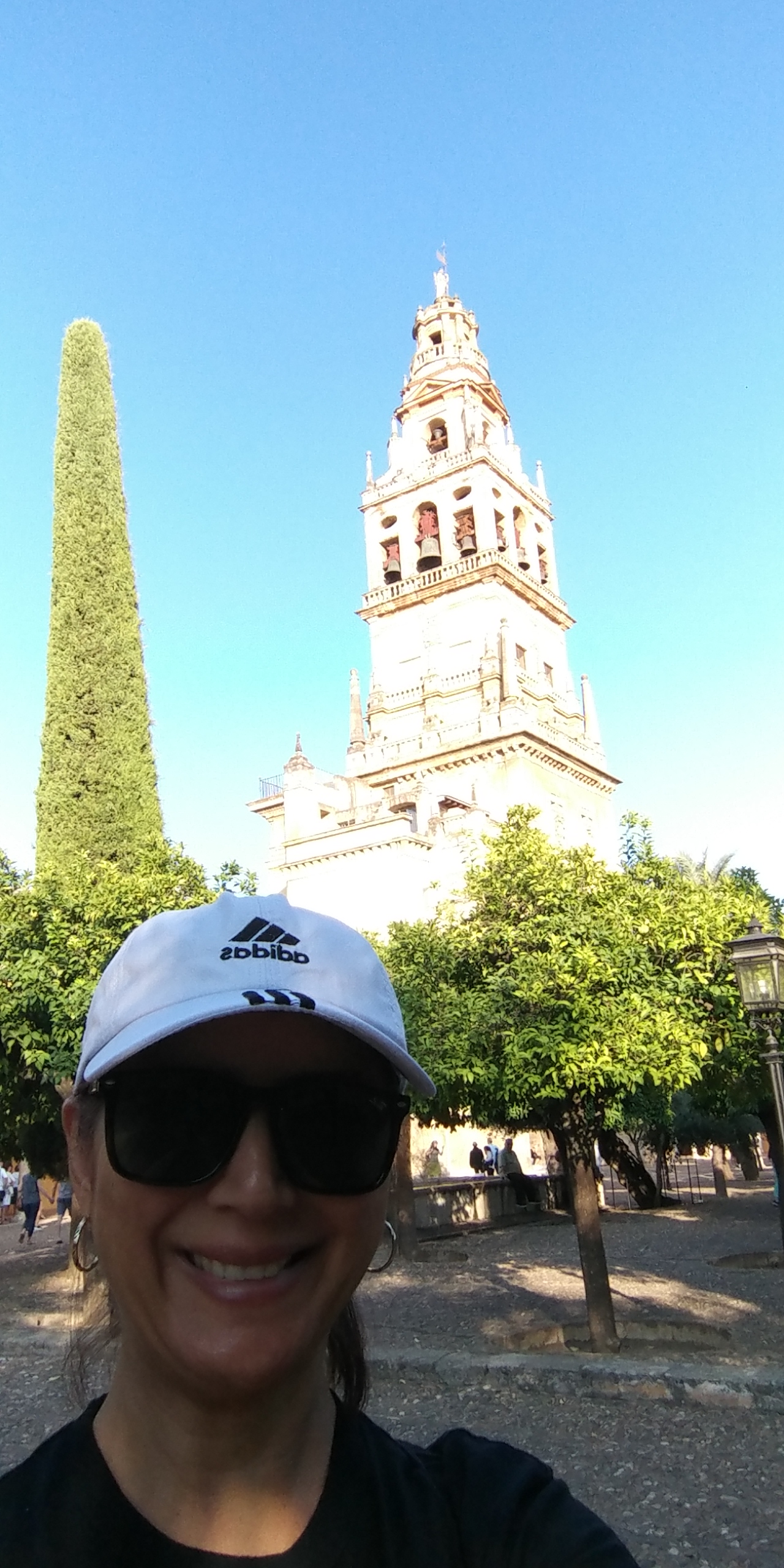
The Minarat in the background, now converted into a bell tower
A bitter-sweet reminder of a time when the call to prayer was heard throughout the Iberian Peninsula. Now standing in this wide expansive courtyard, the one thing that is deafeningly missing, in Cordoba and most of Spain, is the Muslim call to prayer.
The courtyard is large and spacious with pathways leading you to huge doors. Step through the Puerta de la Palmas (the Door of Palms) and you find yourself standing in a large Prayer Hall where more than 850 red and white columned arches rise above you.
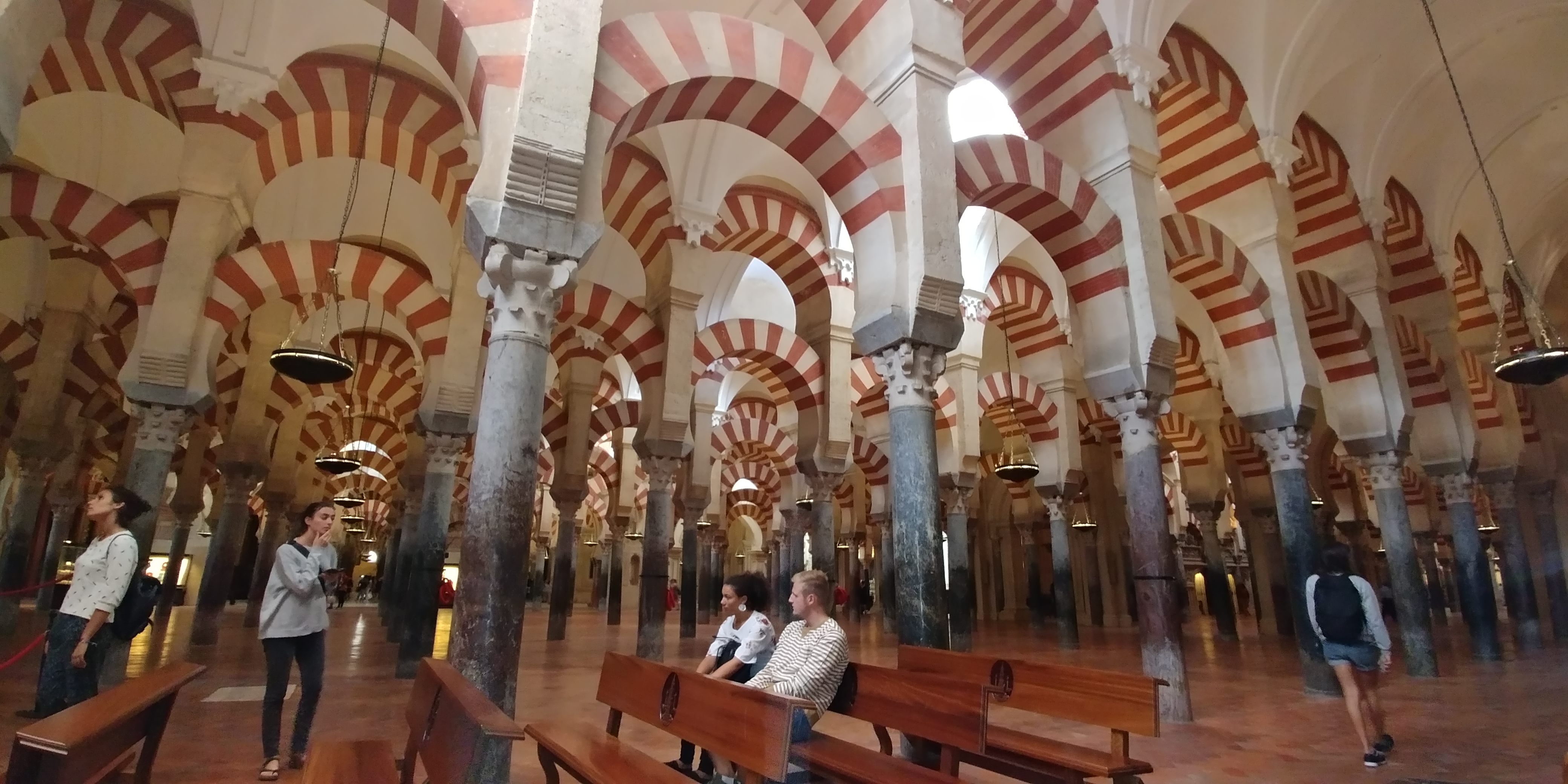
856 red & white columned arches in Mezquita – Cordoba
From this view it’s hard to imagine that this is anything other than what it was built to be, a Mosque, but as you walk deeper into the Prayer Hall, you are suddenly surprised to see right there in the centre, squats a Renaissance Cathedral dating back to the early sixteenth century.
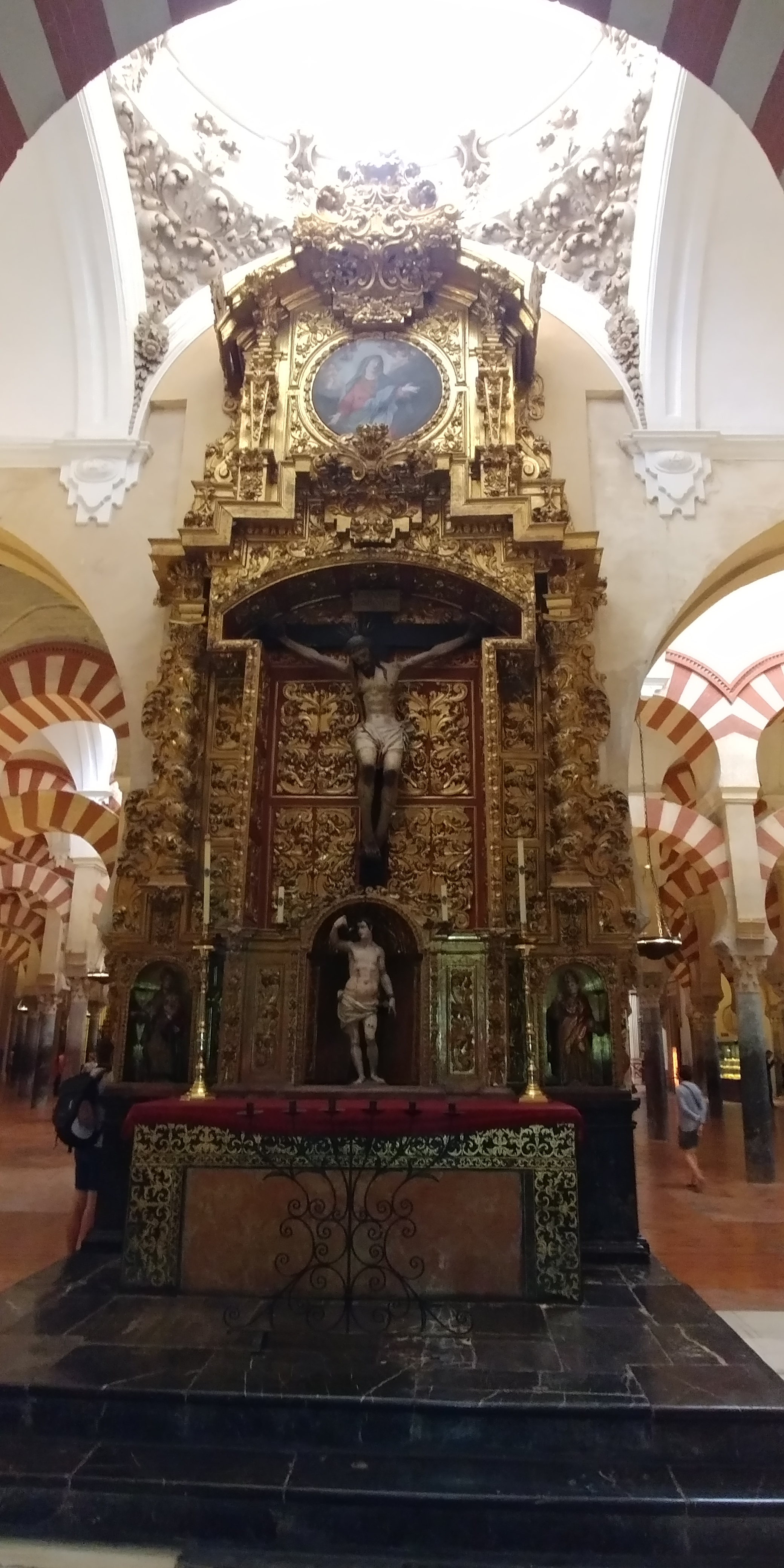
Cathedral in centre of Mezquita
Tourist are mulling around and one is suddenly struck by the mixed emotions that both Muslim and Christians visiting here must be feeling. Here is an example of two worshipping places existing within each other and maintaining its individual architectural style under one roof. It’s a moment to reflect and the space lends itself for deep reflection.
Even with the Cathedral towering in the centre of this Mosque, the horseshoe style arched Mihrab with it’s dazzling Dome remains in intact as a testament to the many sermons and prayers that must have reverberated within these walls in a time long ago.
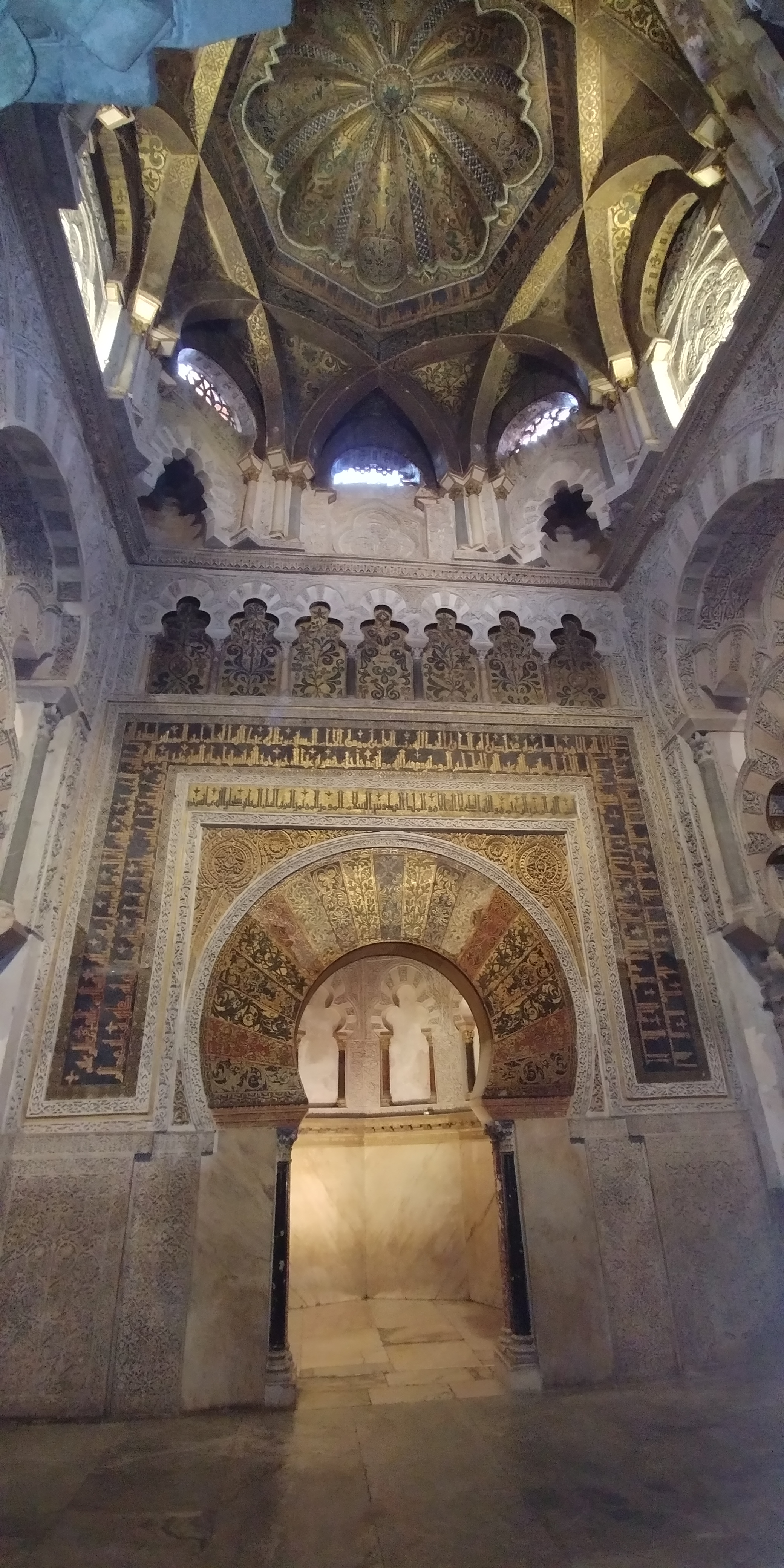
Mihrab with its dazzling Dome
My visit to the Mezquita left me feeling a sense of sadness and wonder. Sad to see that the prayer hall has now become a place where tourist stand in awe of the brilliant architecture instead of a place where Muslims gather to complete their daily prayers. Yet I stare in wonder at the ingenuity of the architects who have over a period of hundreds of years, managed to maintain all of the Islamic Architecture that this Mosque has to offer, whilst placing a Cathedral at it’s core.
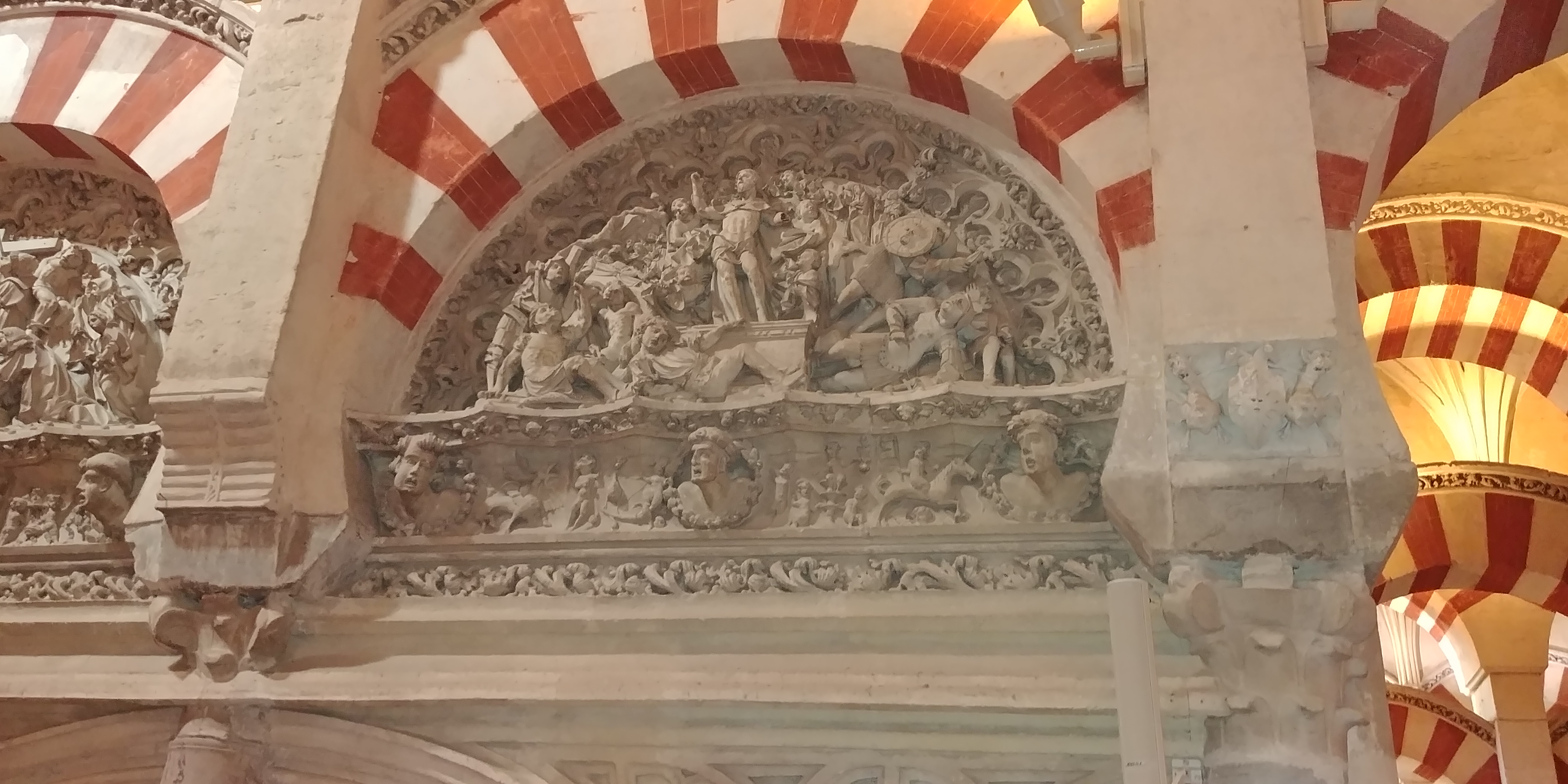
Notice the contrast – Moorish arch filled with Roman/Christian architecture
The Mezquita is open for guided tours or individual tourist at a cost of 10 Euros from 10am. The courtyard area is free for you to roam around in but if you want to see the Mosque and Cathedral area, you will have to pay the entrance fee.
Travel Tip: Early morning between 8.30am and 9.30am individual tourist are allowed to enter for free while workers are cleaning. We visited during this time and found it to be a good time for deep reflection and to take in the energy of spiritual awareness and peace that is present in the early morning silence of the Mosque-Cathedral.

 My Best Travels
Again an excellent read Narriman. I could picture it my mind. Keep blogging I am becoming more and more intrigue by these European countries I once had no desire to visit
LikeLike
Awesome read, love your use of words as one can literally close your eyes and imagine being there. You pics are stunning . This one is going on my bucket list …can’t wait for your next read, …..
LikeLike