Featured

Istanbul-Sultanahmet-making the most of your visit to the old city.

My first taste of Europe was on a visit to Istanbul in the summer of 2015. Prior to this, I had not really been interested in travelling to Europe. Looking back now, I think the decision to make Istanbul my maiden European experience, was a smart one.
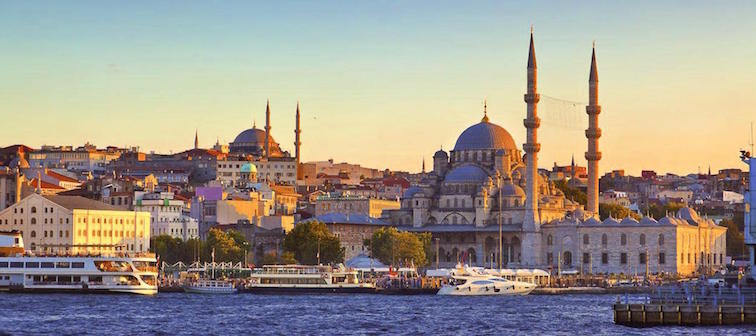
With one foot in Asia and another in Europe, one has the pleasure of experiencing the best of two continents on your visit to Istanbul. The city straddles two continents separated only by a short ferry ride.
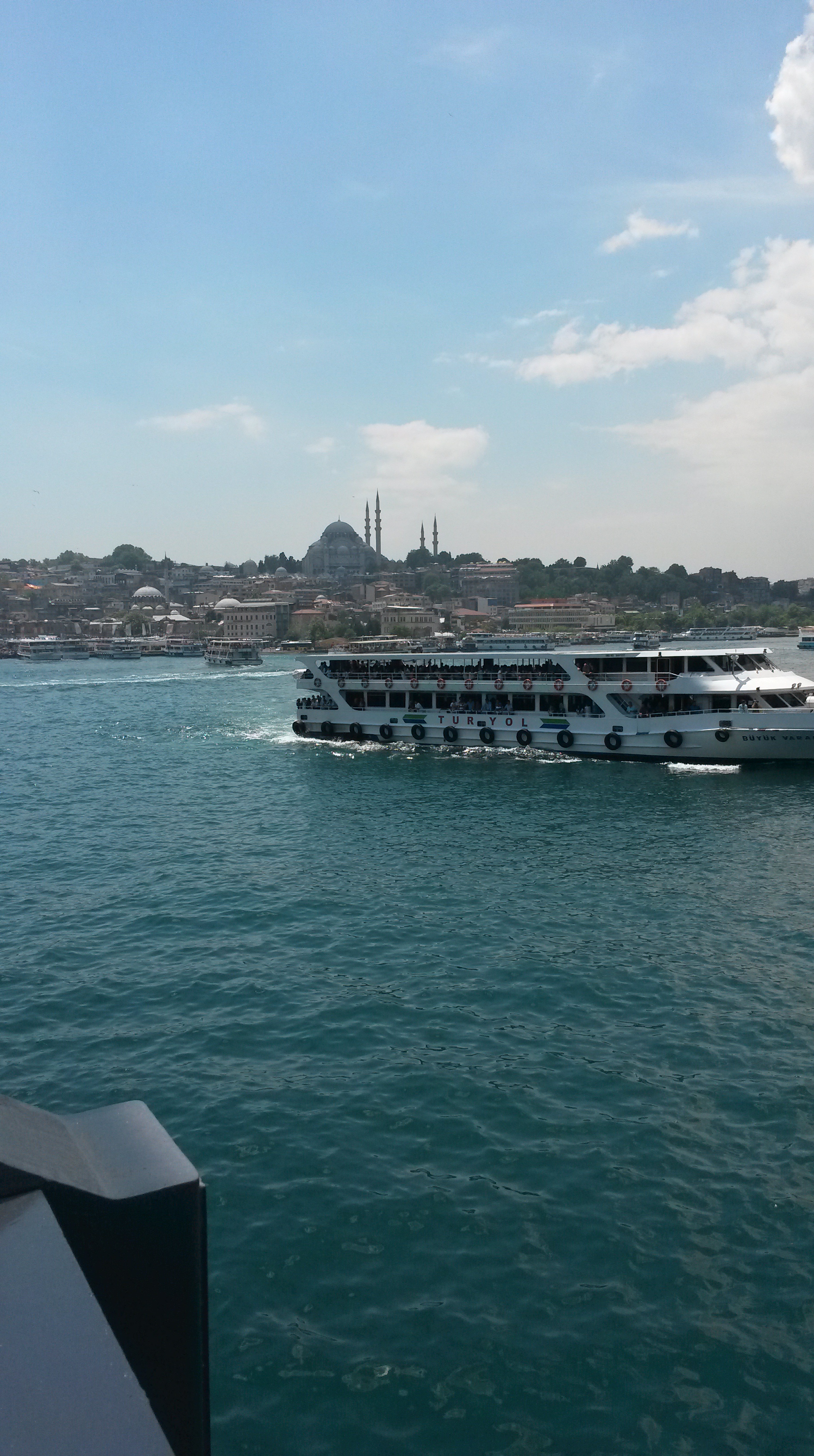
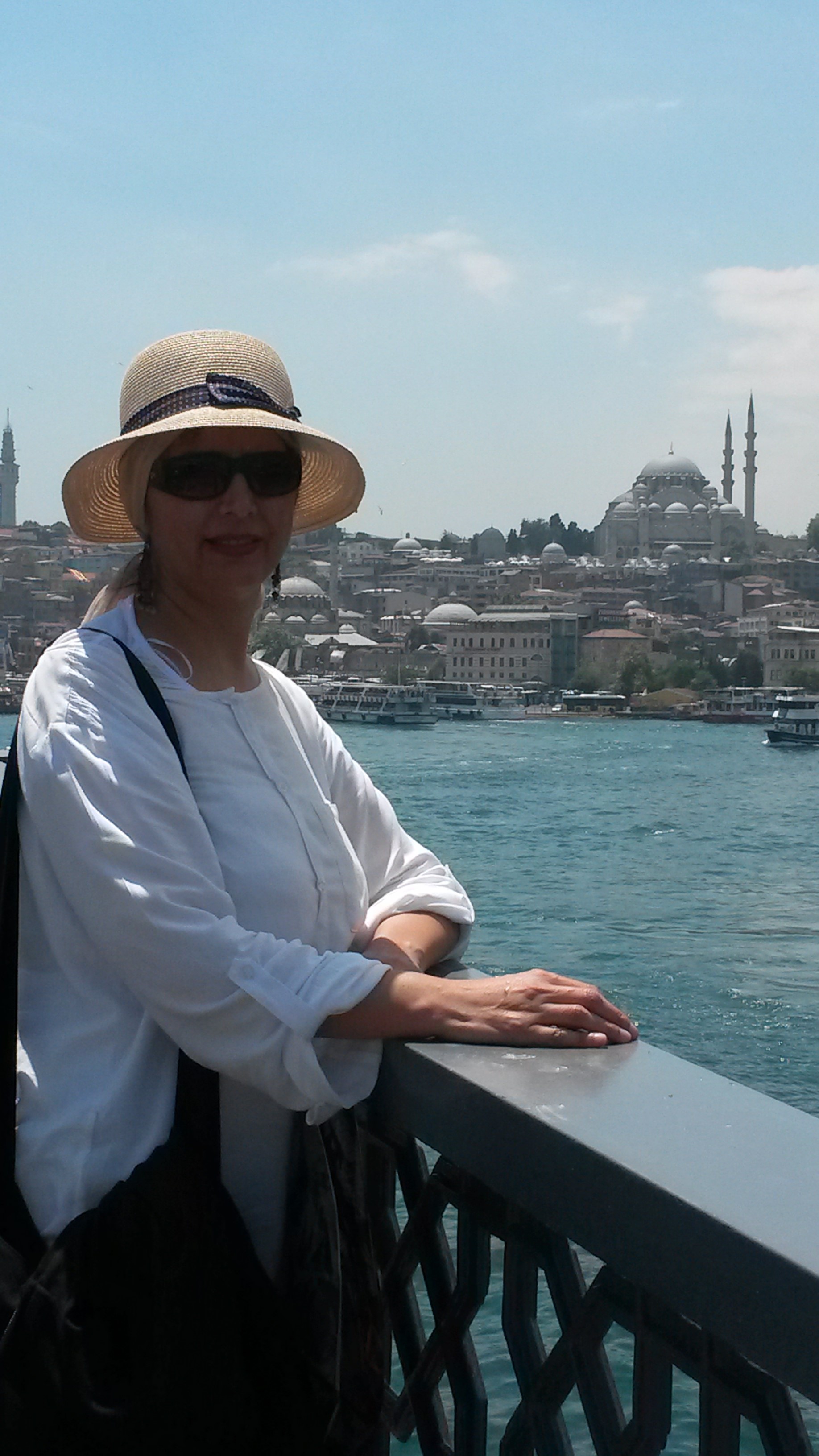
On the European side of the city, there is a further distinction which makes this city so unique and fascinating.

The North bank of the Golden Horn (major urban waterway and the primary inlet of the Bosphorus in Istanbul) tends to be more modern, especially around Taksim area (new city). To the west, you will find Sultanahmet (old city), the historical heart of the city, and what was previously known as Constantinople.
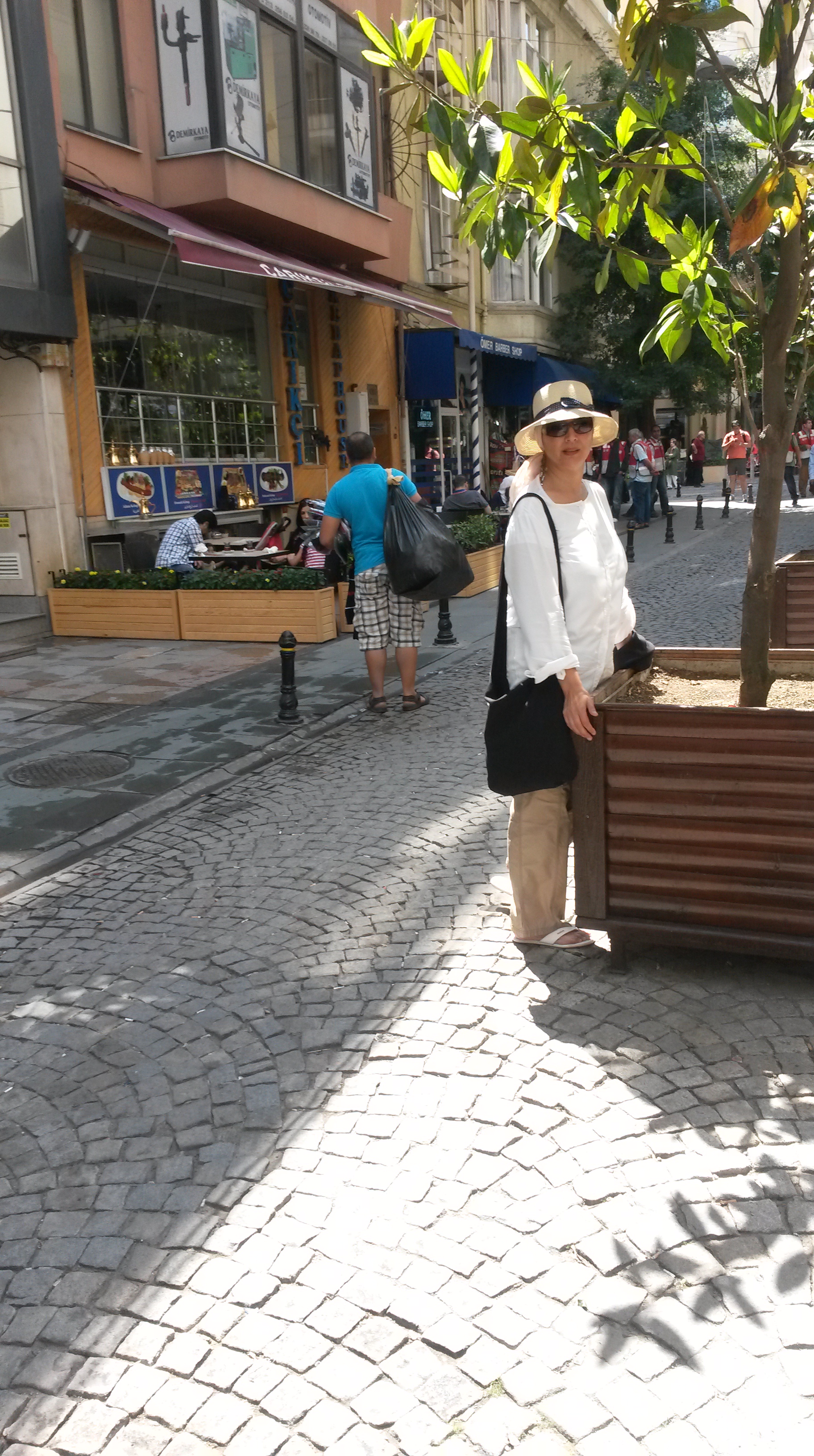
Whilst there are a few touristy things to do in Taksim, in this blog I’de like to share with you some of my tips for your visit to the old city, Sultanahment.

Choose your location wisely

We were fortunate enough to be travelling with family who had previously been to Istanbul and could give us good advice when deciding on hotels in Taksim and Sultanahmet.

Although the old city is relatively small and most historic sites are situated close to each other, if you wanting to be close to the history, culture, transport and the vibe, then I suggest you try The Ambassador Hotel http://www.hotelambassador.co

The Ambassador is a boutique hotel with only five floors and approximately 20 rooms. If you are able to get a room on the fifth floor you will be just one flight of stairs away from the rooftop restaurant where breakfast, lunch and dinner is served.
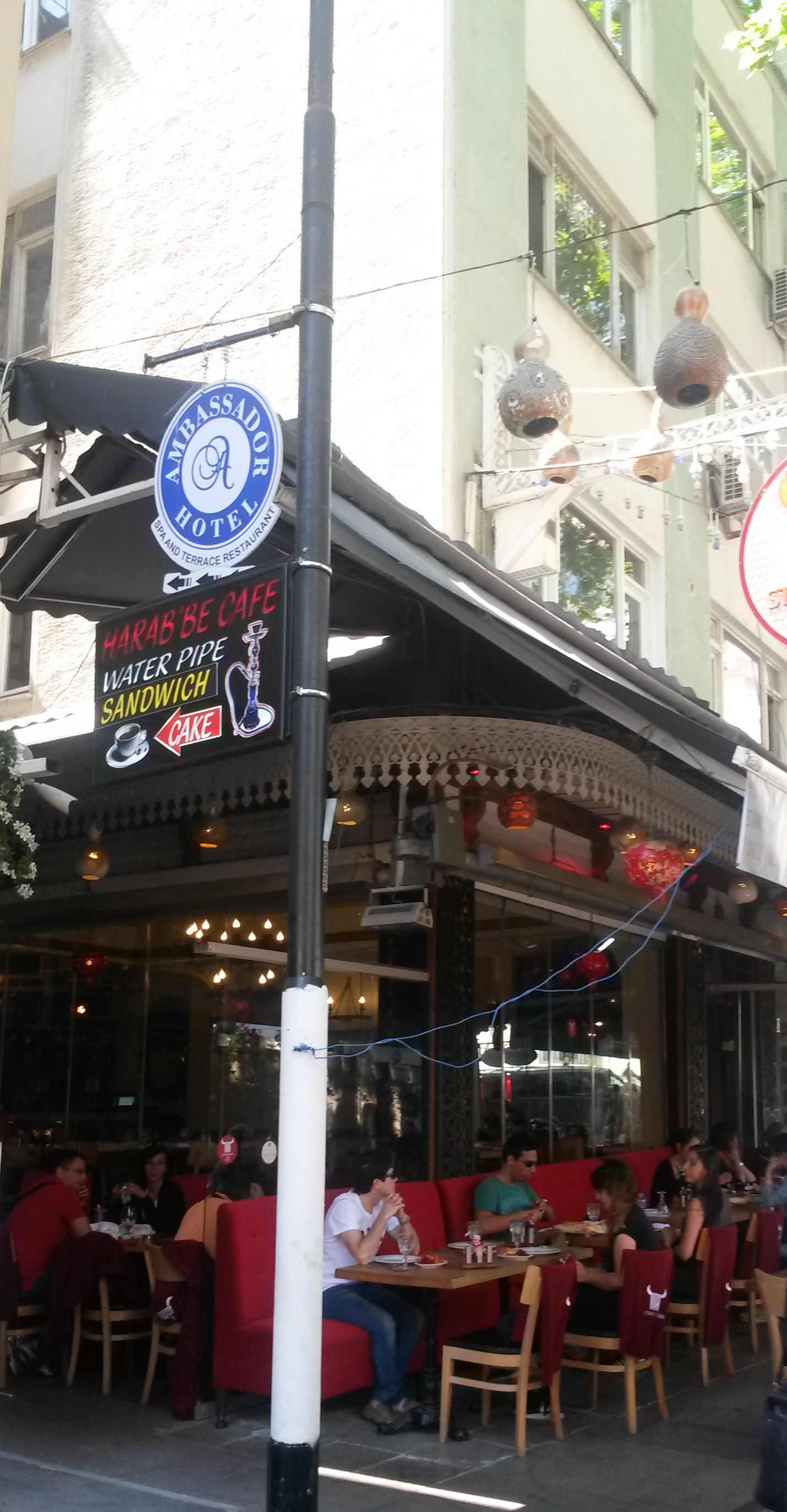
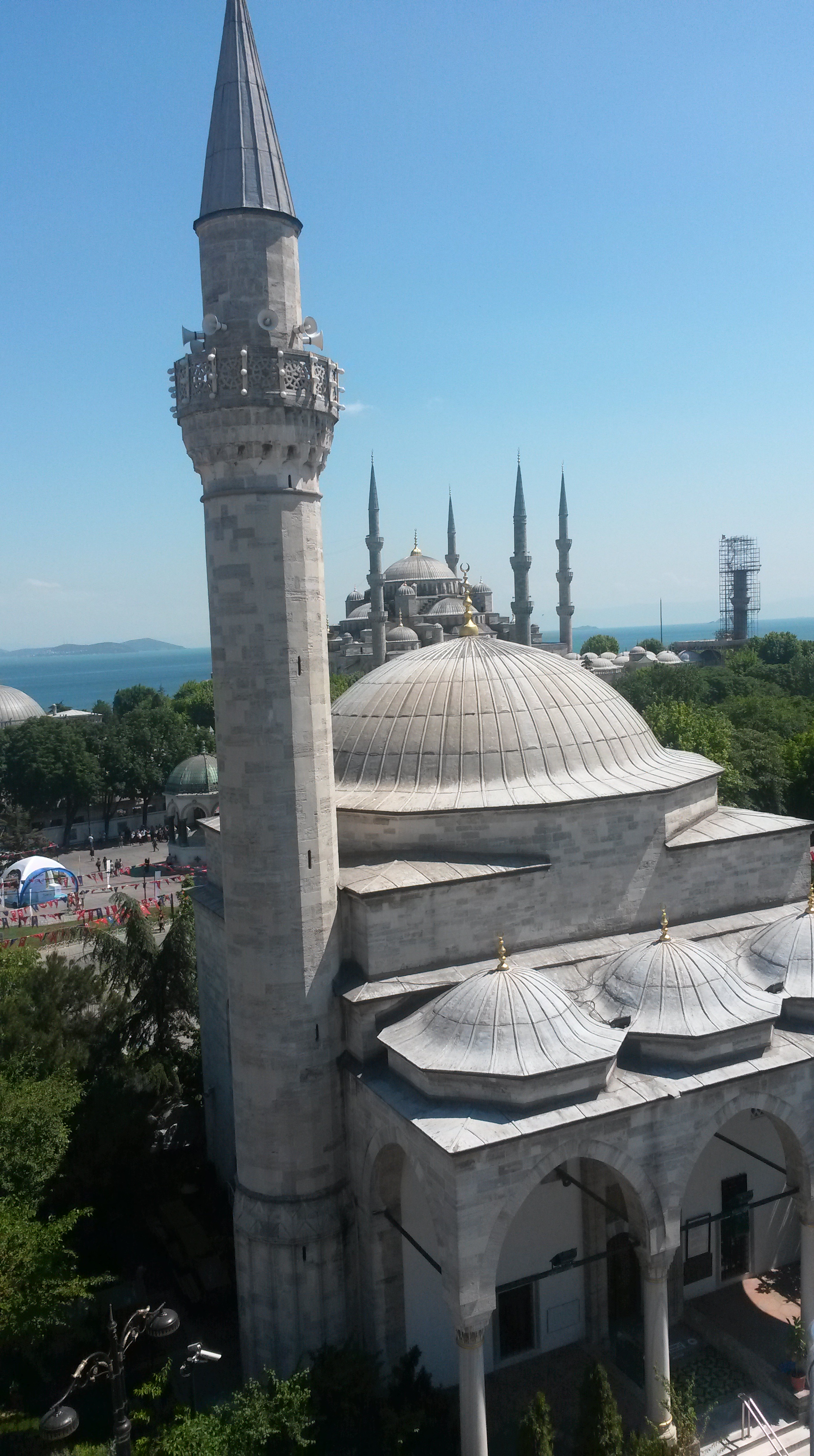
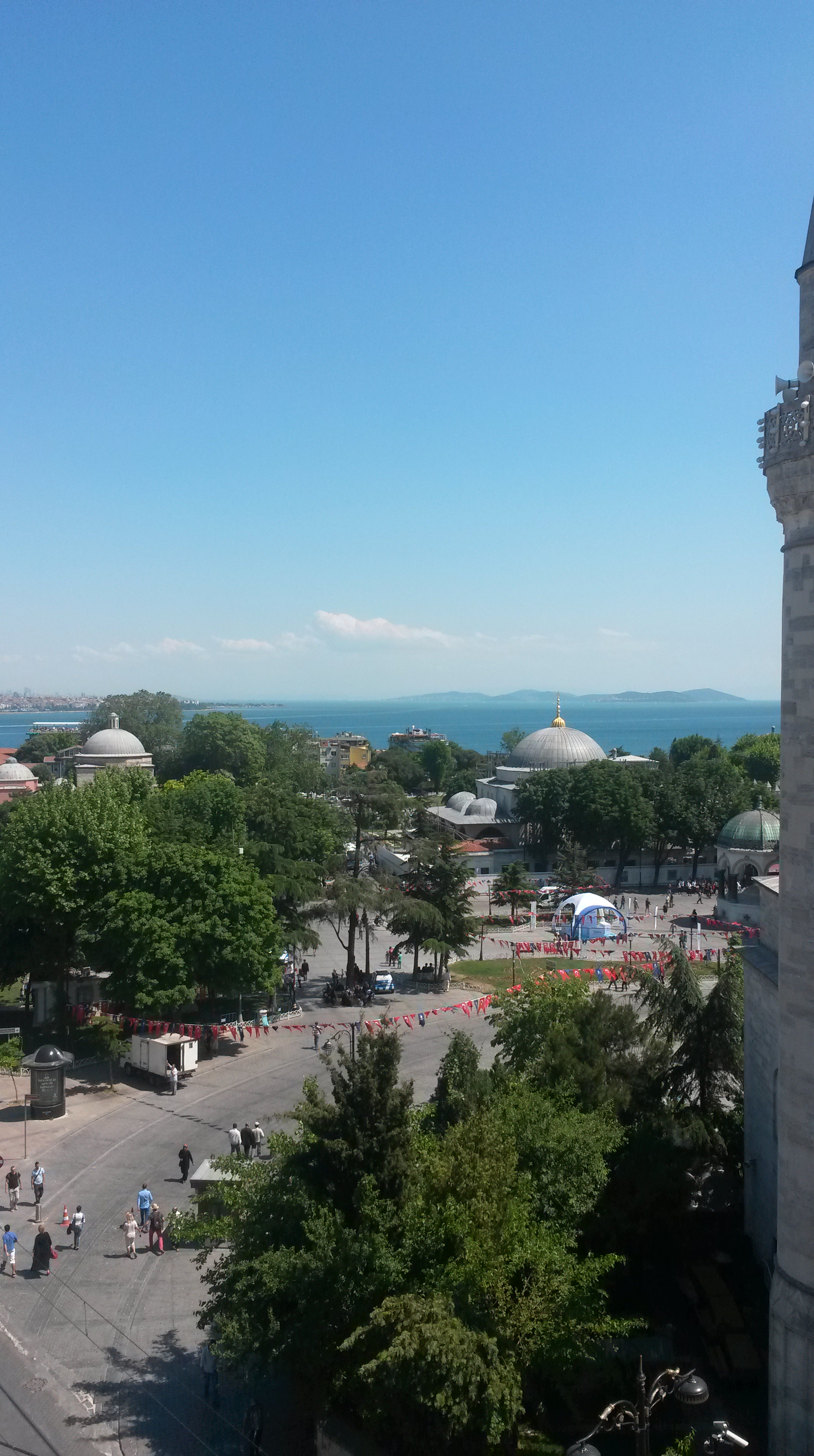
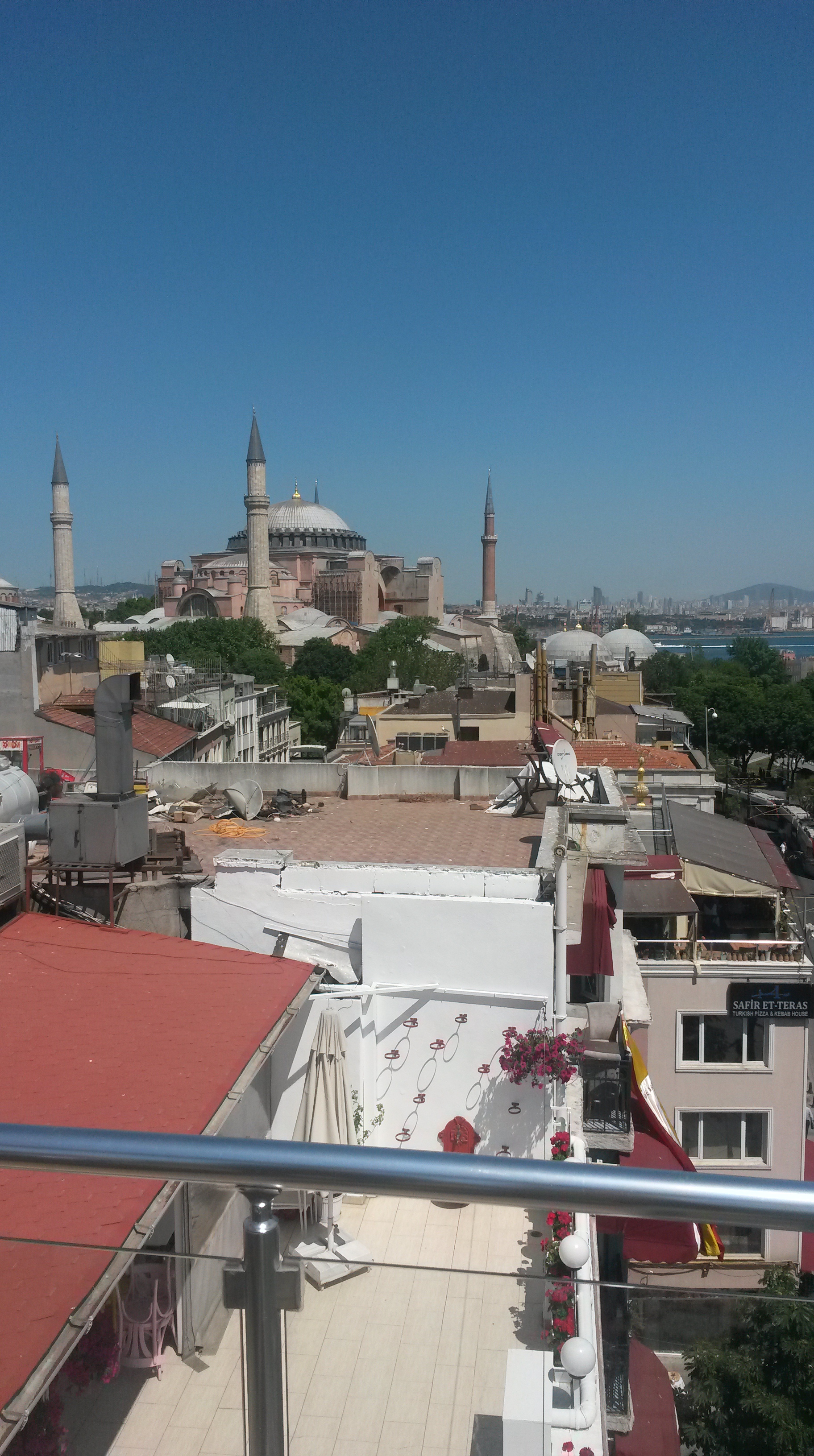
From the rooftop you will have a spectacular view of the Blue Mosque , Hagia Sofia and the Bosphorus river in the background.
Plan your visit to the Blue Mosque carefully

Built in the 1600’s the Blue Mosque is the only mosque in the country with six minarets. The mosque was designed and built as an imperial show of strength to compliment the Hagia Sofia which faces it across the Sultanahmet Square.
Even though it is considered to be one of the world’s most visited tourist attractions, it is still an active mosque and is therefore closed to visitors and tourists for approximately 30min during the five daily prayers.
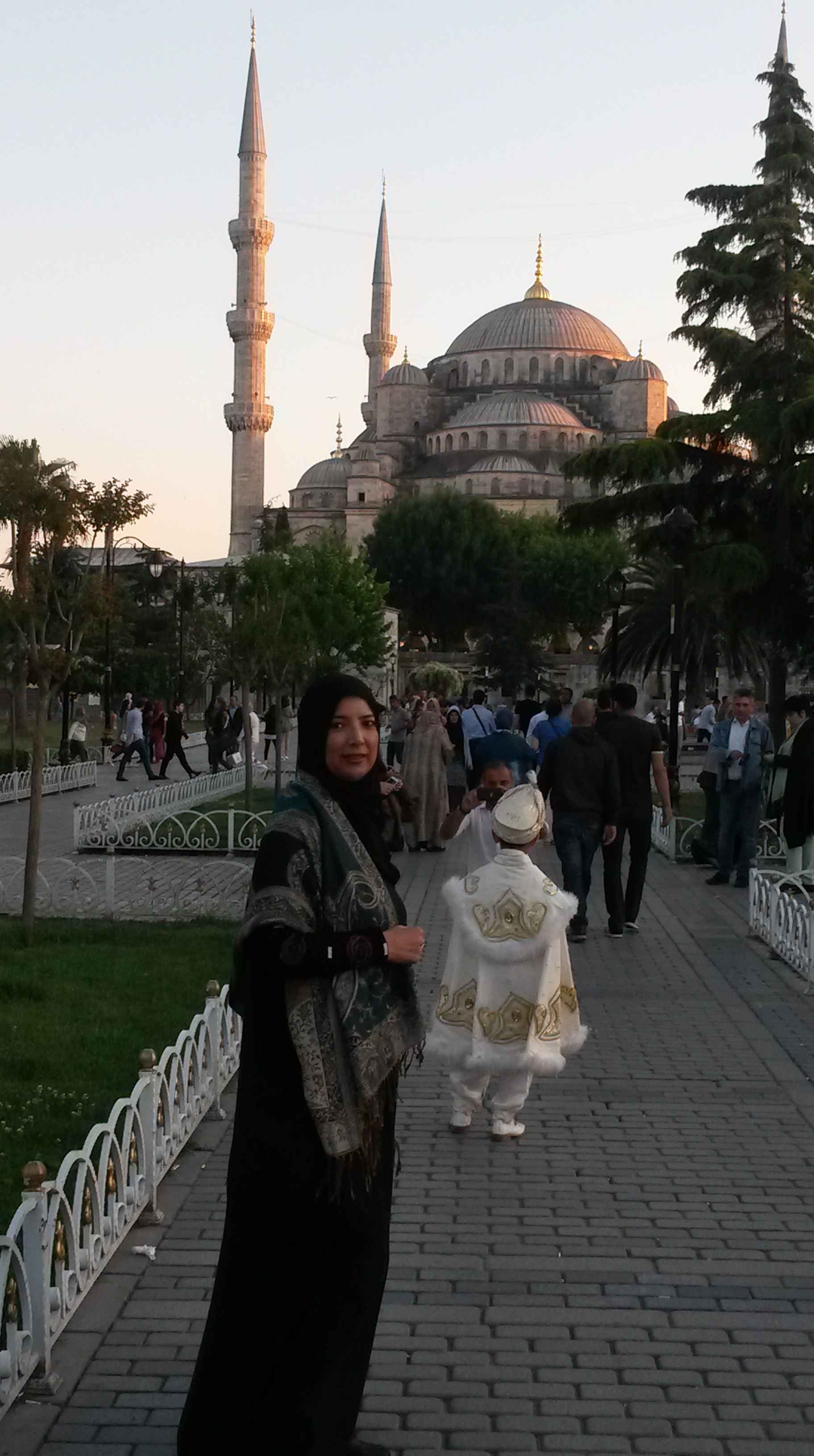
The best time to visit the mosque as a tourist is after sunrise and before the midday prayers. Worshippers can pray the five daily prayers and do the tourist walk-about between congregational prayers.
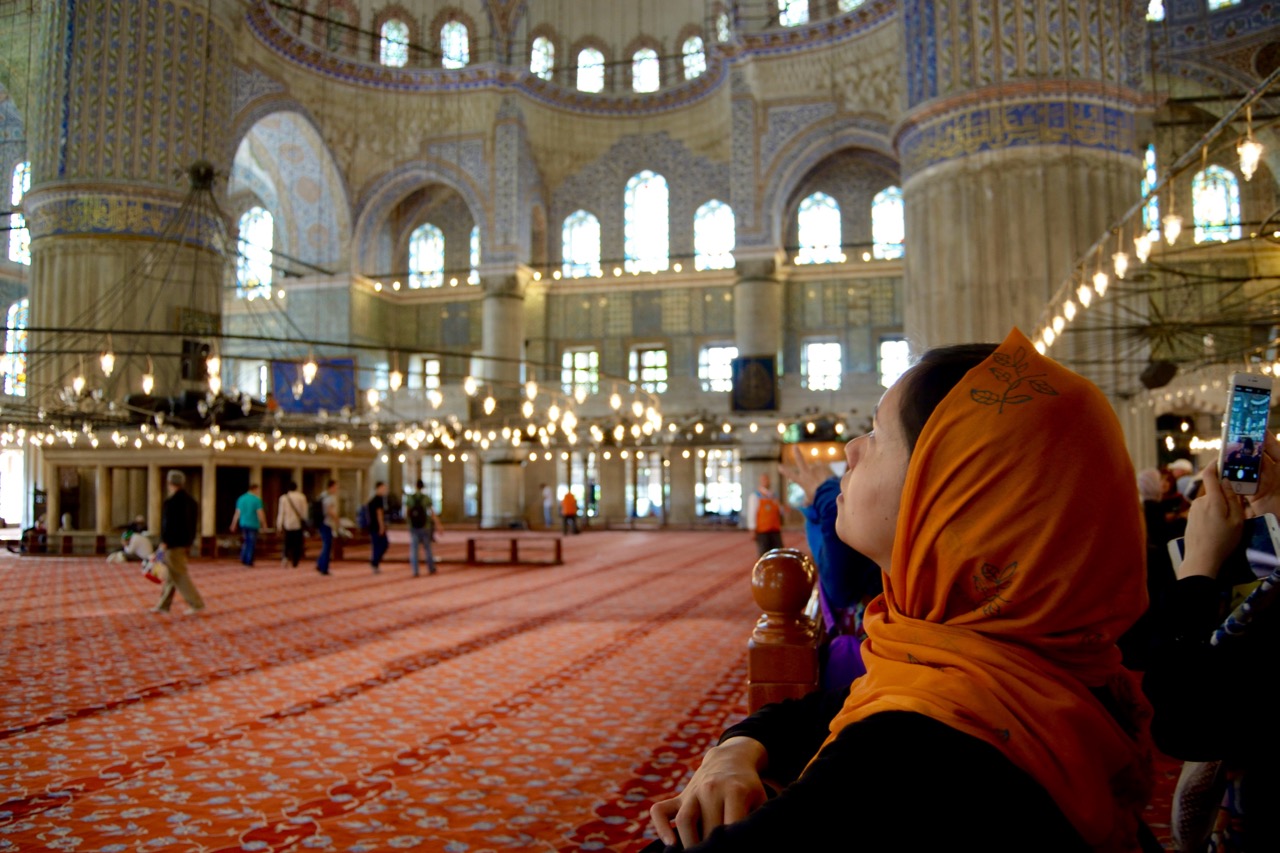
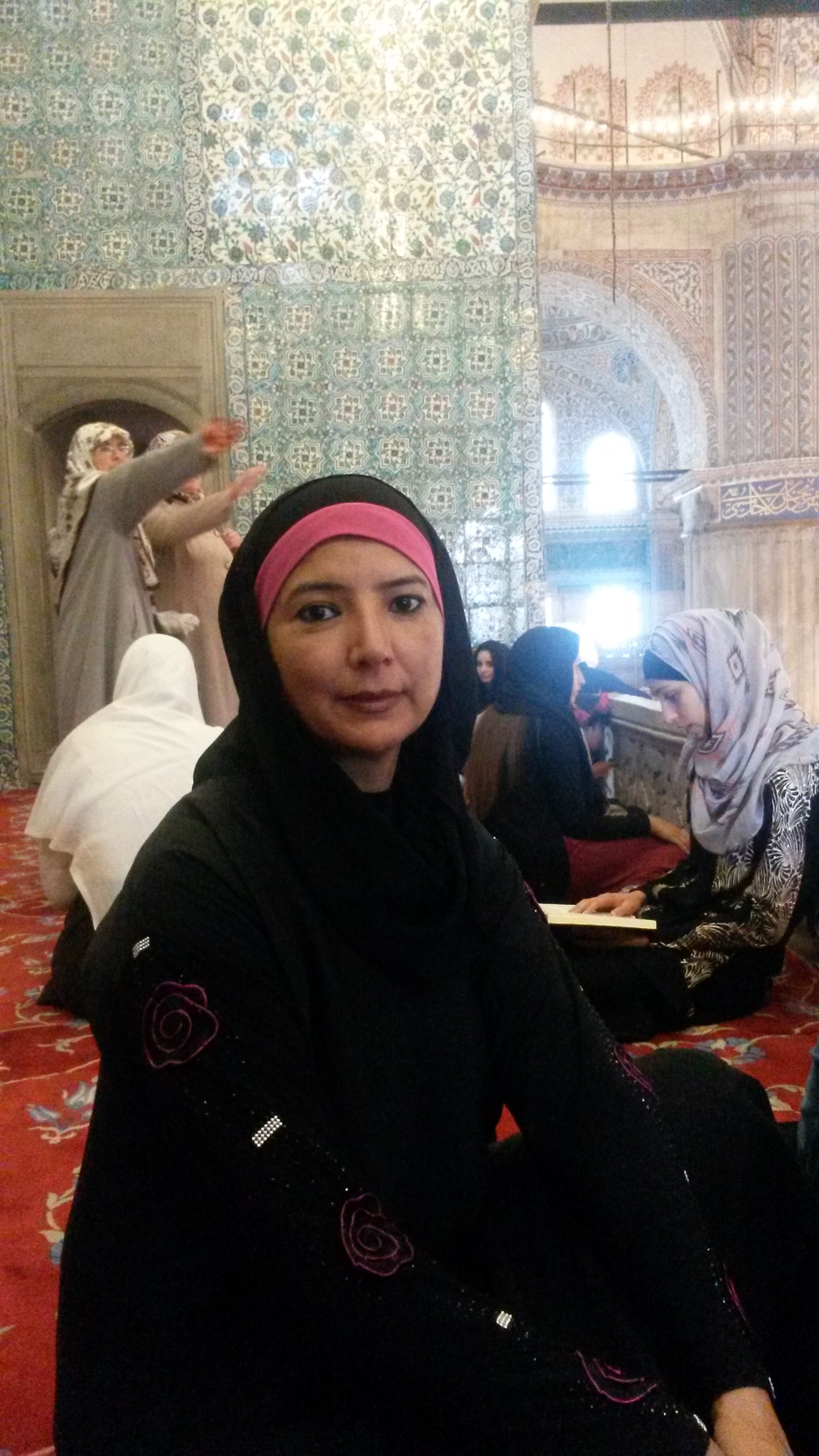
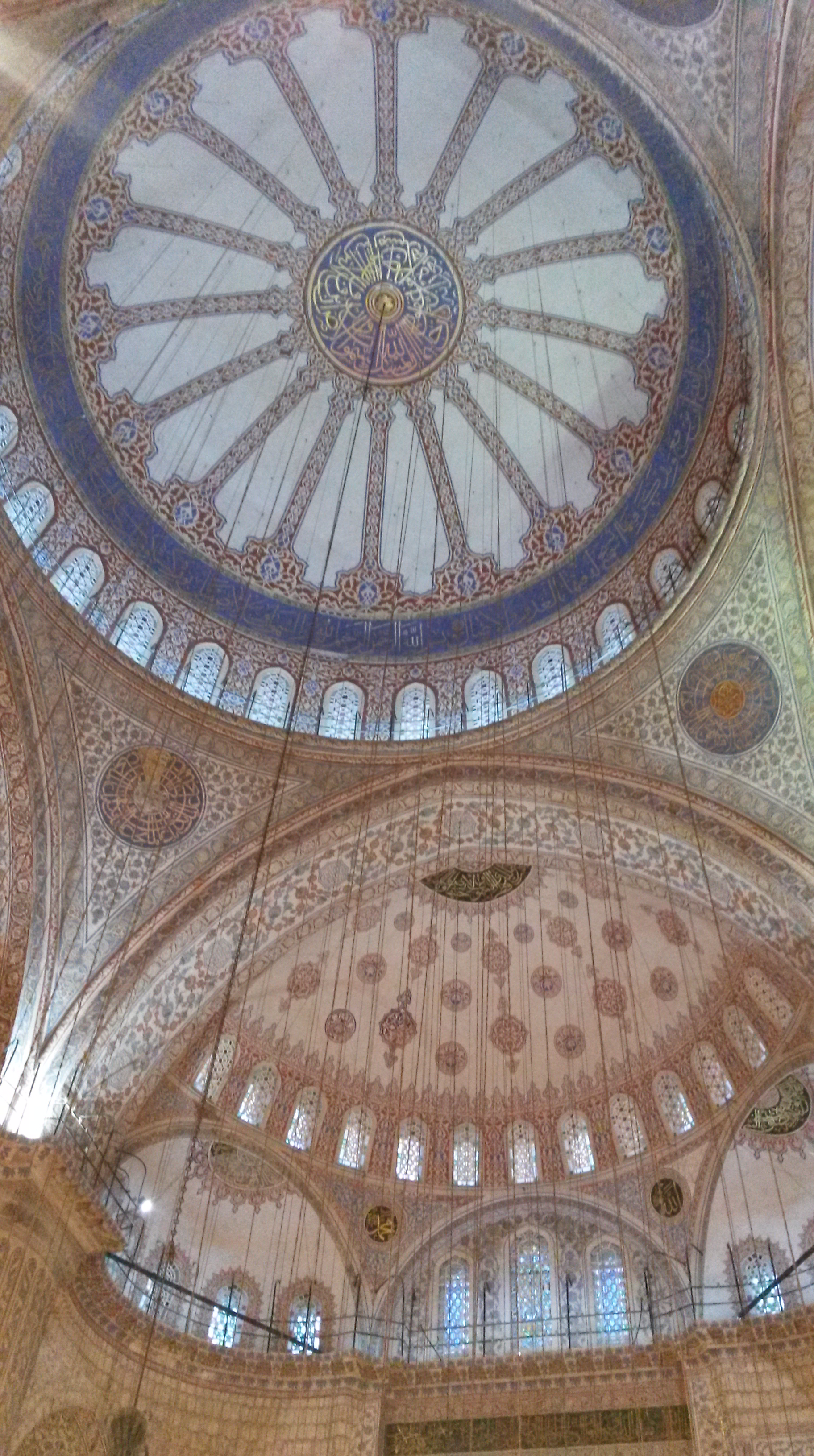
The exterior of this mosque is mesmerising and attractive. It is one of the most significant examples of Turkish Architecture and Islamic Art. The 20000 blue tiles decorating the dome ceiling along with the blue hand drawings will be the first thing that catches your attention as you enter the mosque. The mosque is officially known as the Sultan Ahmet Mosque but is commonly referred to as the Blue Mosque because of the amount of blue tiles used in the decoration of the interior.
Take along some water when visiting the Hagia Sofia

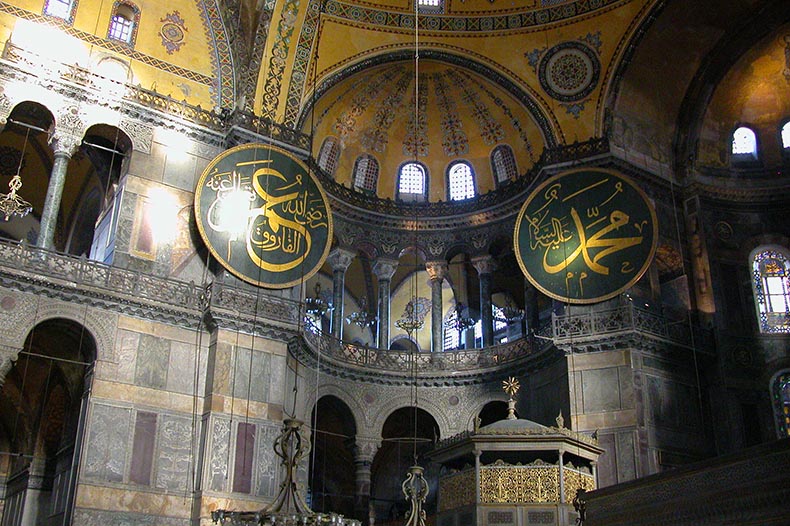
Also known as the Ayasofya in Turkish and Sancta Sofia in Latin, the Hagia Sofia was first built in AD360. The original structure and the second one built was destroyed by fire. The current structure was constructed and built in the 6th century as a Greek Orthodox Church.
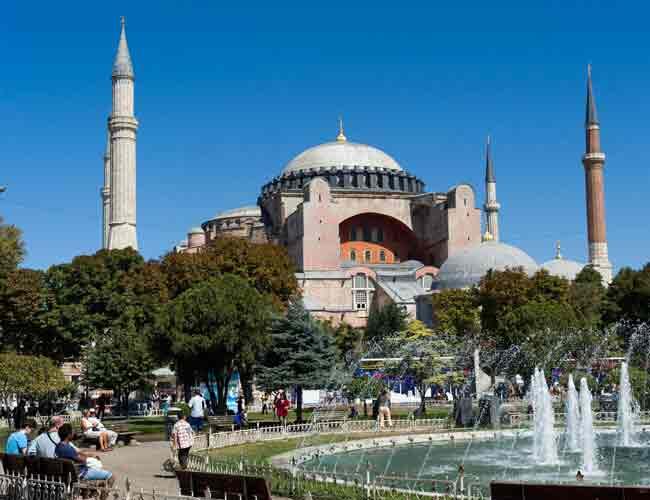
With the arrival of the Ottoman’s in the 15th century it was converted into a mosque. During this time the minarets were added and the apse was changed to face the Qibla (direction which Muslims face in prayer) in Mecca. In 1935 the building was declared a Museum and remains one to this day.
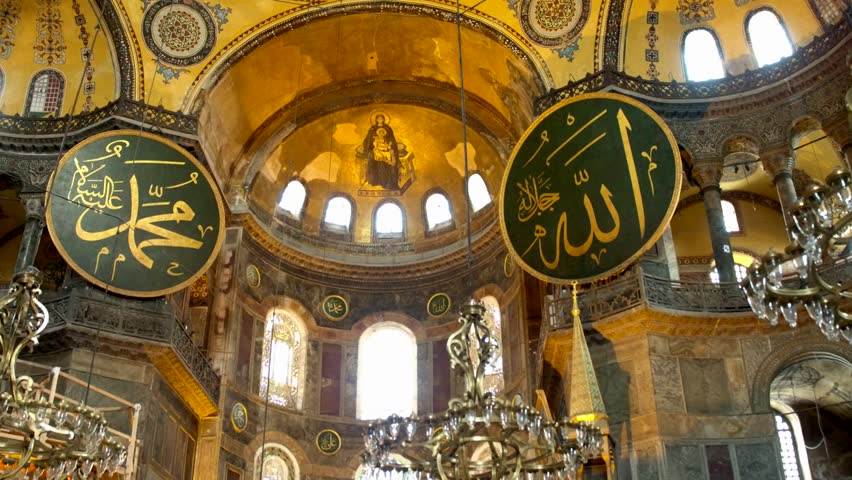
The Hagia Sofia was the world’s largest cathedral for more than one thousand years until the Seville Cathedral was completed in 1520.
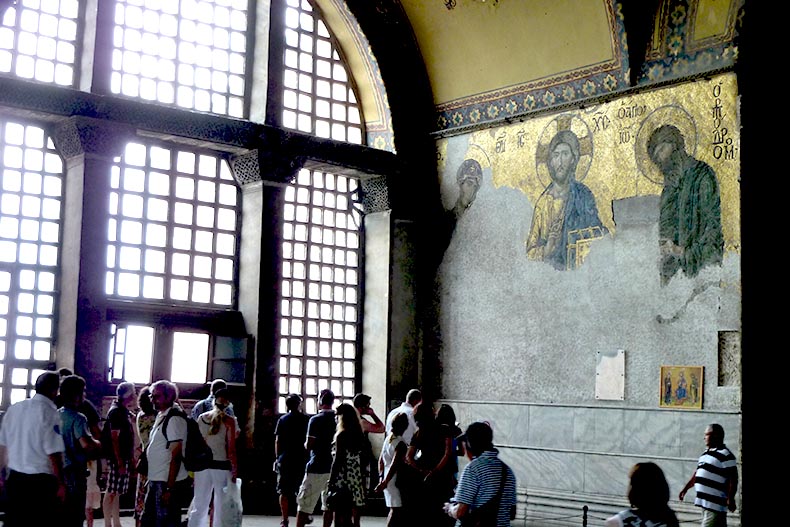
Needless to say, this museum is one of the biggest and busiest tourist attractions in Istanbul. It therefore goes without saying that you will find queues of people trying to buy tickets and enter the museum daily. So make sure you take along a bottle of water and something to shade you from the sun if you are visiting during the warmer months.
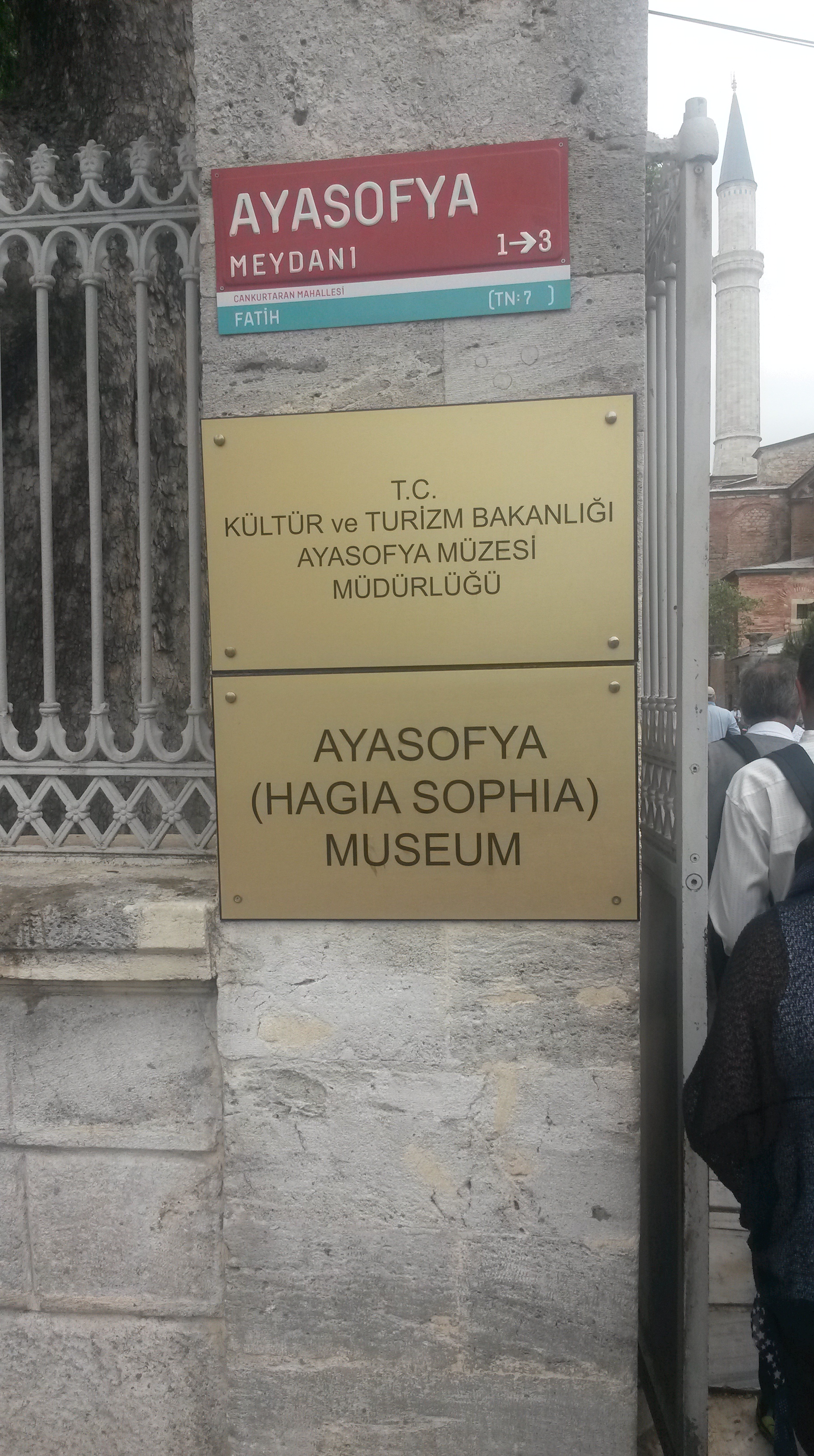
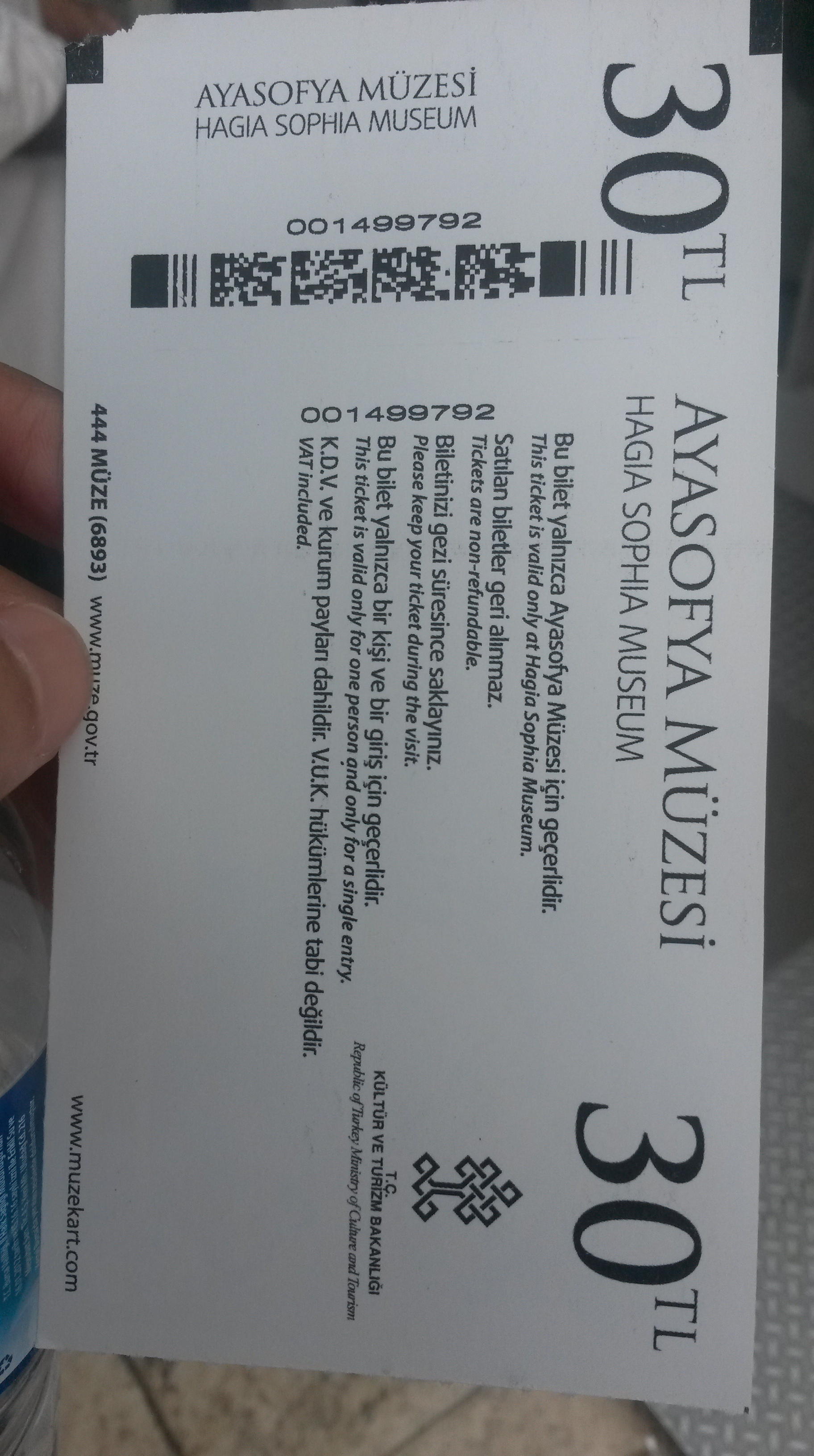
Recommendation : To avoid wasting too much time in the queues at the ticket office, you could purchase your tickets the day before just before the ticket office closes. This way you will be able to proceed directly to the entrance on arrival the next day.

Allocate enough time for visit to the Topkapi Palace Museum

If you are a keen historian or just enjoy enchanting and interesting stories that involve Sultans and Palaces, then you will want to make sure your visit to the Topkapi Palace is not rushed.
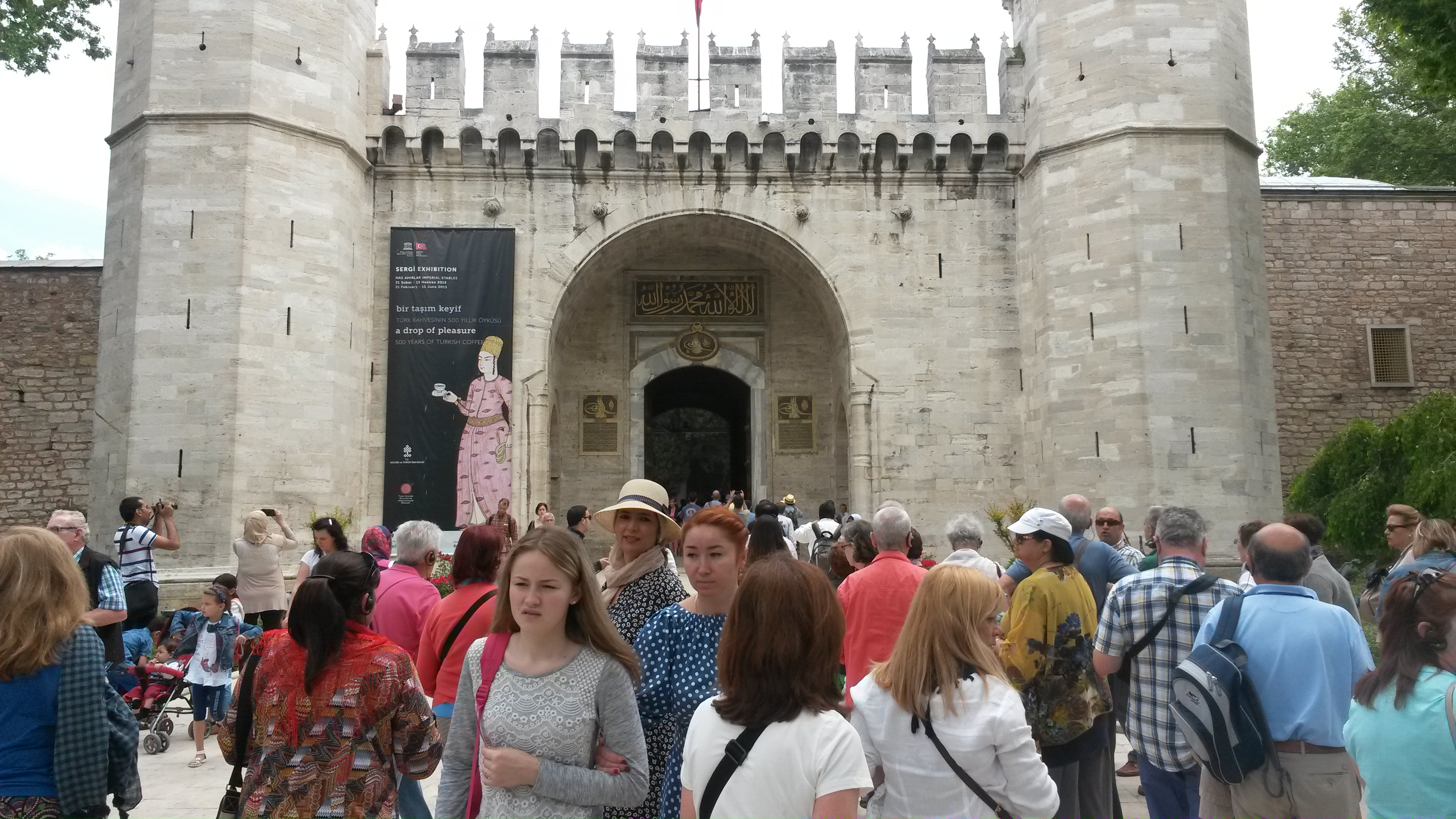
About 30 Sultans ruled from the Topkapi Palace for nearly four centuries during the Ottoman Empire’s 600 year reign. Starting with Sultan Mehmed II who took up residence at the Palace in 1478. After his death the Palace was renovated and partly reconstructed three times to accommodate different Sultan’s requests. In total the building can house between 1000 – 4000 inhabitants in the main palace and a further 300 in the Harem.
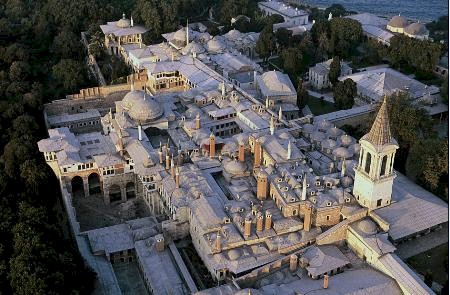
The size of this building and the interesting history which unfolded within these walls, requires time and attention. Dedicate at least half a day to get the most out of your visit to the Topkapi.
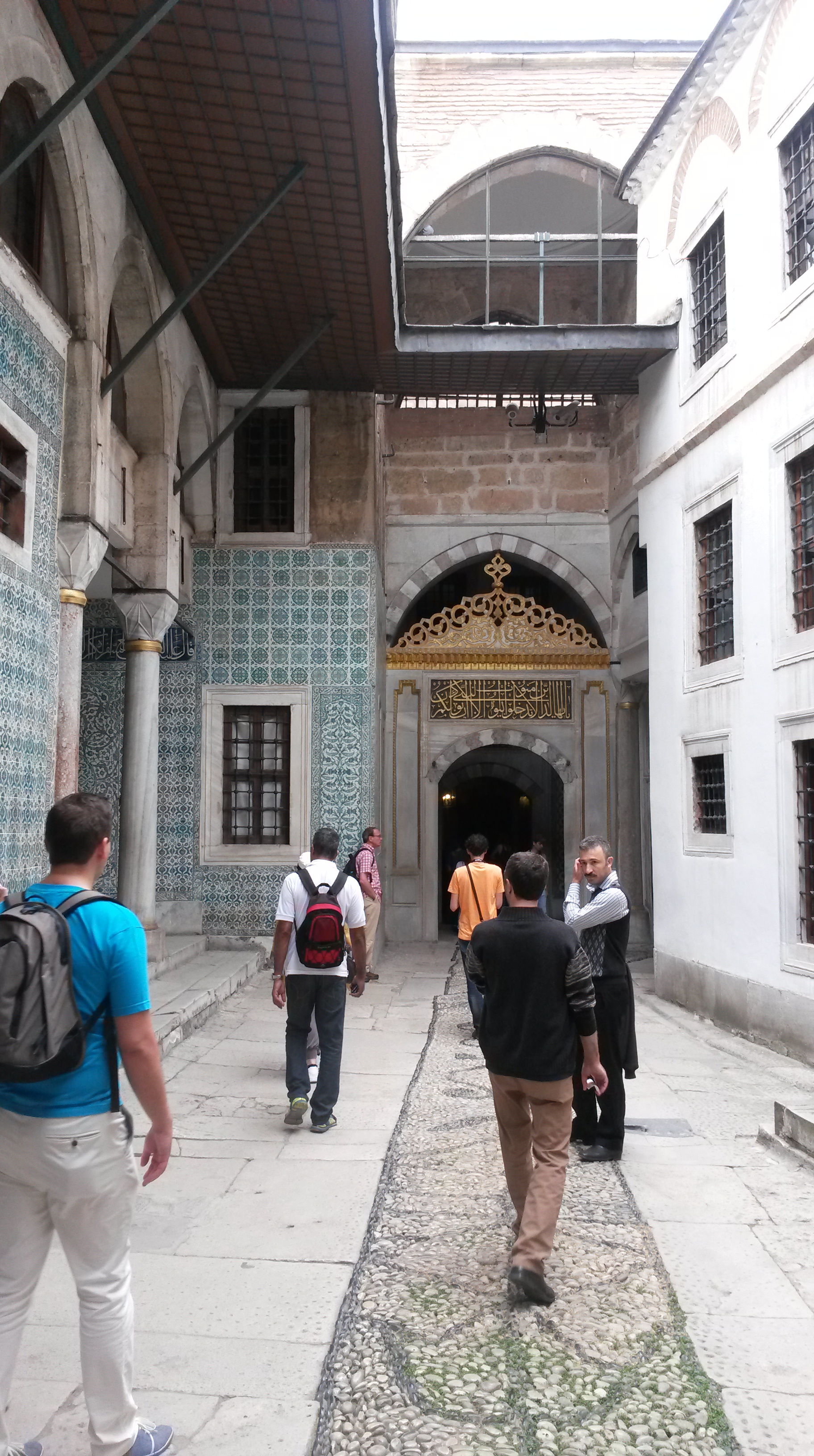
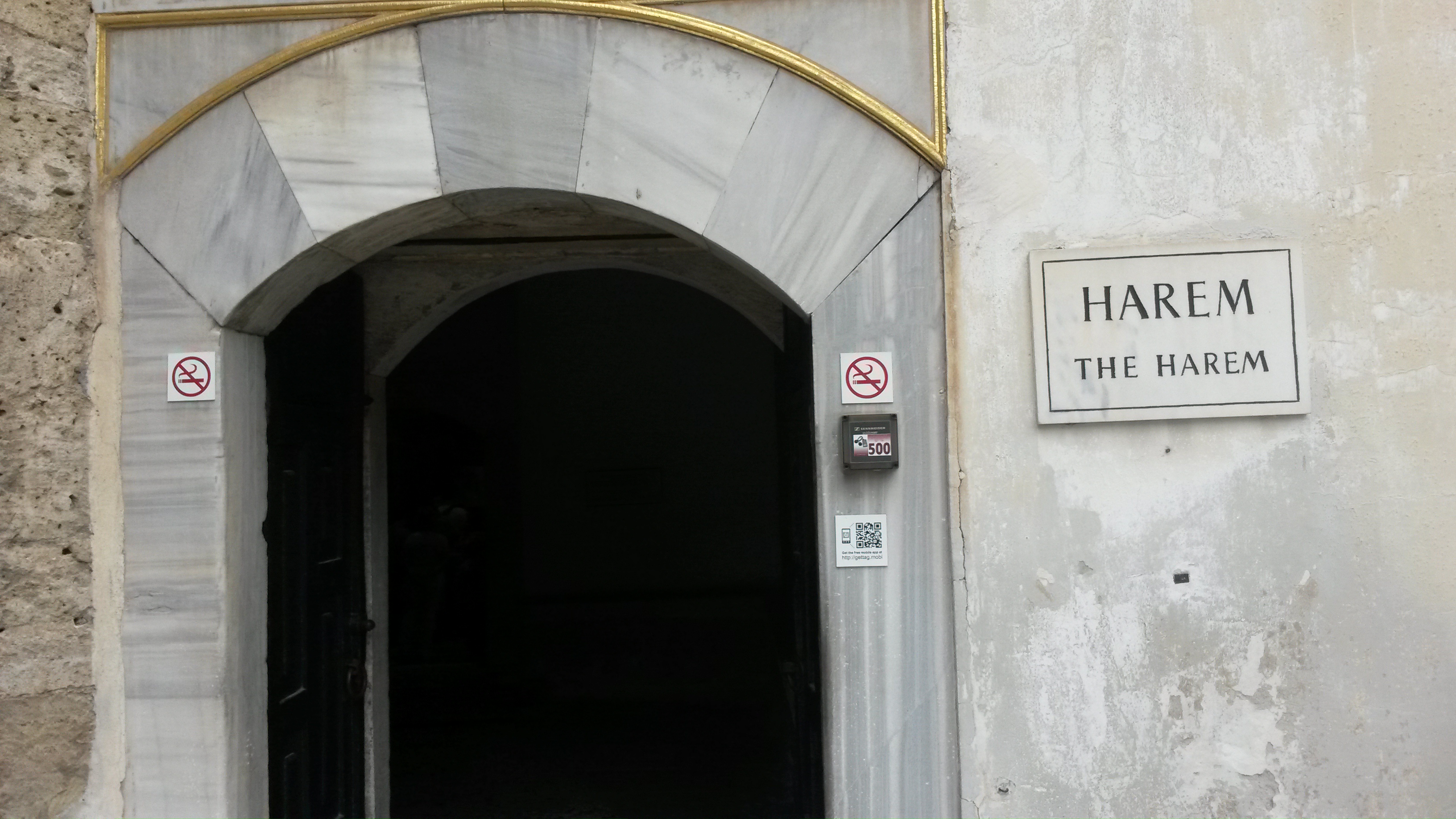
Even though it is one building, the entrance to the Main Palace and the entrance to the Harem is separate. Visitors can choose to either purchase a ticket to the Main Palace and/or a ticket to the Harem.
If you are visiting during peak season i suspect that the queues can get quite long. Don’t let this deter you though, it really is well worth the wait to see how the Sultans lived during their reign of power.

Basilica Cistern will take just 30 mins

Personally I skipped the visit to the Basilica Cistern even though it would probably only take about 30 mins to do a quick tour.

This is how Mark Twain described it in his book The Innocents Abroad:

‘’You’re 40 feet underground, and in the midst of a perfect wilderness of tall, slender, granite columns of Byzantine Architecture. Stand where you would, or change your position as often as you pleased, you were always a centre from which radiated a dozen long archways and colonnades that last themselves in distance and the somber twilight of the place.’’
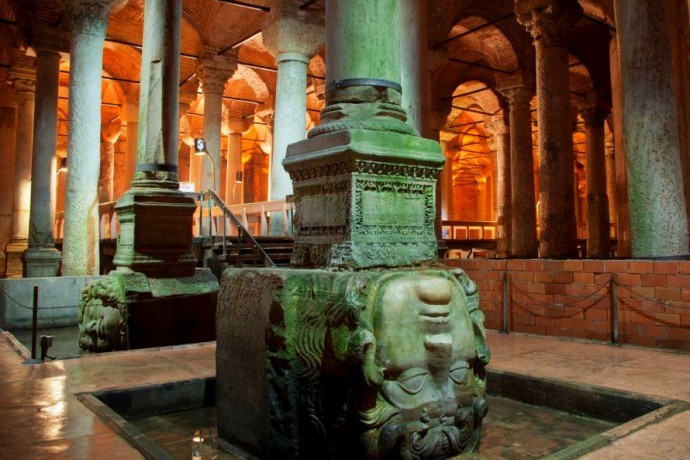
Amazingly preserved despite centuries of conflict and siege, the cistern was built in 532 AD by the Byzantine Emperor to store fresh water for the palace and nearby buildings.
Featured

Interesting things to do in Granada

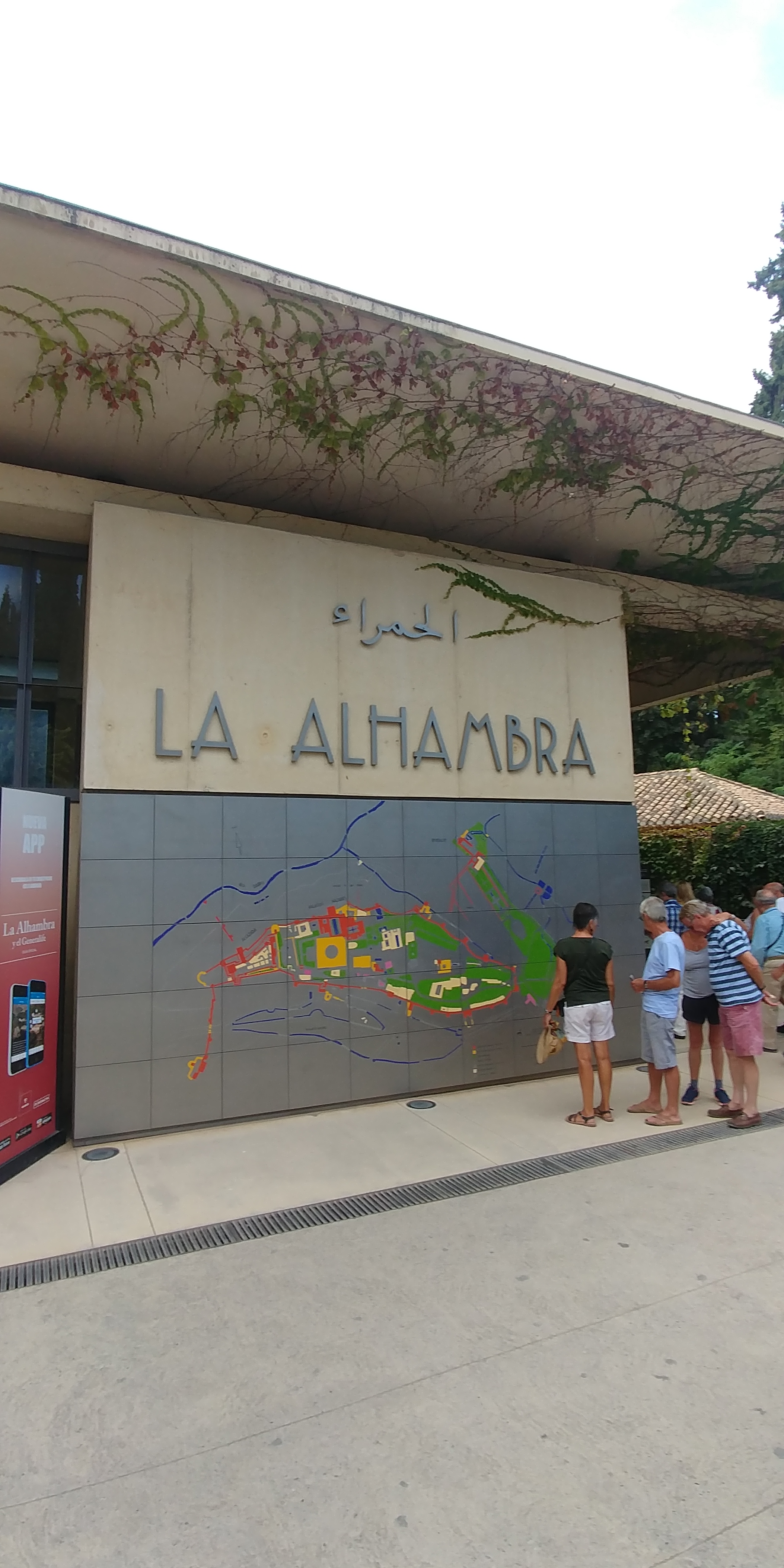
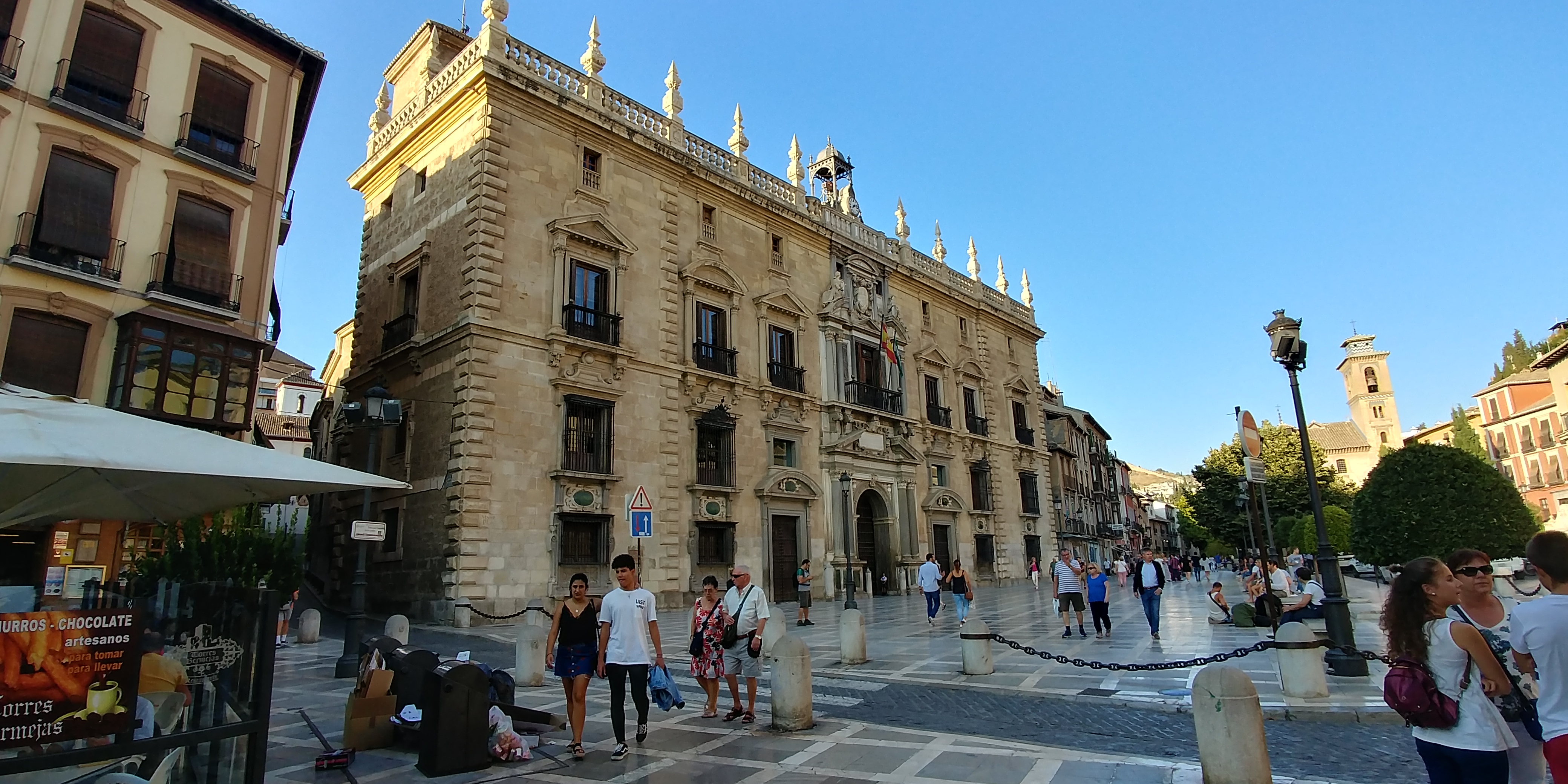
The biggest tourist attraction in Granada is without a doubt the world famous Heritage Site – The Alhambra Palace. Every year millions of tourist pass through the gates of this great palace.

Whilst the Alhambra is the most noteworthy tourist attraction in Granada, there are a few other interesting things to do and places to see in Granada.

Wander around in “mini Morrocco”

Close to the Plaza Nuevo in the center of the city you will find Alcaiceria or as some call it “mini Morrocco”. It stretches from the Plaza Nuevo

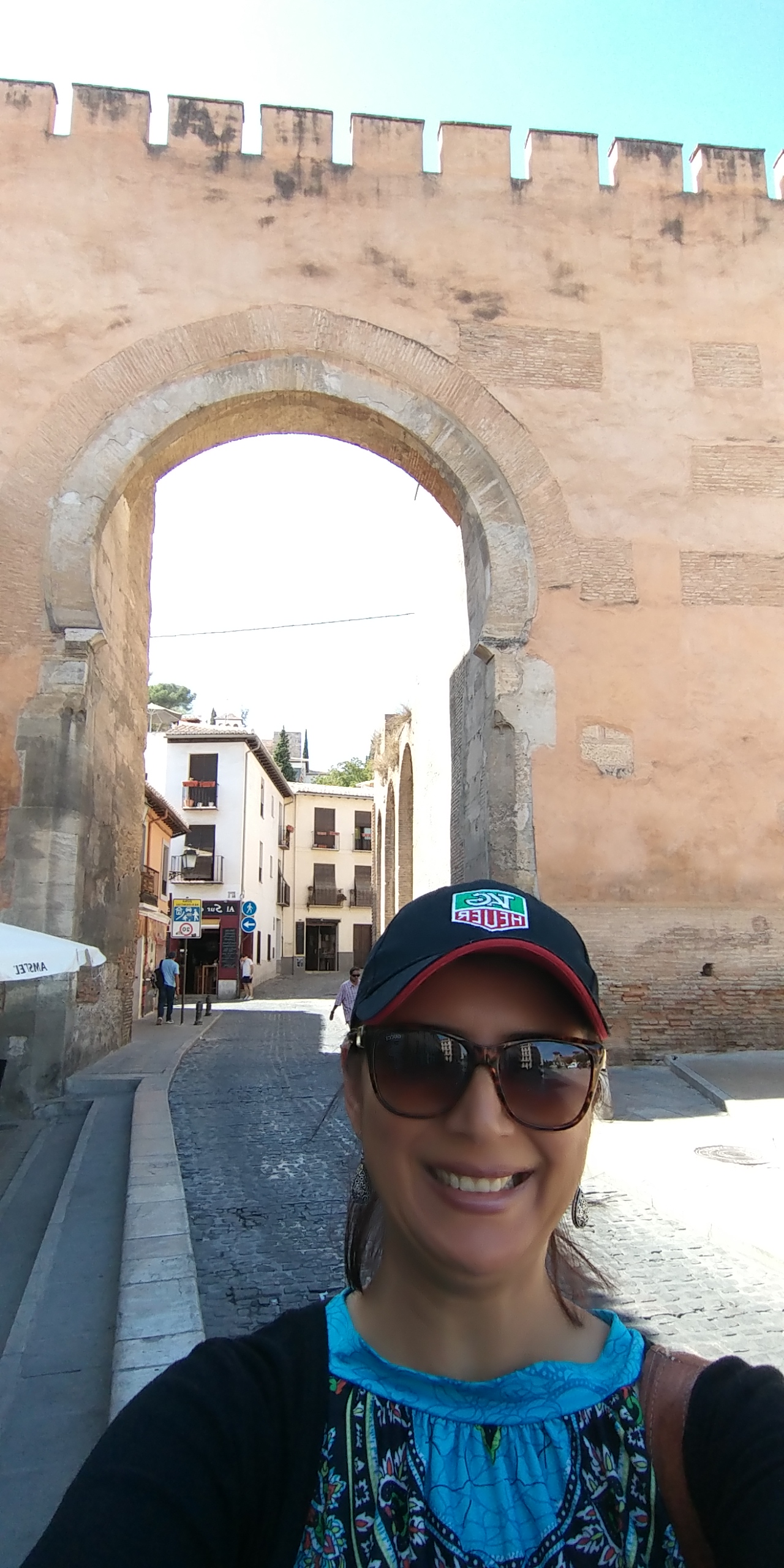
to the historic Elvira gate at the foot of the Albaicin district.

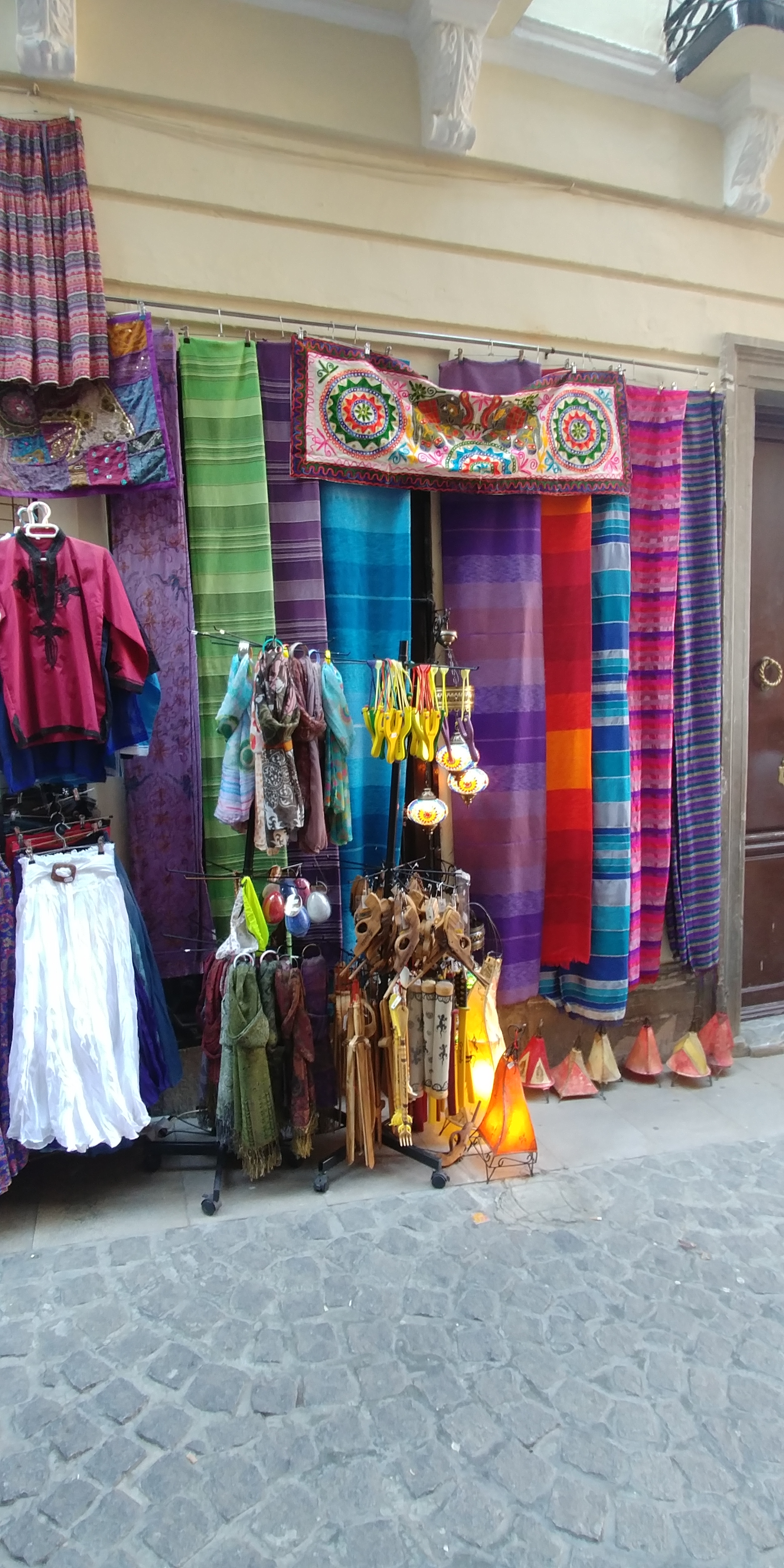
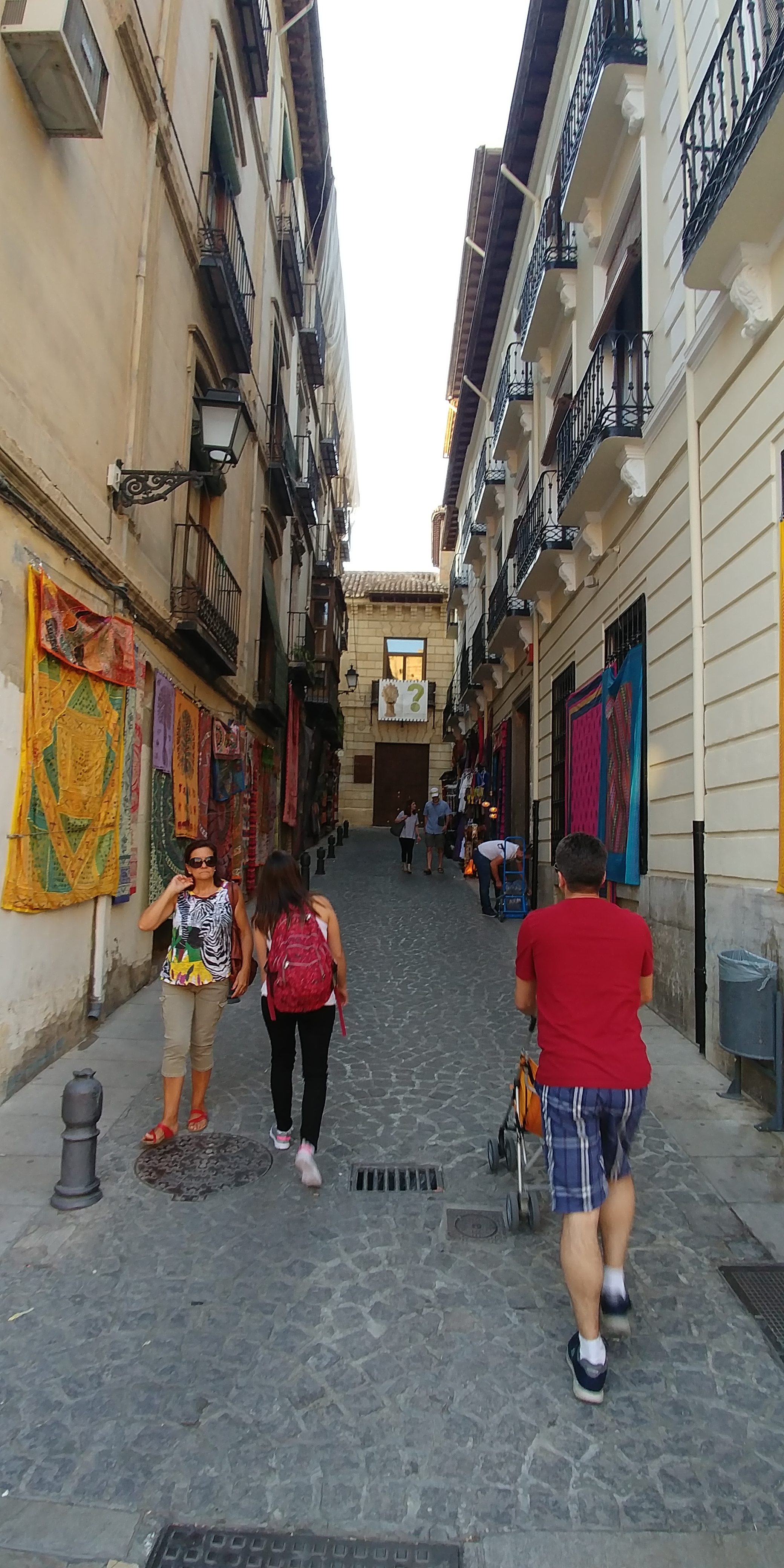
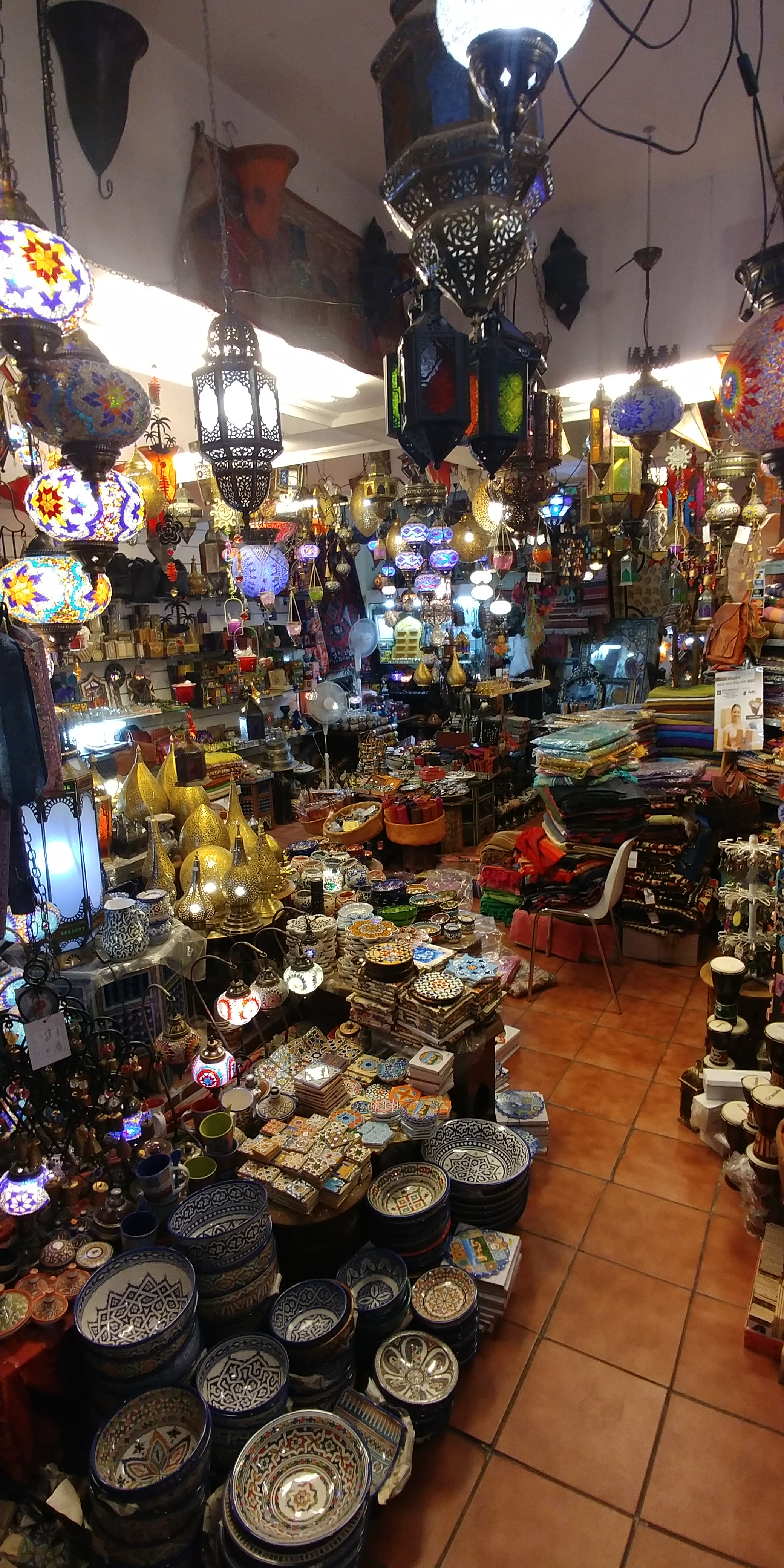
Before the Reconquesta ( when the Christians reconquered Spain) this area was home to the biggest Grand Bazaar or market in Granada. Originally the market was known for selling silk and spices. Today it has maintained its Moorish appearance but is much smaller and sells mainly souvenirs.

Wandering around these narrow streets and souk style shops you can still feel the strong Moorish/Arab ties.

Many of the shops sell similar merchandise but if you take your time and look closer you may still find some exotic items.

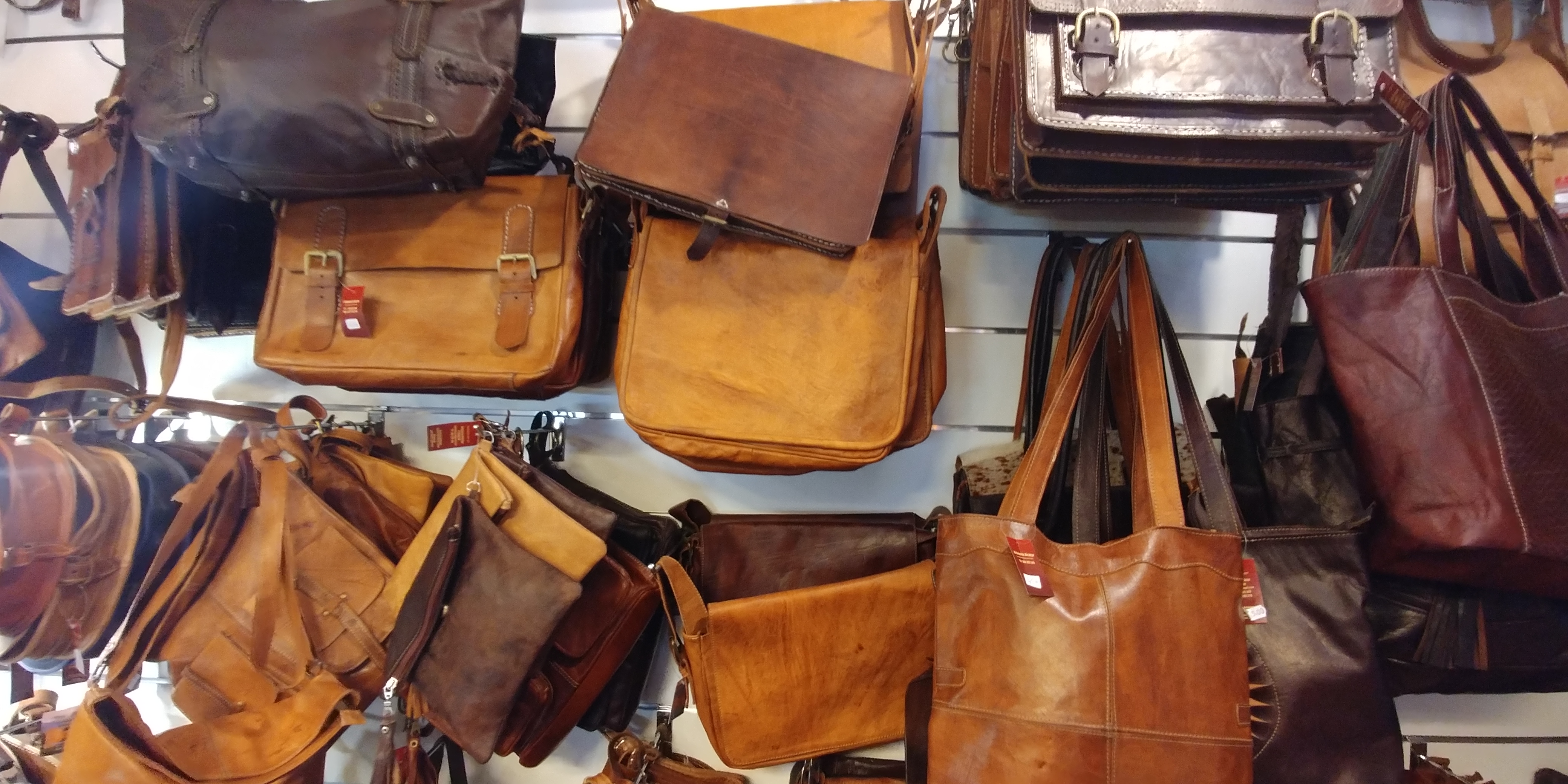
You can purchase glass lamps, leathers good, ceramics, jewellery and spices.

Breath in the fragrances of Granada

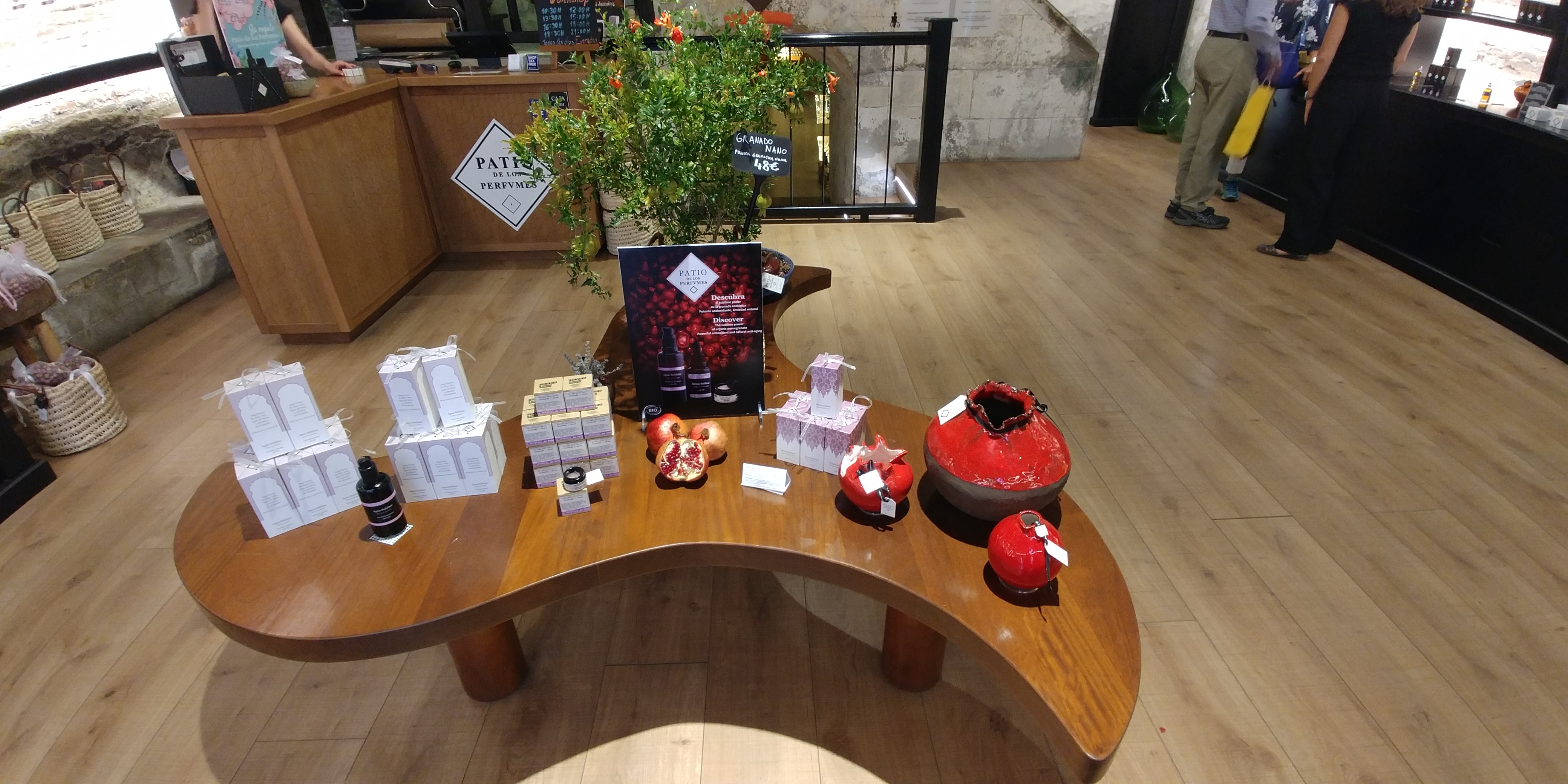
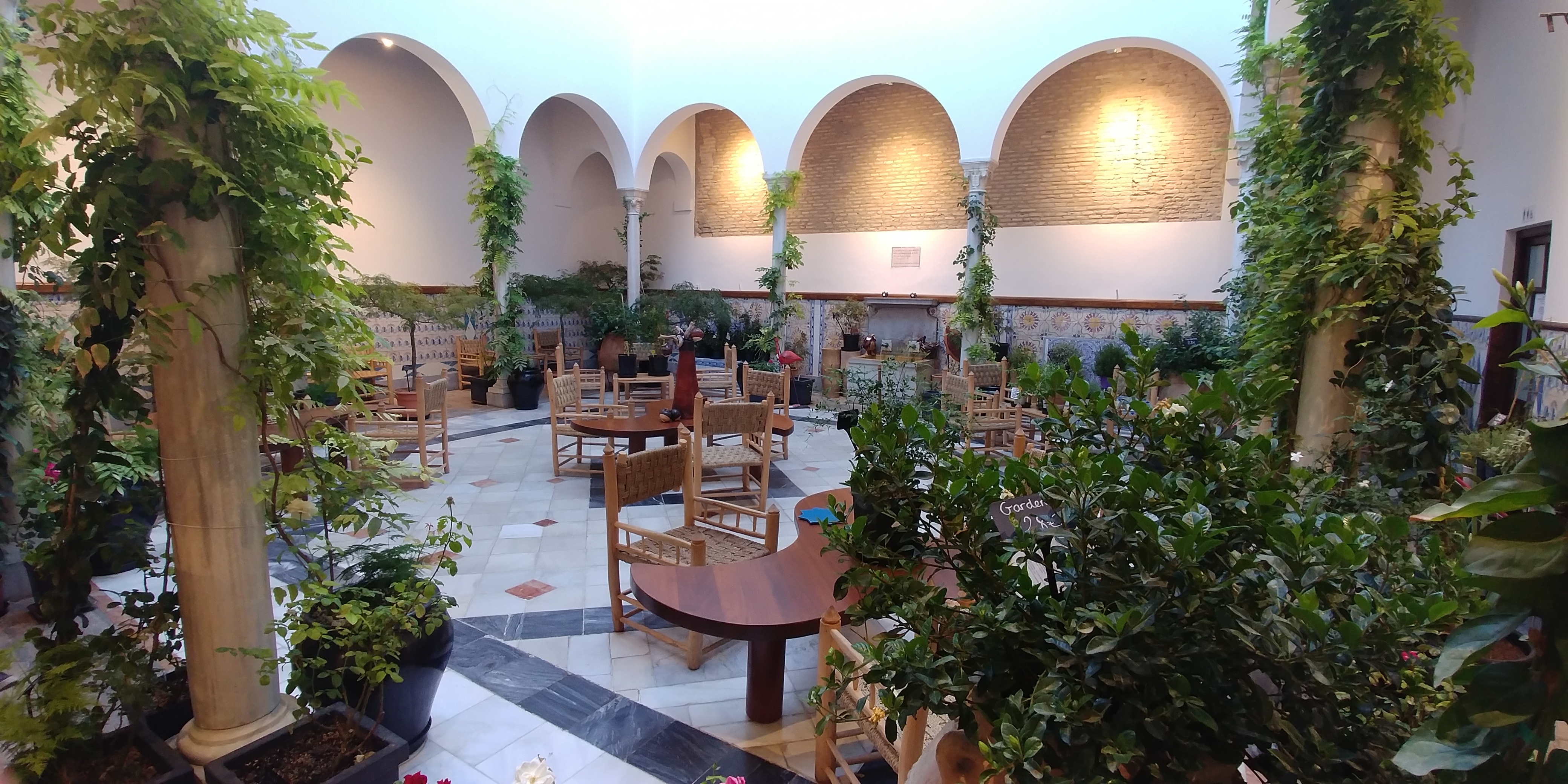
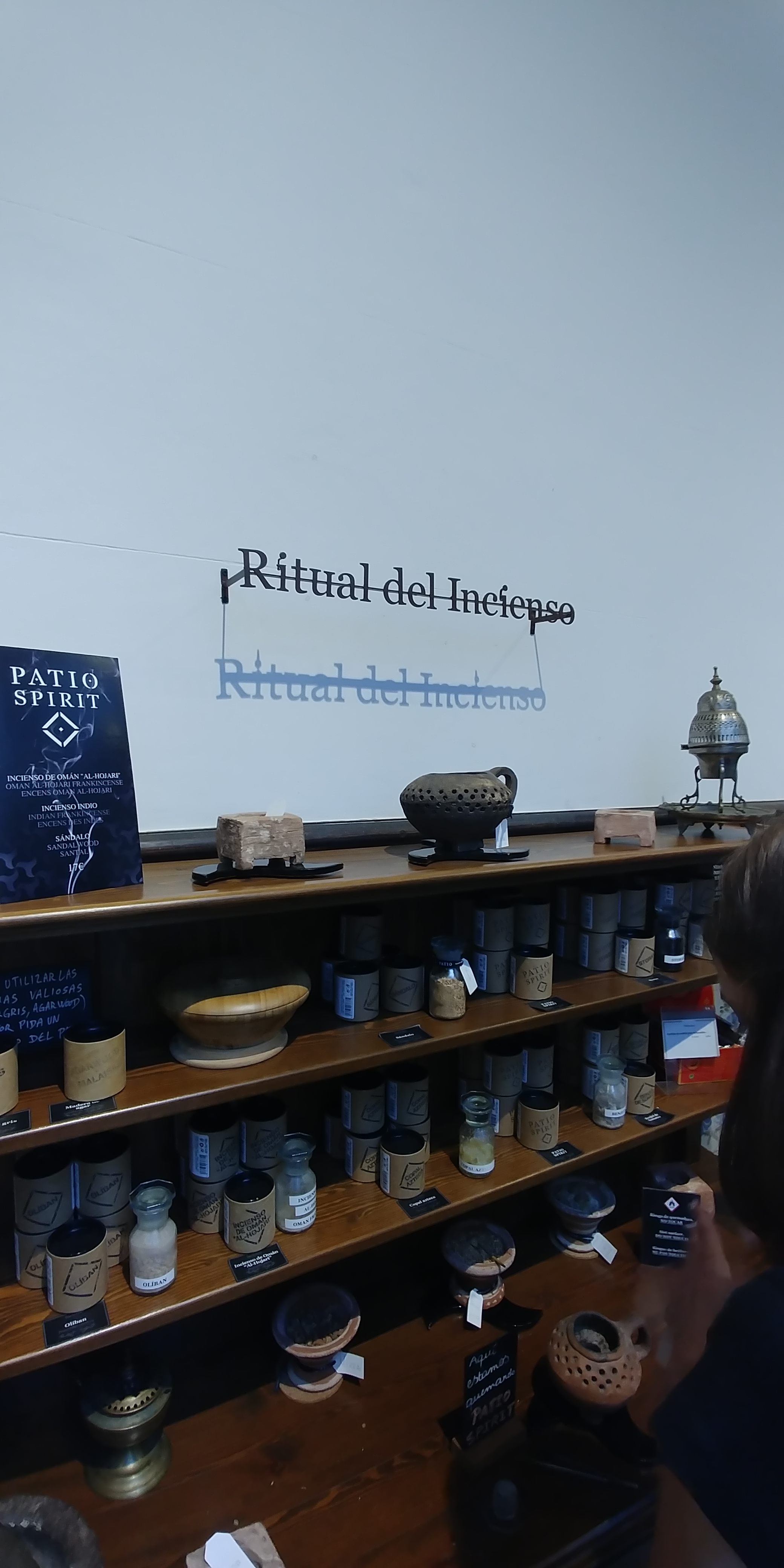
Housed in a 17th century Rennaisance Palace, on your walk to the Morrocan souks, you will find the Patio de los Perfumes http://en.patiodelosperfumes.com/home.html

This unique perfumery consists of a lovely courtyard garden, a retail store for spa items (creams, aromatherapy oils, scented reeds, etc.), perfumes, and a perfume museum. In the patio area you can enjoy a selection of teas and fruit juices while you relax and breath in the fragrances drifting in the air.

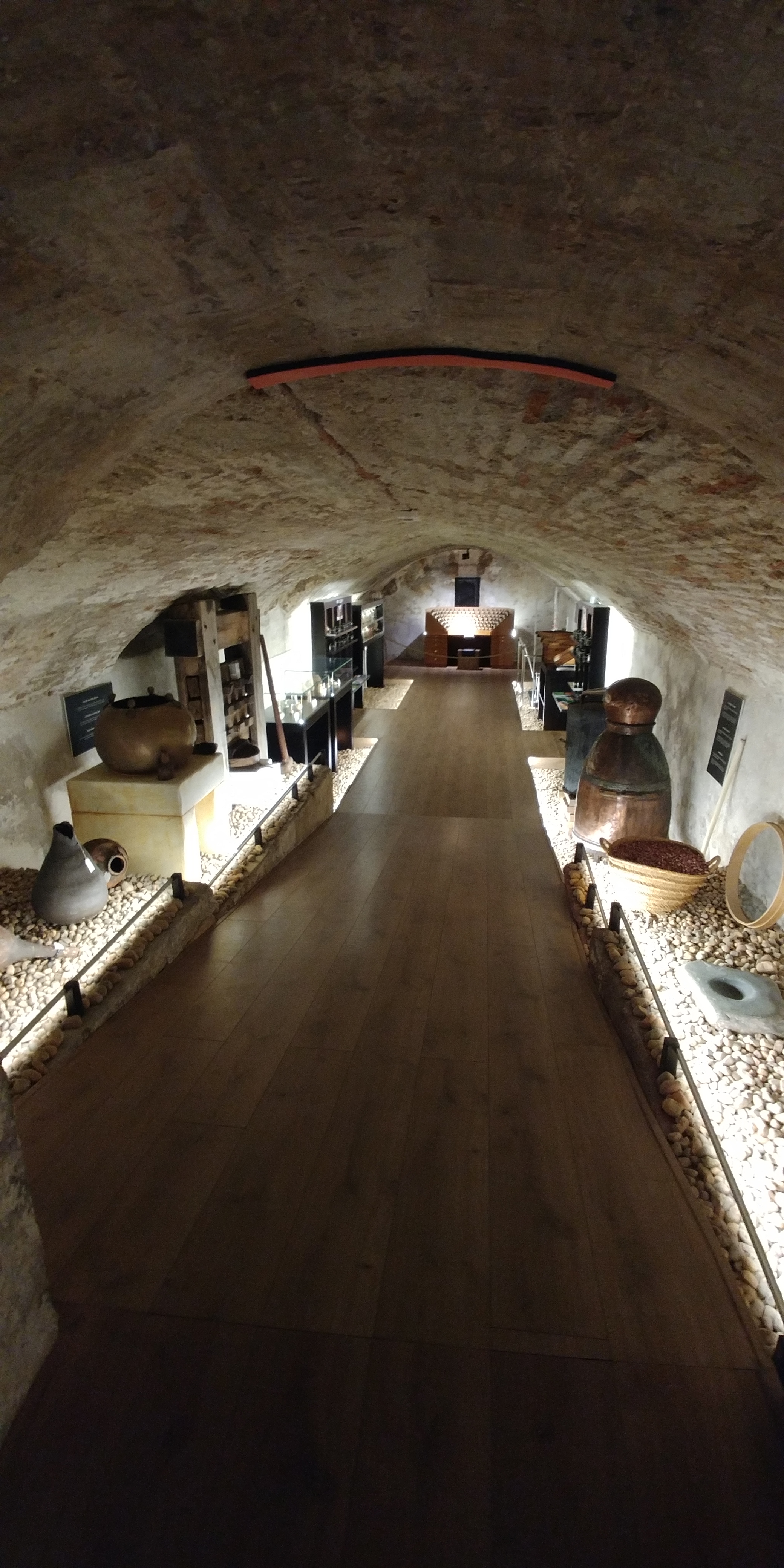
In the perfume museum, located in the basement area, you will discover the art of perfume manufacture, see some of the most ancient perfume bottles and immerse yourself in an olfactory experience of note.

Explore spice and tea heaven

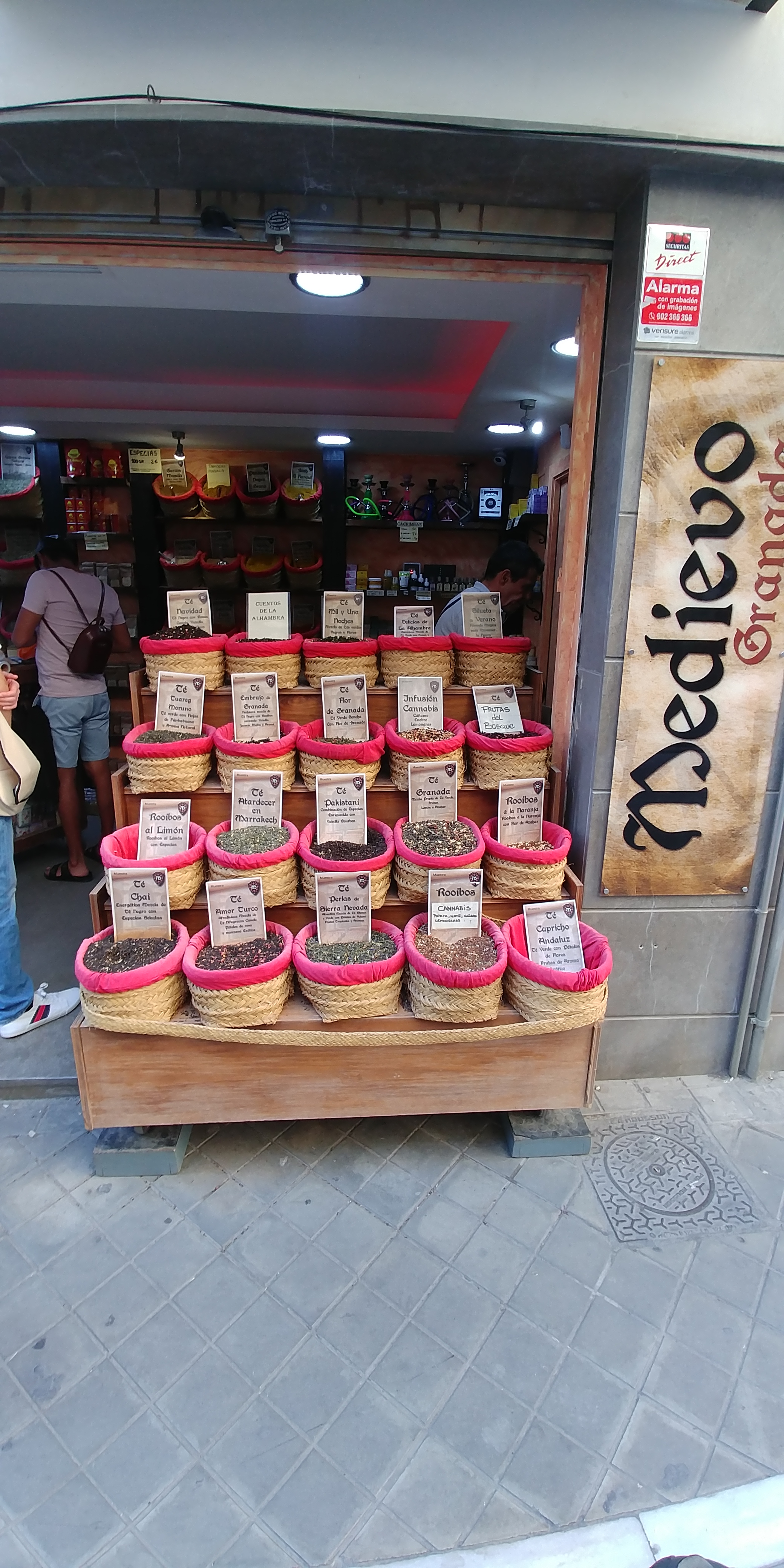
Close to the Granada Cathedral, we stumbled across Las Pasiegas square which has one of Granada’s most famous spice and tea shops called Medievo. https://medievogranada.com/

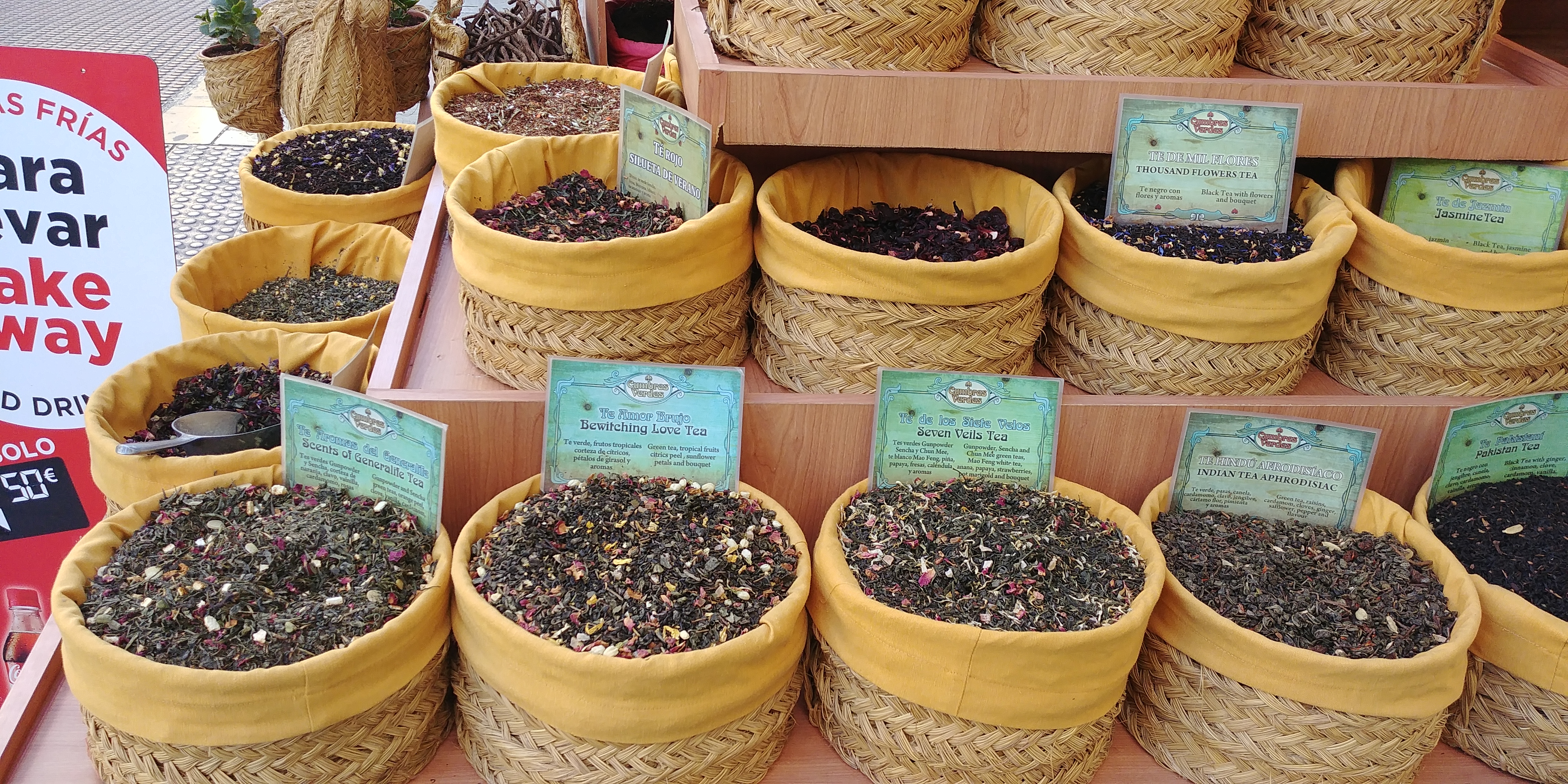
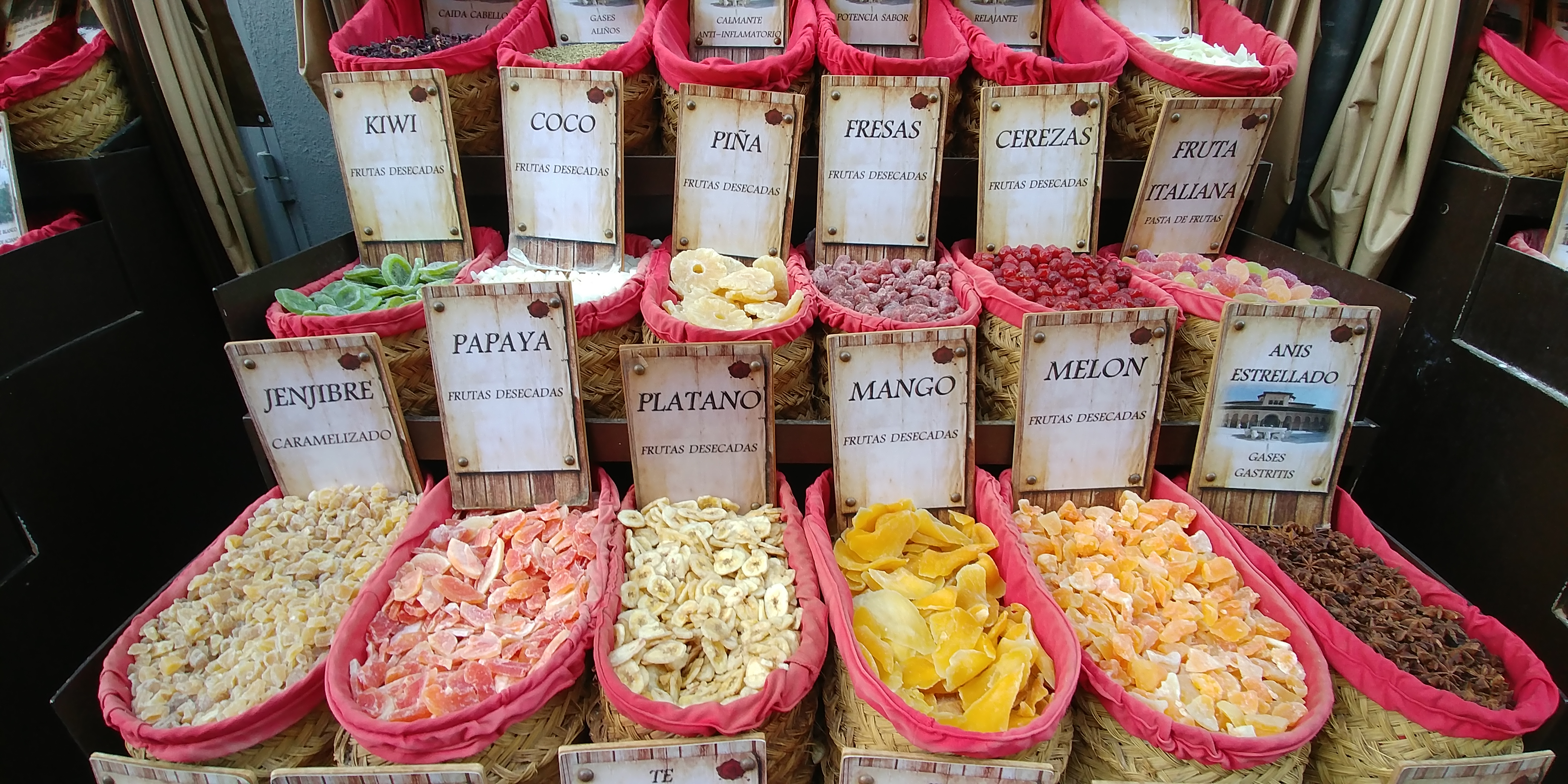
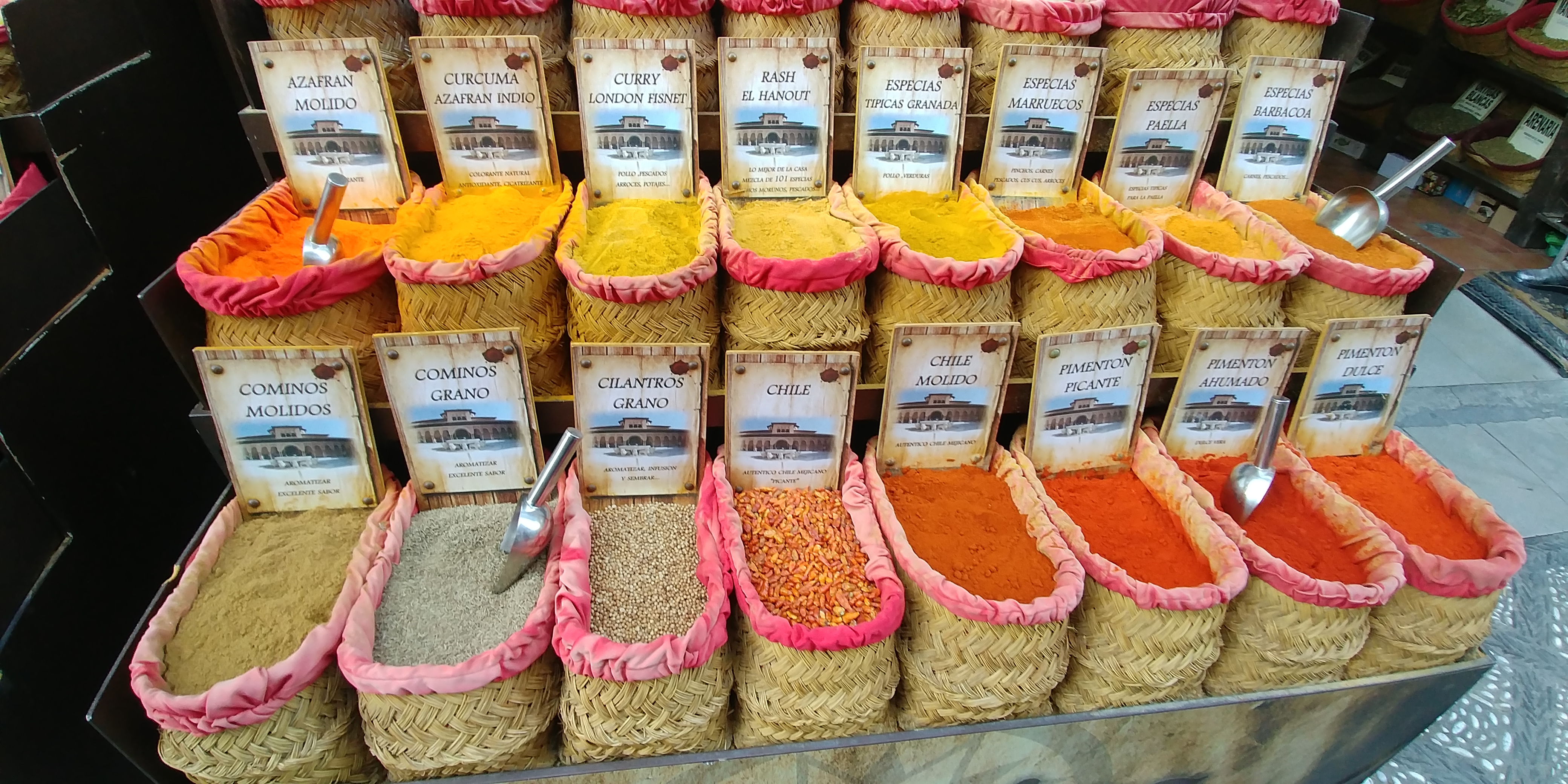
In and around this area there are various vendors selling a selection of teas, spices, dried fruits and herbs.

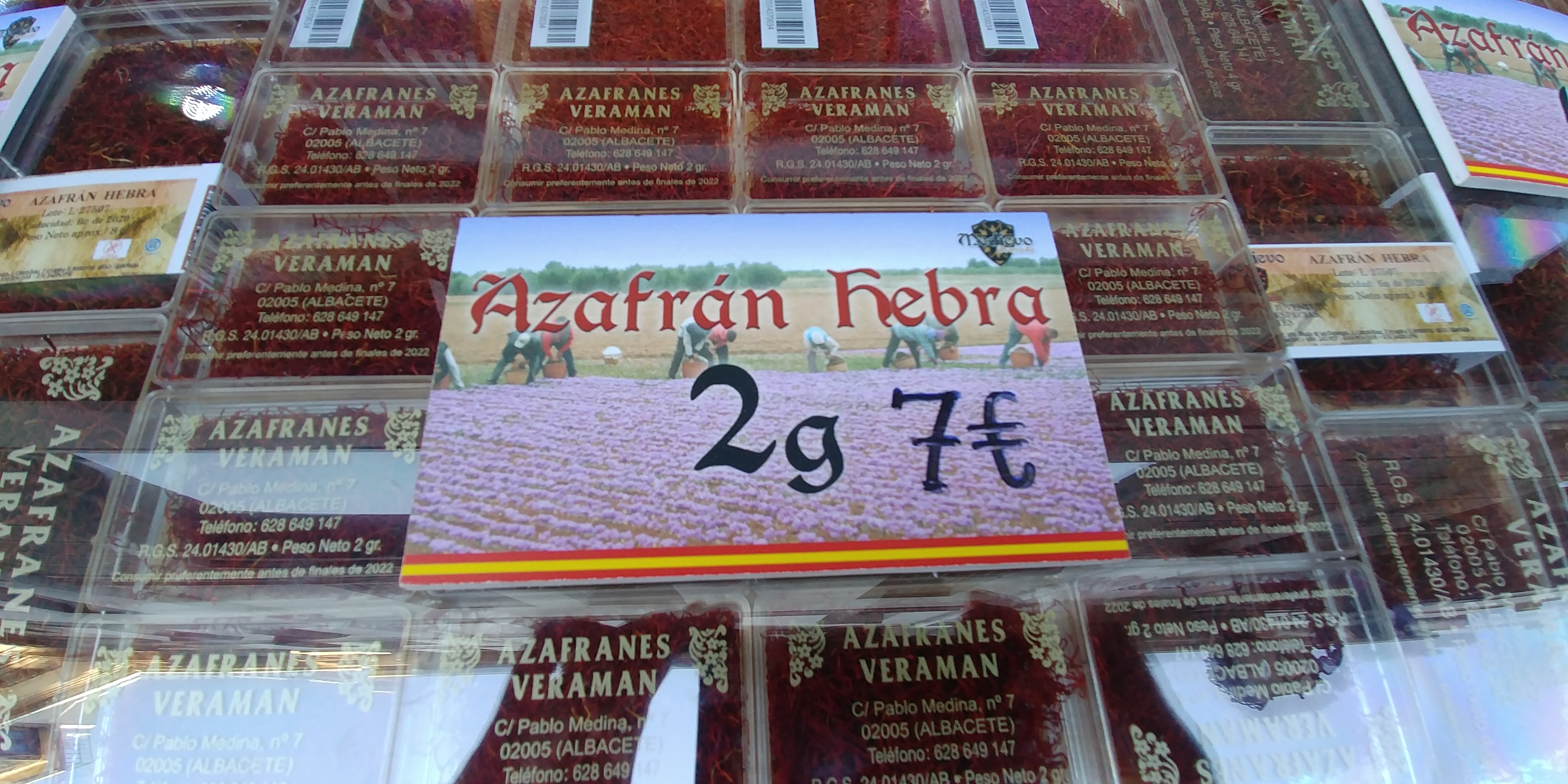
You can also find the best Spanish paprika and well packed saffron at reasonable prices.

Be mesmerised by buskers and street performers

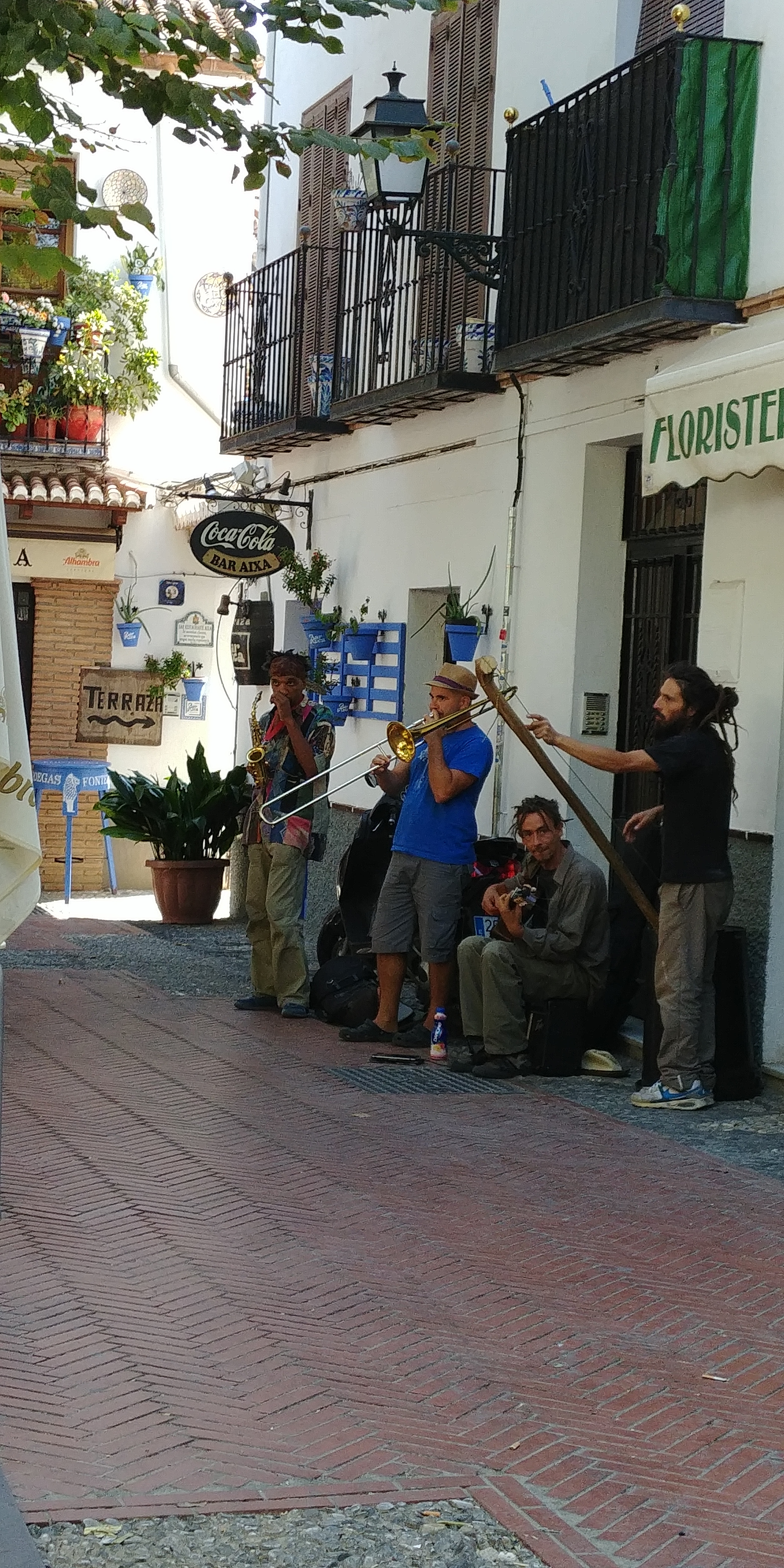
Musicians from all over the world are drawn to Granada because of its bubbling music scene. The many plaza’s around Granada are filled with buskers and street performers.

From Flamenco dancers to acoustic guitarist and even full-on brass bands, you will be fascinated and enchanted at every corner.

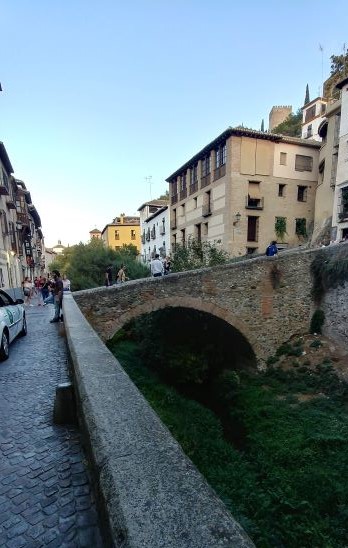
The most popular site for buskers to perform is the Carrero del Darro, a long cobbled street that runs parallel to the river below the Plaza Nuevo and the foot of the Alhambra palace.

It’s a romantic street with medieval style bridges crossing the river. On these bridges you will find street performers and buskers doing what they do best.

These are just a few of the interesting things to do on your visit to Granada.

Read more about my experience in the Old Arab Quarters (Albaicin) here https://withnarriman.travel.blog/2019/05/17/the-old-arab-quarters-grand-mosque-of-granada/

Featured

Granada – where eating halaal is easy

Travelling can be exciting and adventurous but it can also be challenging at times. Especially when it comes to eating.

If you have special dietary requirements like vegan, vegetarian, kosher or halaal, you have to do some research before-hand to ensure that you familiarise yourself with at least 2 to 3 restaurants in the city you will be visiting.

As a Muslim, my first choice is always to eat strictly halaal food. Coming from a country where we have a reliable and trustworthy Halaal Trust, we are spoilt for choice to eat at restaurants that cater for our needs.

When travelling, I’m not always sure where I will find a good restaurant serving halaal food. Breakfast is normally easy, because one can get away with cereal, breads and preservatives with a good helping of fruit and yoghurt. Lunch time though, one tends to want to eat something a bit more substantial and filling.

On our trip to Spain, finding a halaal restaurant in Madrid city centre wasn’t easy, so we opted to eat fish or seafood meals for lunch. Closer to the outskirts of Madrid we found a Pakistani restaurant serving authentic curries and naan roti’s. It was a perfect eat out restaurant for the one night we stayed over in the capital.

In the South of Spain, where the Muslim influence is more prevalent, we were fortunate to find some good halaal restaurants.

Both Cordoba and Granada have enough options to choose from. In this blog I’ll tell you about the two restaurants we visited in Granada.

Swarma King (Falafel & Kebaap)

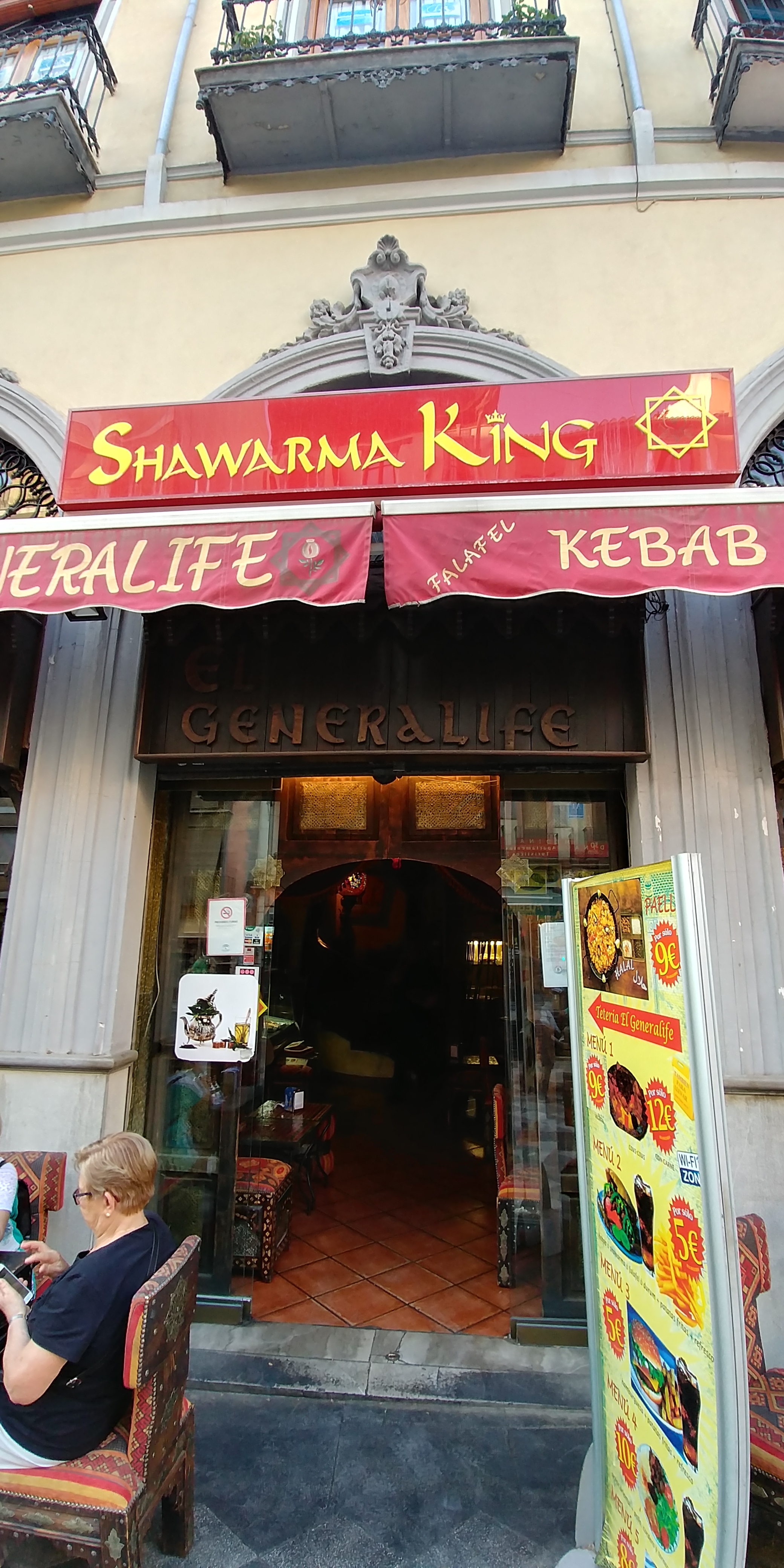
The restaurant is Turkish and is fully halaal. Their signature dish is obviously falafels but they basically make any and all take-away and sit down type meals. It is located close to the Plaza Nuevo (New Plaza which is actually the oldest square in Granada ) so you will not miss it if you are walking in or around this area.

We opted for the chicken and chips meal which was quite a substantial portion. Had we known that the portions would be as big, we probably would have opted for one portion to share instead of the two.

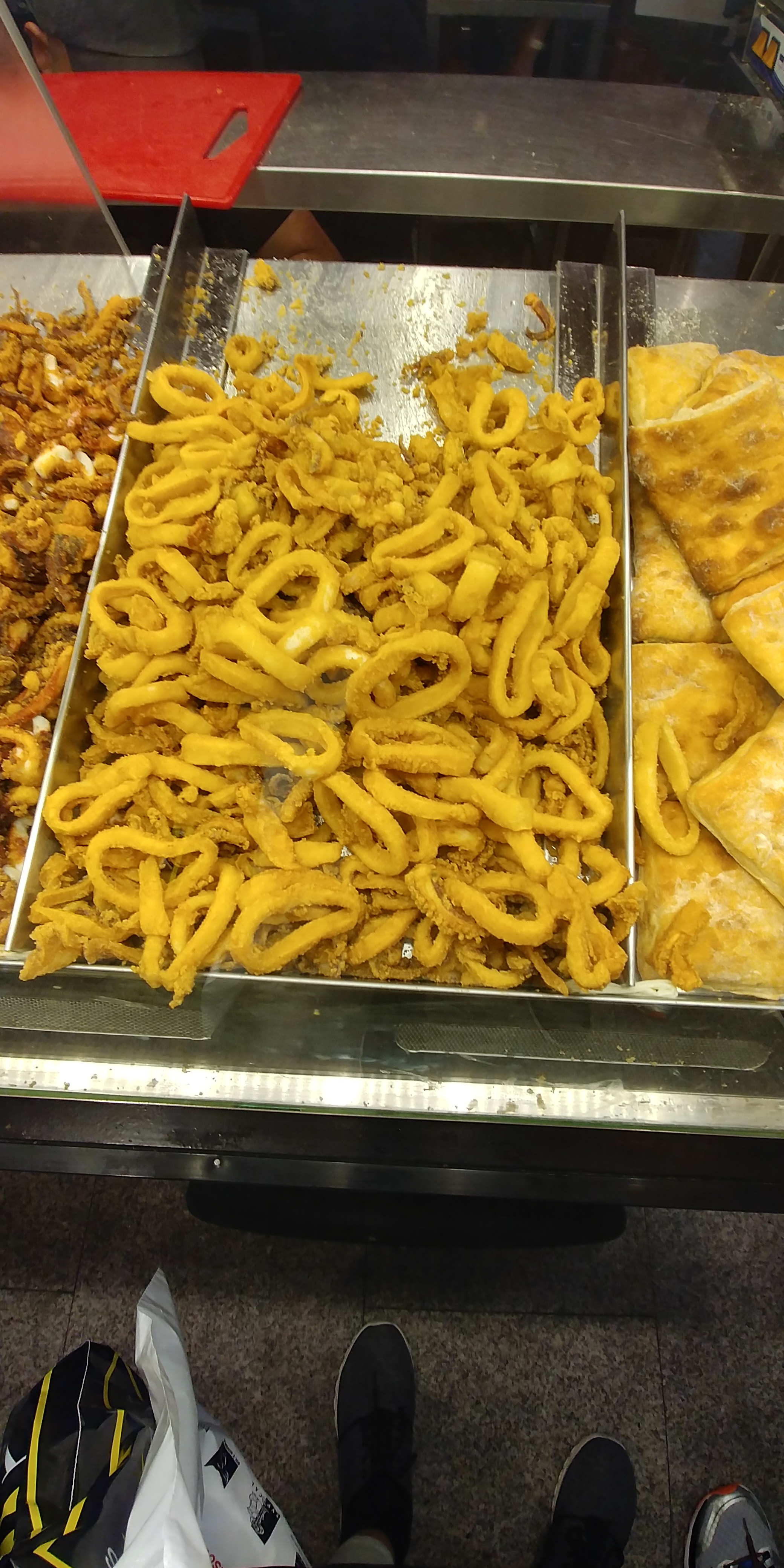
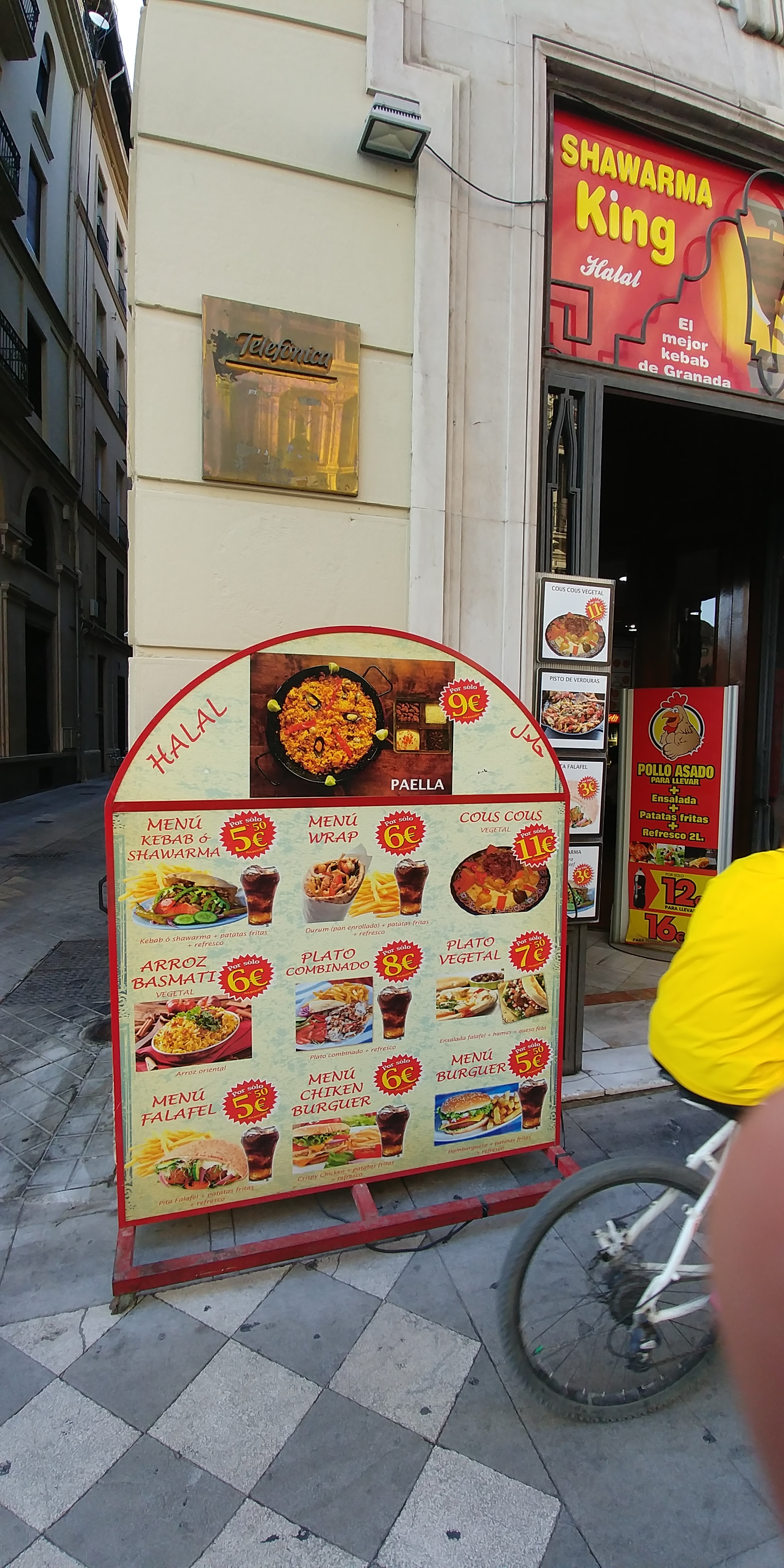
If spicy and tasty Mediterranean Cajun style chicken is your favorite then this restaurant will not disappoint. The cost is reasonable for the portion sizes. I think we paid 5.50 euros per meal which included a soda. For the same price you could also get a Pita filled with falafel, chips and salad and a coke.

They also sell burgers and chips, paella dishes, vegetable food with basmati rice and a variety of other dishes ranging from about 3 Euros to 10 euros.

Shawarma King is a good place to have lunch. It has a casual café style setting. If you are looking for a bit more fancy, then I suggest you cross the road to it’s sister restaurant called ElTaj Halal Shawarma King

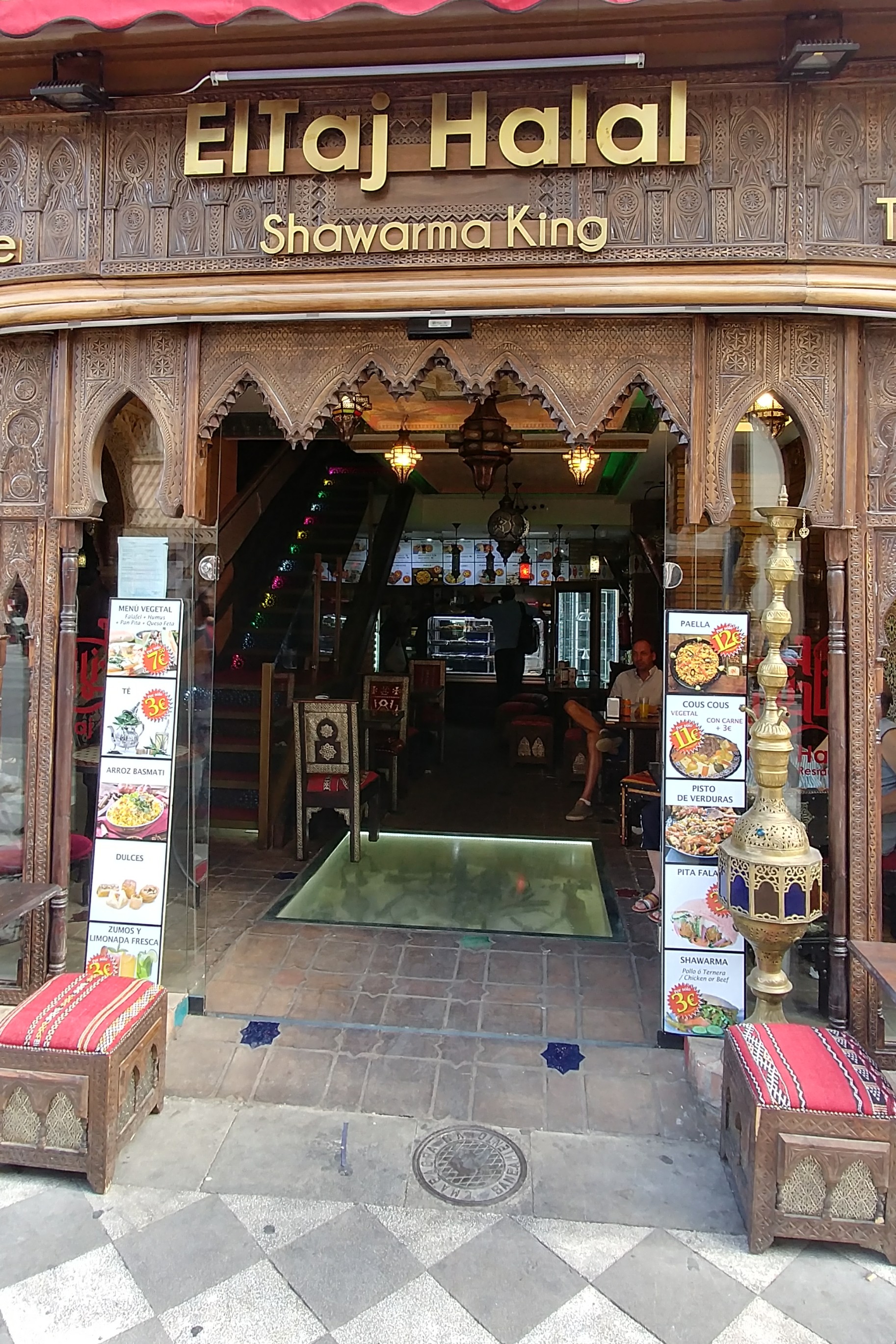
ElTaj Halal Shawarma King

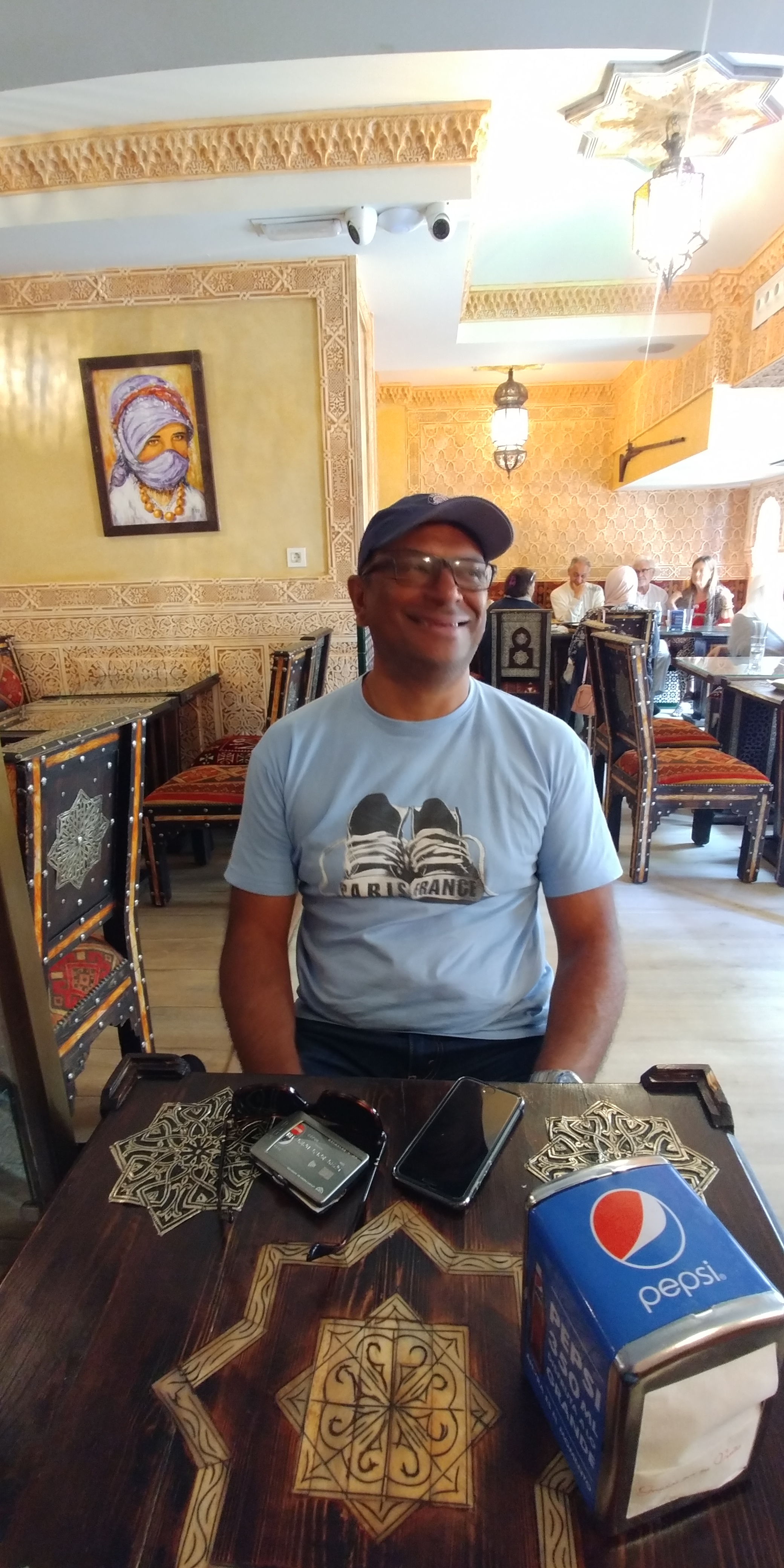
As you enter this restaurant you are mesmerised by the beautiful wooden carved Morroccan style entrance complete with colourfully covered ottomans on either side. The decor is warm and cosy and the atmosphere is welcoming and friendly.

The owners, who are Syrian, have opted to create a Arabian experience in the middle of this busy street . You are transported to a time and place across the oceans in Africa. A trip from Granada to Morrocco will take you less than half a day by ferry and train.

Granada has retained much of it’s Moorish style in architecture, decor and eating establishments.

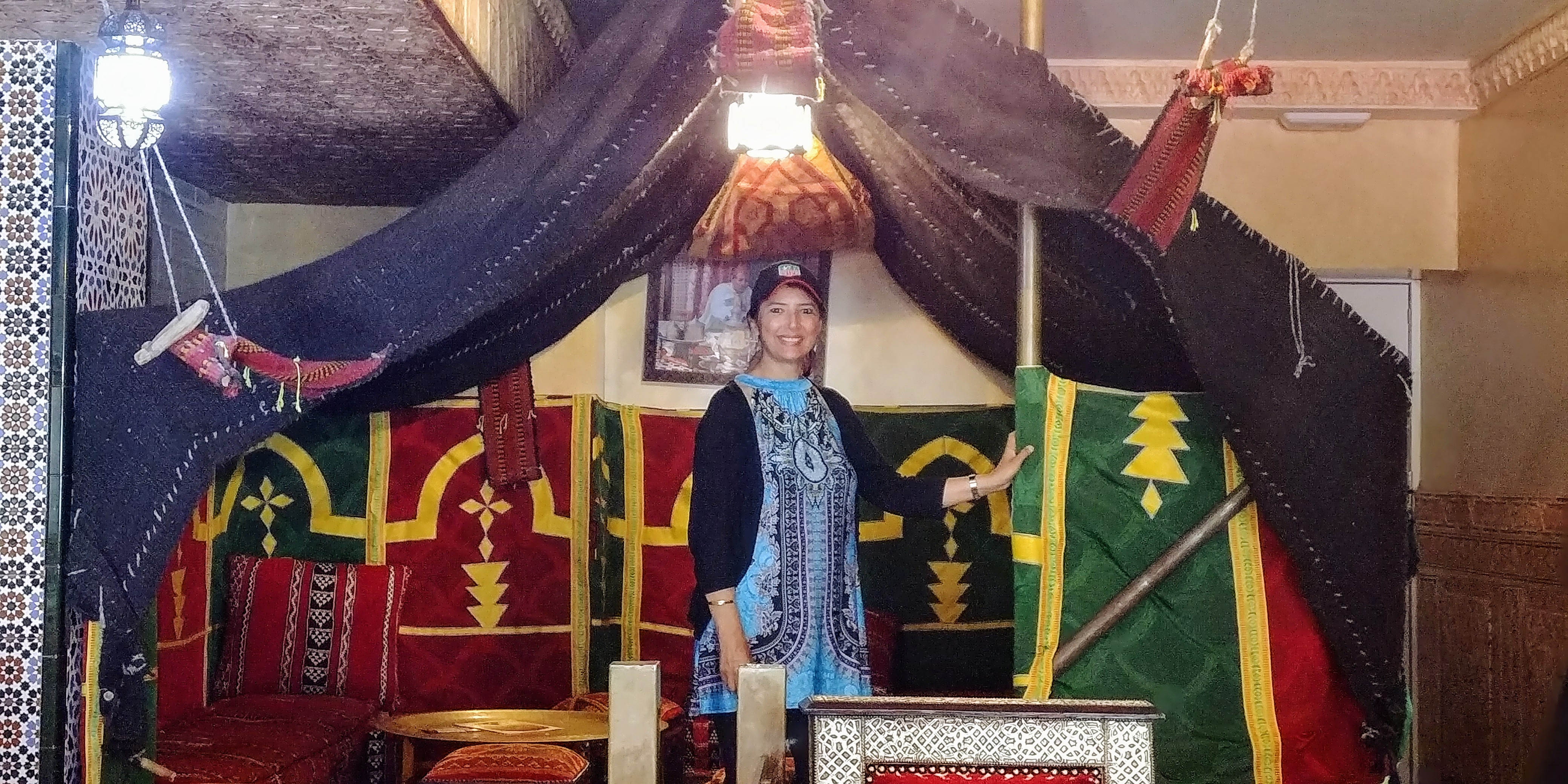
The ElTaj Shawarma King has two levels. downstairs are fitted with plenty of wooden chairs and tables. As you make your way upstairs you will find on one side the restaurant a makeshift Bedouin Morrocan style tent area where you can enjoy some desserts and hookah, if that’s your fancy.

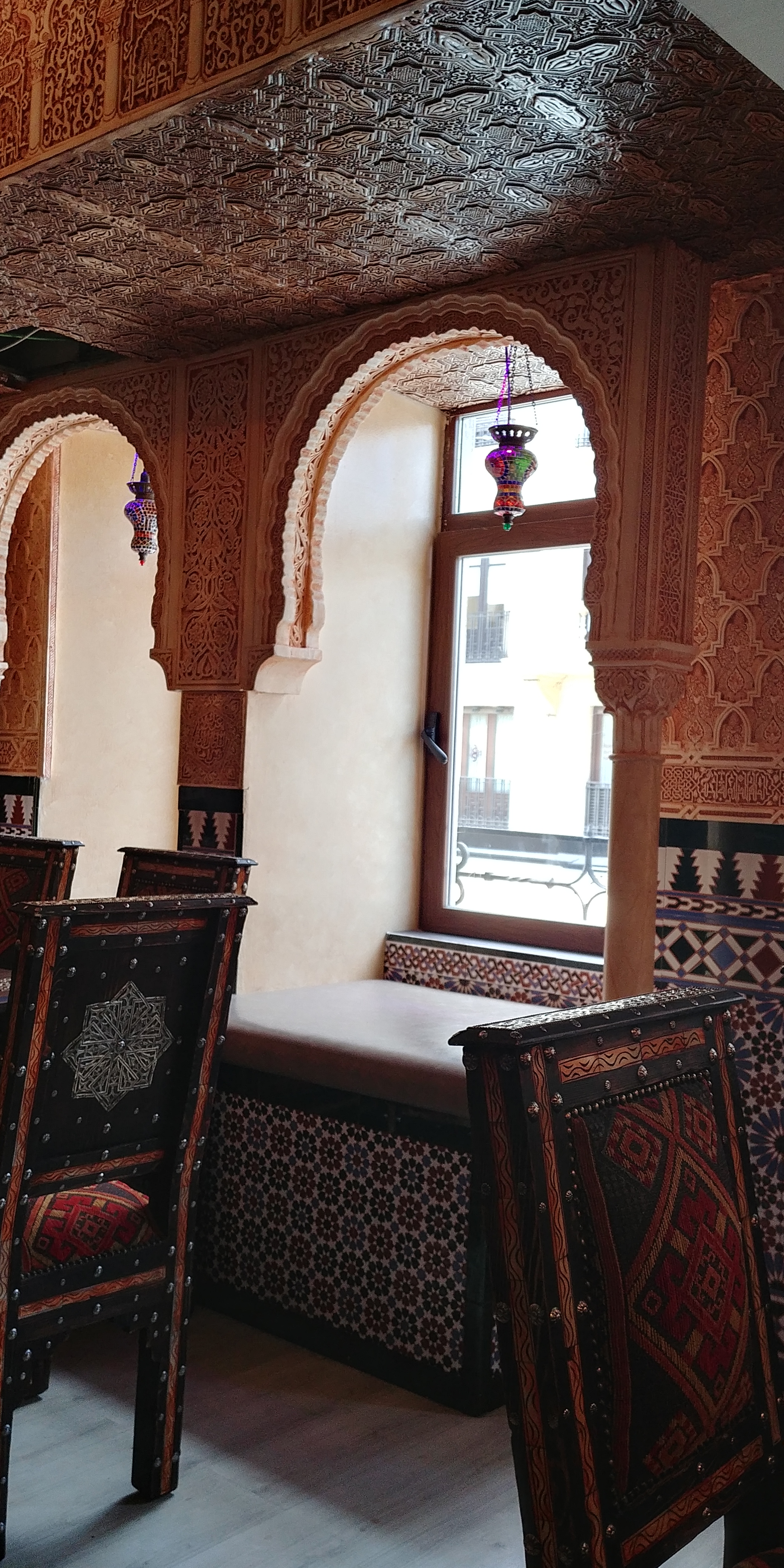
On the other side of the restaurant, there are the most beautifully carved wooden chairs and tables with bay style windows looking out into the street below.

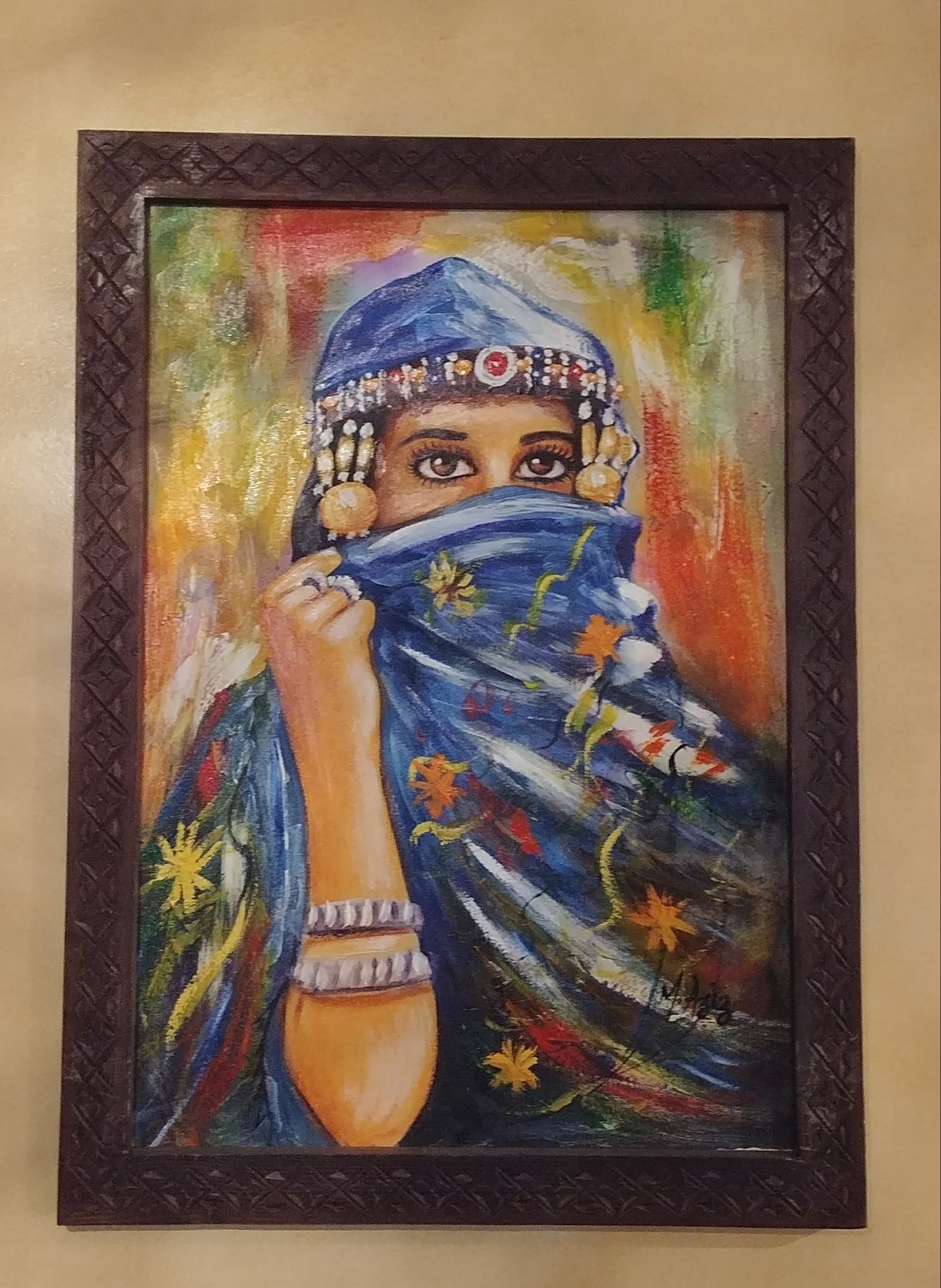
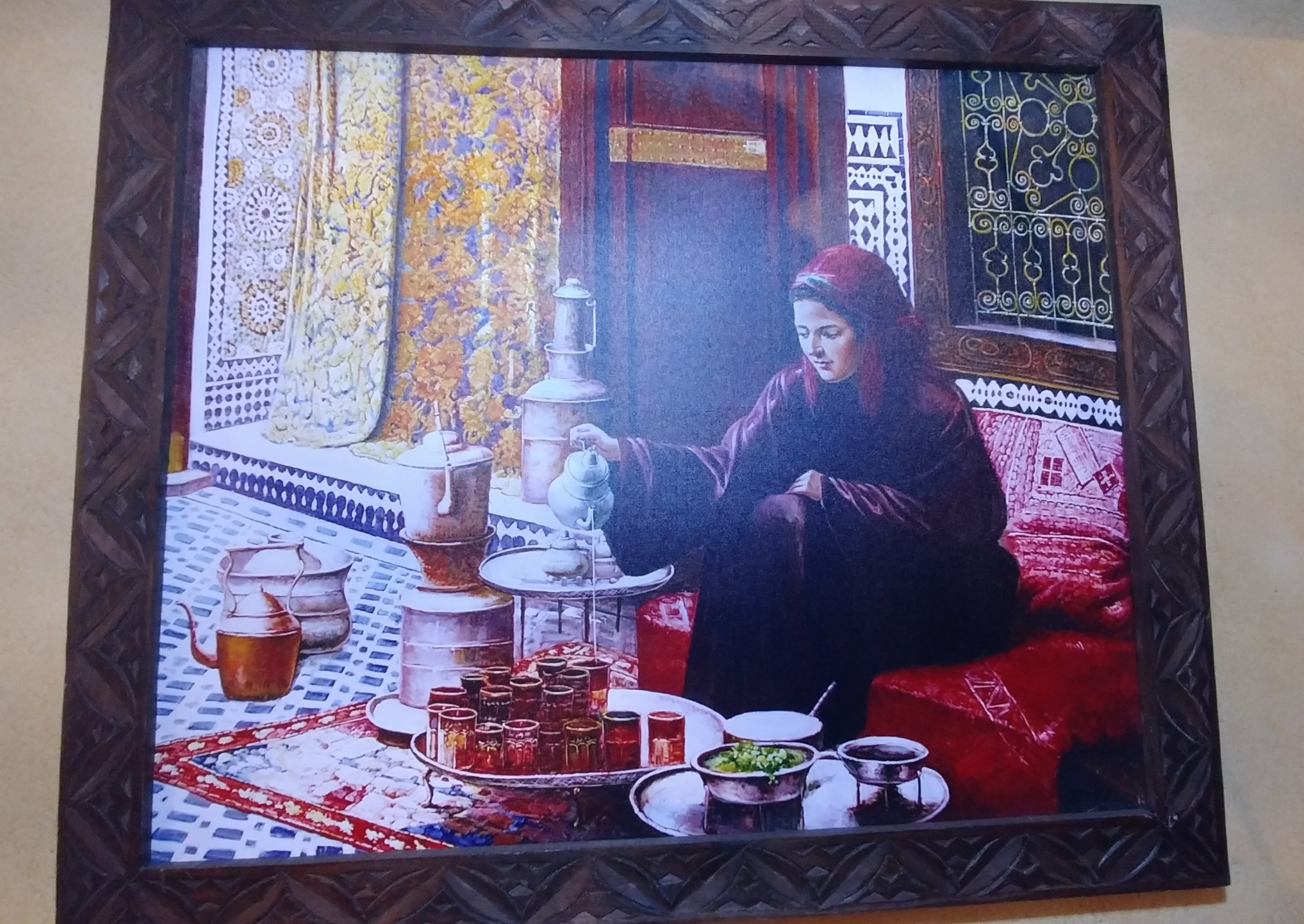
The walls are lined with the most intriguing and eye-catching paintings of Moorish ladies draped in headscarves.

or serving the tea traditional Arab style.

We opted to sit upstairs and enjoy this Arabian experience while having our meal. The menu is vast and flavourful. Catering to your every need, whether it be a light quick meal of kebaab or wraps or whether it be a hearty warm curry.

Prices are reasonable considering that it’s a sit down restaurant. We were tempted to try some of their desserts but decided against it because once again the meal size was substantial and filling.

I would recommend both of these restaurants when travelling to Granada, especially if you looking for tasty halaal food.

Featured

The old Arab Quarters – Grand Mosque of Granada

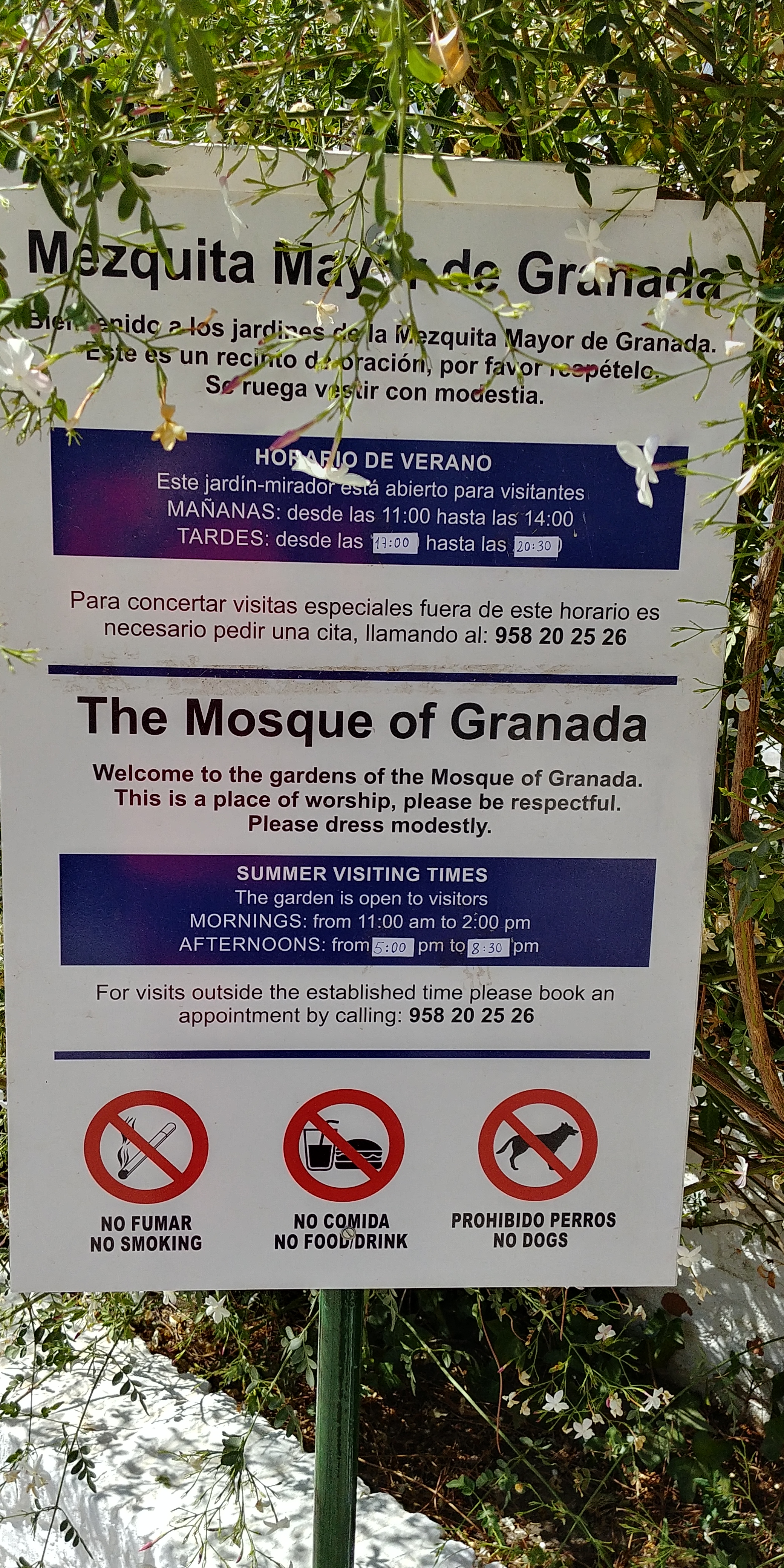
The highlight of my travel to Spain was undoubtedly my visit to the Mezquita Mayor de Granada ( The Grand Mosque of Granada) to perform the Friday prayer.

To understand the significance of this mosque you have to understand the history of the Muslims in Spain and particularly in Granada.

In 1492, the last Muslim leader of the Iberian Peninsula, Emir Muhammed X1 of Granada (known as “Boabdil” to the Spanish) surrendered control to King Ferdinand and Queen Isabella of Castille, after the last battle of the Granada war.

By this time most of Spain had already been re-conquered by the Christians and Granada was one of the last cities to fall.

After the fall of Granada, the Jews and Muslims were given a short period of time to either accept Christianity or be driven out of Spain. By 1502 the Catholic monarch had made the practice of Islam illegal in Spain. There were 137 mosques in the city of Granada, all of them were demolished and converted into churches.

For 500 years the Muslim call to prayer could no longer be heard in Granada, or the rest of Spain. Then in 2003, the Muslims of Granada finally won their 22 year appeal with the city authorities and were granted permission to start building a new mosque.

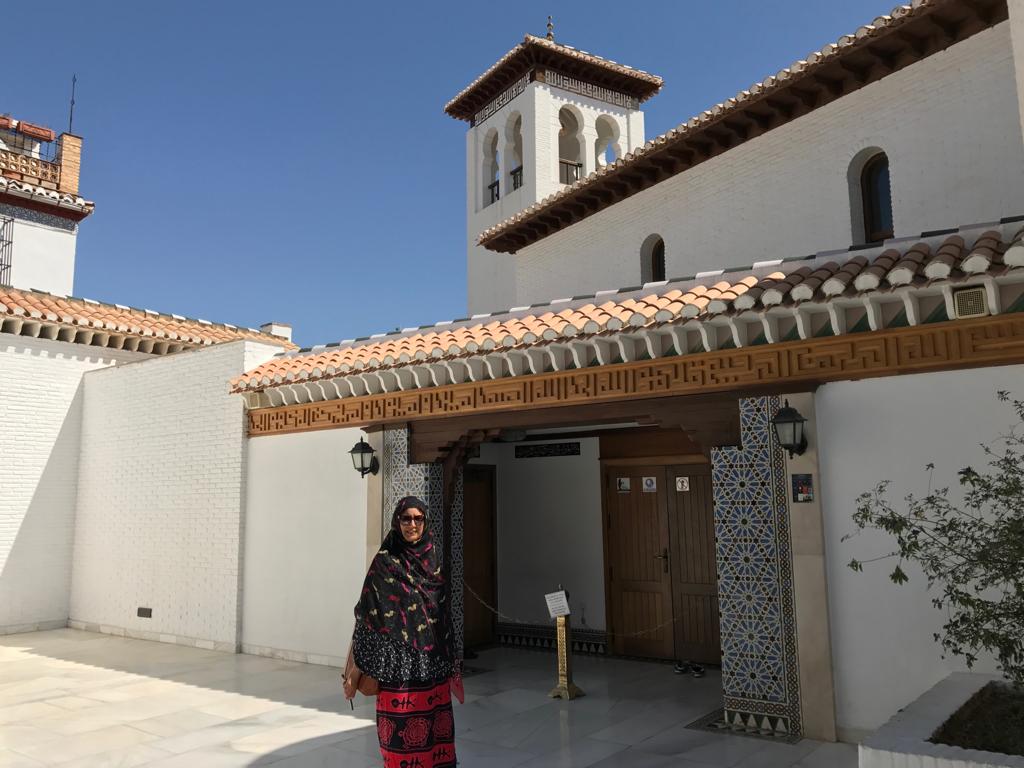
Standing in the shadow of the Alhambra, high up in the Albaicin Quarters, the Grand Mosque of Granada opened its doors in July 2003. It heralded a new beginning for the Spanish Muslim of Granada.

We had planned our trip so that we could be in Granada on Friday in order to make the Jumuah (Friday Congregational) Prayer at this mosque. We visited the Albaicin Quarters on the Thursday for sight-seeing, by bus, but were not able to find the mosque.

We decided that a walk would probably be best on the Friday morning and started navigating our way from our hotel towards the Albaicin Quarters after a late morning breakfast.

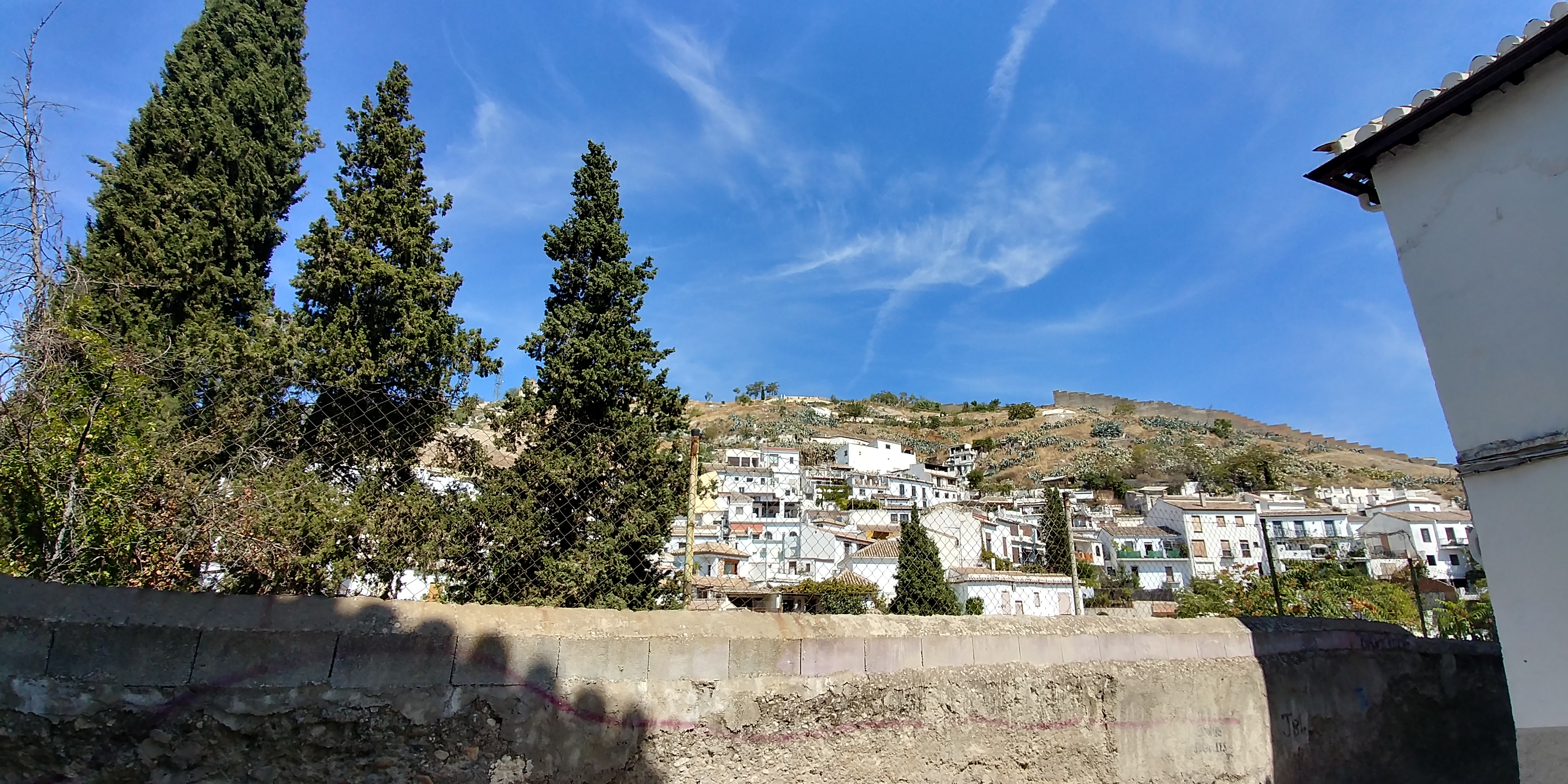
The Albaicin is the old Arab Quarters in Granada.

It is situated between the hill of Alhambra and the Sacromente, an authentic gypsy neighbourhood where the Flamenco dance originated.

No-where in Spain did I feel more Muslim influence than in the Albaicin Quarters. Even though the Muslims where banished after the re-conquest of Spain, it seems that this old Arab quarters is still primarily inhabited by Muslims.

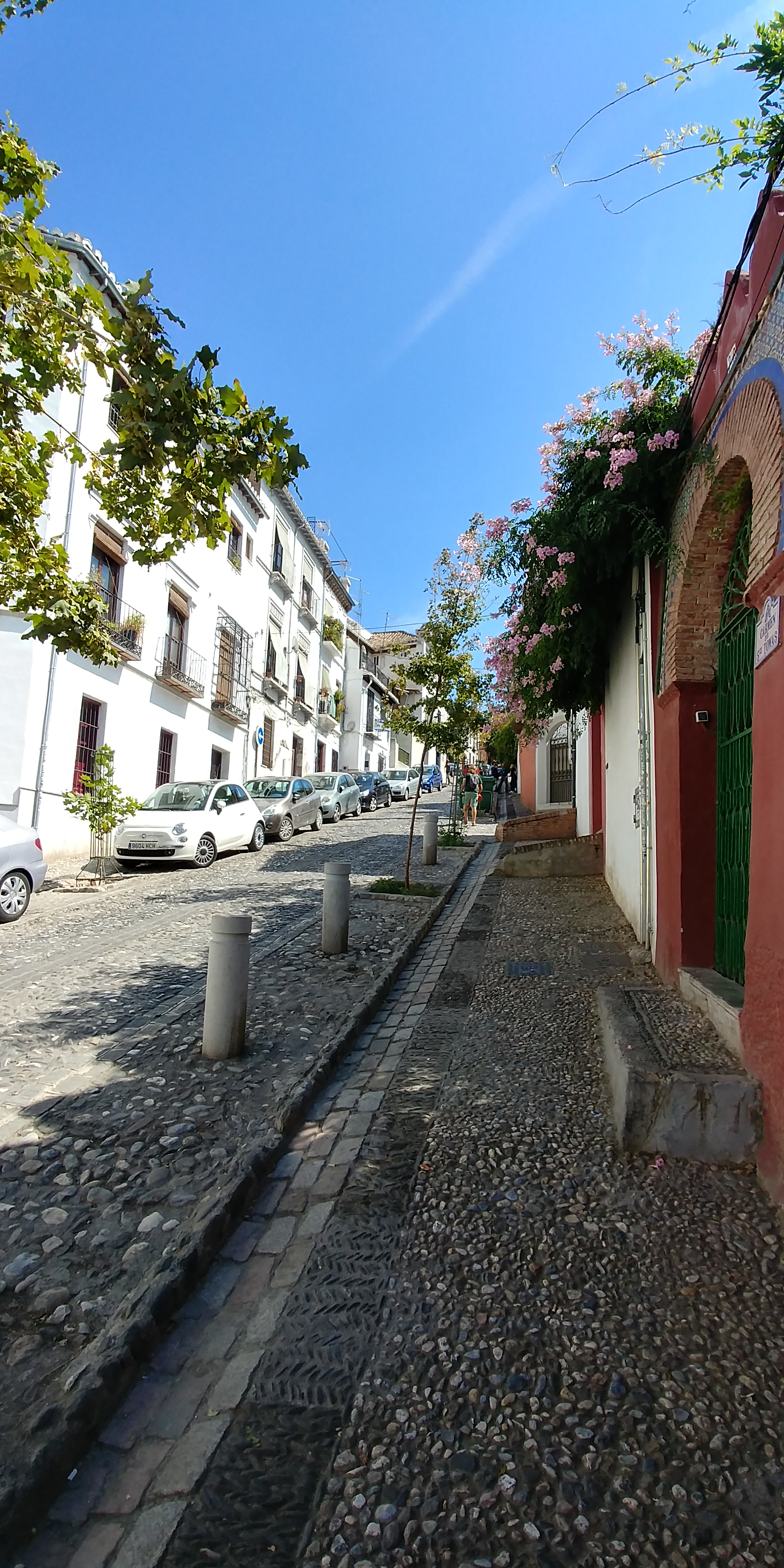
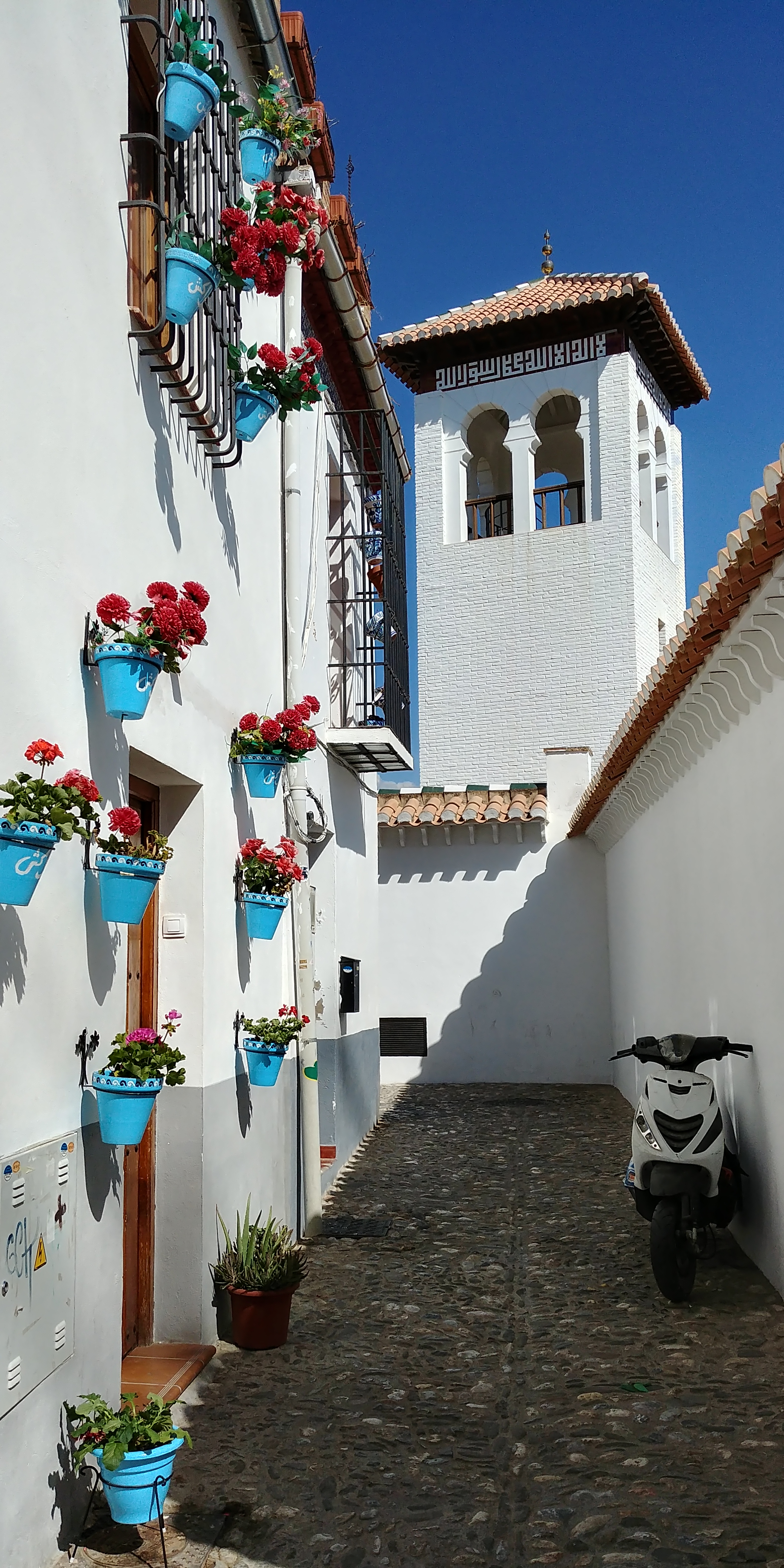
With is narrow streets, plenty of squares (plazas) and small clean houses, this area is a must do by foot.

Make sure to wear comfortable walking shoes and take a bottle of water with to hydrate. The entire neighbourhood is situated on a hill so there is a bit of a climb to get to the Grand Mosque of Granada.

We were planning to reach the Mosque just after midday so that we could be in time for the Friday Sermon. Armed only with a picture of the Minaret, which I printed from google pics, we walked in the direction that we thought would be its location.

The Albaicin is not a very large neighbourhood, but there are endless narrow streets with similar looking white-washed houses and buildings. Its easy to get lost in this neighbourhood. We ended up at a place which we thought was the Mosque only to find that it was deserted.
The time was now pushing closer to 12.30 and there was still no sign of the Grand Mosque. We were also a bit hot and our legs were feeling the heaviness of the climb.  I felt anxious about missing the Friday prayer. Surely, we should hear the call to prayer ring out through the neighbourhood soon?

We kept walking, and ten minutes later, still no call to prayer but fortunately we found two young European tourists who were navigating their way around with a map. They kindly allowed us to check on their map and confirmed that the Mosque was near the San Nicholas Plaza.

Now we had more information to work with. The next passer-by we stopped directed us towards the San Nicholas Plaza and as we reached the top of the road the Plaza appeared in sight. It was easy from here to find the Mosque but still no call to prayer at 1pm?

Entering the mosque precinct  we were pleased and surprised to hear that the Friday prayer only starts at around 2pm when most Muslims are able to leave their work place and make their way to the Mosque. Suddenly the pressure was off and we could enjoy the experience of discovering the many facets of this Mosque.

The Mosque complex comprises of three main areas, the garden, the prayer hall and the Centre of Islamic Studies.
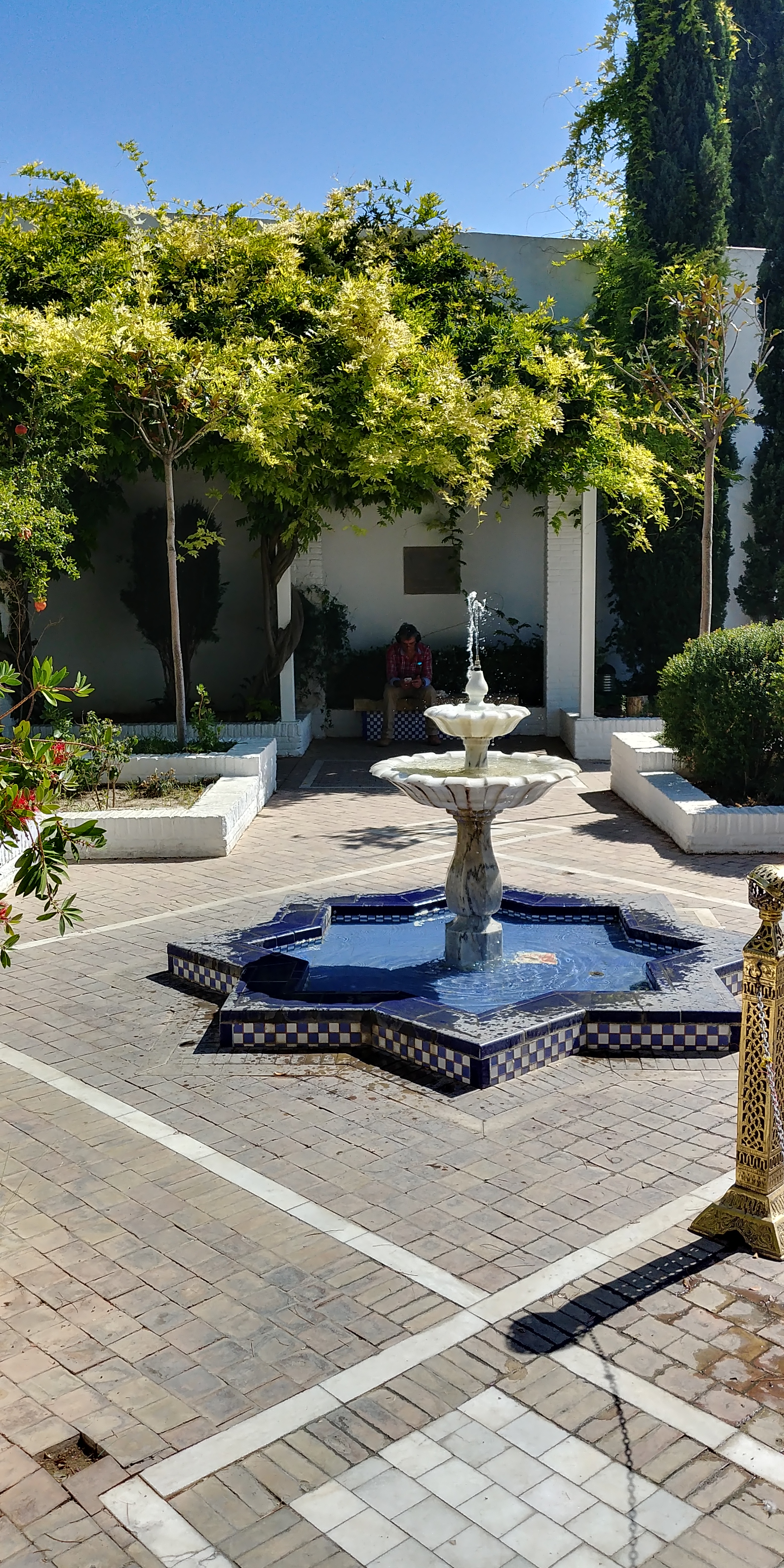
The Garden

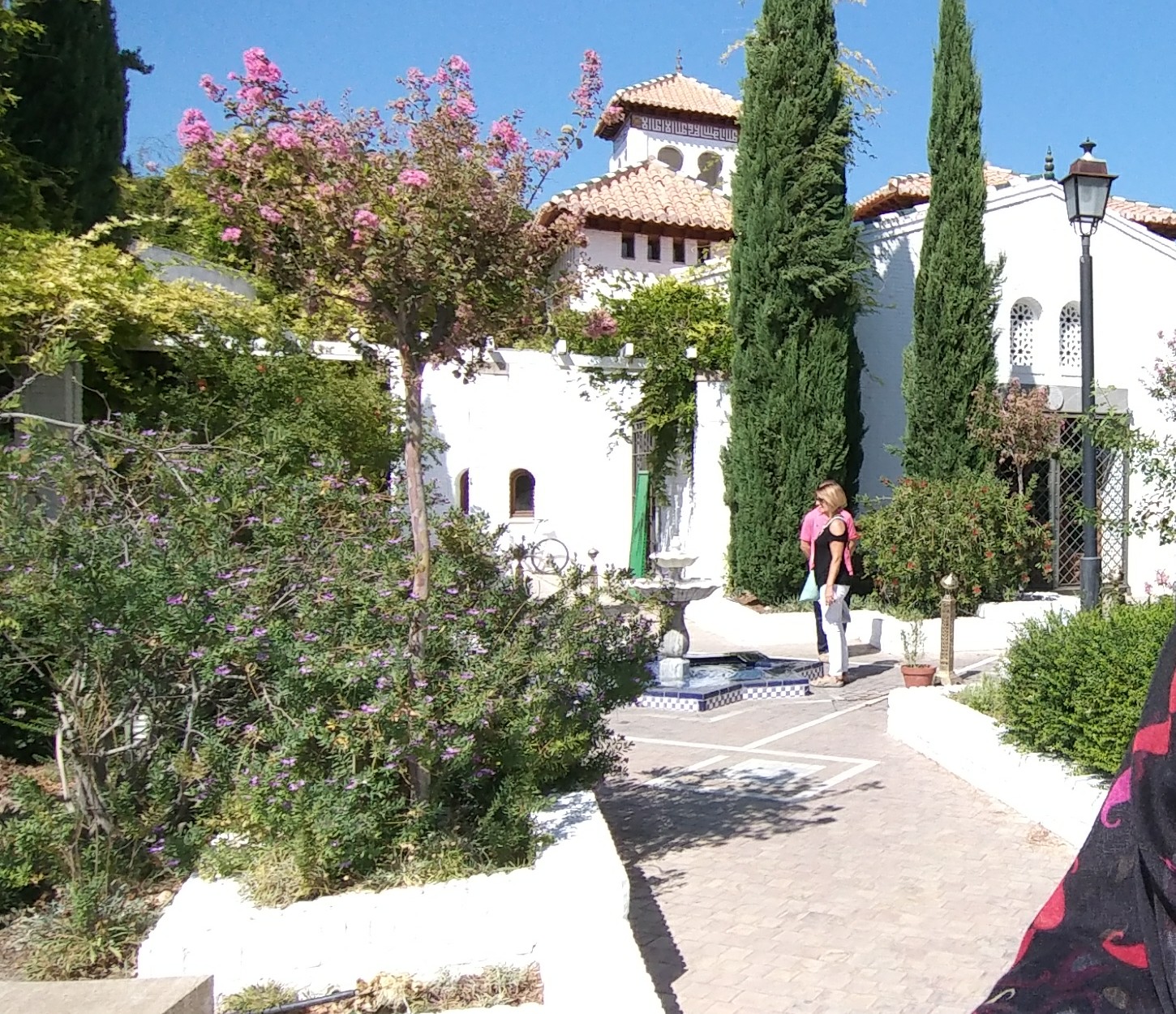
Picture a courtyard with two classic mosaic covered fountains,

surrounded with lush green trees,

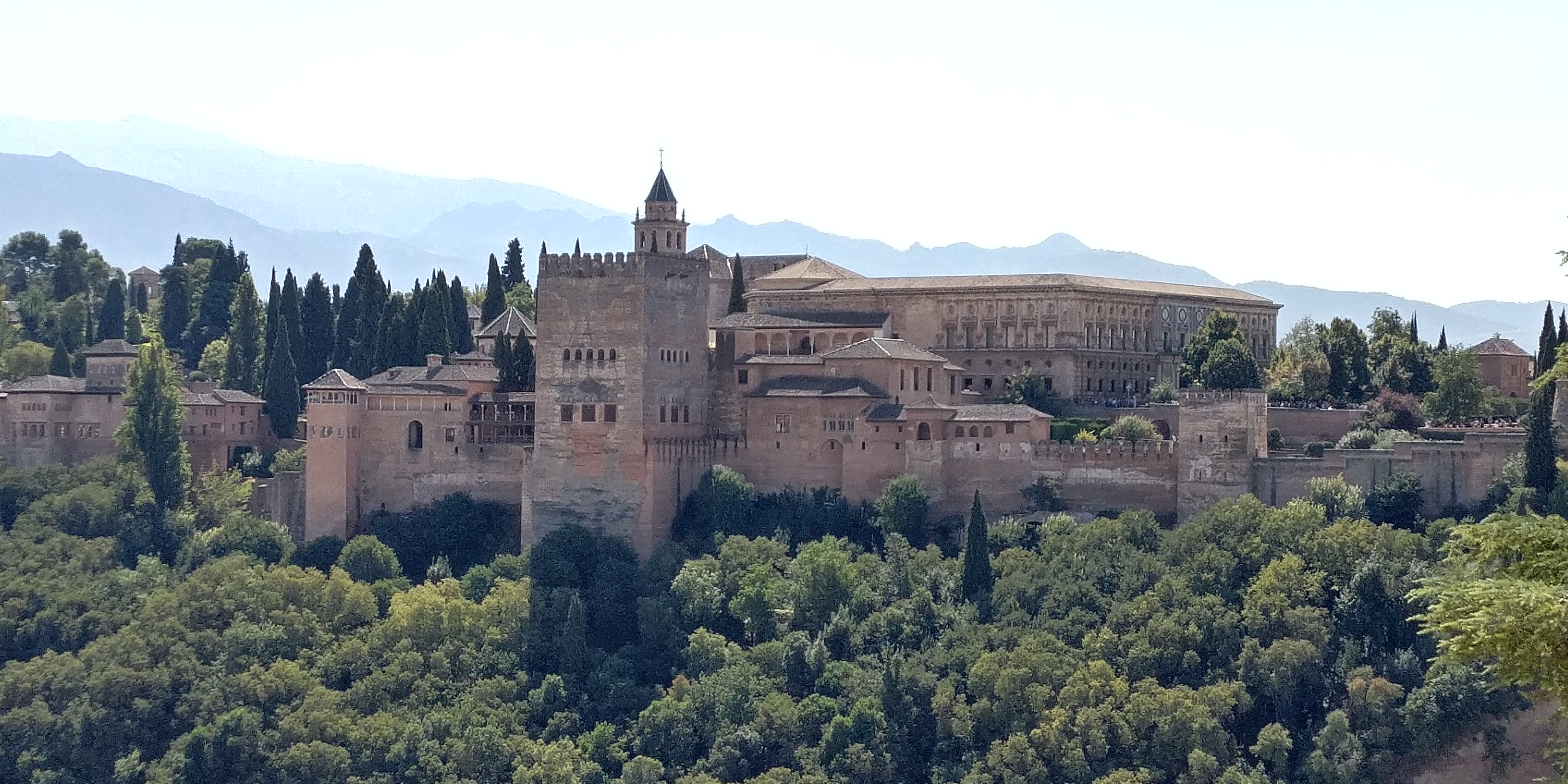
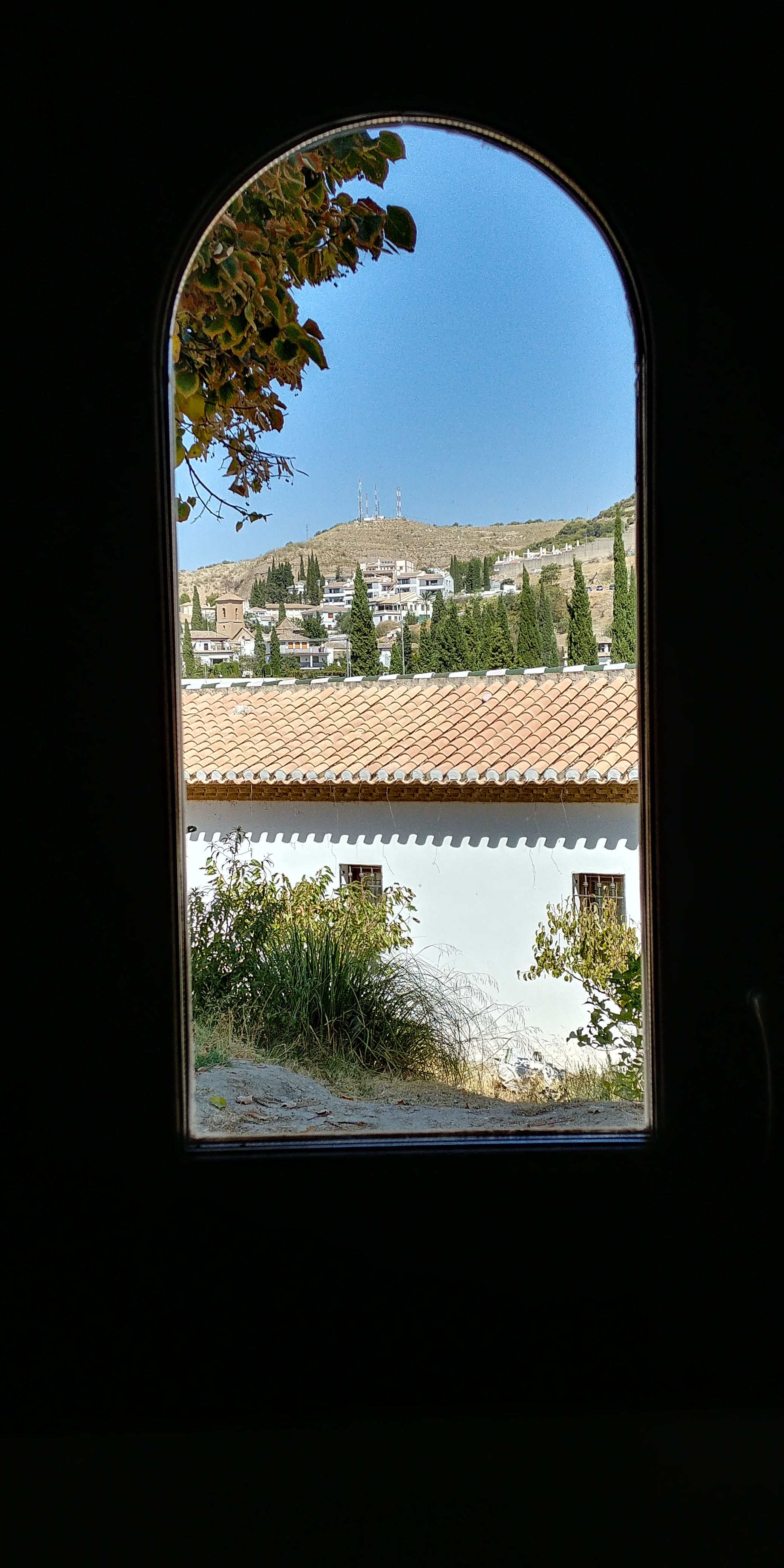
looking out over the hill towards the majestic Alhambra Palace.
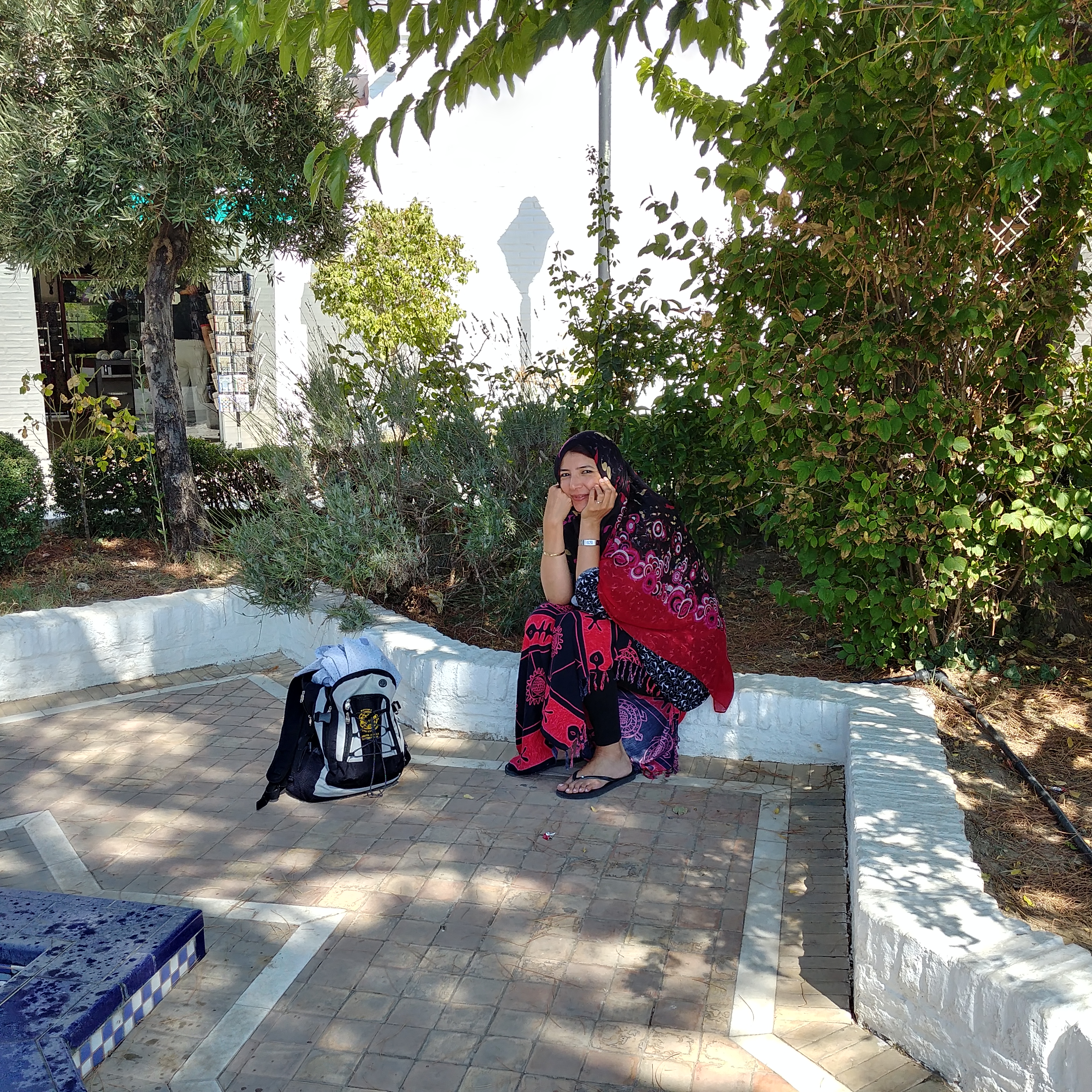
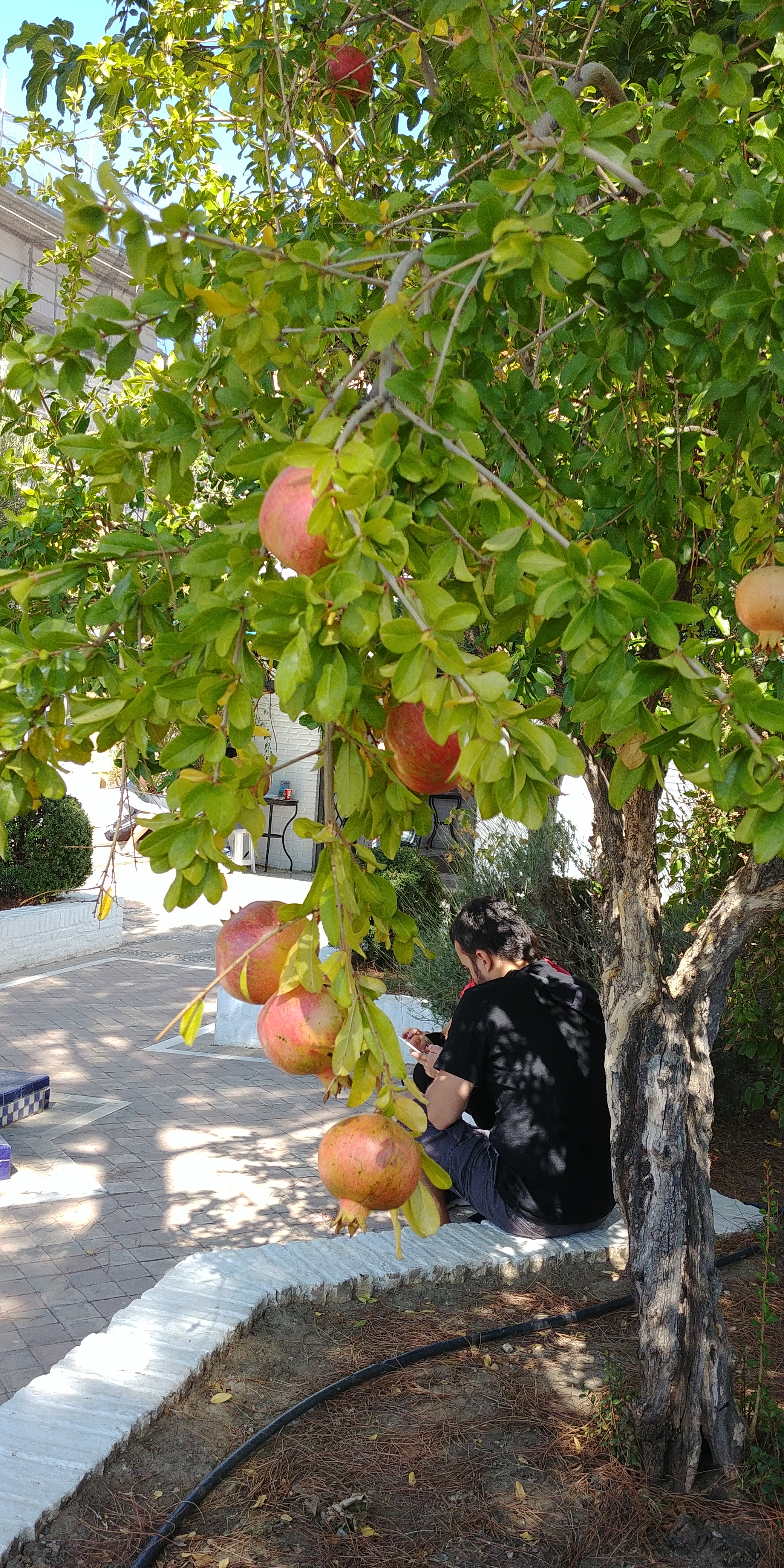
The garden is filled with many different plant and tree species with the most popular being the pomegranate tree. The Spanish word for this fruit is Granada so it has become a symbol for the city.  Everywhere you go in Granada the pomegranate tree is found and here in the garden at The Grande Mosque of Granada it stands tall enough for you to find some shade.

The view from the Mosque garden is spectacular during the day with the backdrop of the Alhambra Palace. I’m sure it must be breath- taking as the sunsets over the Sierra Nevada mountains at night.

Note: I will be doing a separate blog about The Alhambra Palace

The Prayer Hall

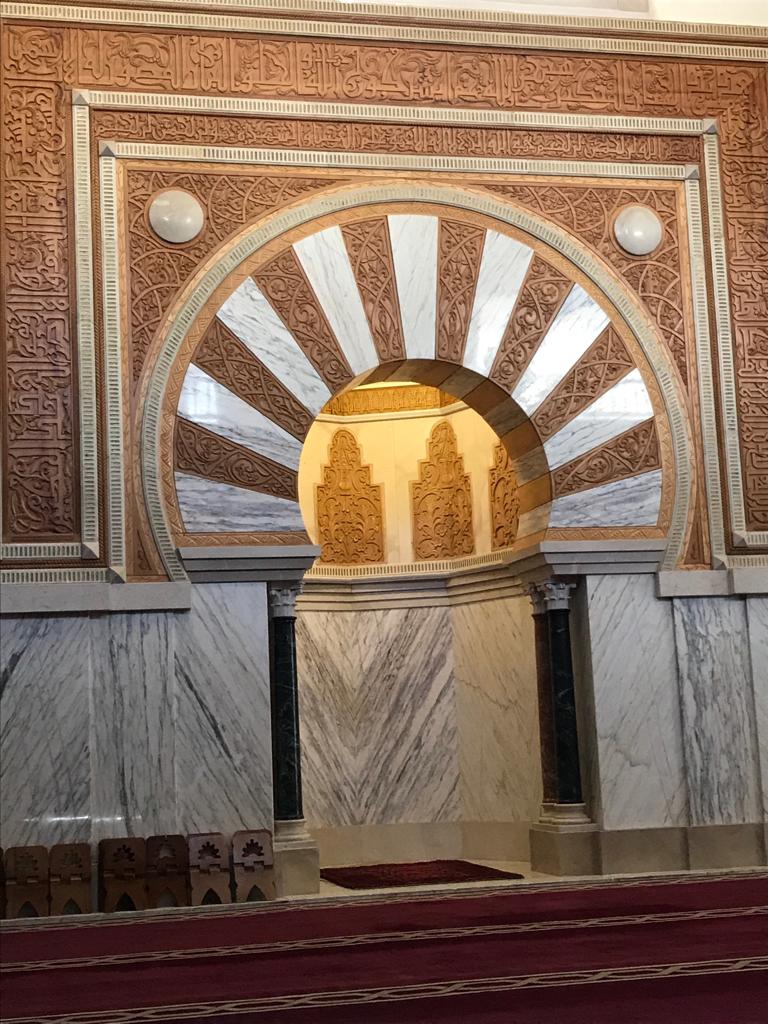
The prayer niche or the Mihrab of the Grand Mosque of Granada is a very good replica of the famous mihrab of the Mezquita of Cordoba.

The multi-coloured marble tiles are identical to those of the Al Aqsa Mosque in Jerusalem and the great “Qibla” windows are replicas from the Blue Mosque of Istanbul. The Minaret from which the call to prayer is made five times a day is designed and constructed in the original Albaicin style.

When you look out from the ladies section of the Mosque area you will be looking at the Sacromente – gypsy neighbourhood on the hill.

The Centre of Islamic Studies

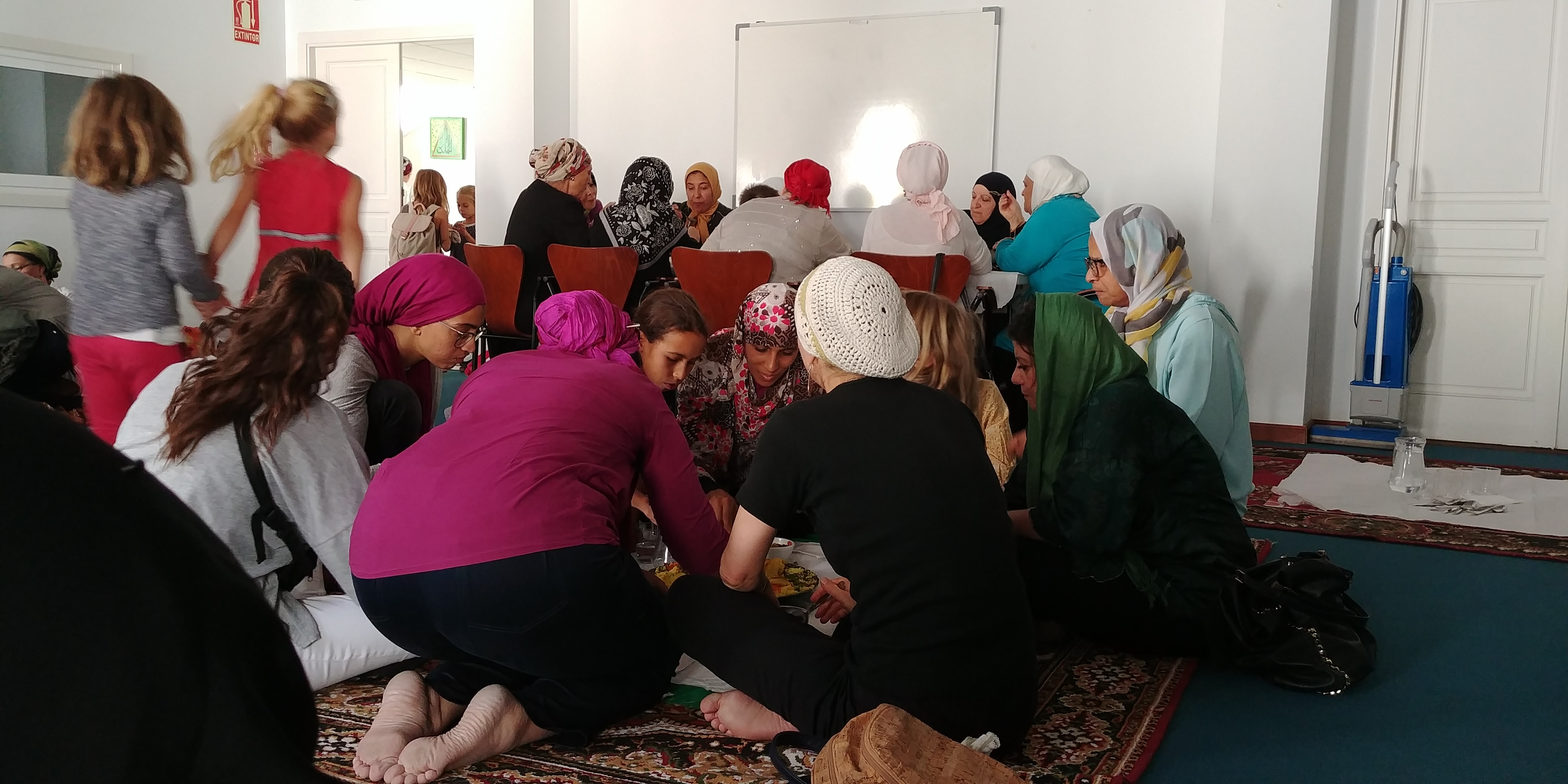
After the Friday prayers were completed, we were invited to join the congregation to share lunch in the Islamic Centre. The centre is on the lower floor and comprises a library, conference room and exhibition room.

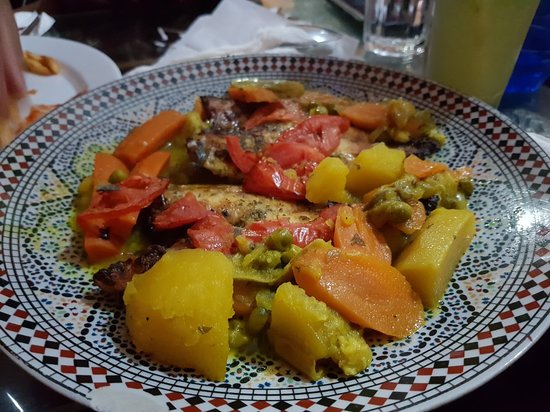
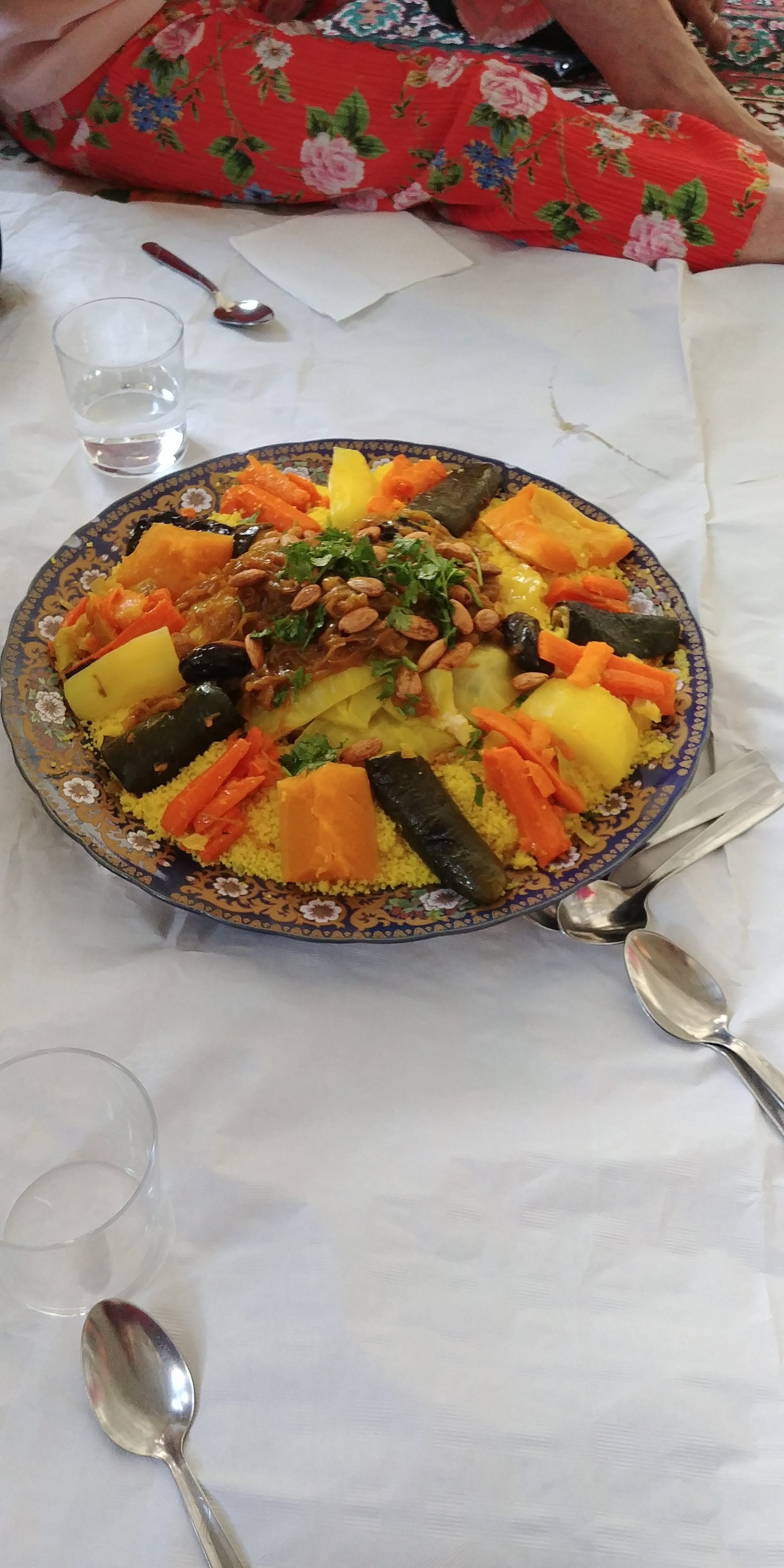
A scrumptious but simple Morrocan meal was presented in huge plates and the women gathered in a separate area to the men to share in this mouth-watering feast.

Such a wonderful experience to share a meal with the local community of the Albaicin neighbourhood.

If you ever find yourself in the city of Granada, be sure include a visit to this neighbourhood. As you wander around these streets you will stumble across so many gems and look out points where you can see breath-taking views of the city.

Featured

Fun things to do in Cordoba

On your visit to Spain be sure to include a few days in the Andalucia territory in the South. This is where you will be able to see first hand the remnants of a time when Muslims, Christians and Jews lived in harmony and peace in small cities like Cordoba and Granada.  

I visited Cordoba in September 2017. Here are some fun things to do while visiting Cordoba:

See the city on a bicycle

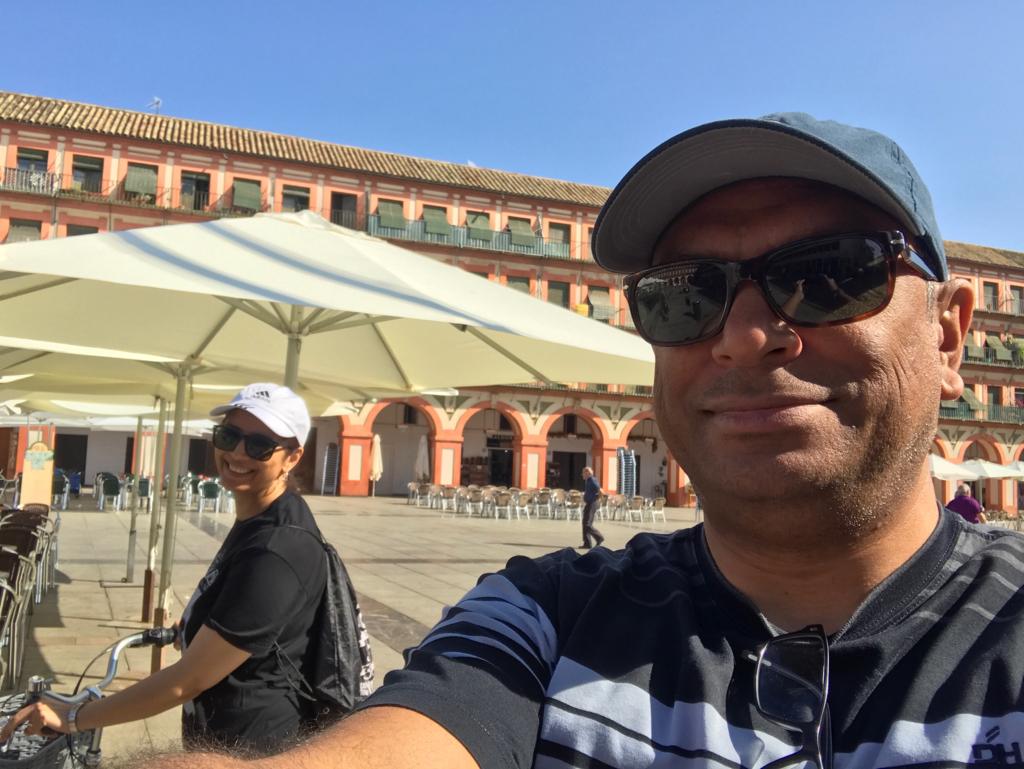
If you are the adventurous type and like to see more than the usual guided tour on the Red Hop on Hop off Bus, then why not try a bicycle ride. The city centre of Cordoba is compact, making it easy to complete a tour of the city and its outskirts within a few hours by bicycle. We rented bicycles at a rental shop not far from our hotel in Cordoba.

On our scenic ride we stumbled upon this huge model aeroplane on the outskirts of the town. 

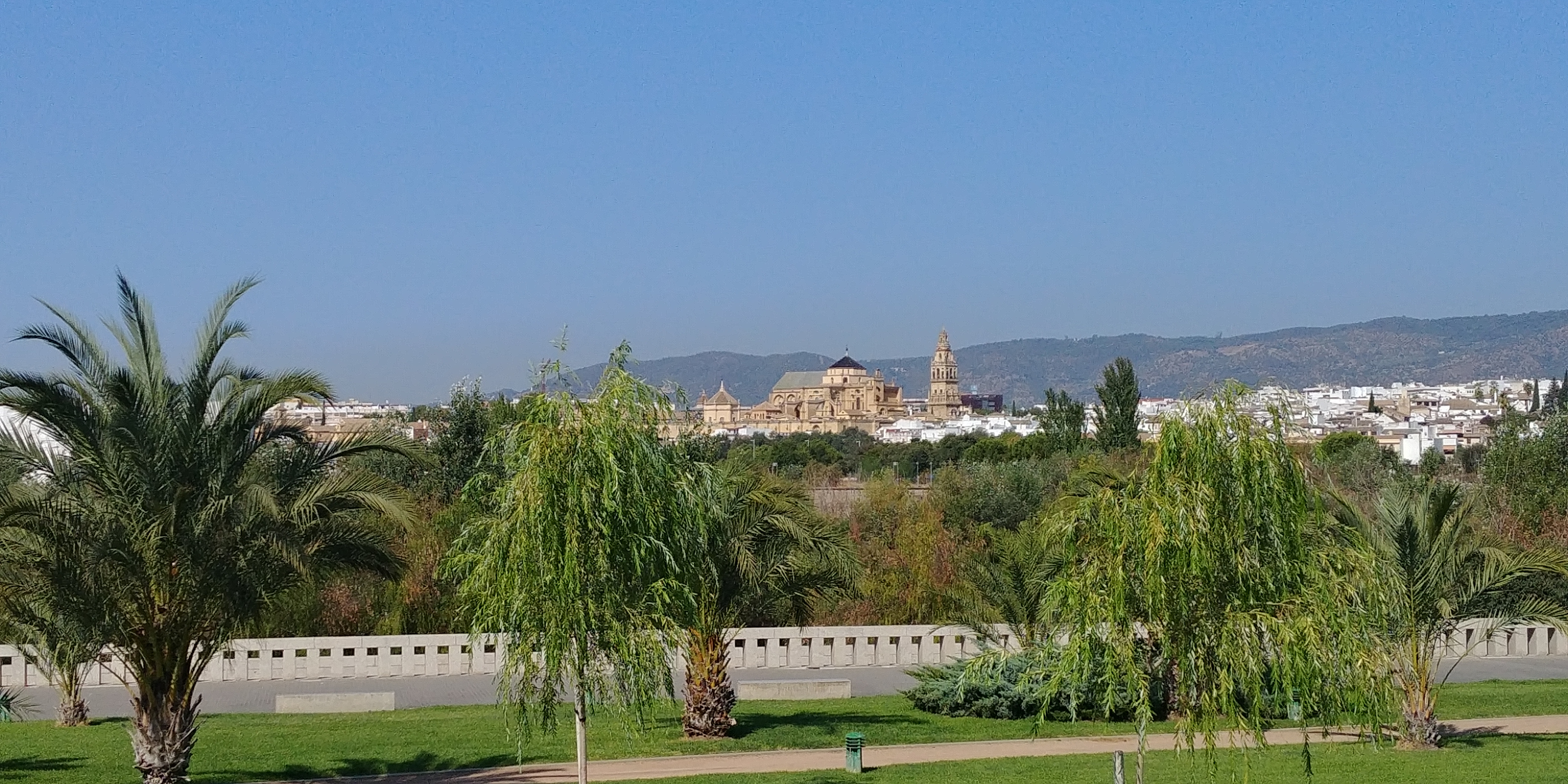
As we looked across the field we saw this breath-taking view of the Grand Mosque of Cordoba – La Mezquita.

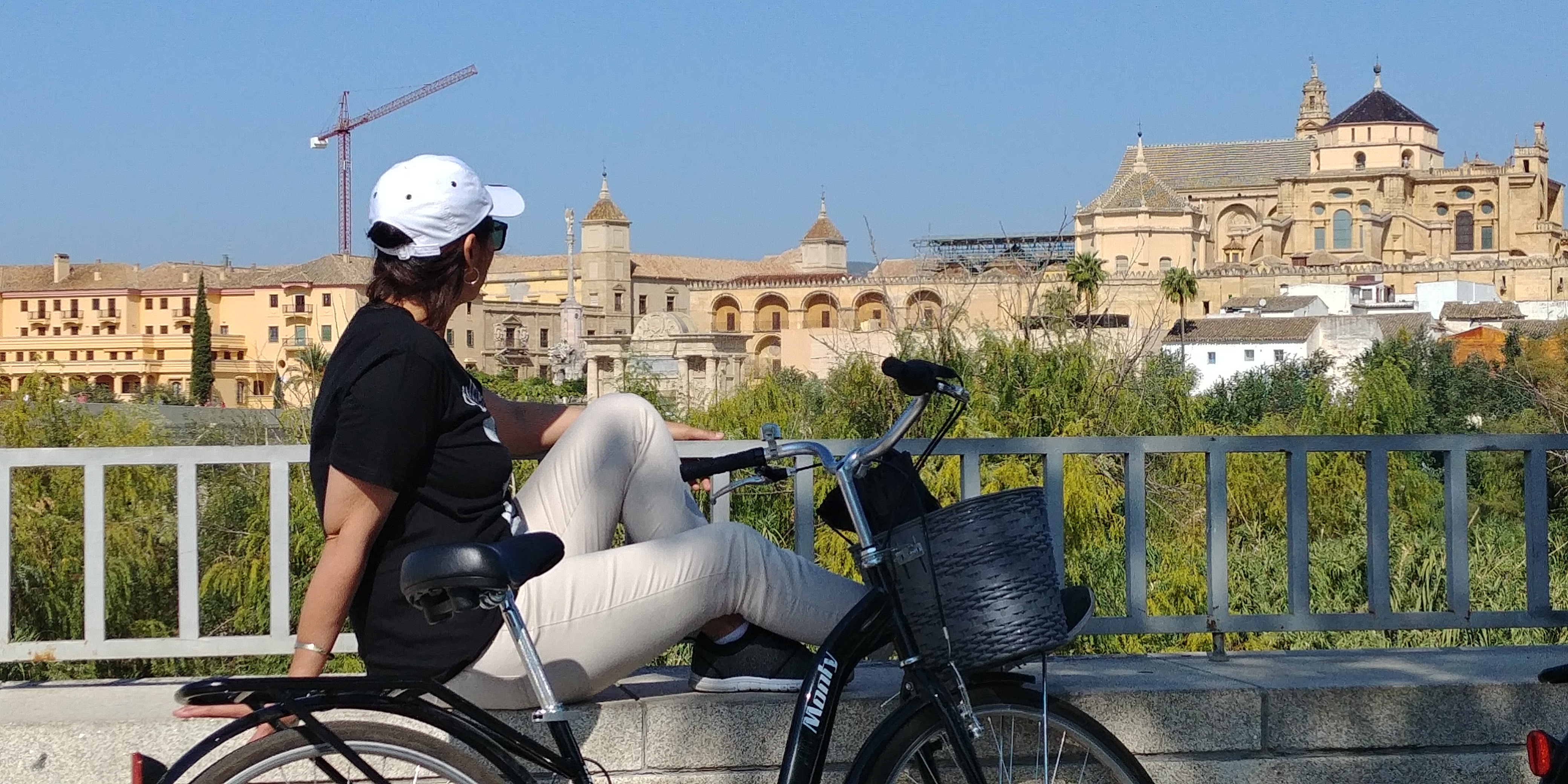
What better way to cross the famous Roman Bridge than by bike while stopping to look back and take in the back drop of the Mosque- Cathedral.  A memory captured in the heart and mind, and if you lucky to have someone with you, in a picture as well.

Speaking about Roman Bridges, another must do I recommend.

Take a night walk across the Roman Bridge

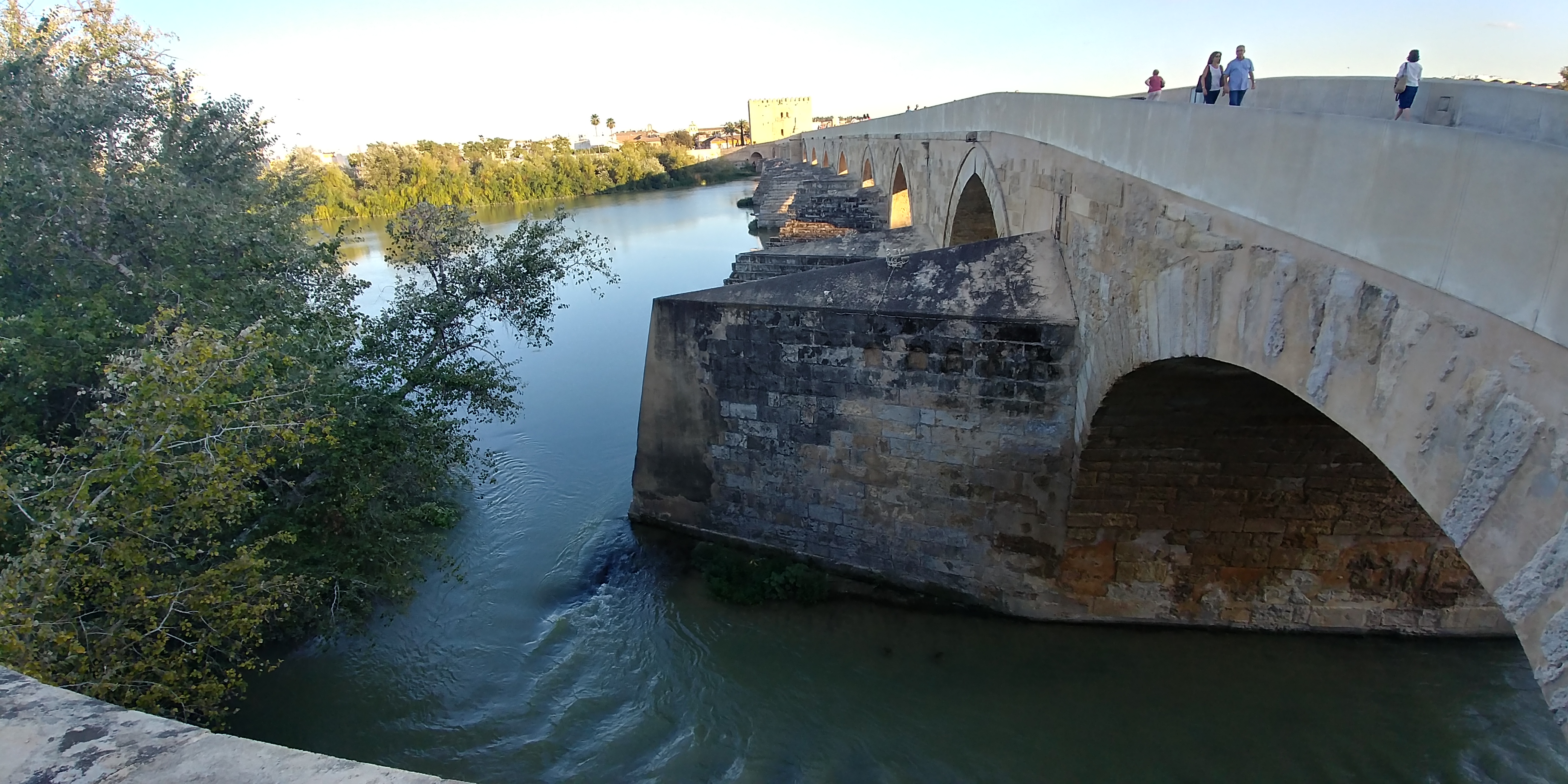
Built in the first century by the Roman’s and rebuilt a few times, most of the current structures that remain of the Roman Bridge dates back to the Moorish reconstruction in the eighth century. The bridge is best seen during the day to fully comprehend it’s structural magnificence.

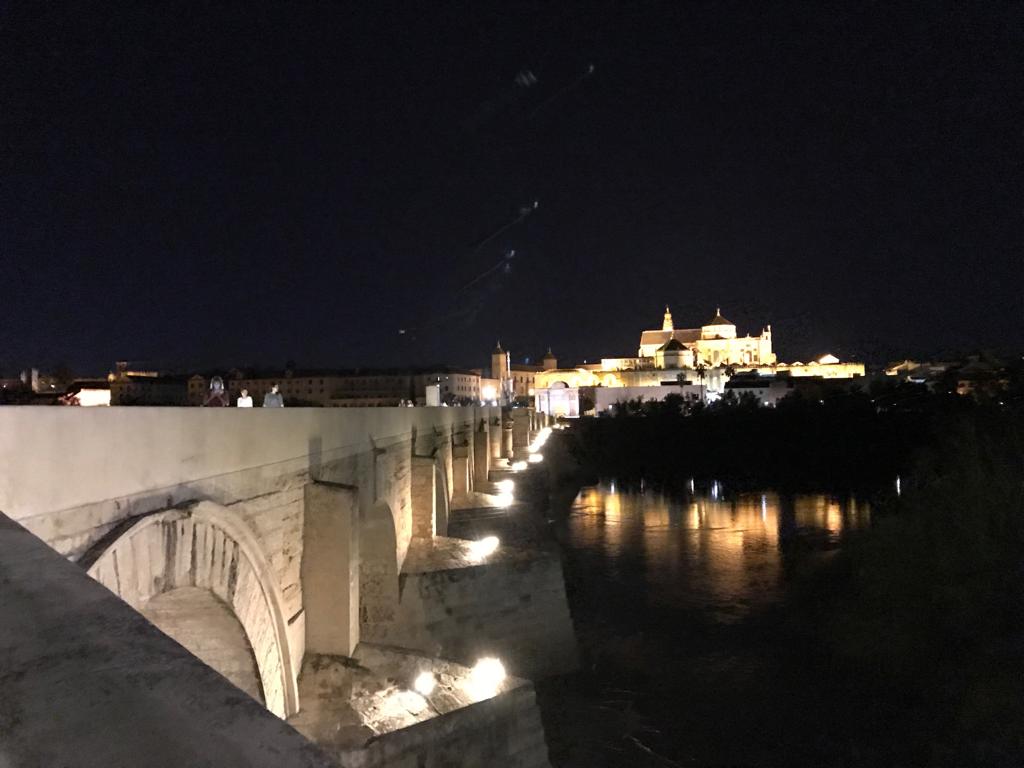
But your visit would be incomplete without a romantic night stroll across the bridge. With the river glistening in the night sky and the Mezquita lit up in the background, the walk across this bridge sets the tone and mood for a very romantic evening.

Flamenco Dancing & Dining

If you ask some of the locals in Madrid, where is the best place to see a Flamenco show, they will tell you that authentic Flamenco dancing can only be seen in the South of Spain, where the dance originated.  

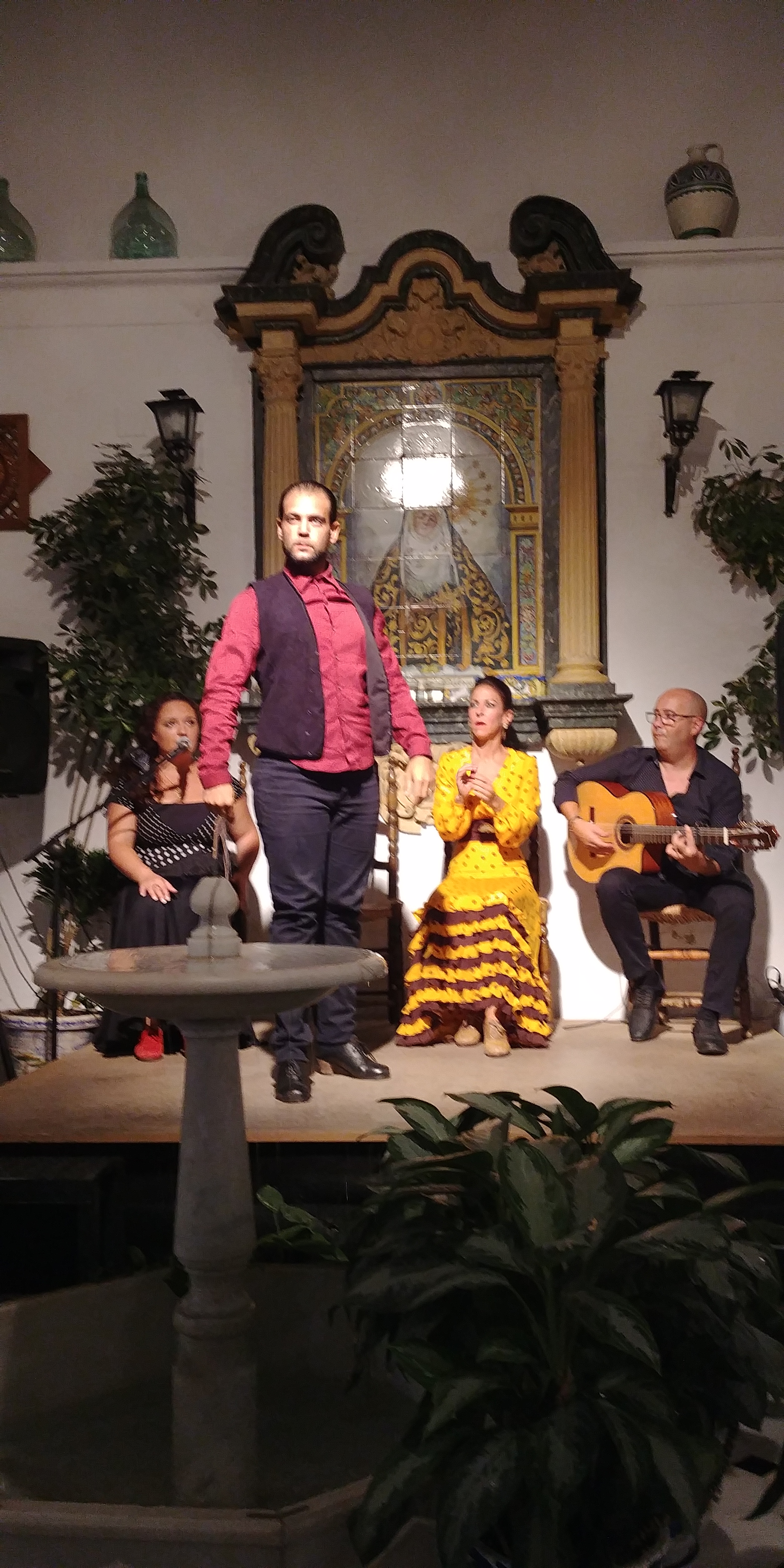
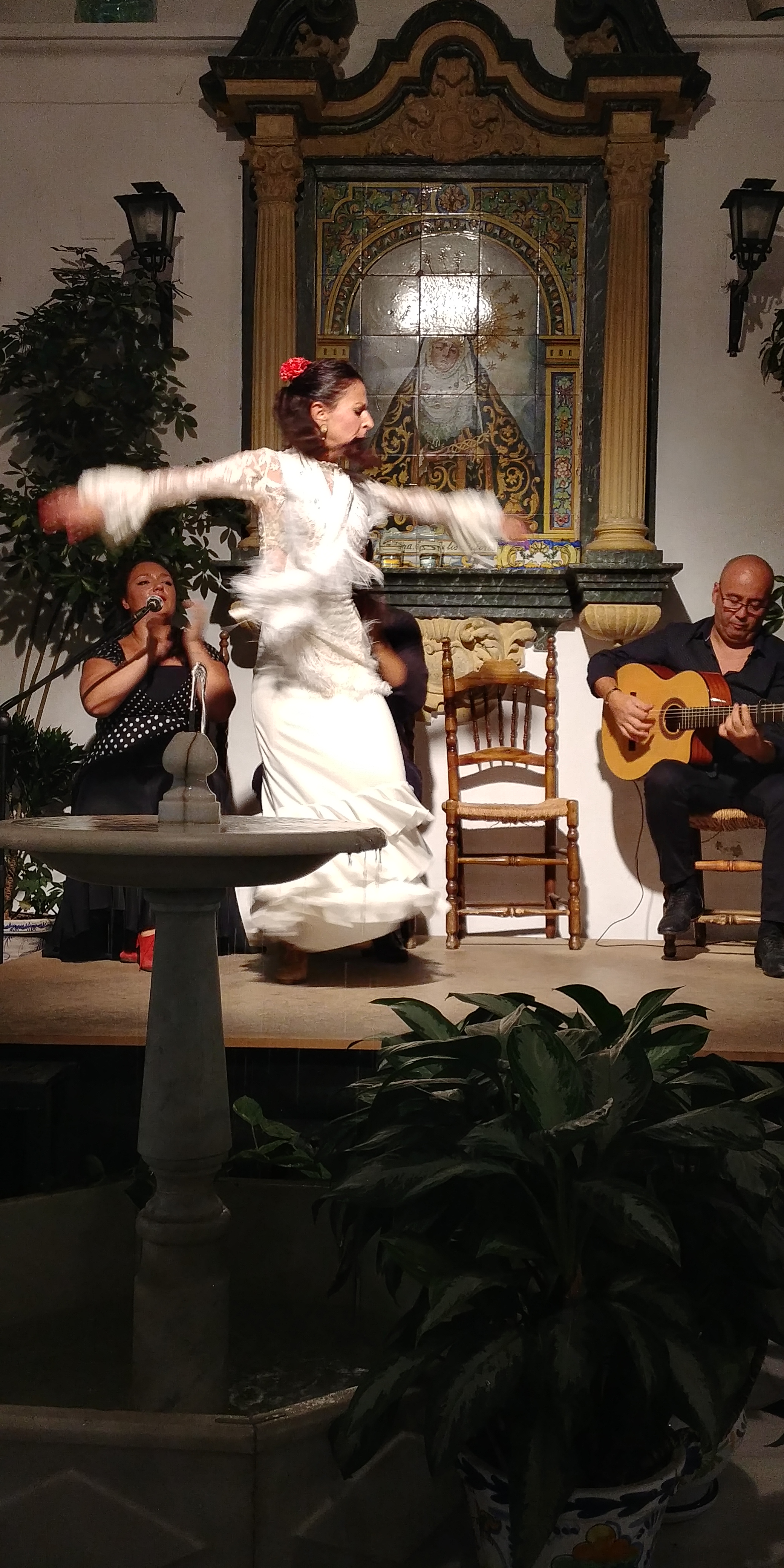
The Flamenco is not so much about the dance but more about the passion and emotion which plays itself out in an energetic movement of hips, clicking of castanets, clapping of hands and stamping of feet. Add to this the music, the strumming of the guitar and some powerful and demanding singing and you are witnessing an art form which dates back centuries and was perfected by the Gypsies of Andalucia.

In the area surrounding the Mezquita, you will find a variety of restaurants offering a Flamenco show with their evening dinner. We were told to make a reservation rather than just pitch up, since these restaurants get booked up a day or two in advance.

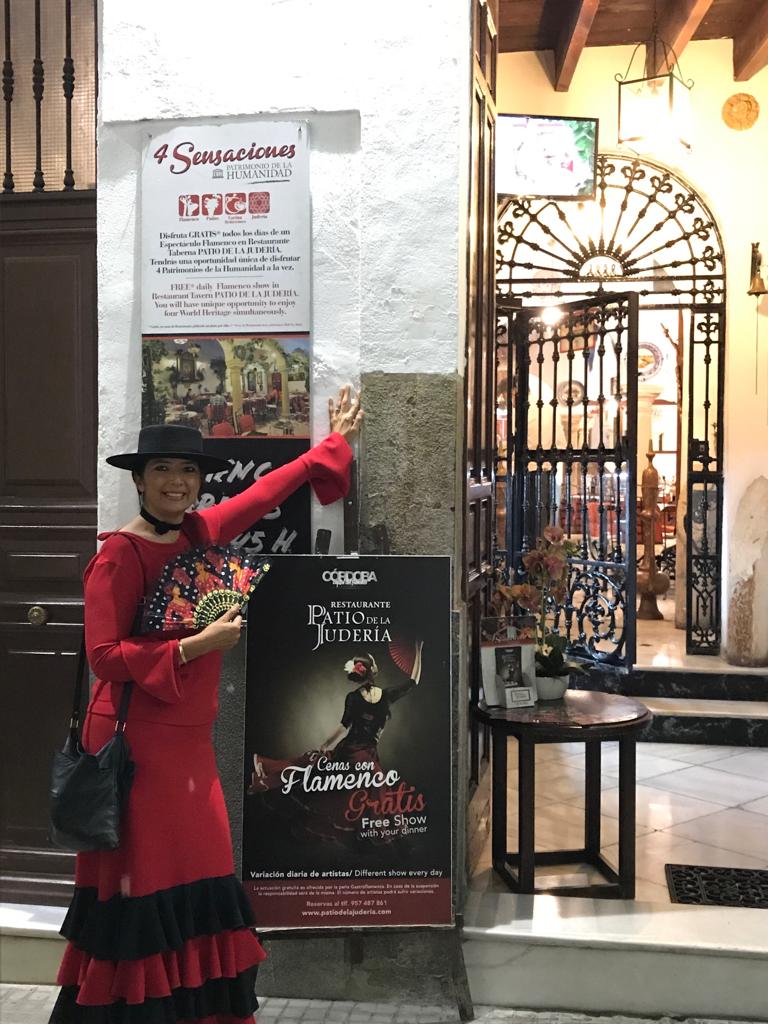
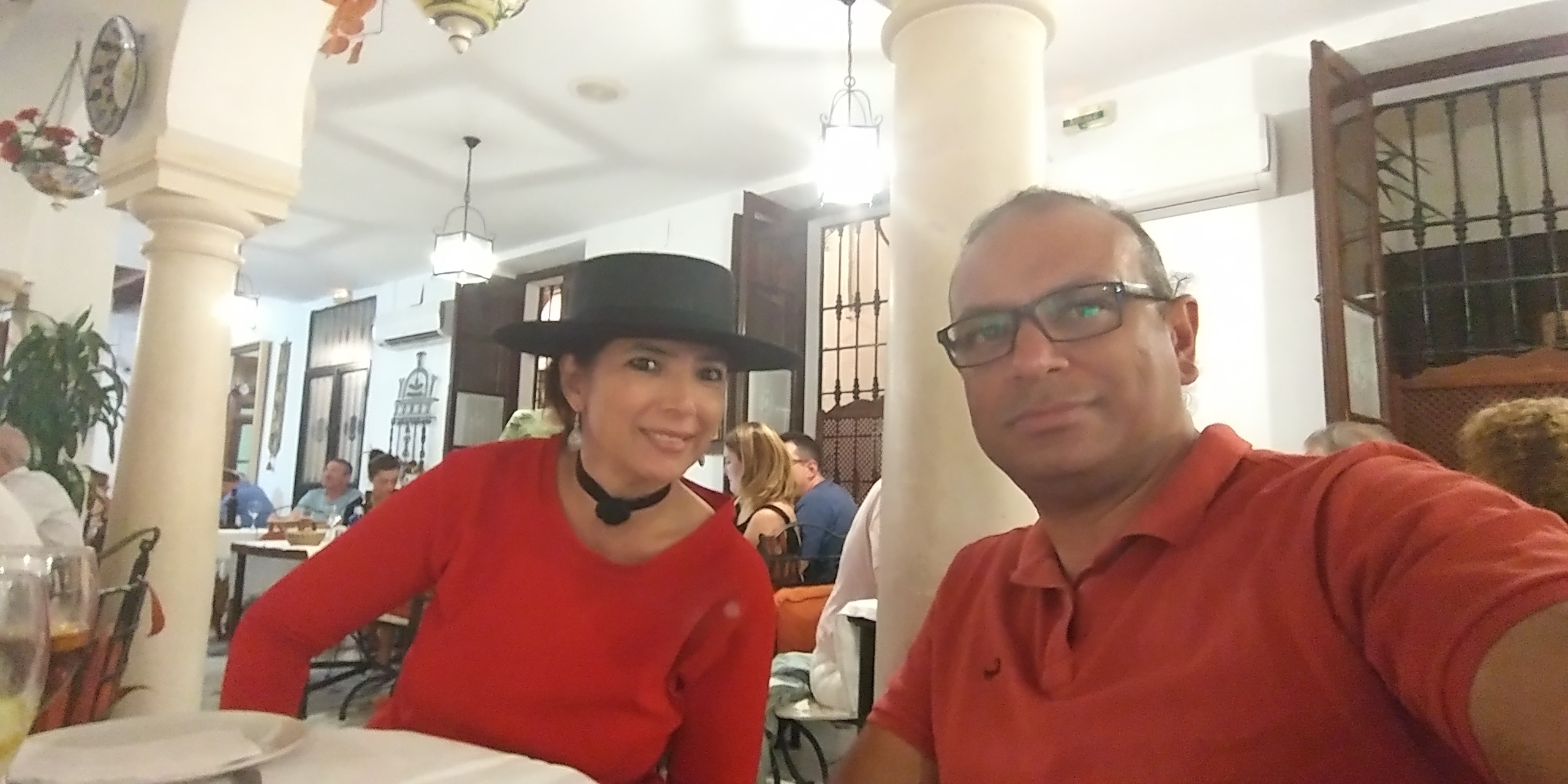
I decided to play dress up and went to dinner in my custom-made Spanish outfit matched with my newly bought hat. To experience authentic Flamenco dance while enjoying a delicious meal try this restaurant https://patiodelajuderia.com/wp/

What a night to remember. The passion and energy with which the dancers move, leaves one feeling breathless and emotionally charged.

Wander the Juderia

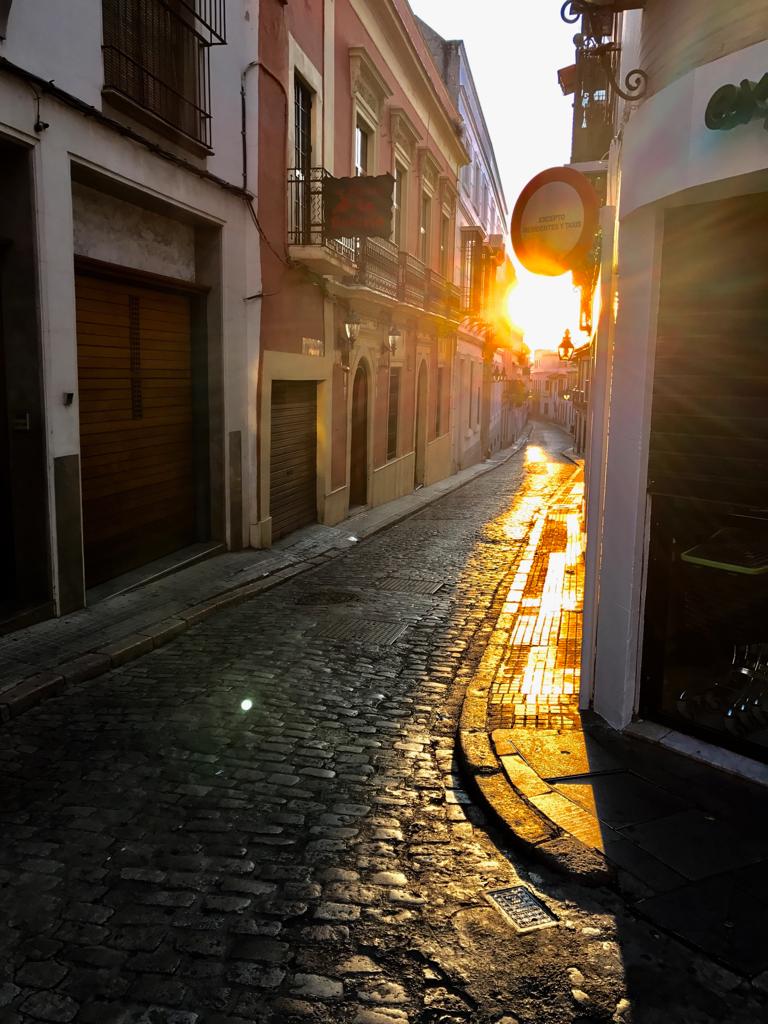
With it’s narrow cobbled streets and its white-washed buildings the old Jewish Quarters called the Juderia is best explored by foot. A long time ago, the city of Cordoba was called the city of three cultures because of the harmonious nature of the relationships between Muslims, Christians and Jews who lived side by side in this little city.

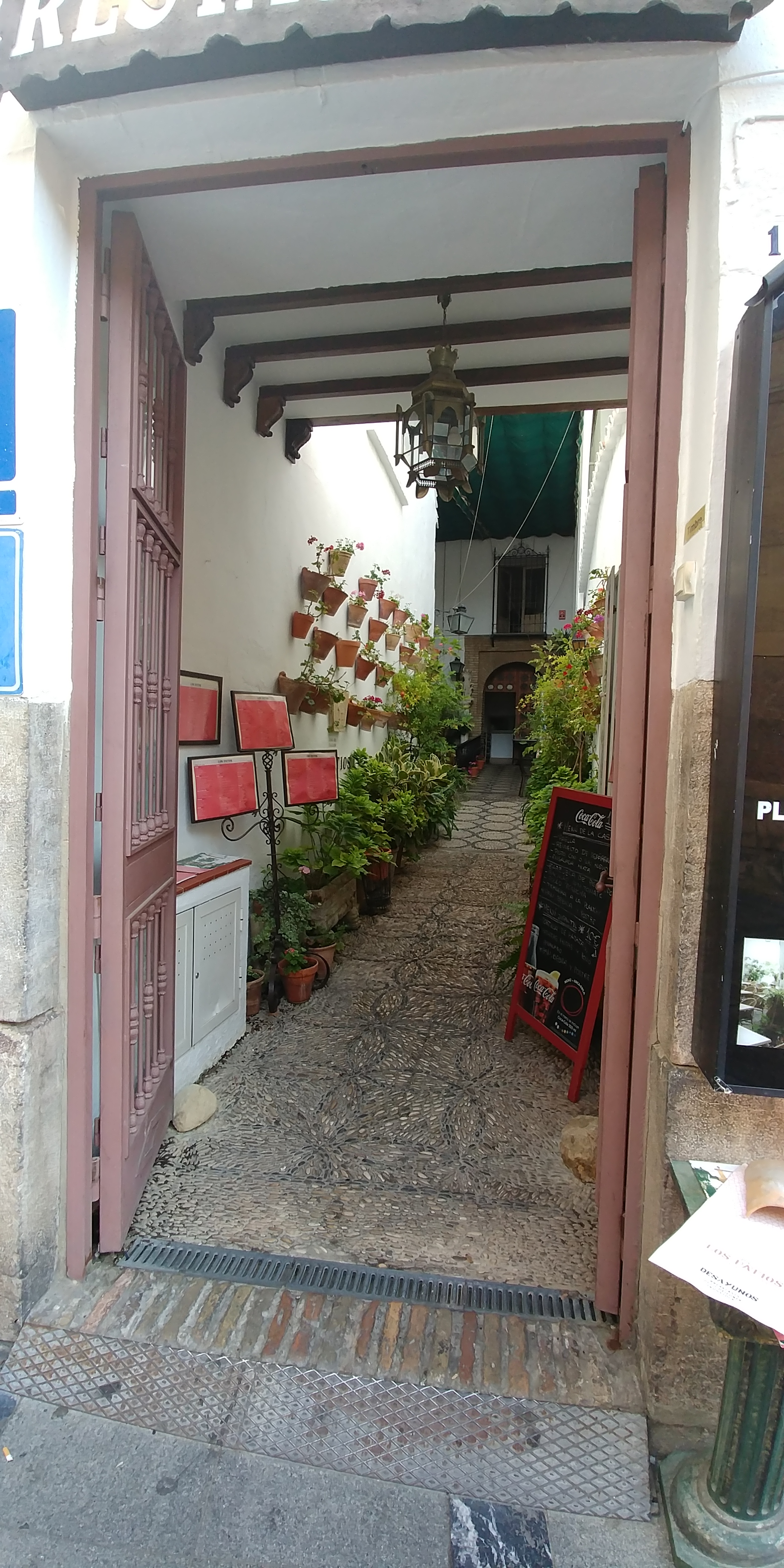
 Today most of the Jews and Muslims have left Cordoba. The streets referred to as the Juderia is where the Jewish people once lived and remains a beautiful and attractive part of Cordoba.  You will be charmed by the picturesque streets filled with flower-covered walls and patios.
Take a pic at the Calleja de las Flores

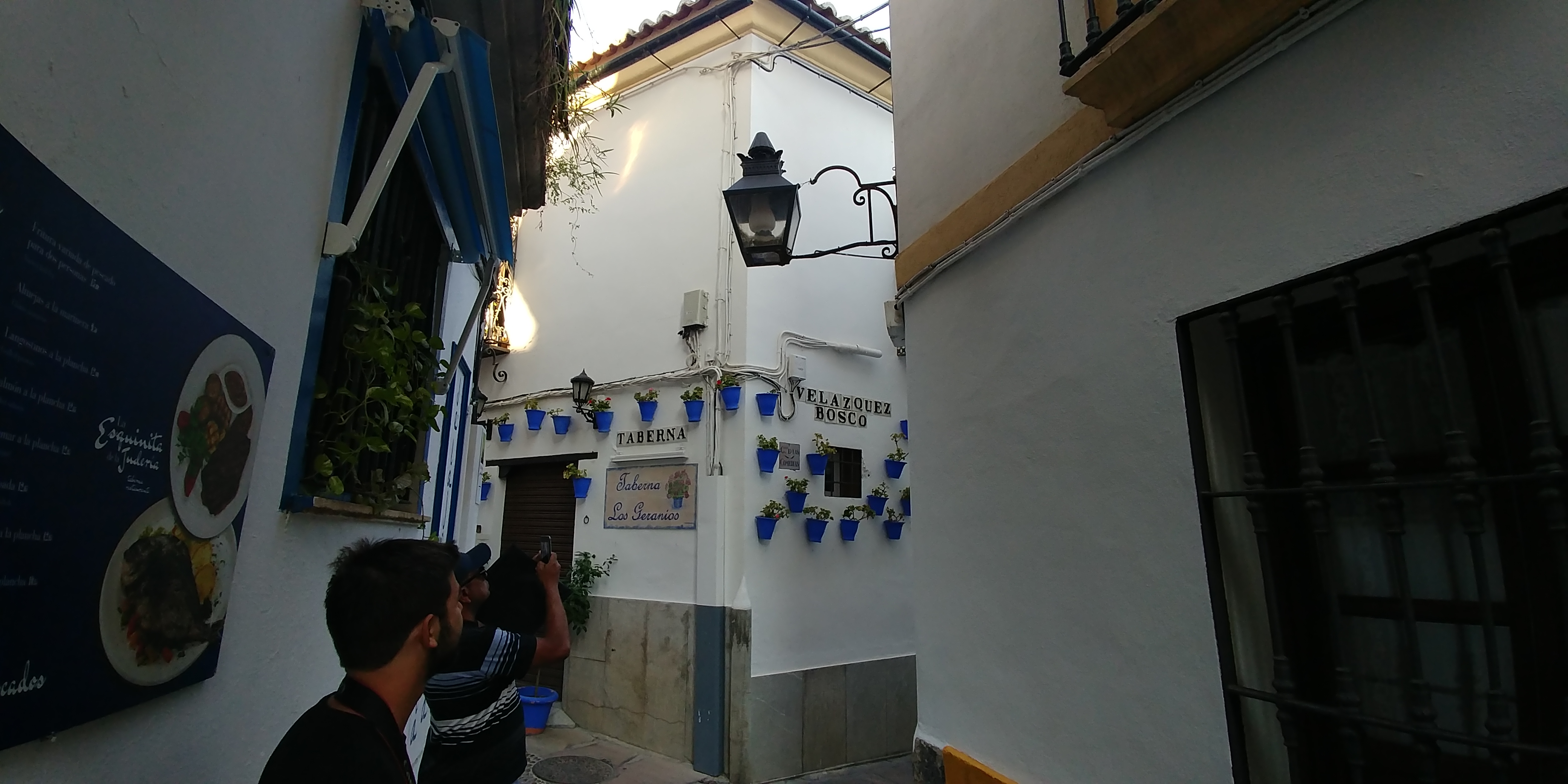
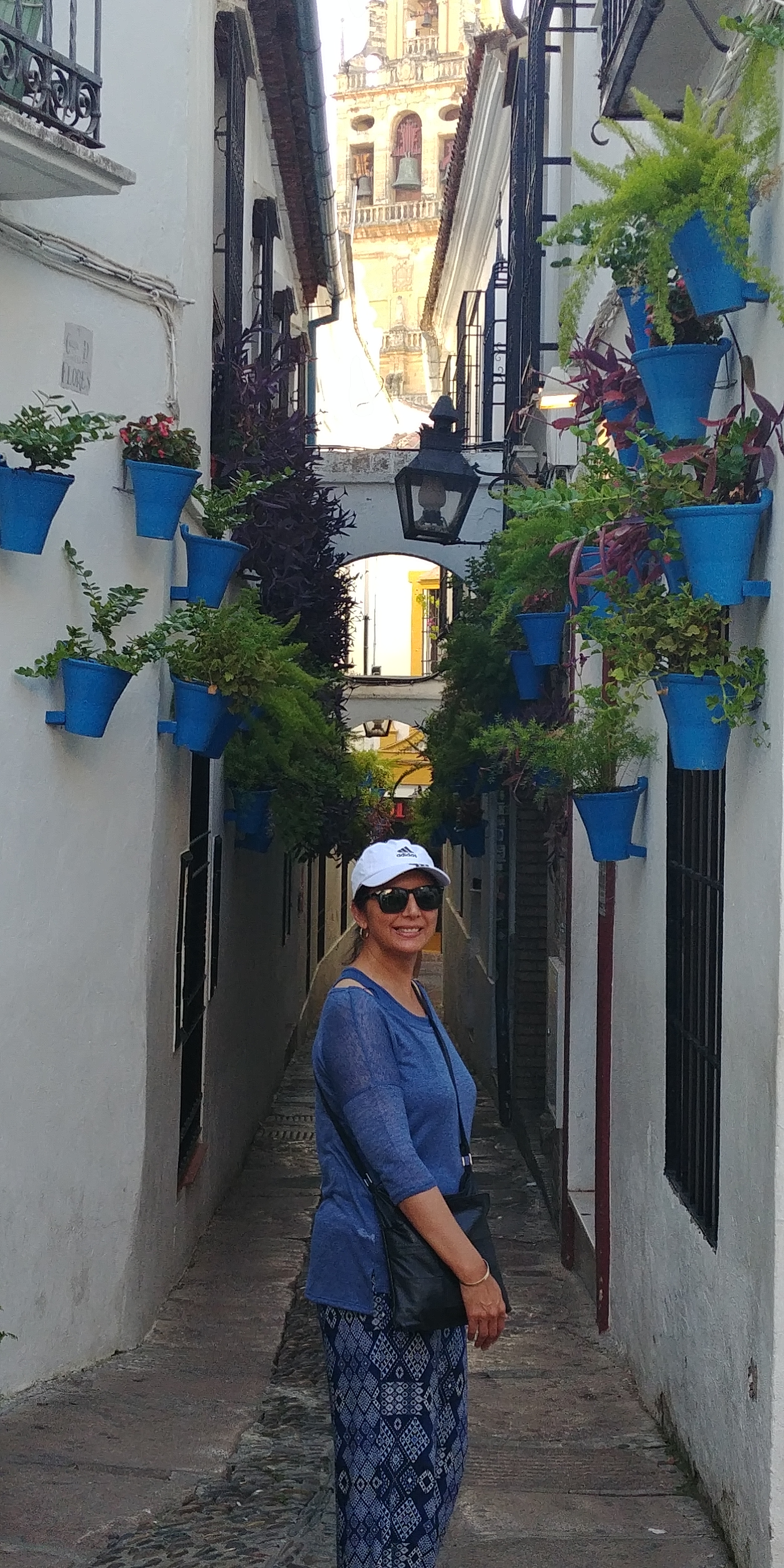
While walking around the Juderia, be sure to look out for this street – Calleja de la Flores – the street of flowers. . You may be confused by the many similar streets in the area but do not despair.
A good landmark to keep in mind is that you will be able to see the Minaret of the Mezquita peeping through in the background. Another is ofcourse the blue flower pots hanging down the walls on either side filled with brightly coloured flowers.

There are many tourist wanting to take their perfect Instagram pic in this street so timing is important if you want to take a good pic.

One other “must see” while in Cordoba is ofcourse a visit to La Mezquita, the Mosque-Cathedral of Cordoba. I’ve written a complete blog on my visit. You can read it here: https://withnarriman.travel.blog/2019/05/06/fall-in-love-with-cordoba-spain/

If you are enjoying my blog posts and find it to be interesting and useful, please leave a comment.

Featured

Fall in love with Cordoba – Spain

We visited Spain in September 2017. It was a trip that was long in the making in my head and heart so it turned out to be extra special that I could share it with my husband.

Spanish history is rich with Islamic influence and I was looking forward to visiting historic sites where I could see first hand what has been left of Islam in this European country.

We decided to spend much of our planned visit, in Andalusia, an autonomous community in the south of Spain. Andalusia territory is divided into eight provinces of which Cordoba, Granada, Malaga and Seville are the most popular for tourist visits.

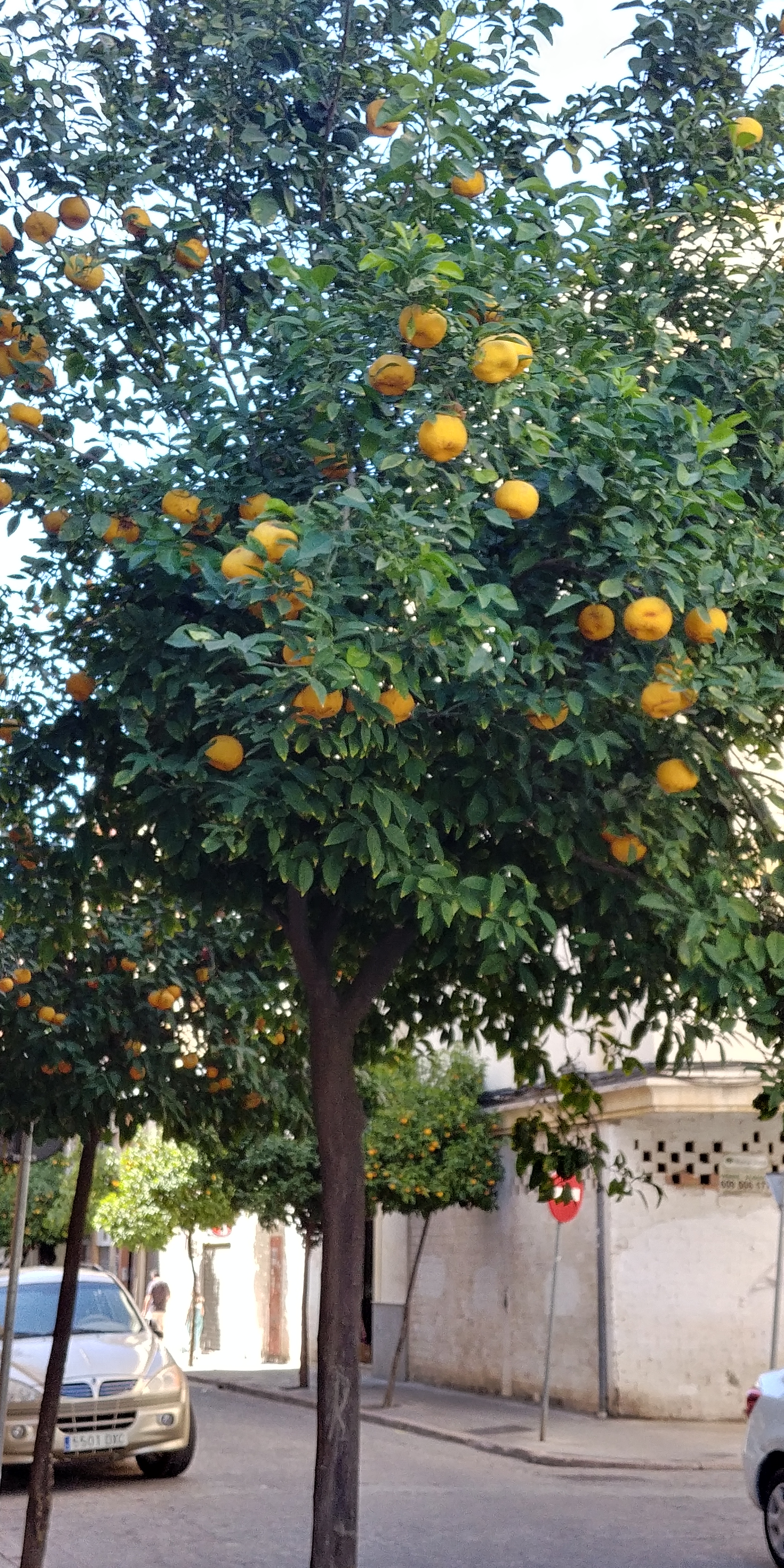
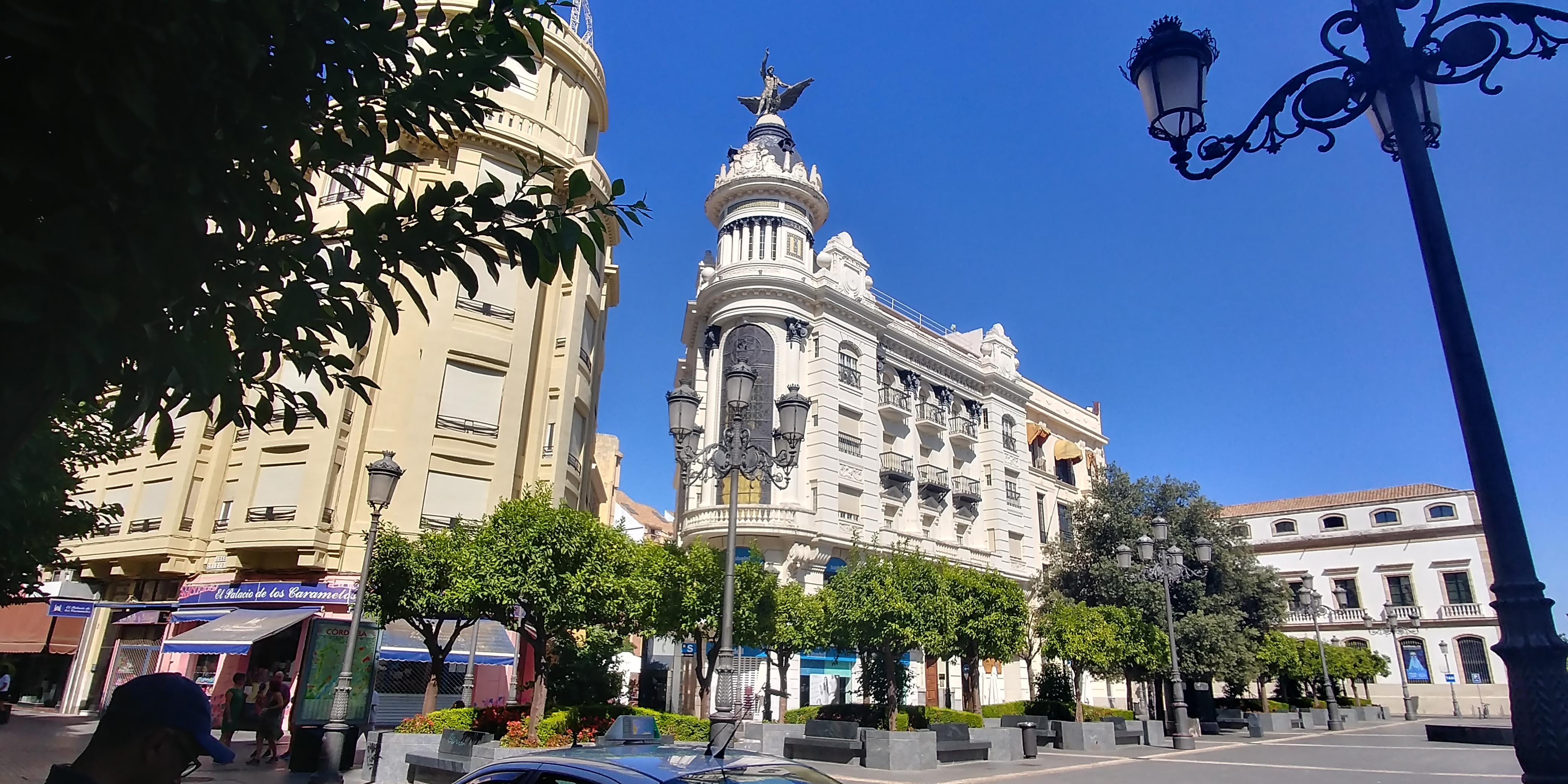
On this visit we spent time in Cordoba and Granada. I fell in love with Cordoba from the moment I breathed its air and smelled its orange fragrance drifting from the many orange trees that lines their walkways and streets.

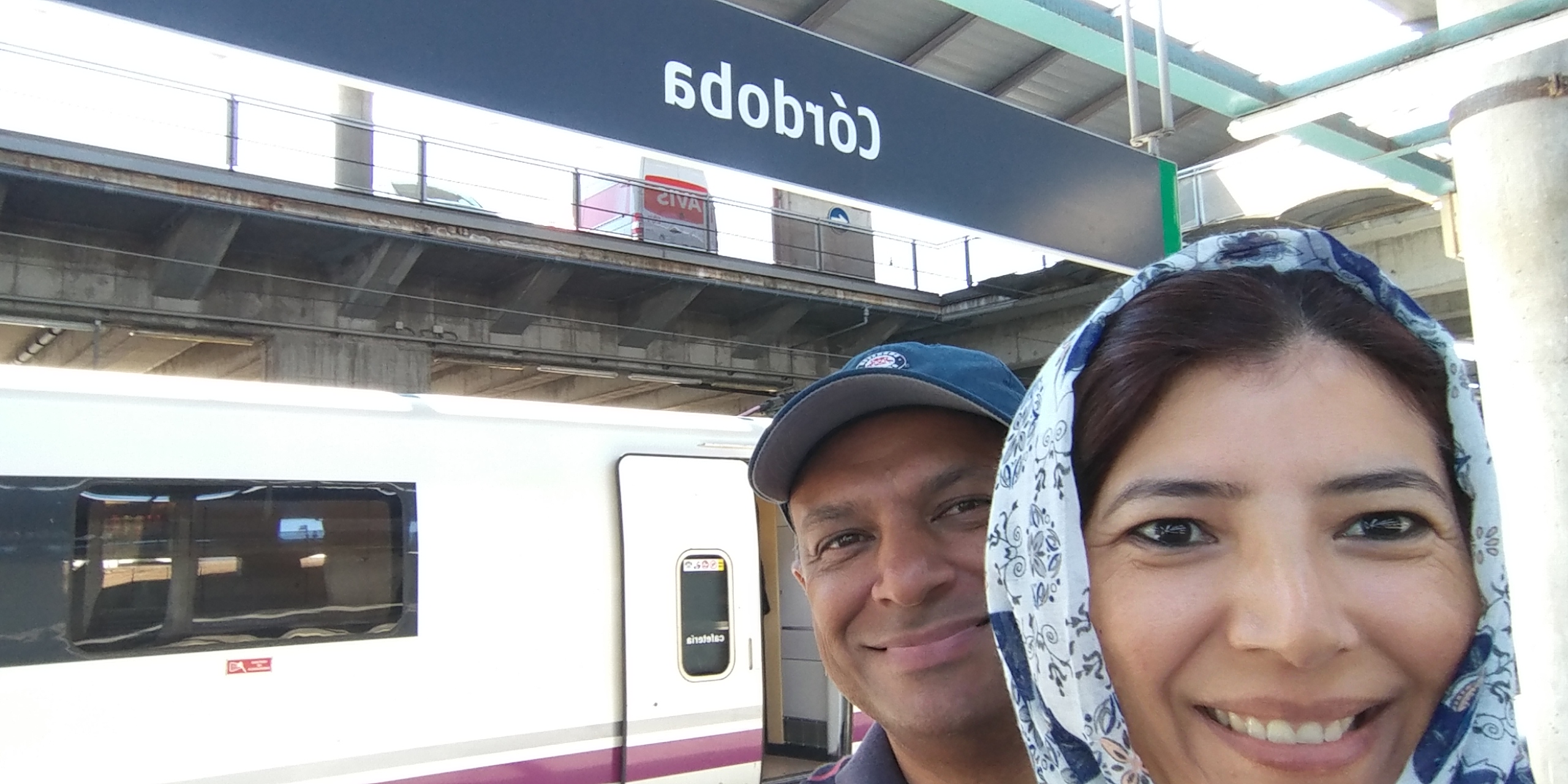
We arrived in Cordoba on the Monday, after we had spent the weekend in Madrid. The train ride from Madrid Atocha station to Cordoba takes a little over two hours depending on the route you choose.

 I remember arriving at Cordoba station not sure about what to expect. At first glance it looks like any other European town but as you walk further from the train station into the centre of Cordoba, you notice the change in the architecture of the buildings from modern to medieval Roman with a hint of Moorish influence.

The city of Cordoba was a Roman settlement until it was invaded and conquered by the Umayyad Caliphate in the eighth century. There is a distinct visibility of Islamic remnants in this quaint town.

In another blog I will tell you more about some must-do’s in Cordoba, in this blog I want to draw your attention to the main attraction :

Mosque–Cathedral of Córdoba

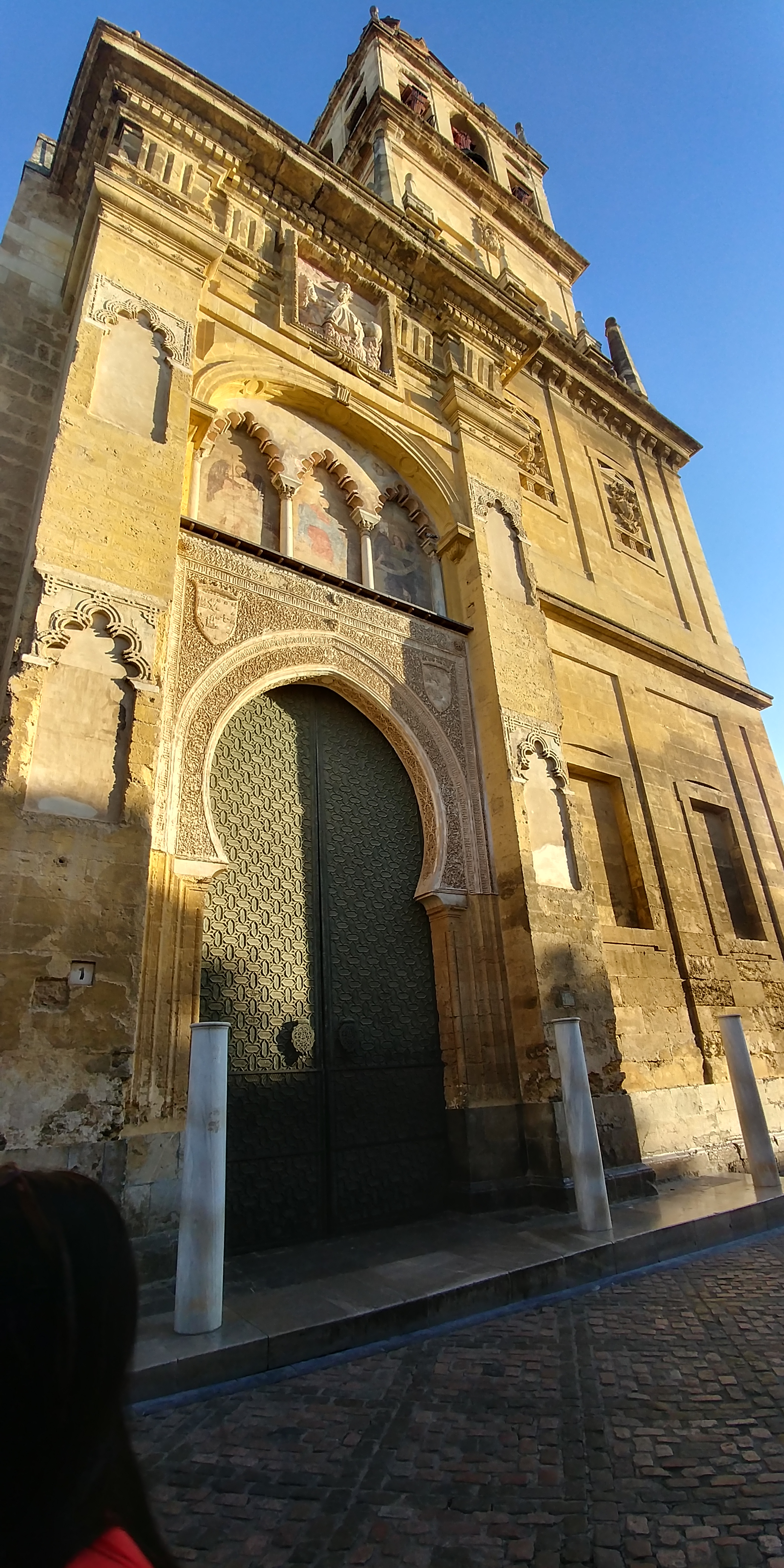
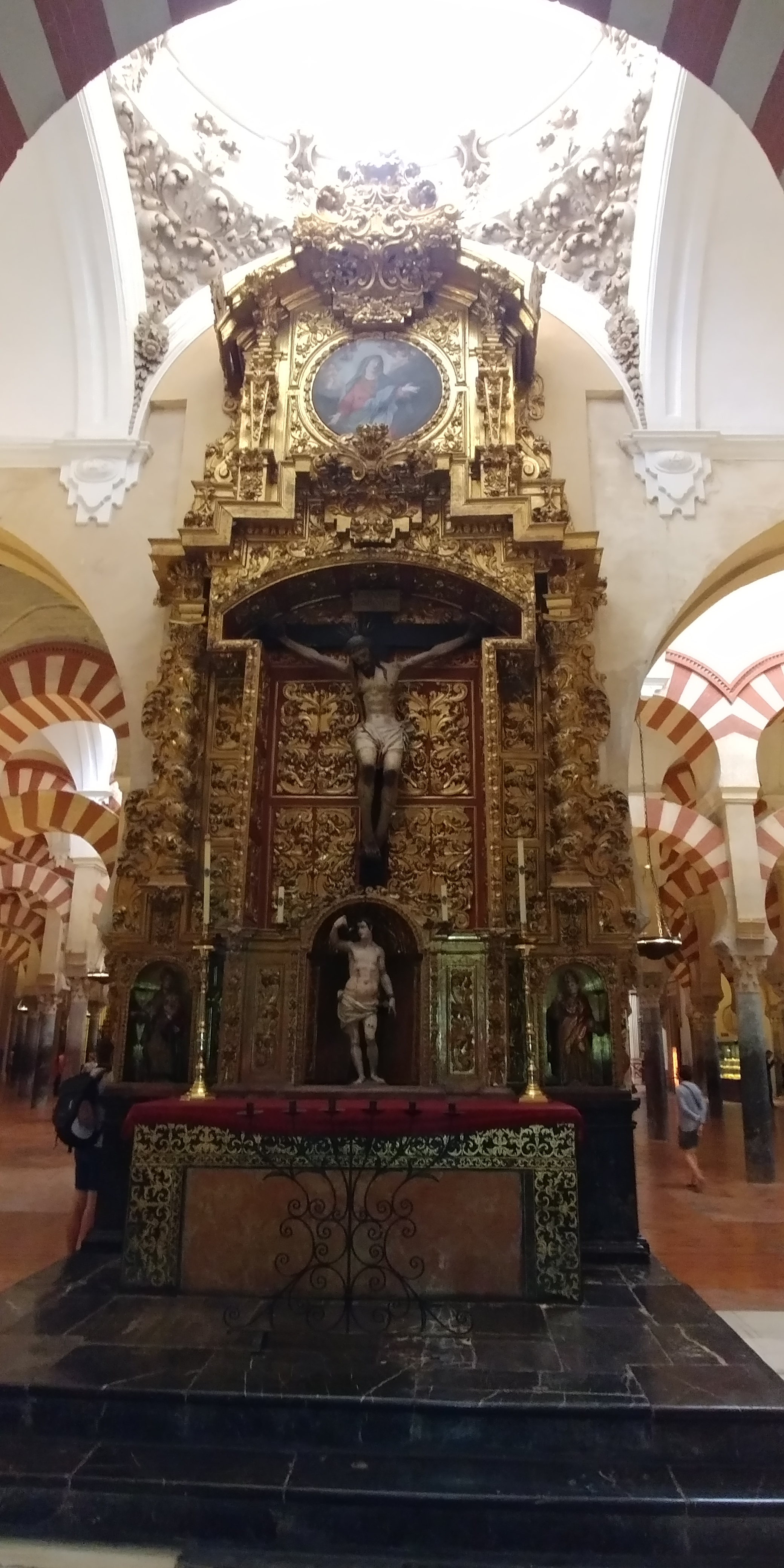
The Great Mosque of Cordoba – La Mezquita- was built in 786 and expanded several times until the Christian Reconquesta when a Cathedral was built right in the centre of the mosque area. Most Spanish people still refer to it as the Mezquita, but its official name is now the Mosque-Cathedral.

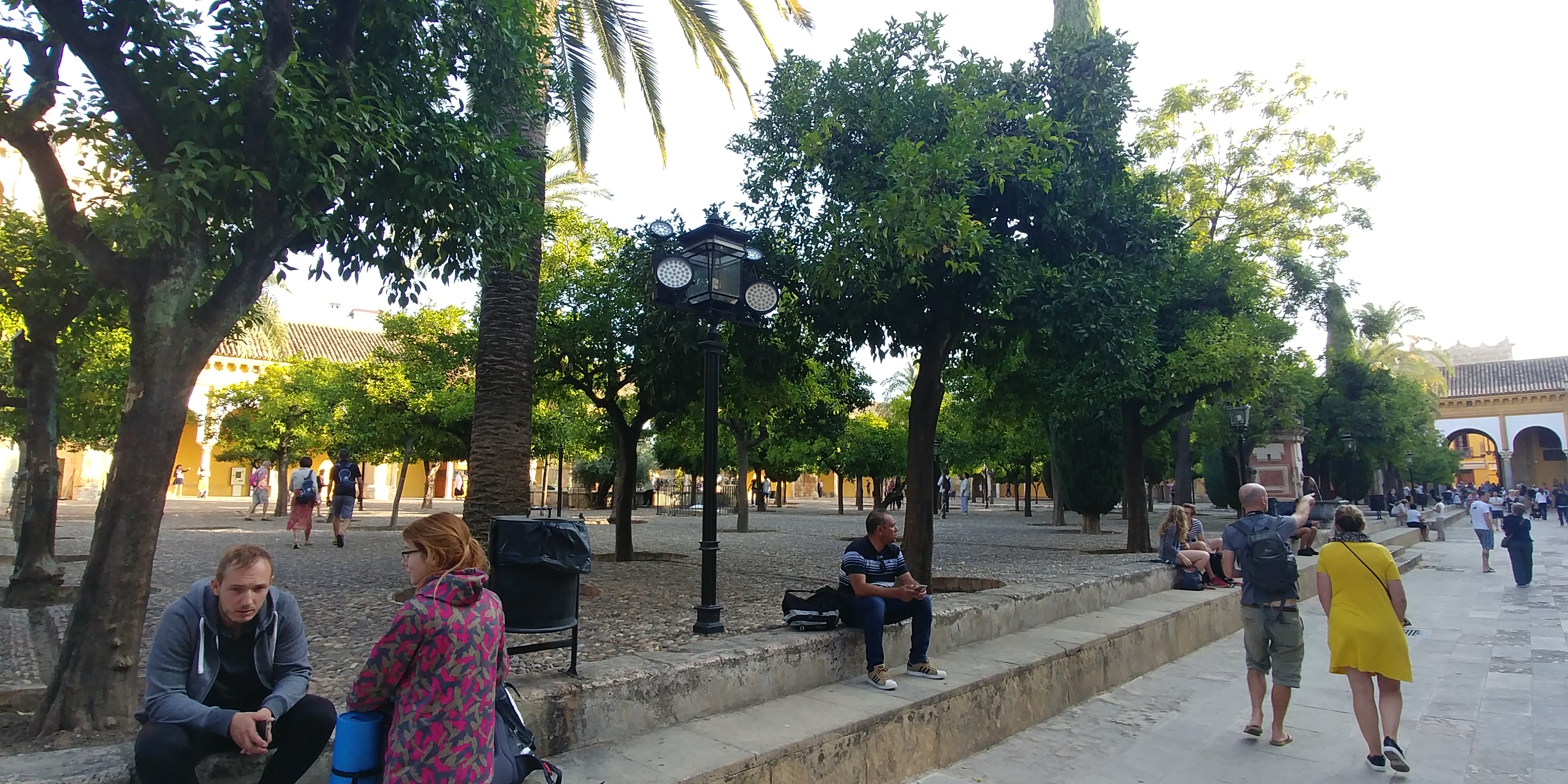
As you walk through the entrance to this magnificent architectural gem, you step into a courtyard, Patio De Los Naranjos, which has at its centre a fountain, an orange grove with a covered walkway circling the Mosque.

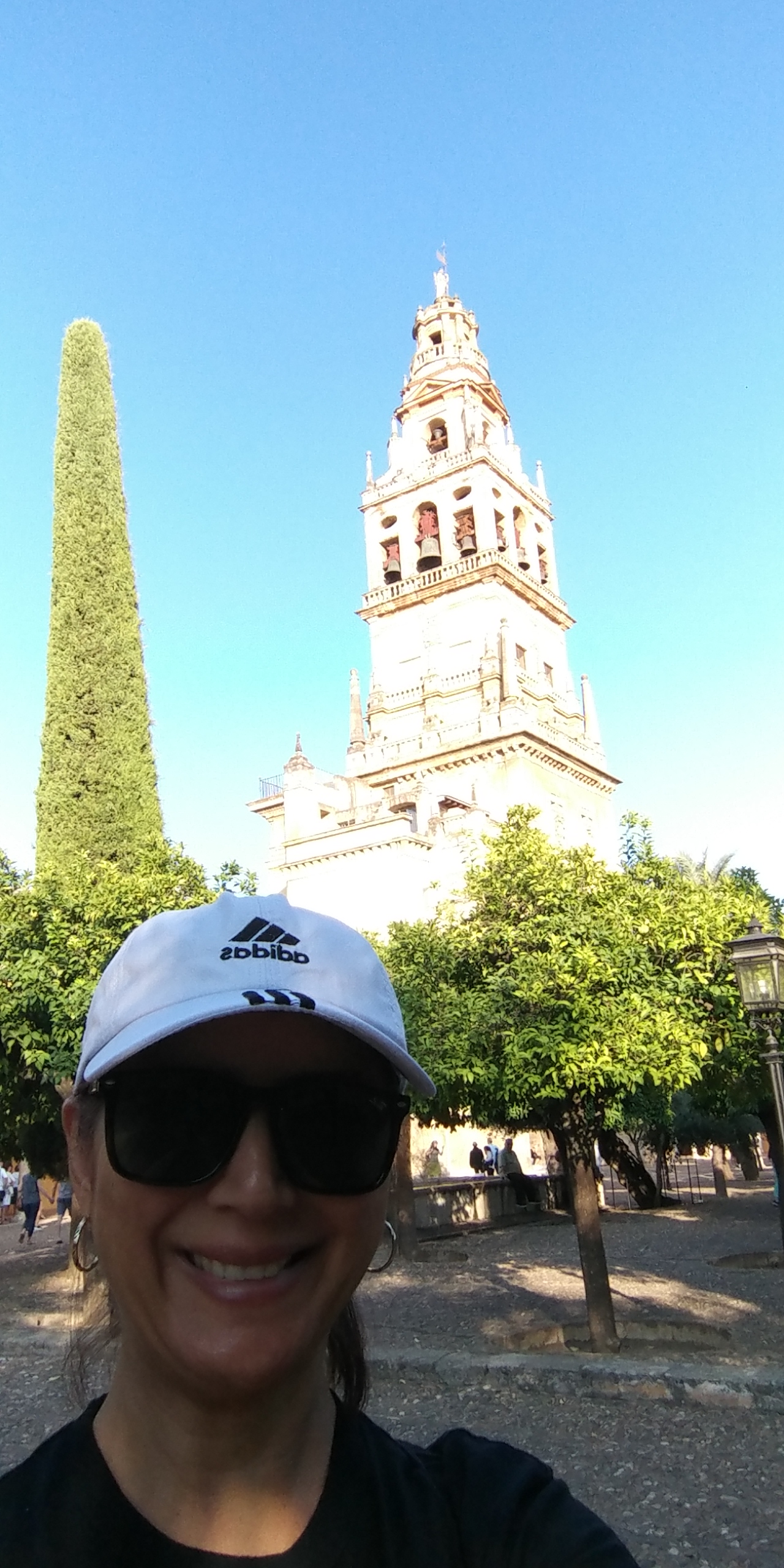
To the right you will see the foundation of a minaret which has now been converted into a bell tower.

 A bitter-sweet reminder of a time when the call to prayer was heard throughout the Iberian Peninsula. Now standing in this wide expansive courtyard, the one thing that is deafeningly missing, in Cordoba and most of Spain, is the Muslim call to prayer.

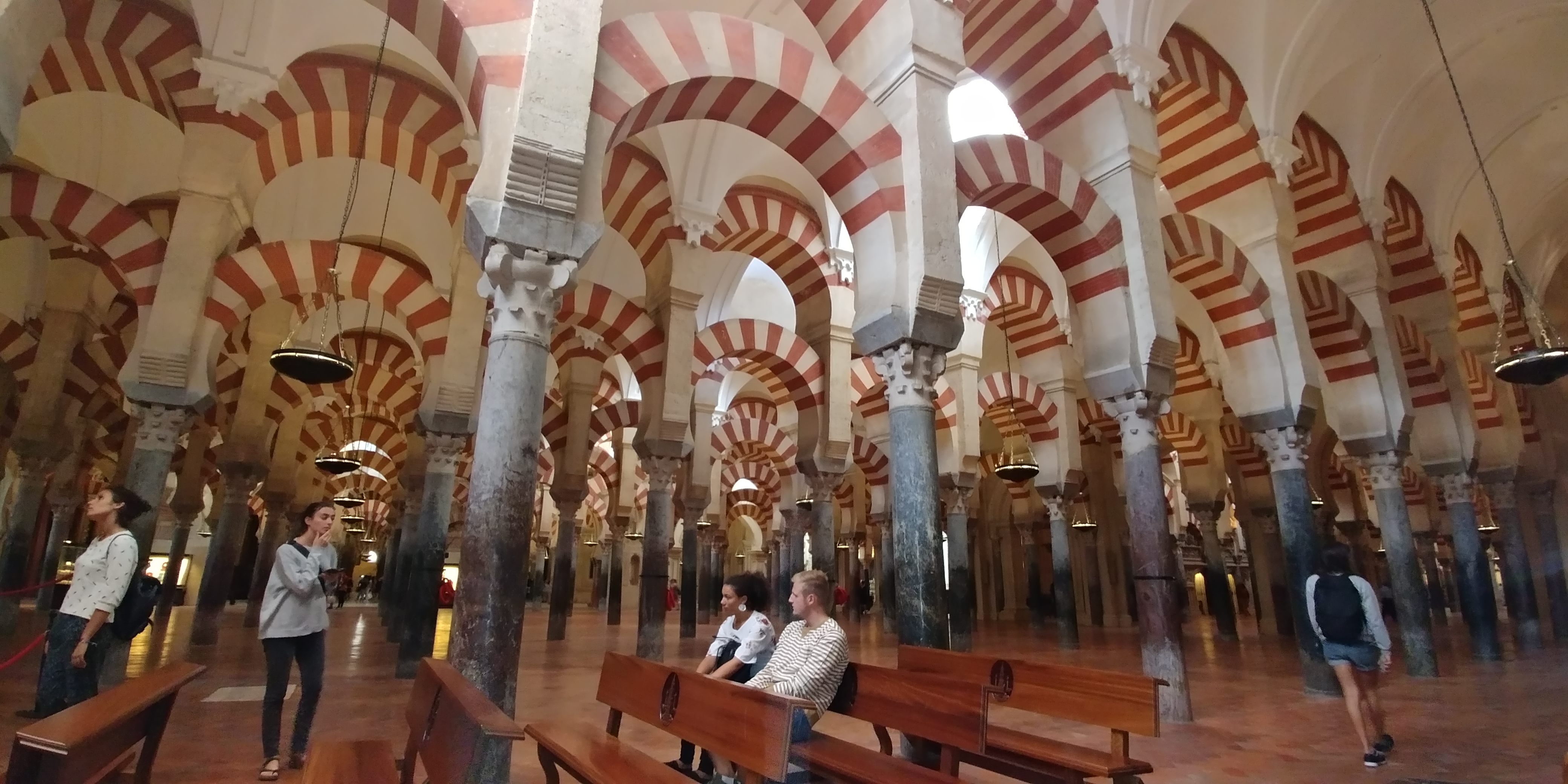
The courtyard is large and spacious with pathways leading you to huge doors. Step through the Puerta de la Palmas (the Door of Palms) and you find yourself standing in a large Prayer Hall where more than 850 red and white columned arches rise above you.

From this view it’s hard to imagine that this is anything other than what it was built to be, a Mosque, but as you walk deeper into the Prayer Hall, you are suddenly surprised to see right there in the centre, squats a Renaissance Cathedral dating back to the early sixteenth century.

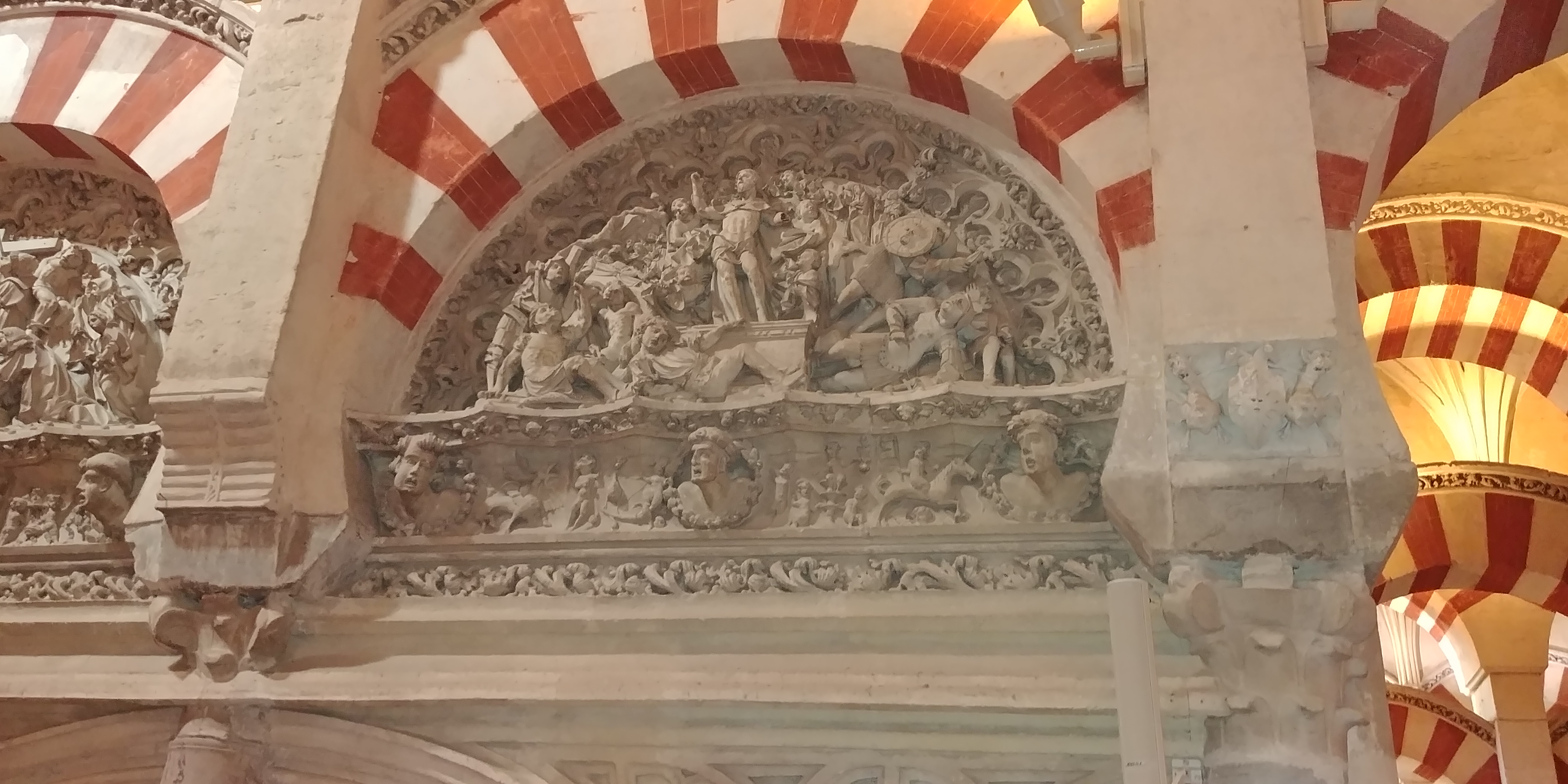
Tourist are mulling around and one is suddenly struck by the mixed emotions that both Muslim and Christians visiting here must be feeling. Here is an example of two worshipping places existing within each other and maintaining its individual architectural style under one roof. It’s a moment to reflect and the space lends itself for deep reflection.

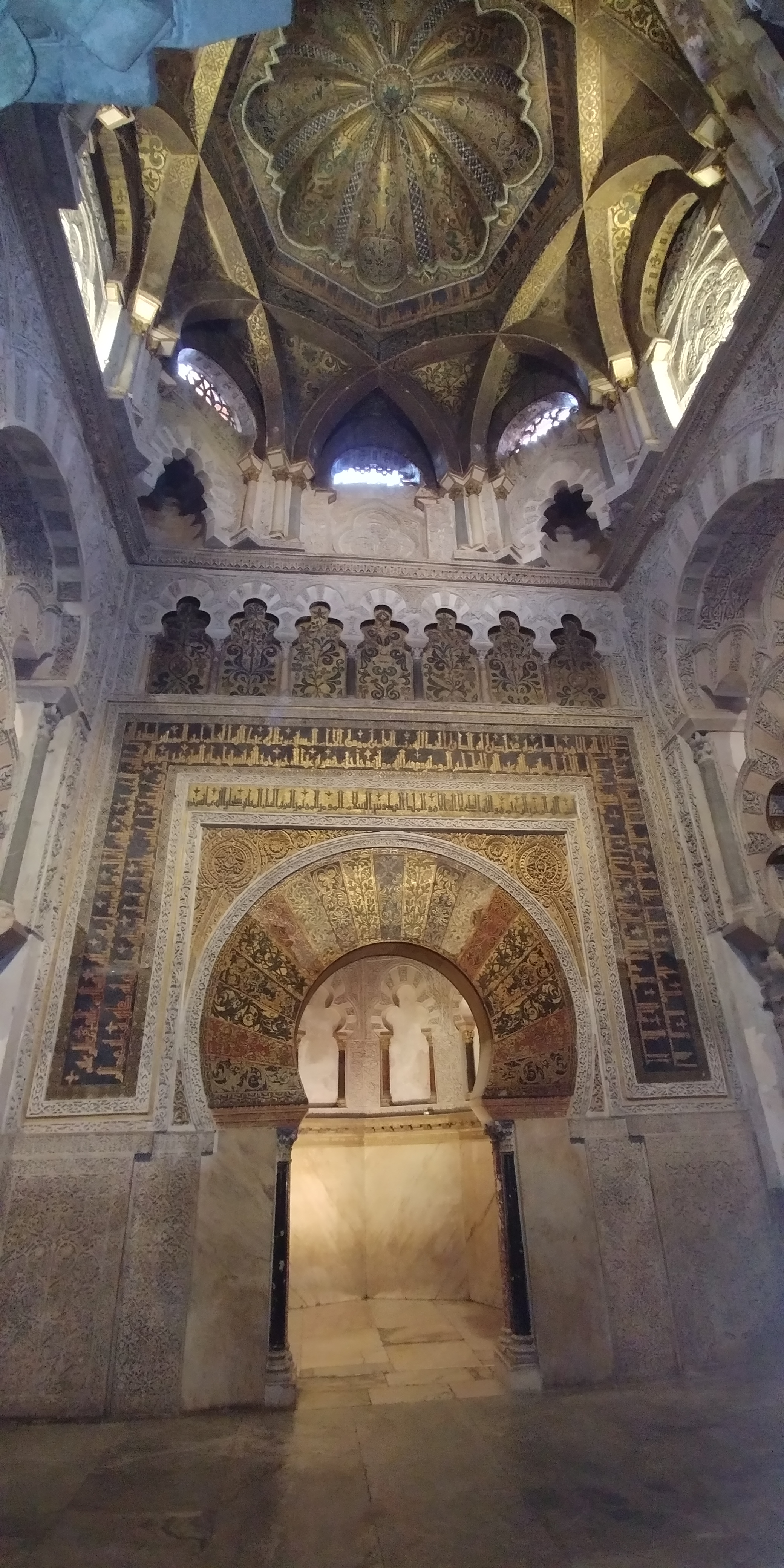
Even with the Cathedral towering in the centre of this Mosque, the horseshoe style arched Mihrab with it’s dazzling Dome remains in intact as a testament to the many sermons and prayers that must have reverberated within these walls in a time long ago.

My visit to the Mezquita left me feeling a sense of sadness and wonder. Sad to see that the prayer hall has now become a place where tourist stand in awe of the brilliant architecture instead of a place where Muslims gather to complete their daily prayers. Yet I stare in wonder at the ingenuity of the architects who have over a period of hundreds of years, managed to maintain all of the Islamic Architecture that this Mosque has to offer, whilst placing a Cathedral at it’s core.

The Mezquita is open for guided tours or individual tourist at a cost of 10 Euros from 10am. The courtyard area is free for you to roam around in but if you want to see the Mosque and Cathedral area, you will have to pay the entrance fee.

Travel Tip: Early morning between 8.30am and 9.30am individual tourist are allowed to enter for free while workers are cleaning. We visited during this time and found it to be a good time for deep reflection and to take in the energy of spiritual awareness and peace that is present in the early morning silence of the Mosque-Cathedral.

Featured

Paris – the city of love or light?

Who can forget the famous line in the 1942 movie Casablanca when Humphrey Bogart tells Ingrid Bergman “We’ll always have Paris” referring to their love and the time they spent in Paris.

Paris has been called the City of Lights largely due to the fact that it was one of the first European countries to use gas street lighting on a large scale to light up its many boulevards. But it is also referred to as the City of Love.

Its difficult to understand why a city would be associated so strongly with romance and love. I went to Paris in June 2018 and found out for myself what makes this city a place for lovers, where romance flourishes and love overflows.

The Eiffel Tower

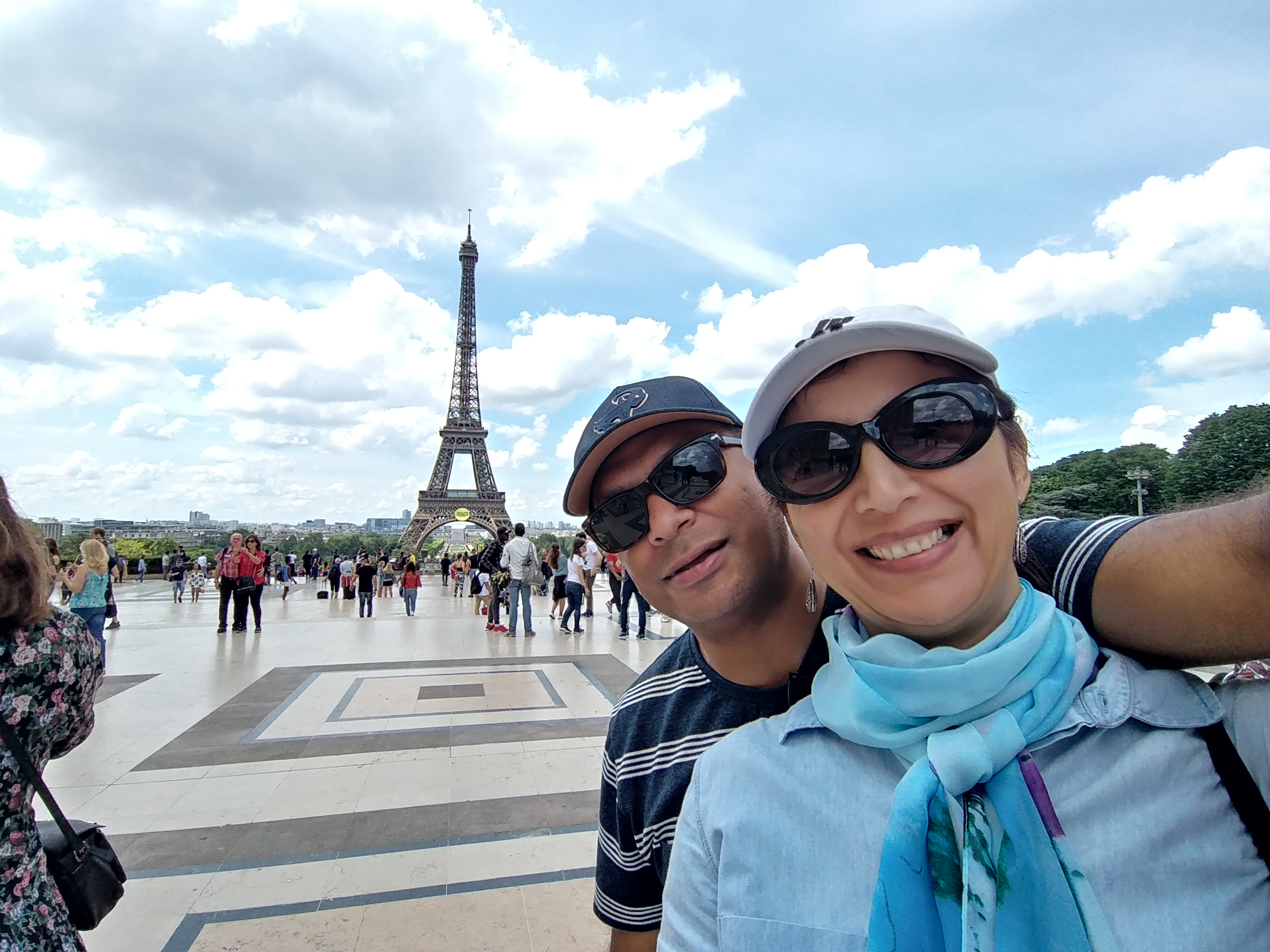
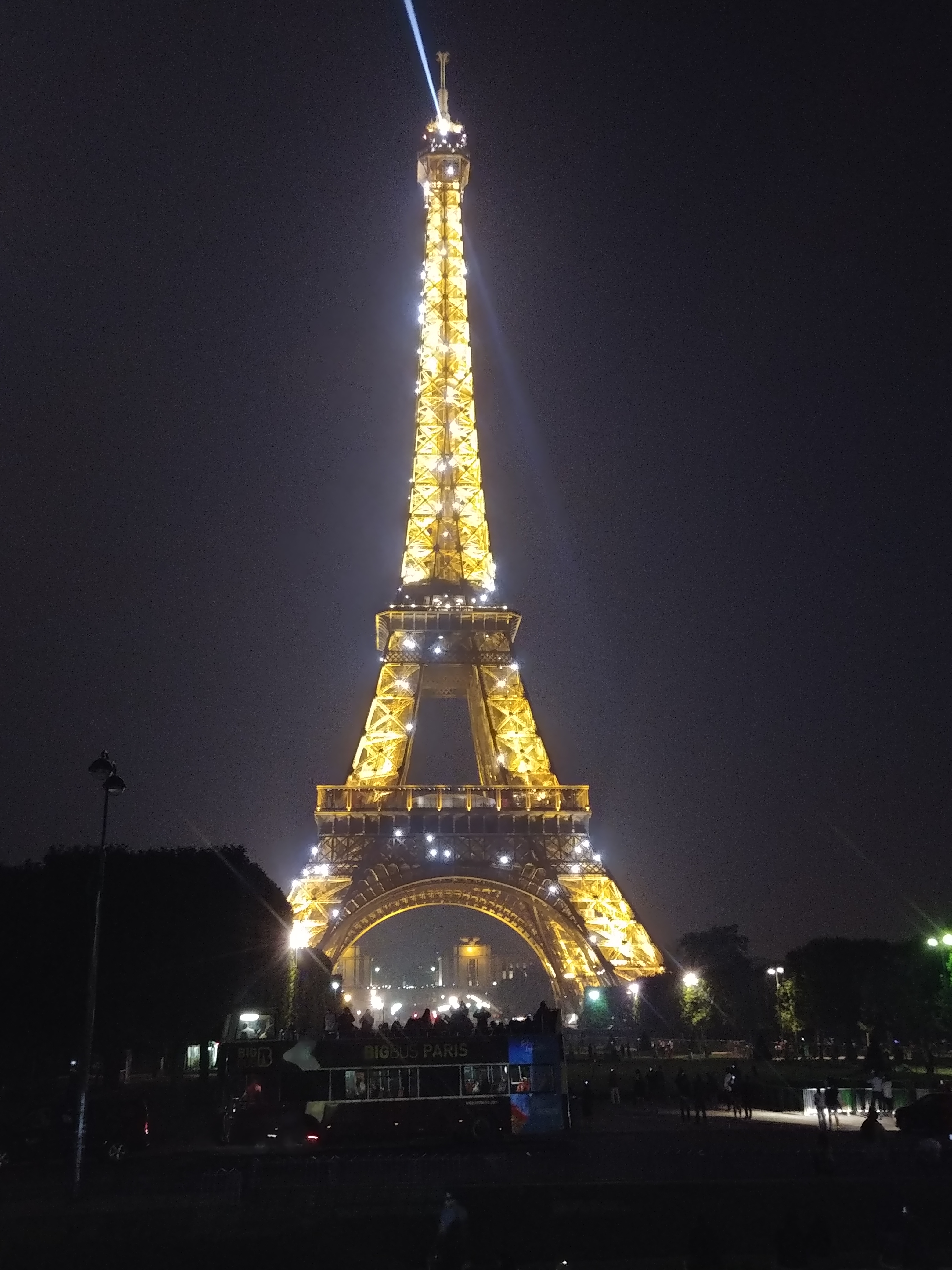
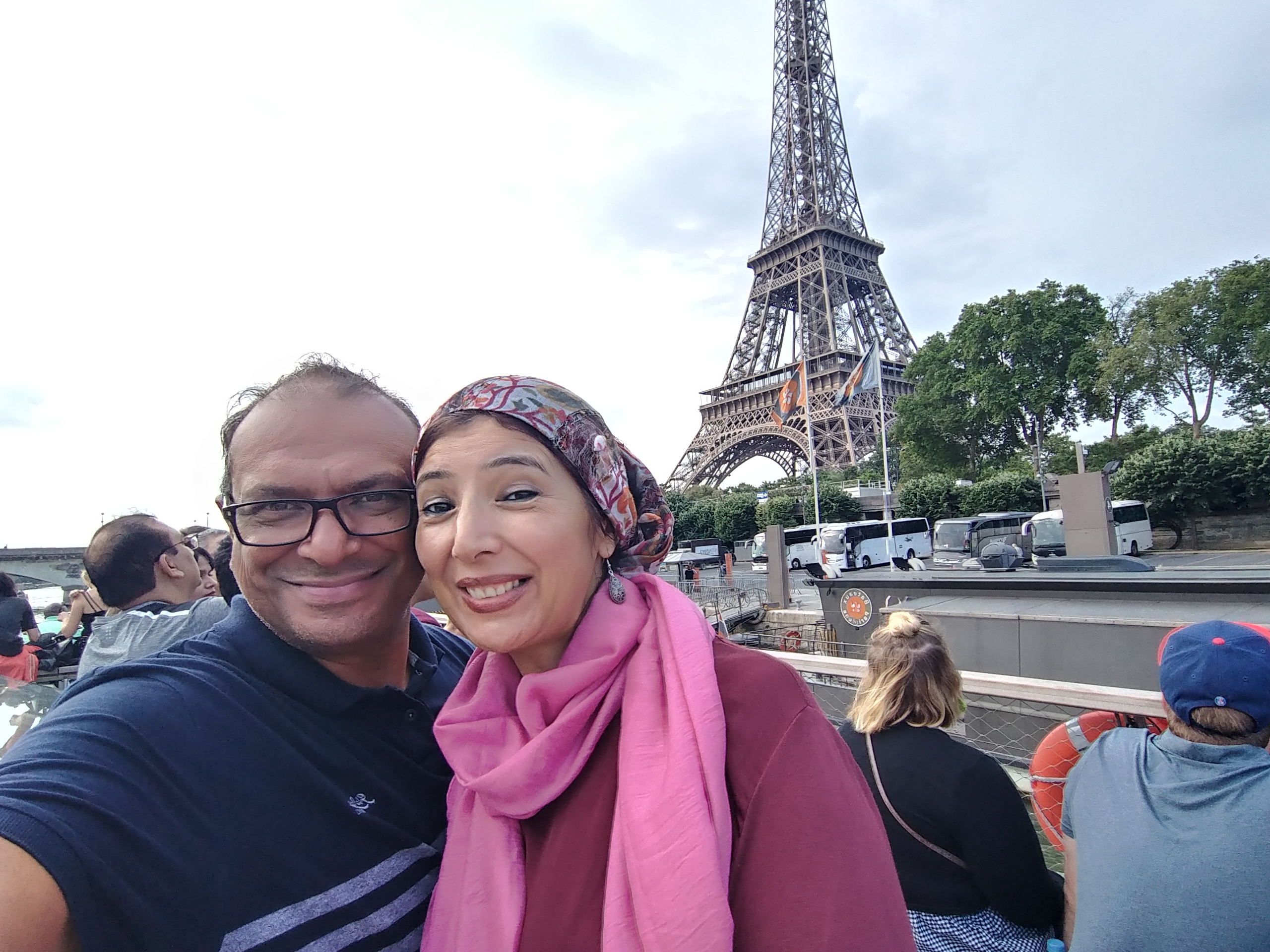
When we think of Paris, we think of the Eiffel Tower. It’s no wonder then that the first thing you want to do once you arrive and settle in, in Paris, is make your way to the Eiffel Tower. This iconic landmark stands as a symbol of romance in the centre of Paris and few who has visited Paris can deny that it represents all that we’ve come to associate with love.

Whether its by day or night, when the Eiffel Tower is lit up with 20 000 light bulbs, lovers find themselves drawn to its mesmerising beauty. One would think that a structure which has been constructed with wrought iron would appear cold and dis-engaging but the opposite is actually true. As soon as you spot the Tower in the distance you feel moved to find your way towards it to marvel at its brilliance.

The Champs Elysees

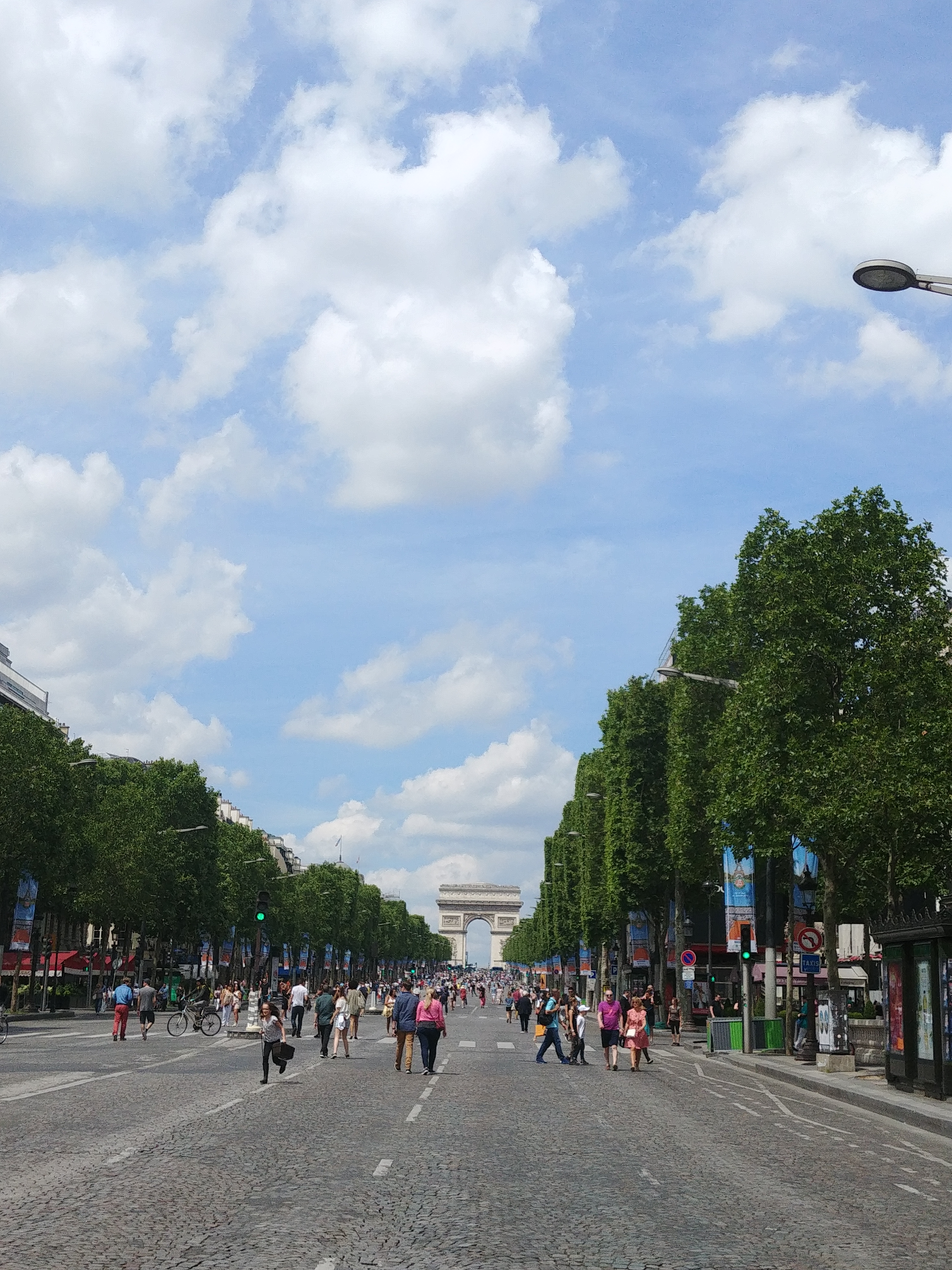
The Champs Elysees is regarded to be one of the most recognised avenues in the world. As a cyclist, I associated the Champs Elysees with the Tour de France before visiting Paris last year. It is in this famous avenue where the race finishes after riders spent just over 3 weeks in the saddle racing through France and sometimes passing through nearby countries over 21 day long stages.

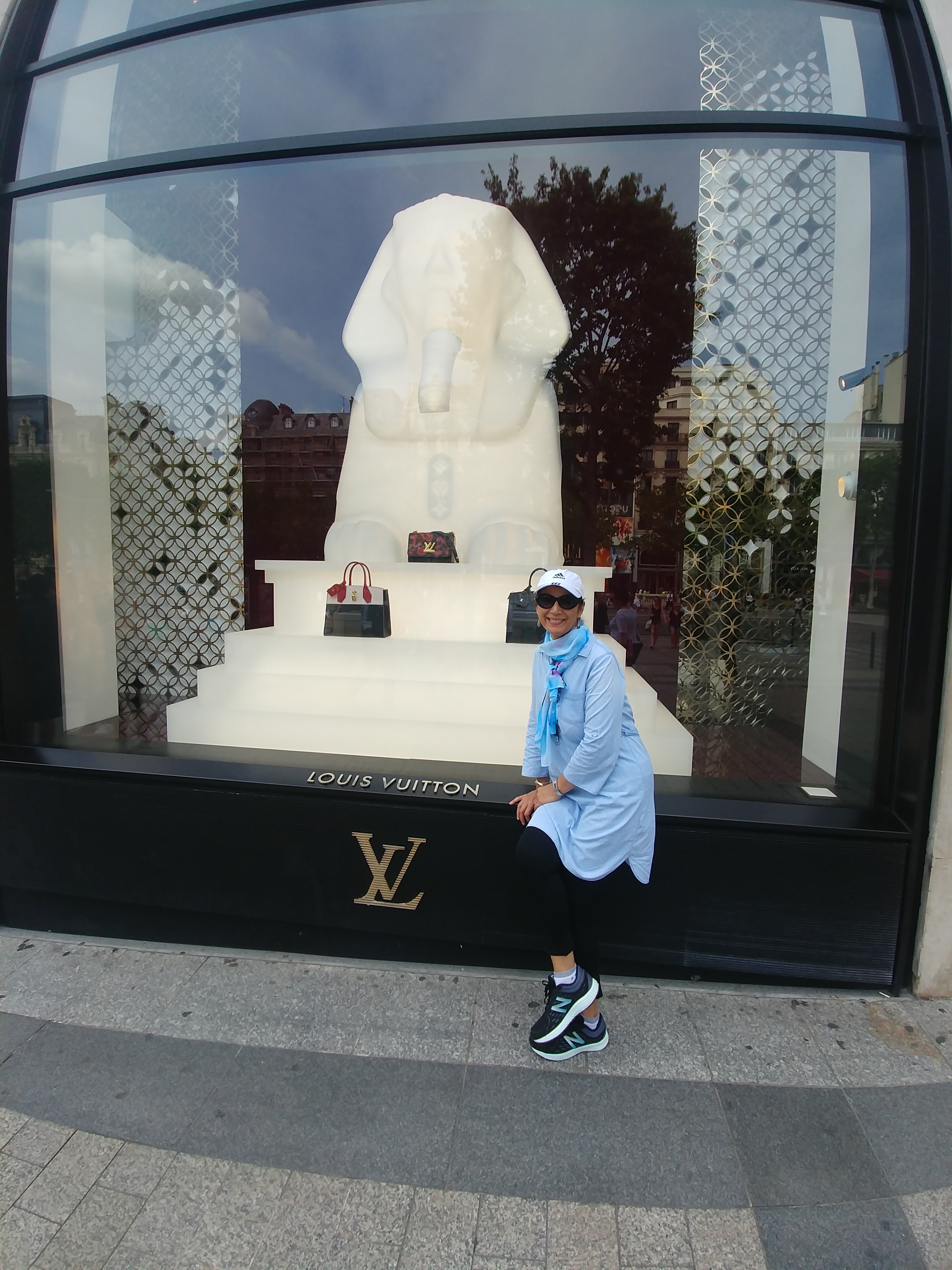
The Champs Elysees (pronounced as Cha-za-lee-zay) is also well known for its theatres, cafes and luxury shops. One of the most well known brands have a luxurious store on the Champs Elysees. In 1854 Louis Vuitton opened his first store in Paris, but it wasn’t until 2005 that this famous brand opened its doors to a 1900 square meter luxury store on the Champs Elysees.

Strolling down the Champs Elysees is a must do on your holiday to Paris. If you are a keen fashionista and love walking, then this avenue will give you the best of both worlds.

Couples favour the avenue for a romantic stroll because it provides so much to see and offers cosy cafes to stop at for a quick coffee or a leisurely lunch.

The River Seine

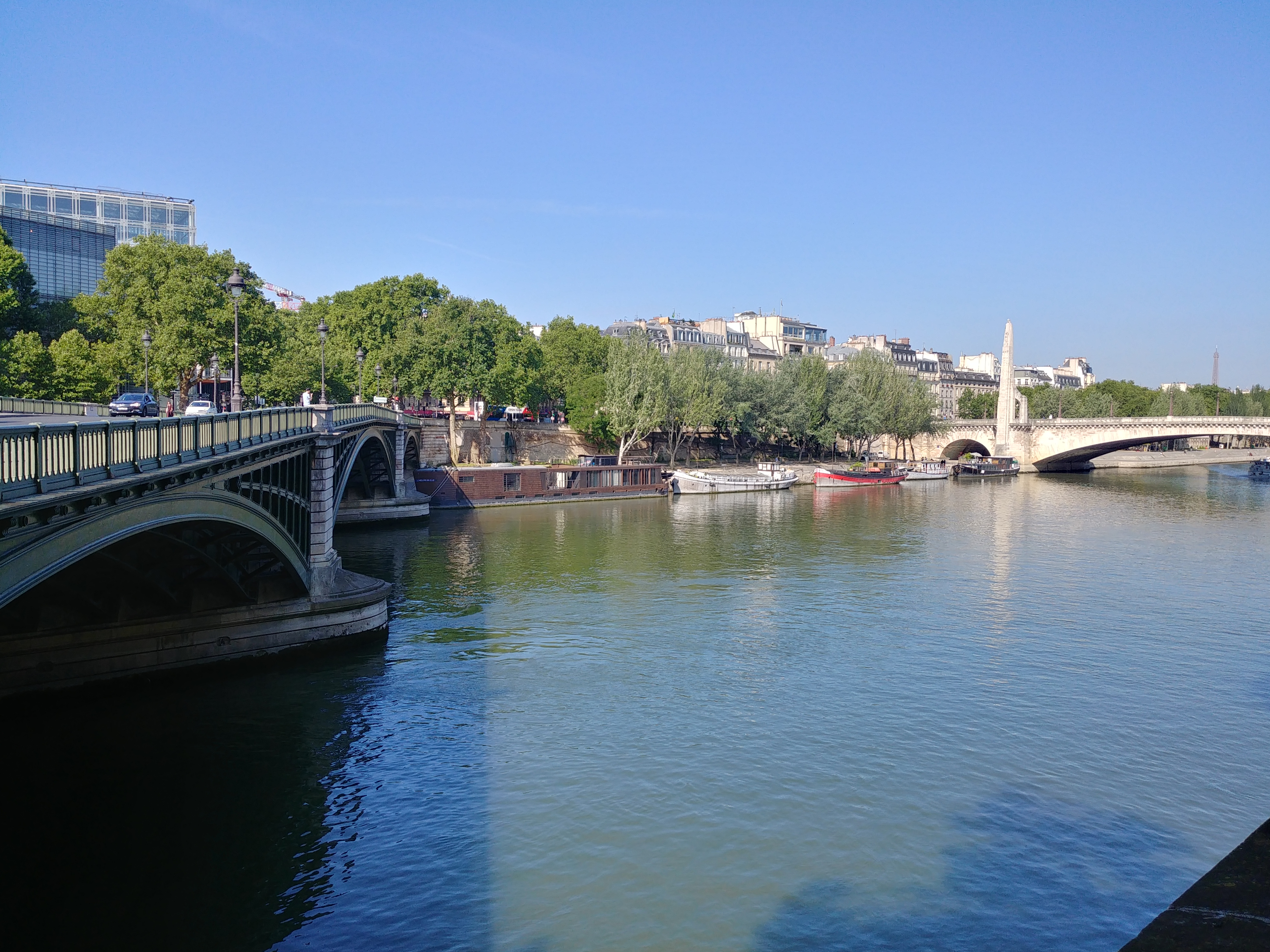
Capturing the essence of Paris and running through the city is the Seine River which is an important commercial waterway of the Paris Basin in the north of France.

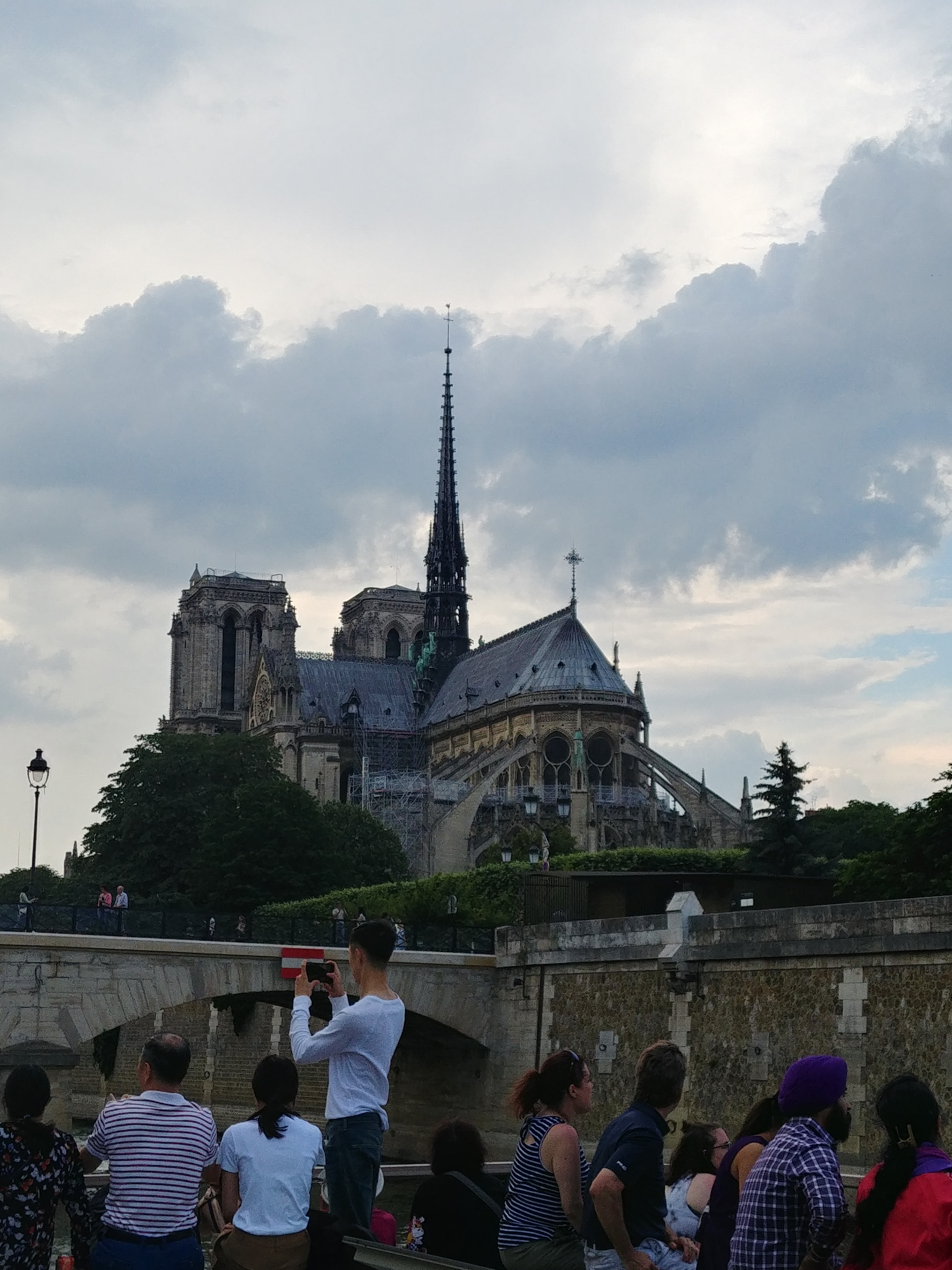
A cruise on this river will leave you in awe as you pass by the Eiffel Tower, Notre Dame Cathedral, Musee d’ Orsay and Invalides.

We decided to do a cruise on the River Seine on the same day that we saw the Eiffel Tower for the first time. We had also been to the Notre Dame Cathedral so it was fitting to now have a view of these two iconic landmarks as we cruised down the river.

Wherever you find water, boats and cruises, you find couples cosying and cuddling, right? Ofcourse. Now add to that cruise the Paris skyline with the Eiffel Tower and the Notre Dame Cathedral passing in the distance and you have the makings of the most romantic moments.

Louvre Museum

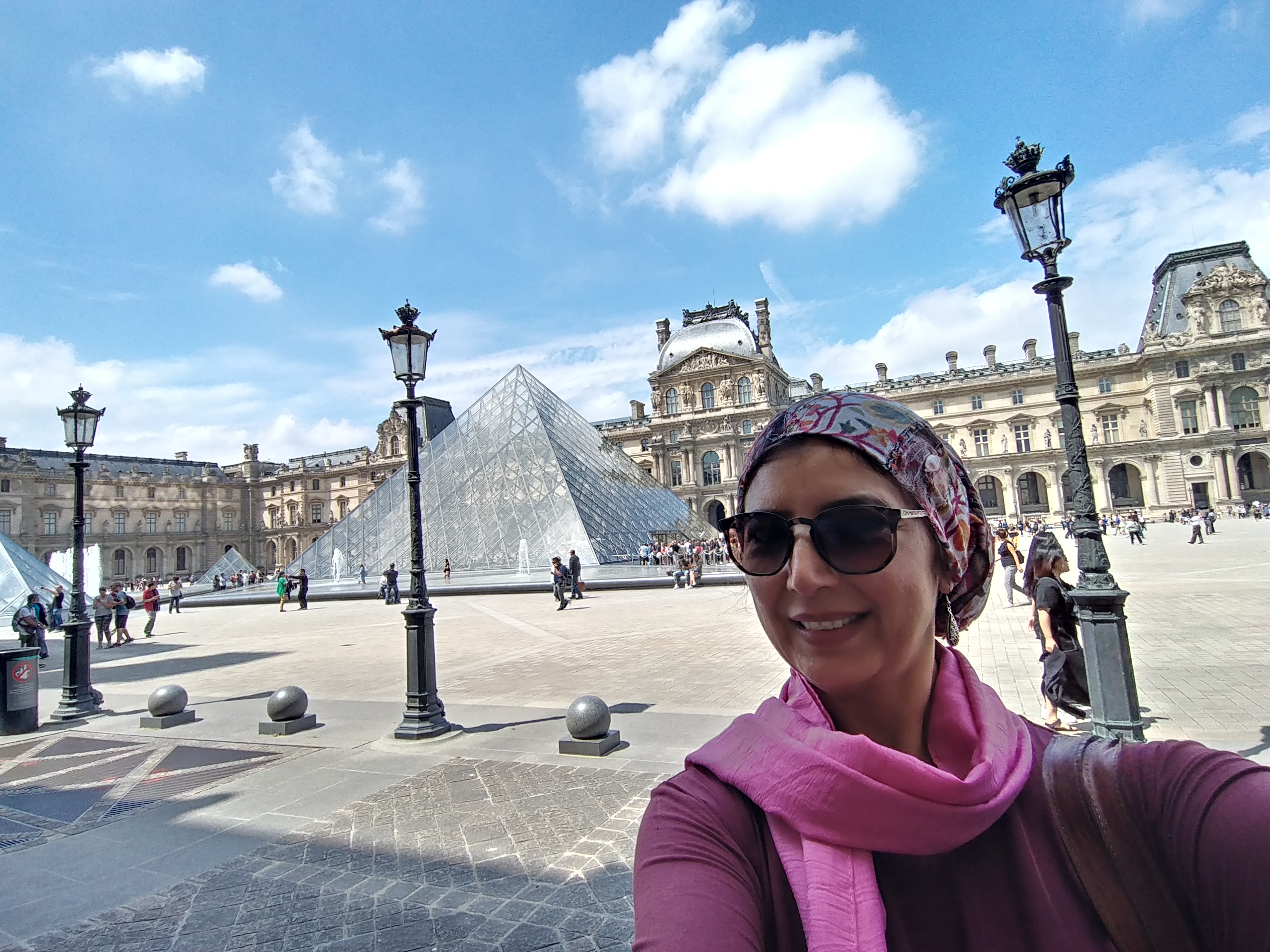
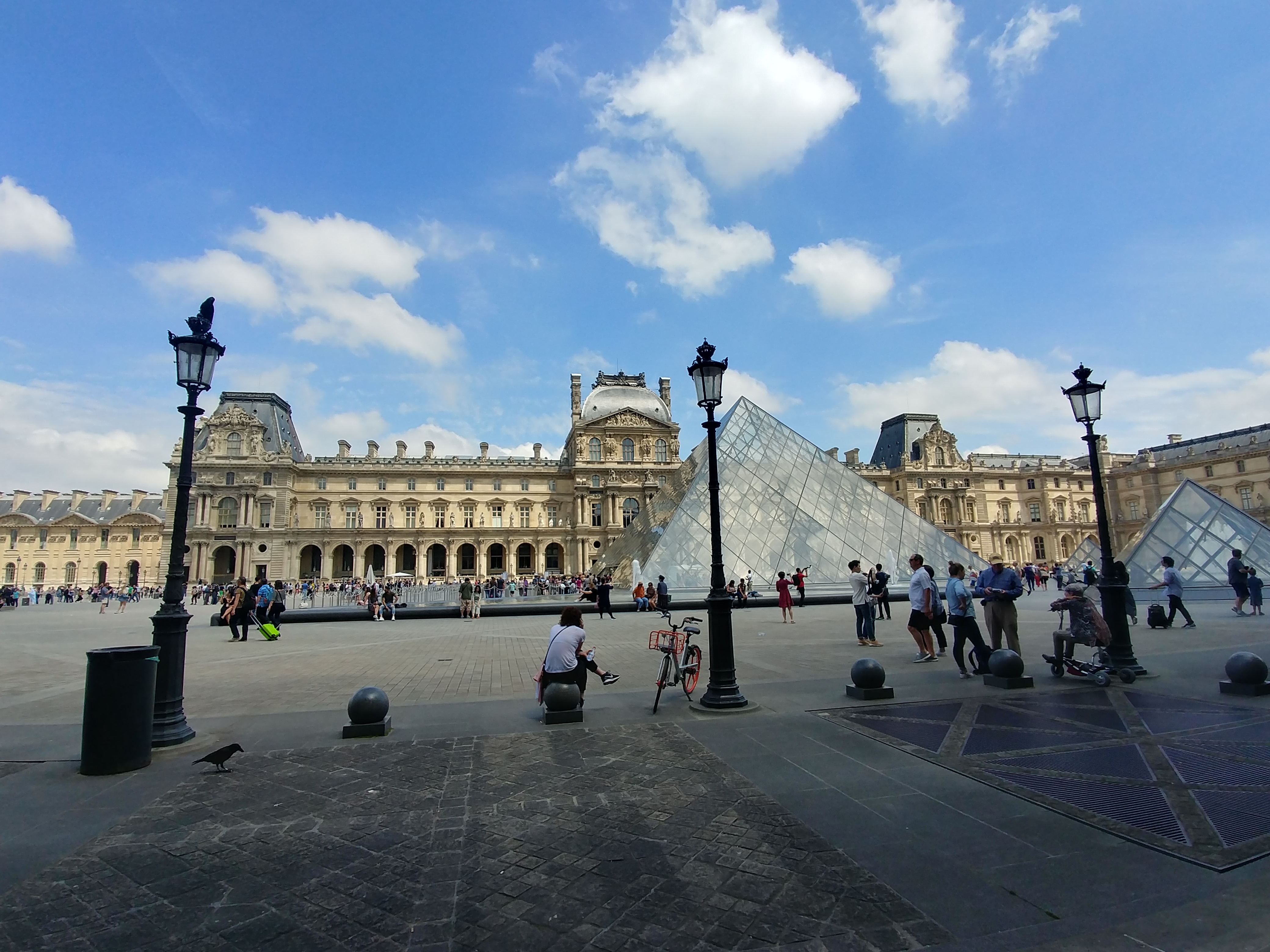
The world’s largest and most visited art museum can be found in Paris. With its famous glass pyramid standing 21 meters high, the Louvre, was opened in 1793 with only 537 paintings collected mostly from royals and confiscated church property. Today it is home to more than 380 000 pieces of art including the world famous Leonardo di Vinci’s, Mona Lisa painting.

Fun fact : It is humanely impossible to see every single piece of art in a one day visit to the Louvre.

Just like the Eiffel Tower and the Champs Elysees, the Louvre Museum has an energy which attracts and mesmerises. Once in the vicinity of this famous landmark one finds yourself feeling all warm and fuzzy and cosy. I’m not sure if it’s the Parisian air or the sound of violins playing in the background by street buskers, but something about the atmosphere in and around the Louvre, speaks directly to romance and love.

Can Paris be considered to be the city of love? Absolutely!

I would say that Paris gives lovers the space to explore and marvel at its mesmerising landmarks much like Venice gives lovers intimacy and closeness while strolling along its narrow alleys and cruising its narrow canals.

Read more about my Venice travels here : https://withnarriman.travel.blog/2019/04/11/what-i-discovered-i-didnt-know-about-venice/

Featured

Vienna – making the most of your short stopover.

My husband travels to Germany at least once a year, sometimes more, depending on company requirements. He tries to take advantage of his business travel by adding a few days to see a new city before heading back home. And because I am the wife, I get to join him, obviously :).

Germany itself is a large country which means you have a variety of cities to choose from within Germany.  But one can also easily travel to any other European country from Frankfurt airport. This year we decided to visit the city of Venice for a few days. You can read more about my Venice travel blogs https://withnarriman.travel.blog/2019/04/14/when-in-venice-eat-like-an-italian/

The best thing about travelling in Europe is the ease of movement when you have a Schengen visa. Add to that the fact that their transport by rail is as good, if not better, as their transport by air and you end up with one of the easiest and convenient holidays.

When making our travel arrangements, we try to get the best deal possible, not only in terms of cost but also in terms of travel benefit. We search for flights that will take us through as many cities as possible, even if it’s just for a few hours. For this trip we managed to book our return flight from Venice via Vienna and added a seven-hour stopover before departing to Frankfurt and then onwards to Cape Town.

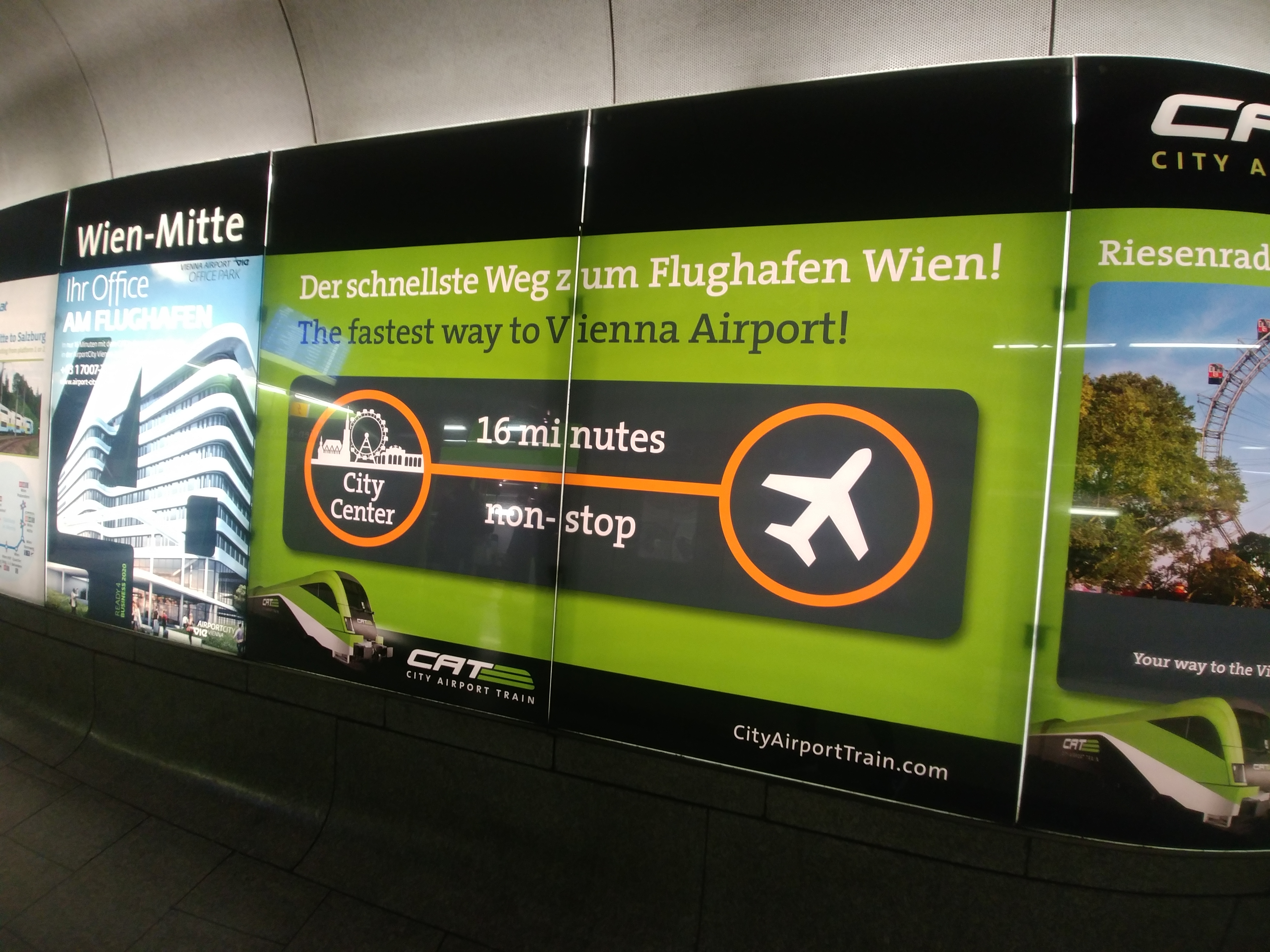
I did my research, as usual, and was pleased to find that Vienna has a fast train service which takes you from Vienna airport directly into Vienna city centre in exactly 16 mins. The cost is 20 euros per return ticket, which is really nothing considering you will be seeing another city in another country. It was a no brainer for us.

We arrived at Vienna airport on Sunday morning at 8.30am and we learnt that the CAT Train (City Airport Train) leaves every half hour and the next train would leave at 9.00am to arrive in Vienna City at 9.16am. At the CAT kiosk you are able to purchase either a single ticket, a return or a combo which is a return ticket plus a pass on the City Red Bus Tour. We opted for the combo which seemed like a good deal for us considering that we had only five hours to spend in the city before heading back to the airport to make our connecting flight.

True to European style, the train departed at exactly 9.00am from Vienna airport and arrived at exactly 9.16am in the city centre.

With it being Sunday, it seemed like the city was still struggling to wake from its slumber and shops were only just beginning to open their doors while travellers started making their way around. As we exited the Train Station we wandered around for a few minutes and as we crossed the street we stumbled upon the StadtzPark (City Park).

Stadtpark Vienna

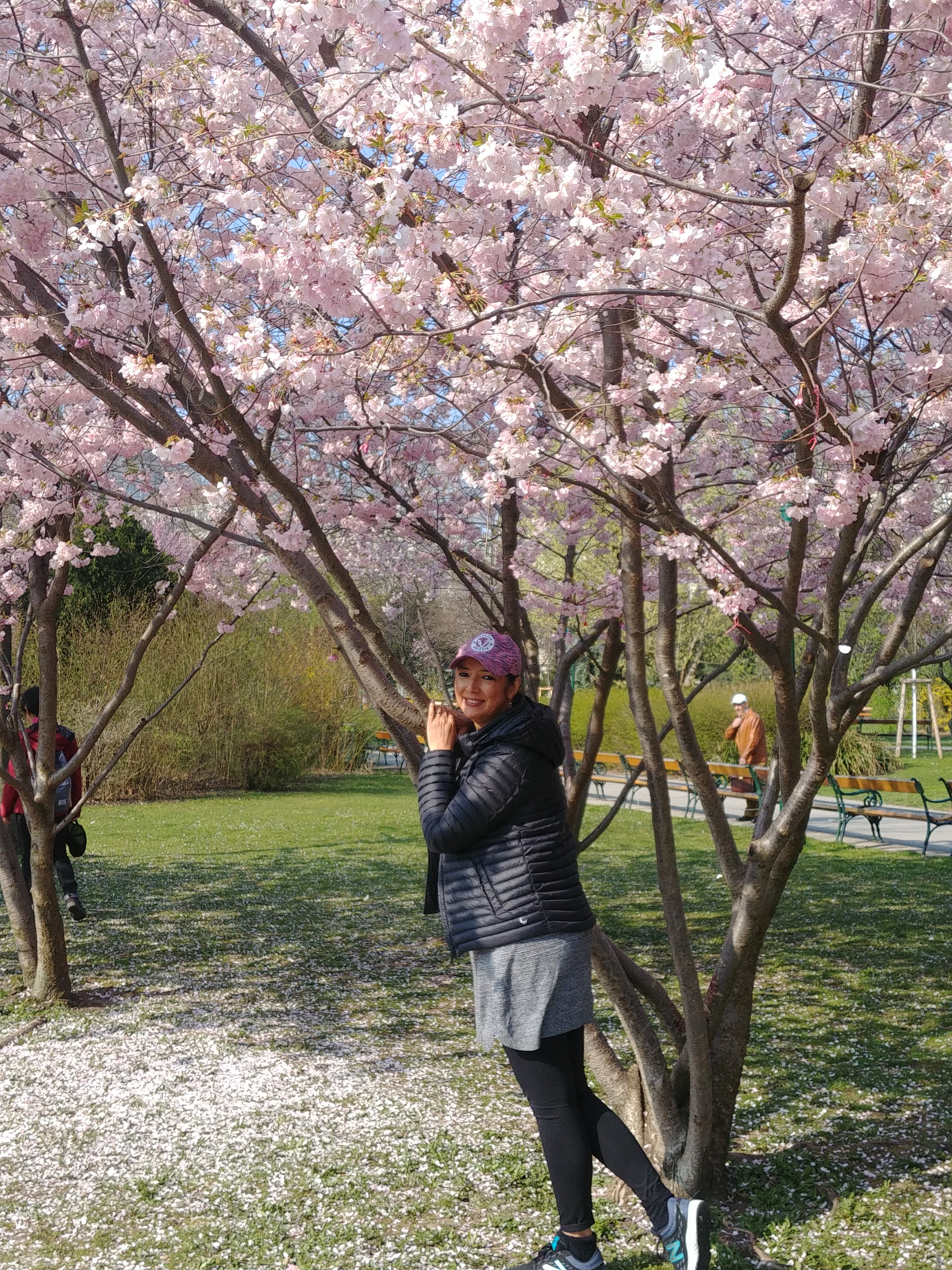
What a pretty sight to see cherry blossoms blooming in the Park as the European winters begins making way for a delightful spring.

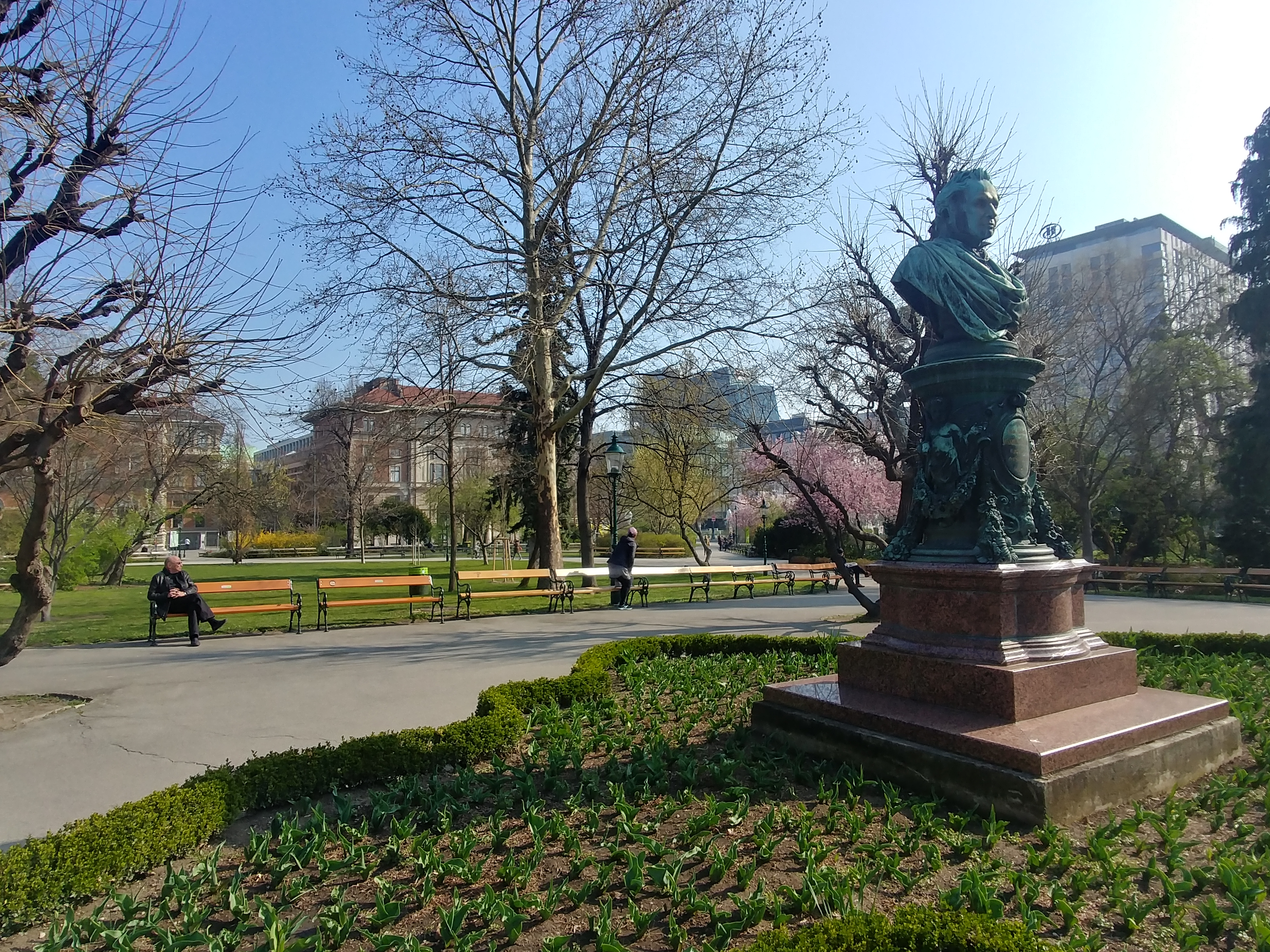
This municipal park was opened in 1862 after the destruction of the Vienna city hall. In the centre of the park you will find a gilded statue of musician, Johann Strauss.  The park is divided in two sections by the Vienna River and while strolling through the park you will find various statues of famous Viennese artists, writers and composers.

The Red Bus Tour has one if its main stops at the Stadtpark. This is where we hopped on the bus to begin our tour of the city.

Our next stop was Prater. With its almost 1,500 acres, the Prater is one of the largest recreation areas for the Viennese people.

The Giant Ferris Wheel

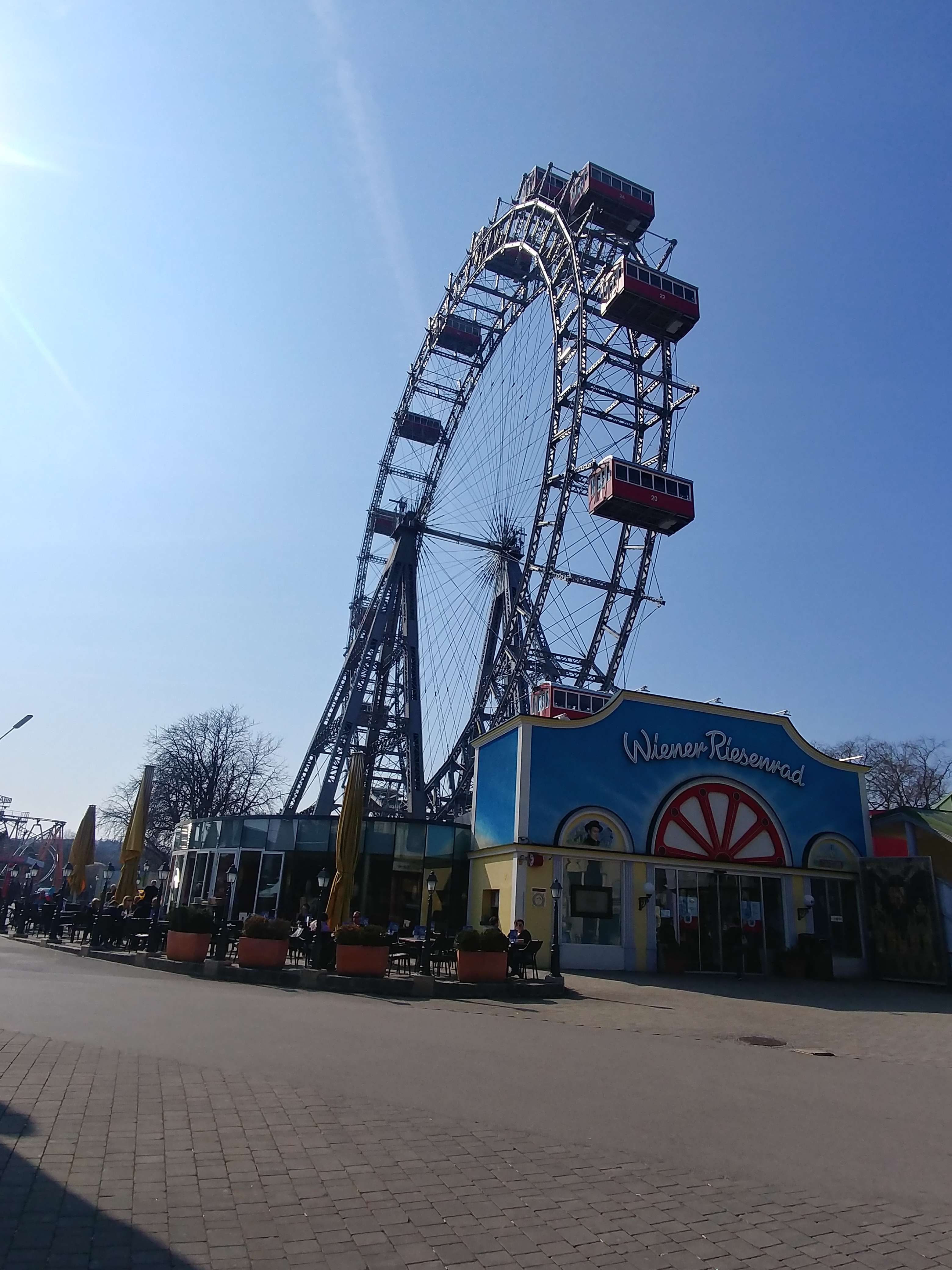
Vienna’s Riesenrad, the Giant Ferris Wheel – one of Vienna’s most iconic landmarks – has been turning since 1897 in the Prater.

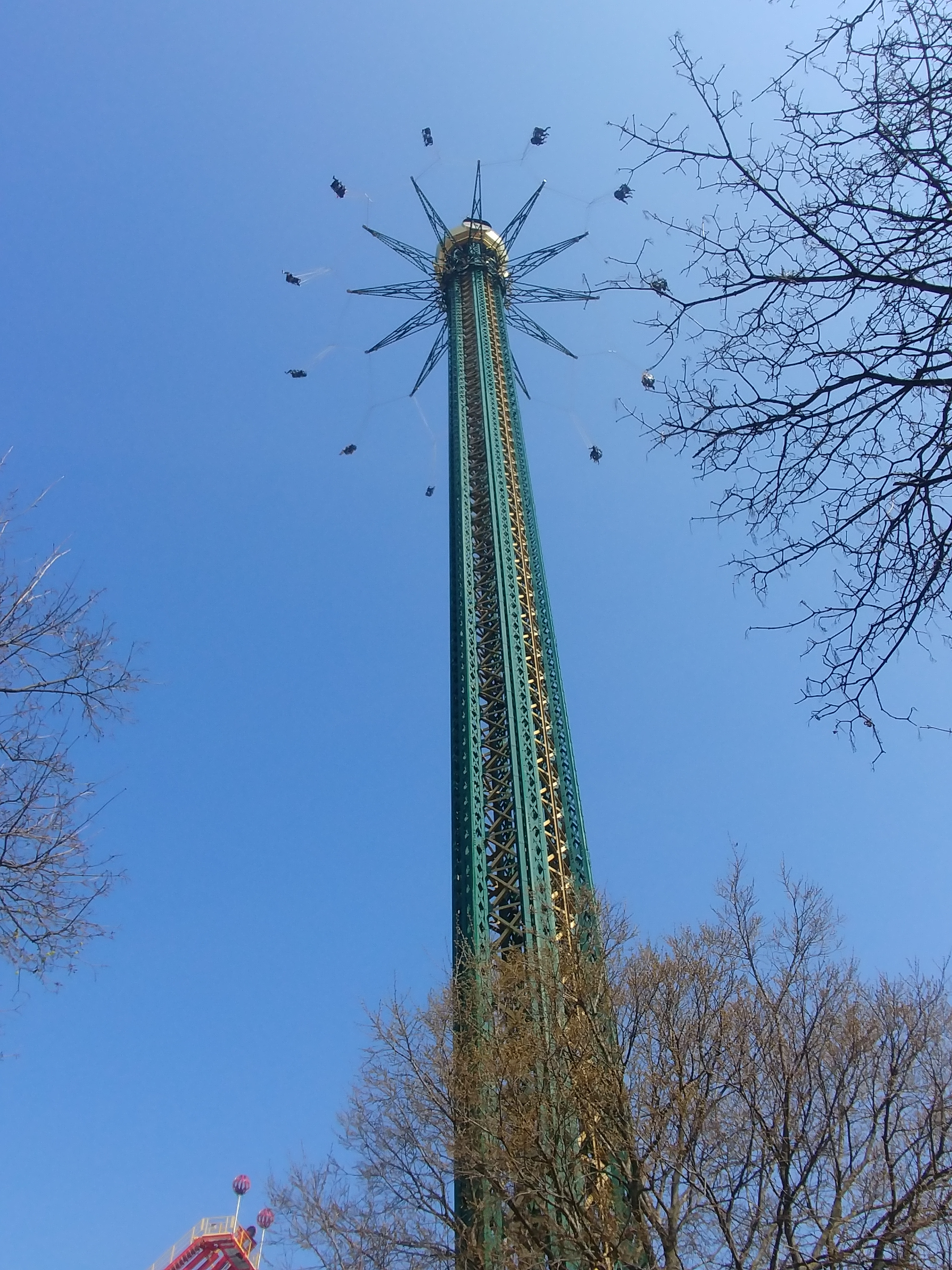
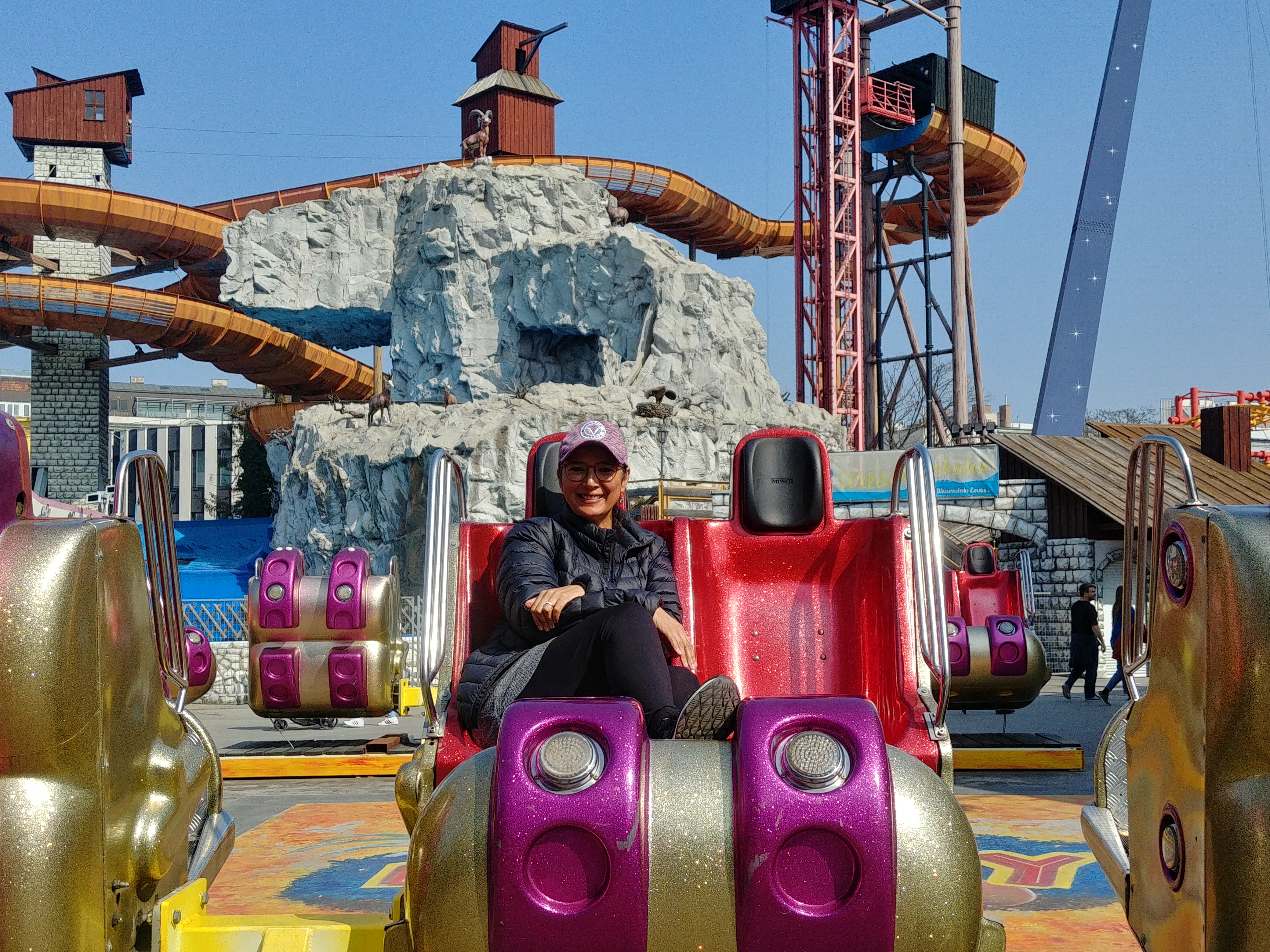
The area around the Giant Ferris Wheel, known as Wurstelprater is a kiddie’s paradise. Here you will find the most exciting and exhilarating amusement rides you could think of. I might be wrong but I think I saw the world’s highest swing here.

I know I said, it’s a kids paradise but you would most likely find that adults are as intrigued, excited and exhilarated with the many amusement rides and novelty stands.

I think we spent far too much time at this amusement park mesmerised by the many attractions it has to offer. Word of advice, do not be distracted by the shiny, blingy attractions or you will lose too much time. We hurried to catch the next bus to continue on our tour. With a little bit of walking and navigating, we finally hopped on the bus and were on our way to the next sight.

The Vienna State Opera

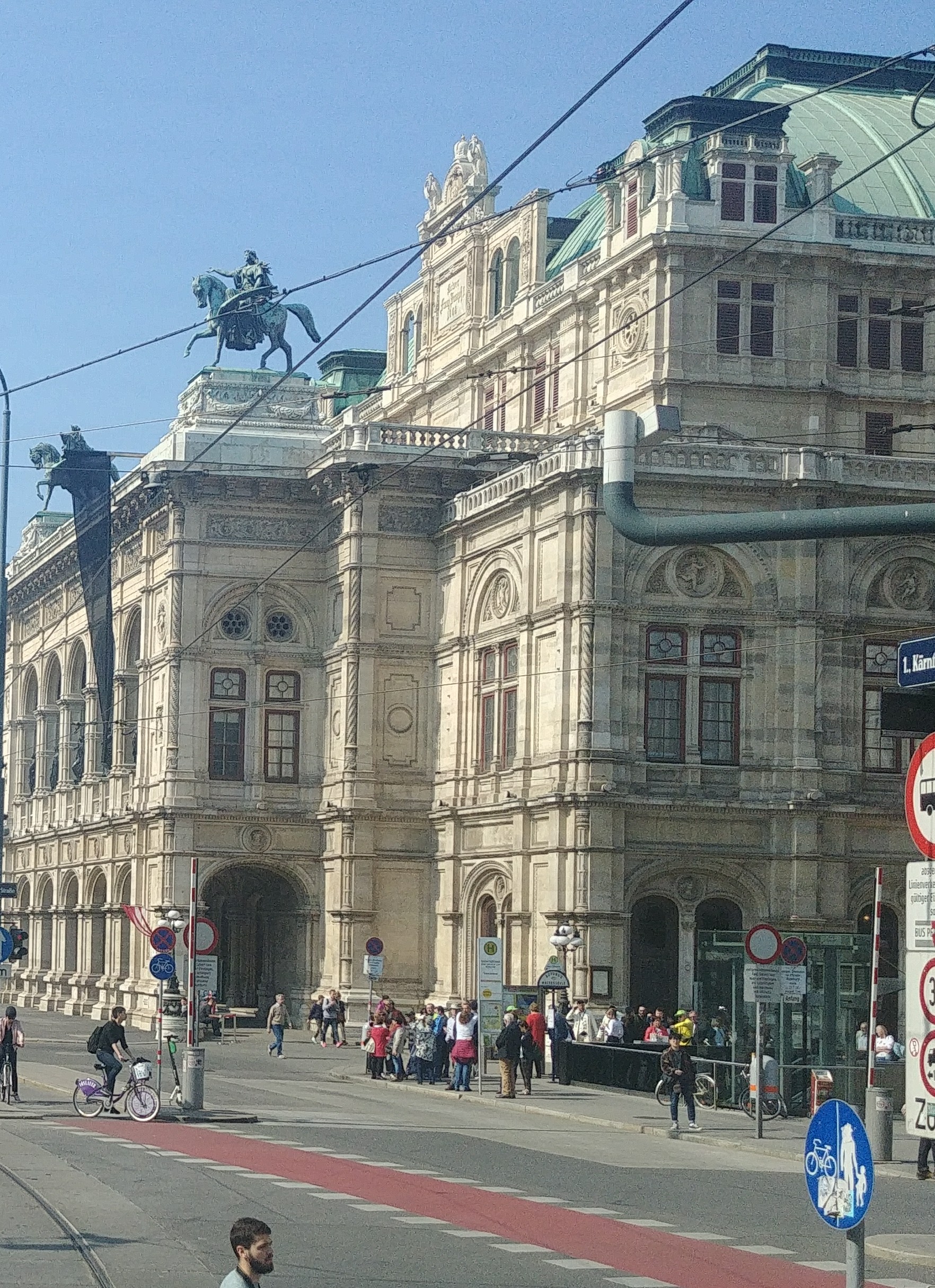
The Opera house kind of just appeared as the bus took a turn on it’s city route and the recorded guide pointed out the famous Opera House to the right. We quickly had to scramble to get to the bottom of the bus to jump off.

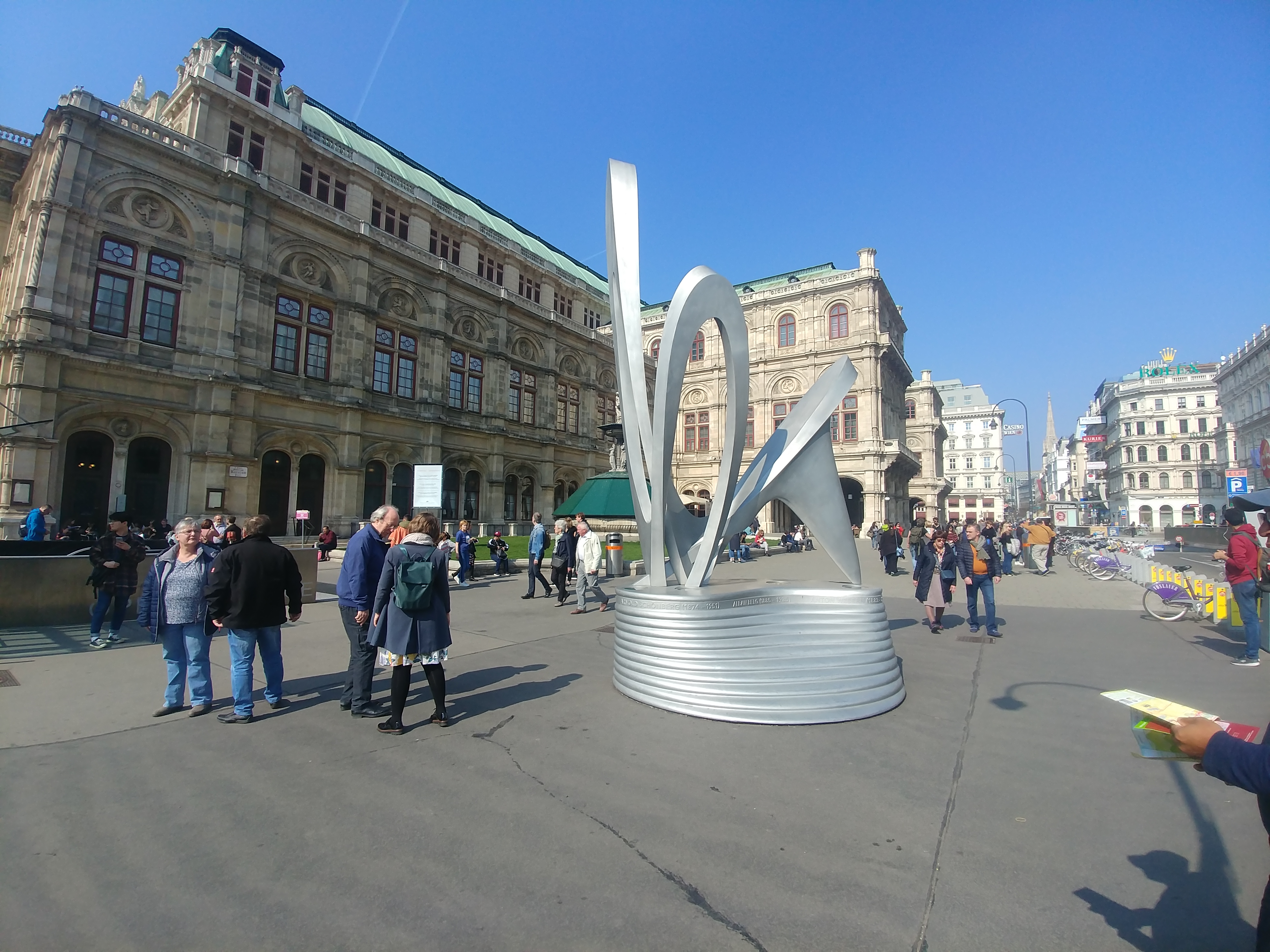
Built in Neo-Renaissance style, the Vienna State Opera is situated in the heart or centre of the city.If you have time, you should do the 40min tour which offers insights into the history, the architecture and the operatic life of this institution. Unfortunately, we were not able to do the tour due to time constraints.

Street view – Vienna State Opera
Side view of the Vienna State Opera

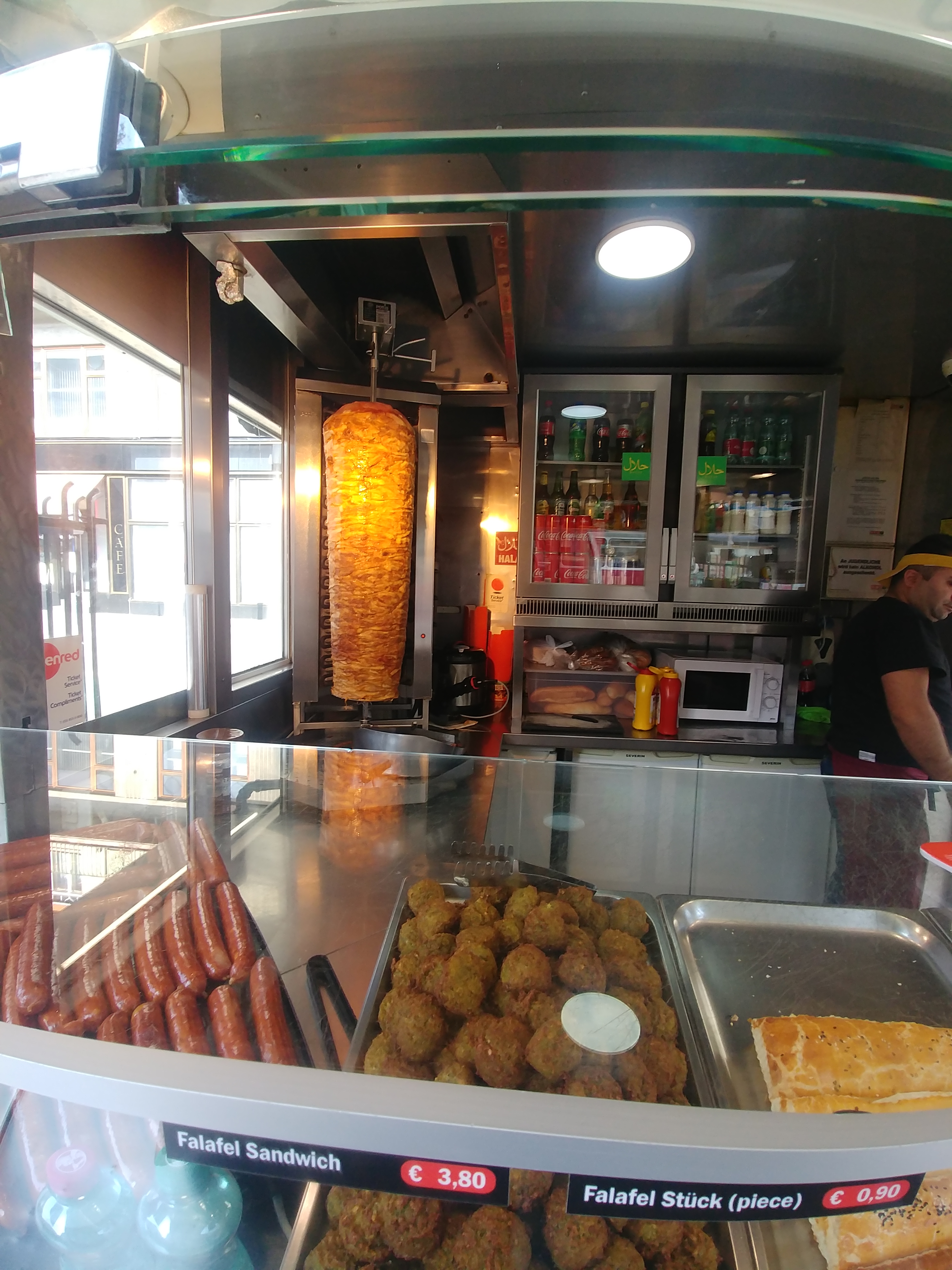
Diagonally across from the State Opera I was pleasantly surprised and delighted to find a street vendor selling kebabs and pitas. I opted for a pita bread filled with the most delicious falafel with humus and salad. You should definitely try and find this street vendor if you happen to be at the Vienna State Opera.

THE BEST falafels I have ever eaten!

Street Vendor – Vienna State Opera

Stephansplatz Pedestrian Mall

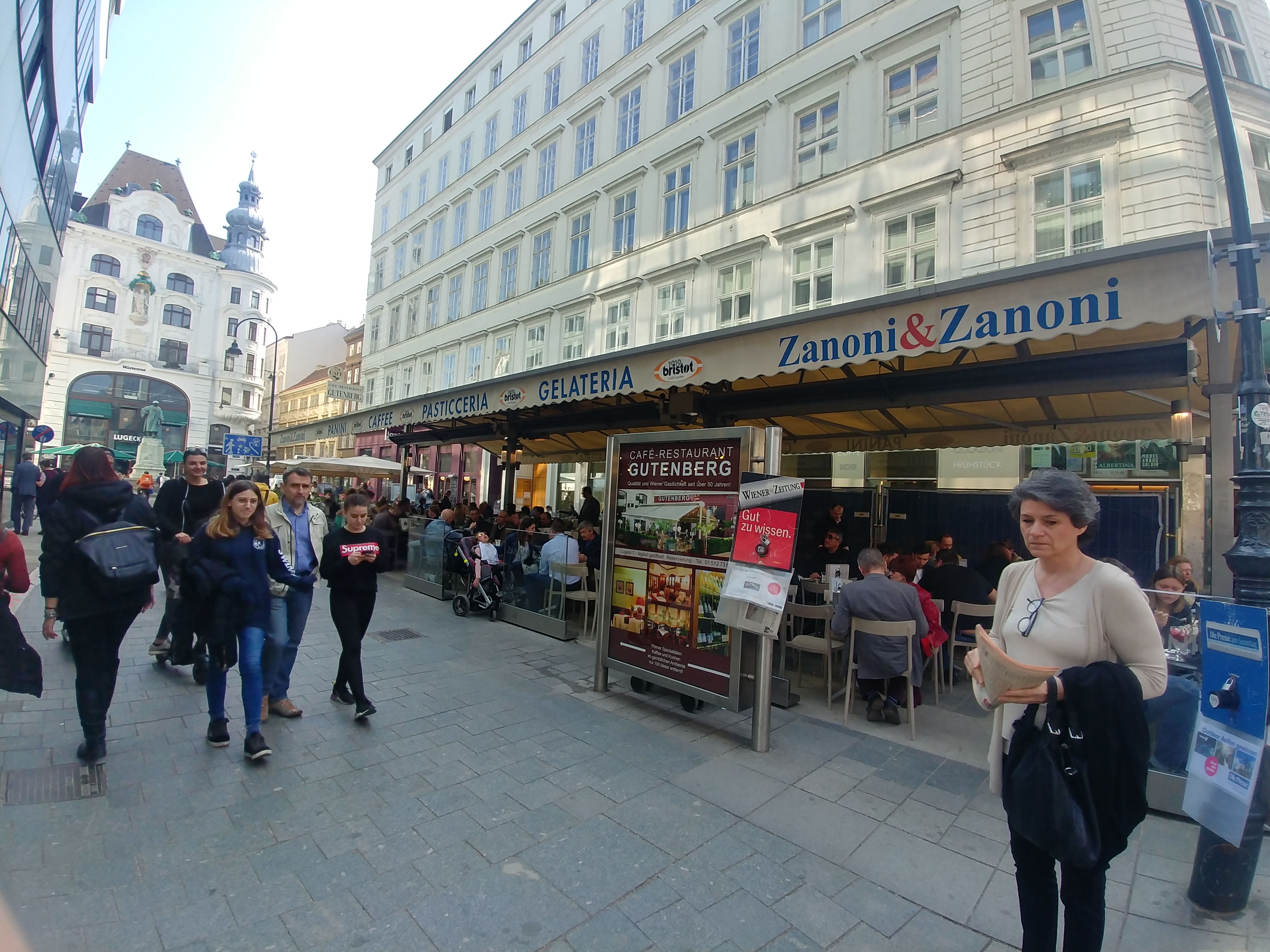
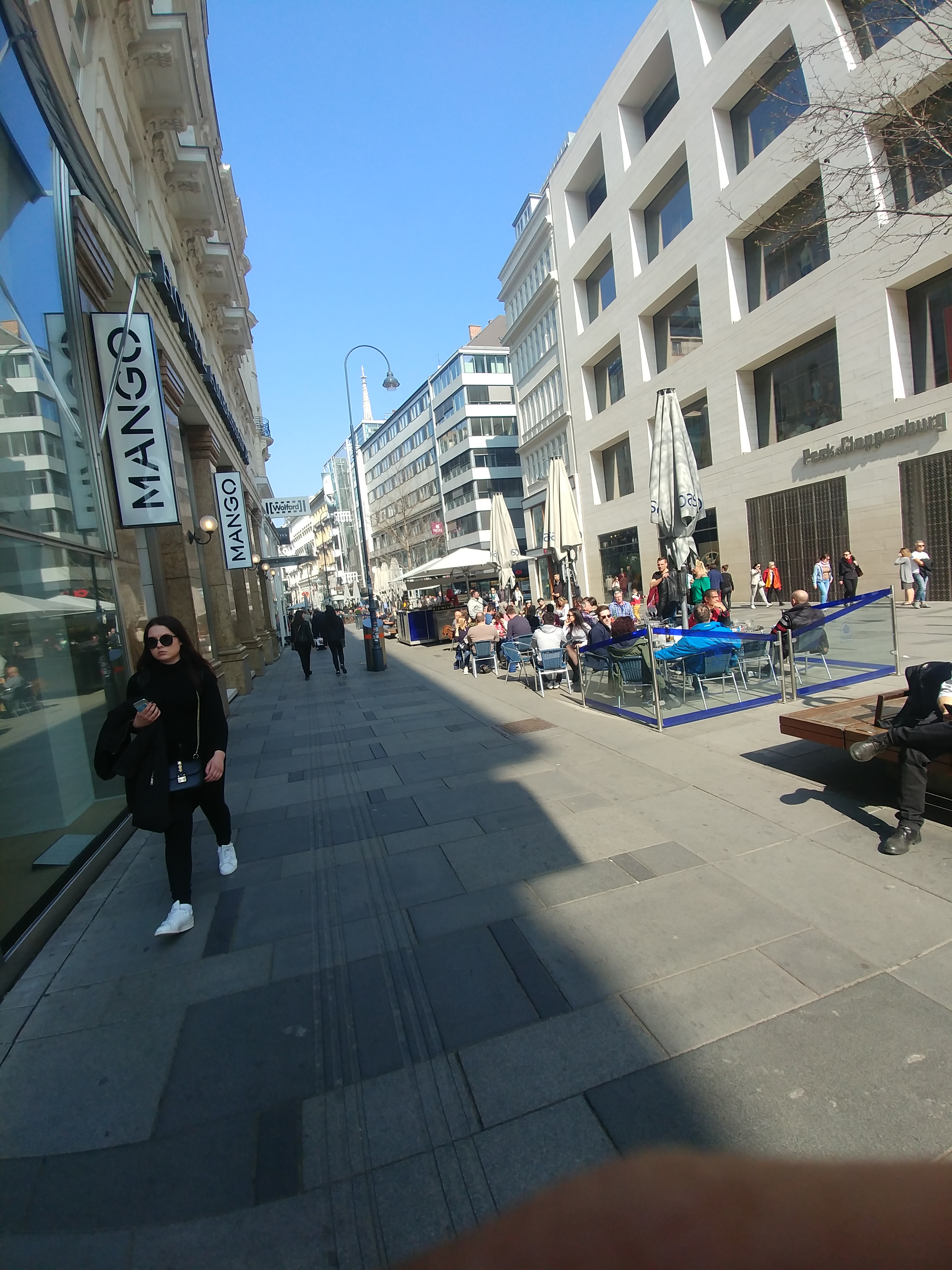
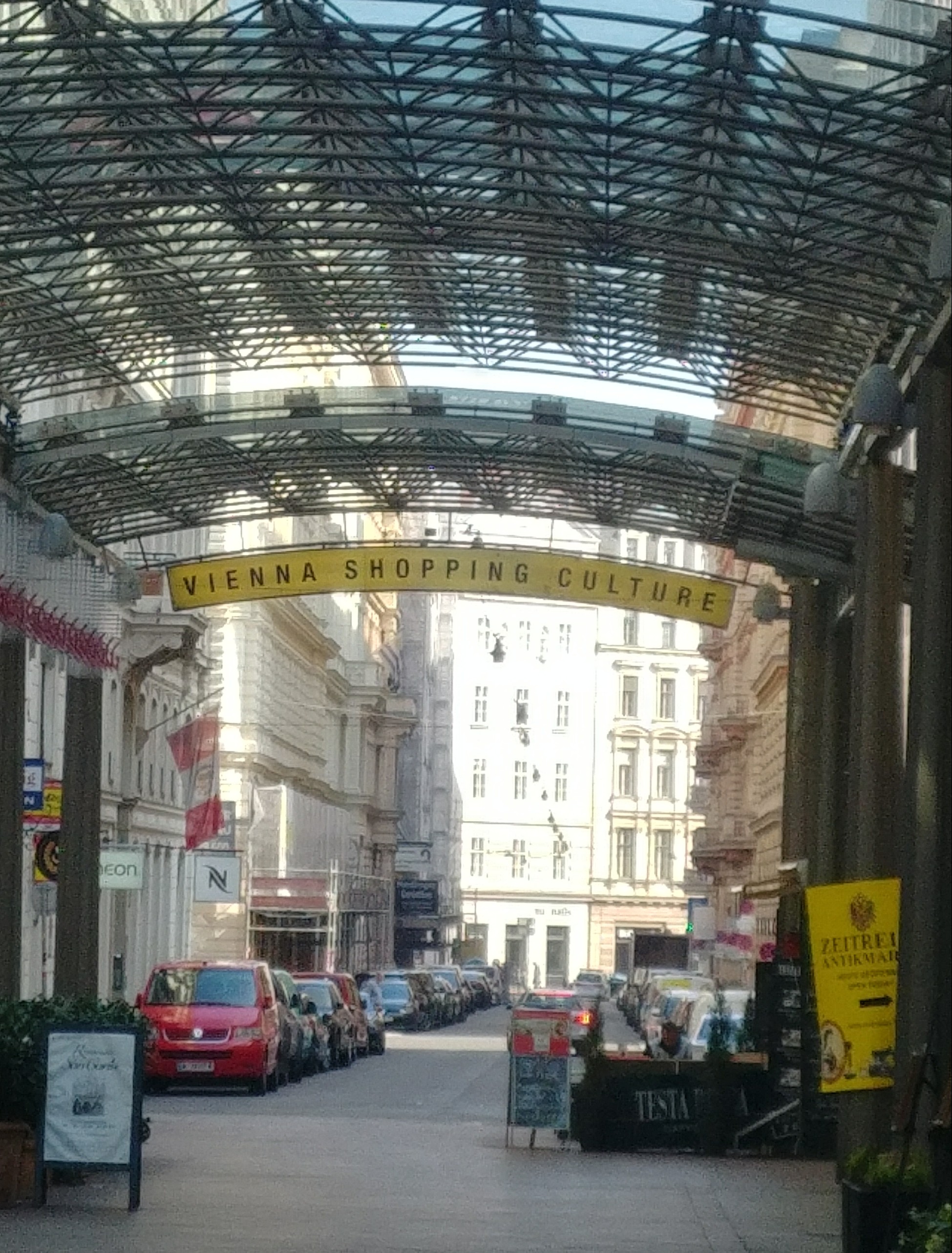
Instead of hopping back on the Red Bus we decided to do the rest of the tour by foot. We followed the crowds and soon found ourselves in one of the most popular pedestrian shopping malls in the centre of Vienna. The atmosphere around this area is festive and it seems as if everyone had decided to come out for some Sunday afternoon shopping.

Be sure to watch the time as you wonder in and out of the many brand name stores. And be sure to watch the purse too. In my experience, goods in Vienna is more expensive than some other European cities like Venice, Spain and Paris.

St Stephens Cathedral

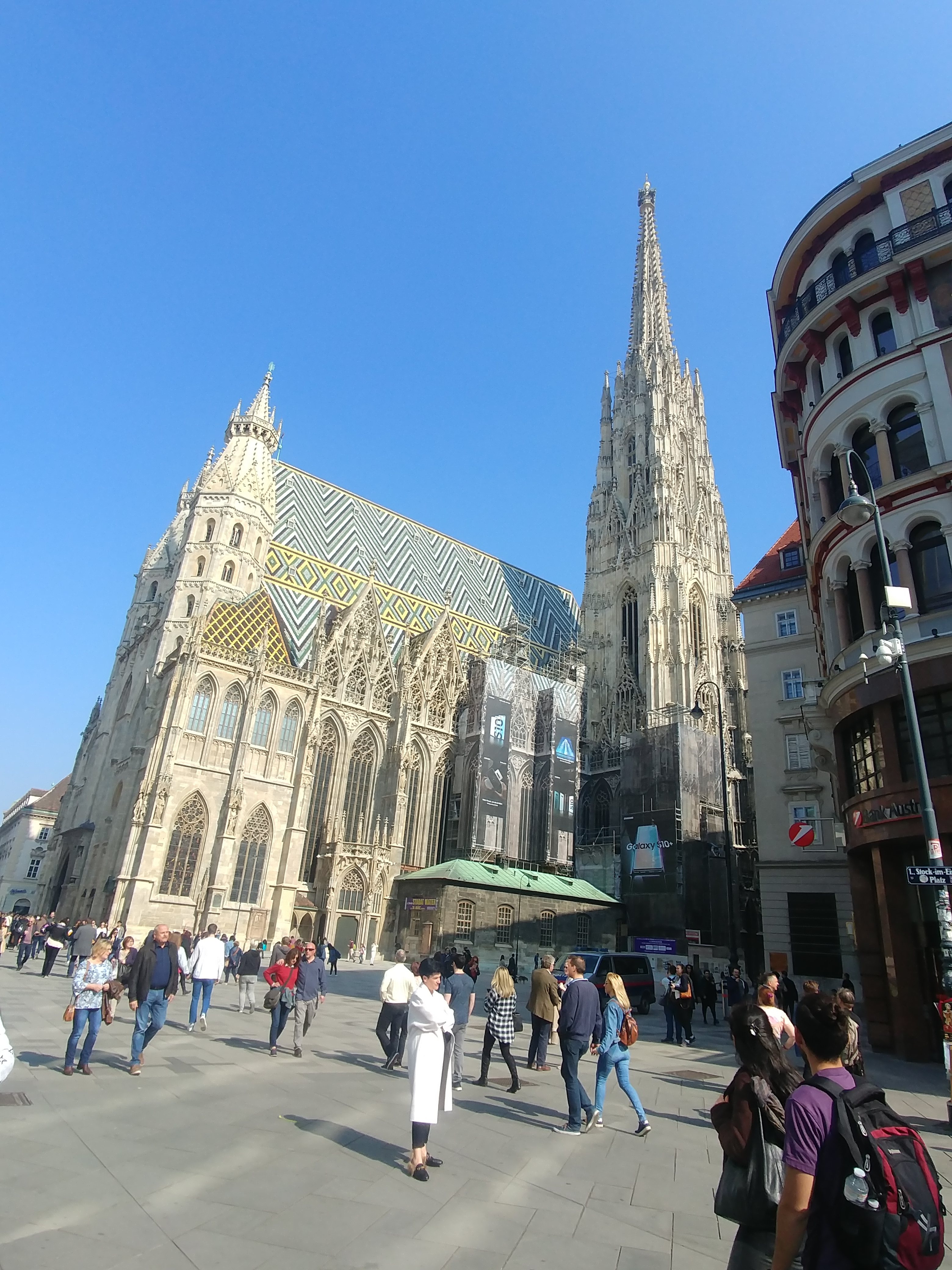
There are many churches in and around the Stephansplatz but none as majestic as the well-known St Stephens Cathedral. Also known by its German title, the Stephansdom, this church is the mother church of the Roman Catholic Archdiocese of Vienna and the seat of the Archbishop of Vienna.

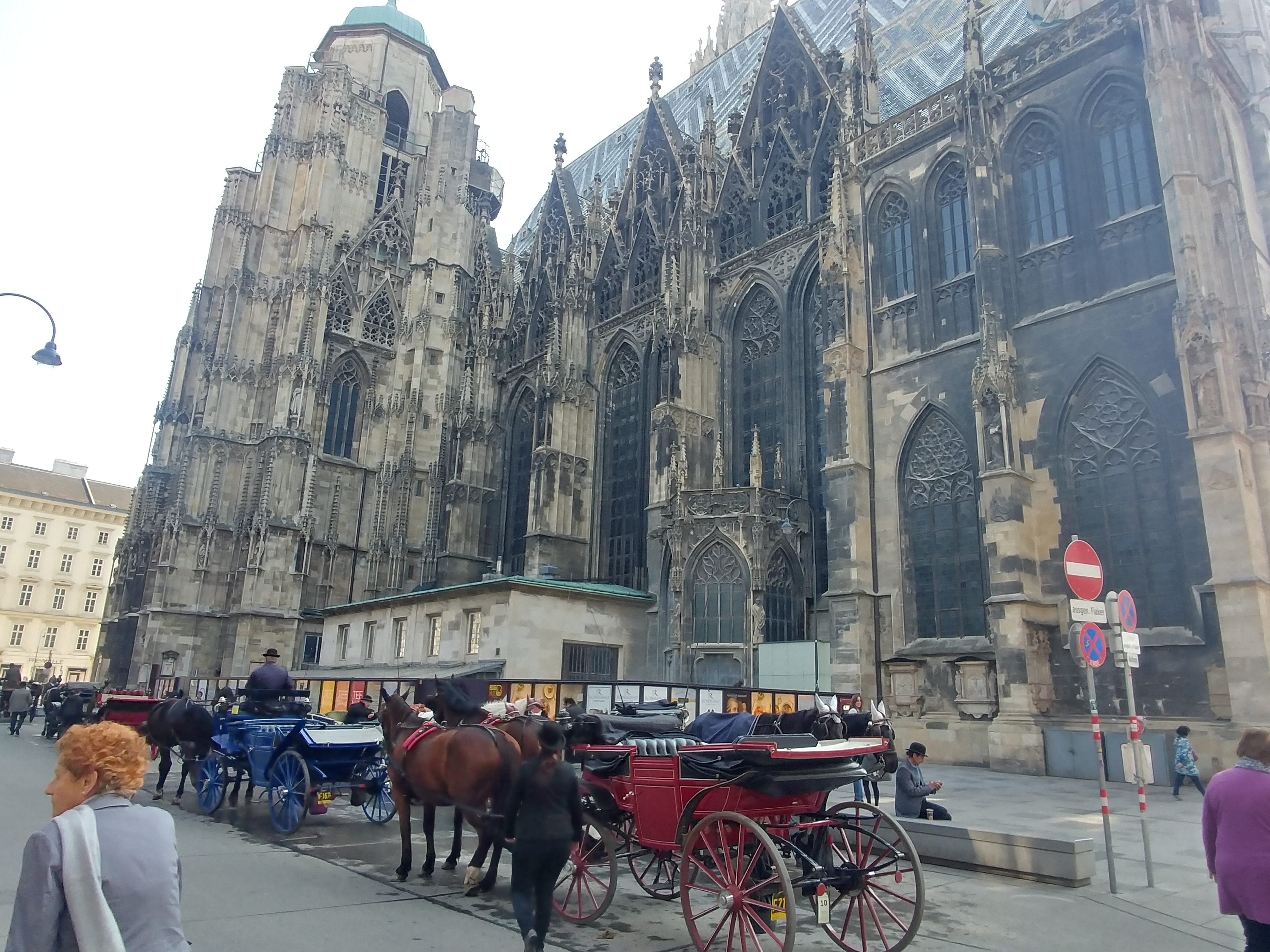
Parked outside of this beautiful church are horsemen with their carts waiting to take you on a scenic trot around the city of Vienna. If time allows I recommend you spoil yourself to this treat. I’m sure it will be well worth it.

Unfortunately for us, time was running out and we had to head back to the train station to catch the train back to the airport.

We were fortunate to be able to add this historic and architecturally rich city to our travel itenary at very little extra cost.

Travel Tip : When travelling in Europe search for flights that will take you through as many cities and countries as possible without compromising on your total travel time.

Featured

Murano – why you have to visit this Island.

When you look at a piece of delicately spun glass you think of two things: how beautiful it is and how easily it can be broken.”

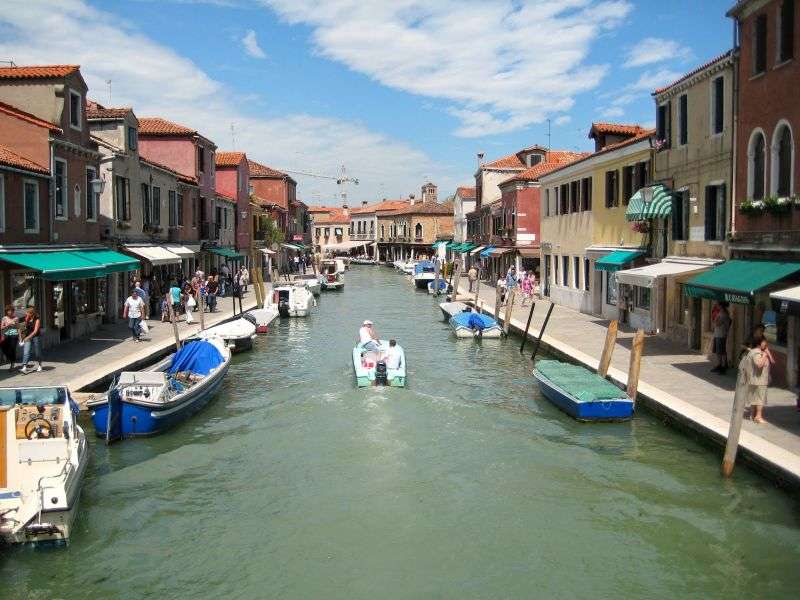
Murano is a series of islands linked by bridges in the Venetian Lagoon. It lies about 1.5km north of Venice and measures about 1.5km across and has a population of just over 5000 people.

Before visiting Venice I read a few travel blogs recommending a visit to Murano. It wasn’t until I visited this island myself that I understood why it was so important to add to my travel itinerary in Venice.

If glass is your thing then Murano is a must do on your trip to Venice.
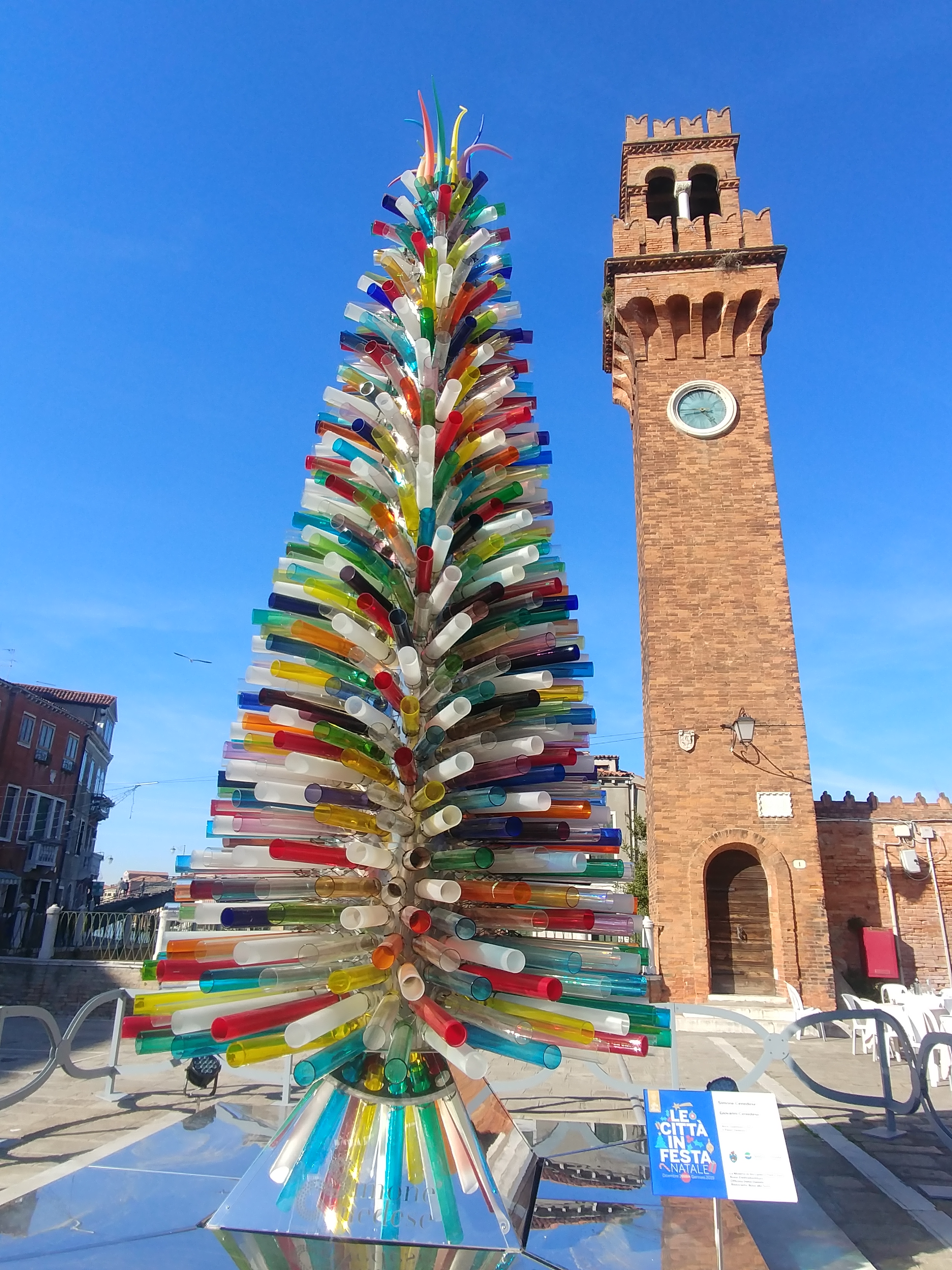
It is on this island where you will find the world-famous Murano glass and exquisite glass art pieces.

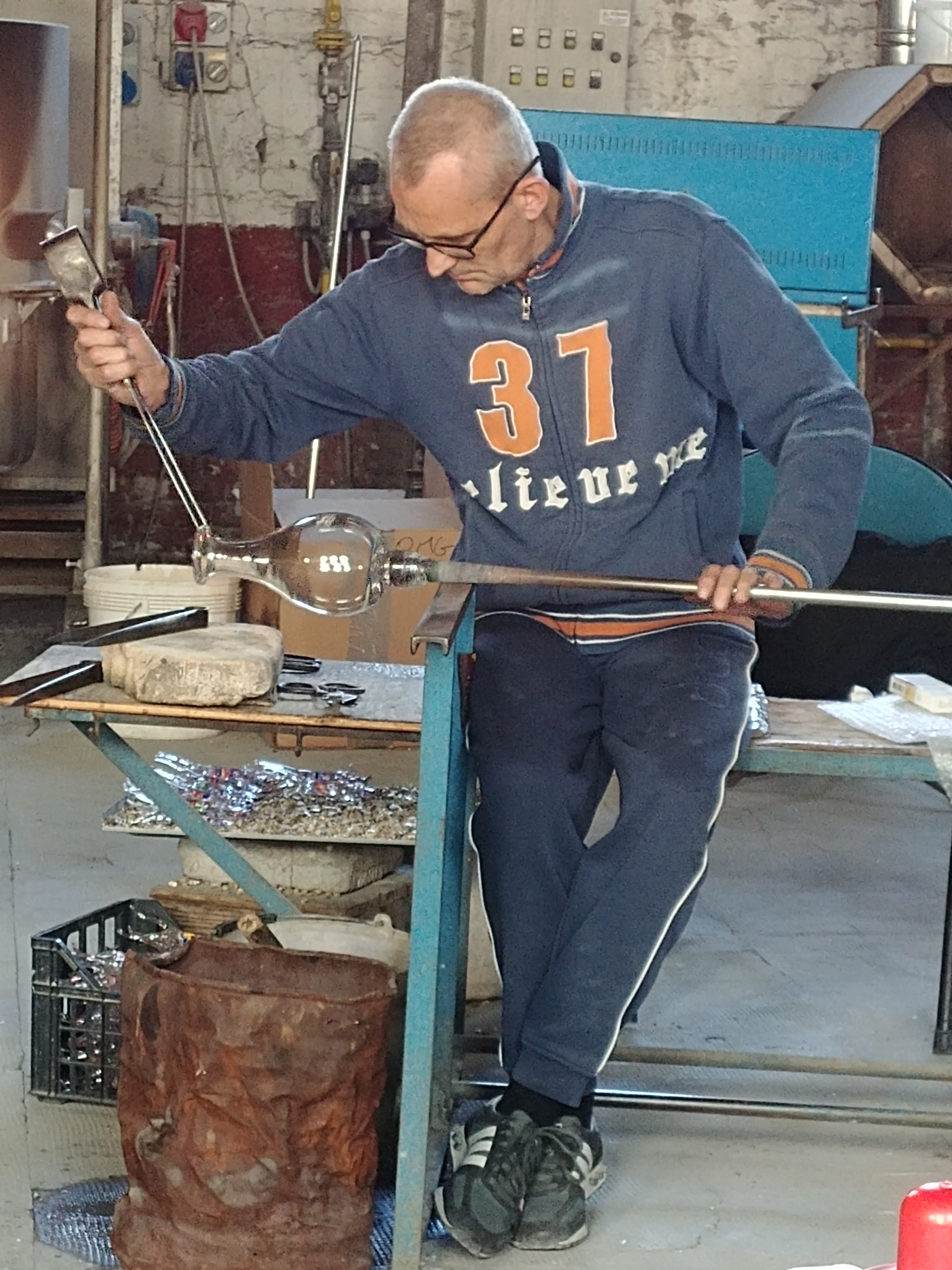
The island has no other attractions besides the many glass blowing factories and rows upon rows of shops selling of the most interesting and attractive pieces of glass.  When we arrived on the island we made our way to the nearest factory where we paid 4 Euros for entry to a 20min demonstration.

I was blown away by the technique of the glass maker and the skill with which he handled the long iron stick while blowing and twisting and turning the glass into the desired shape.

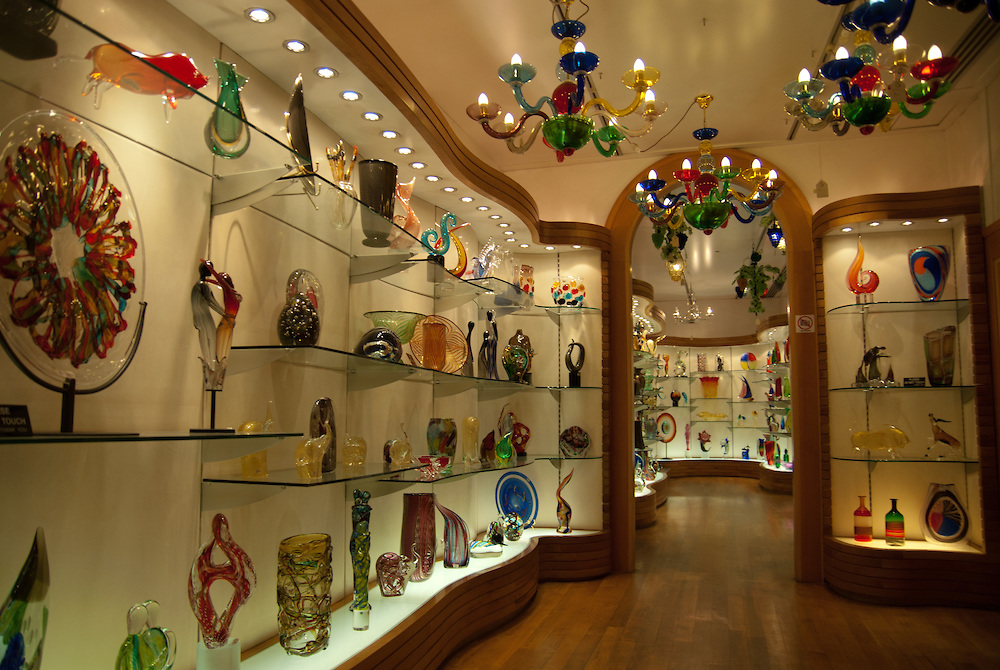
It’s only after the demonstration when you are taken to the display room where all the magnificent and exquisite designs are housed.

Besides the glass vases, chandeliers, bowls, tumblers etc glass makers in Murano have also perfected the art of making glass beads.

One could easily lose track of time as you wonder from one shop to another admiring the glass designs.

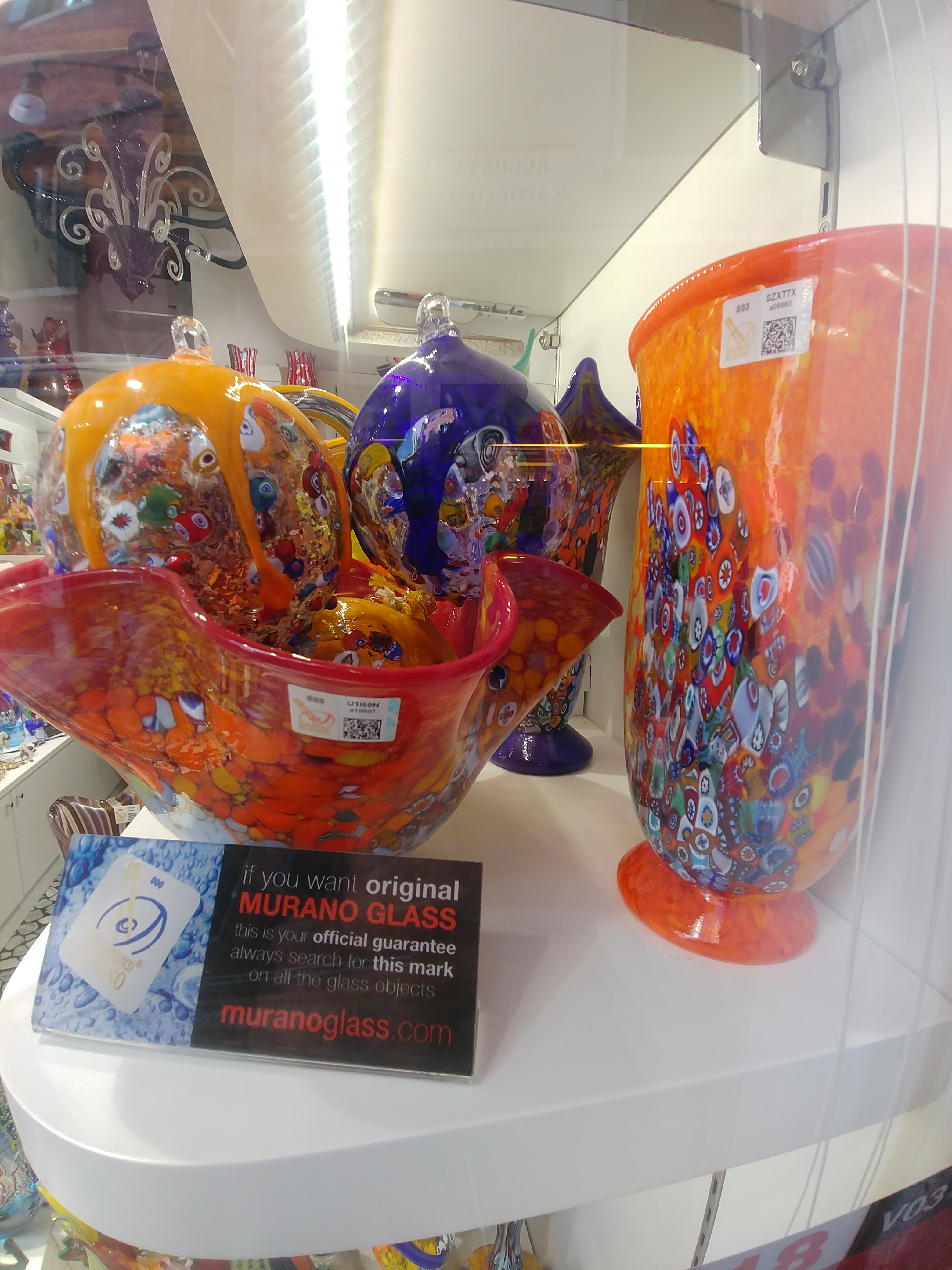
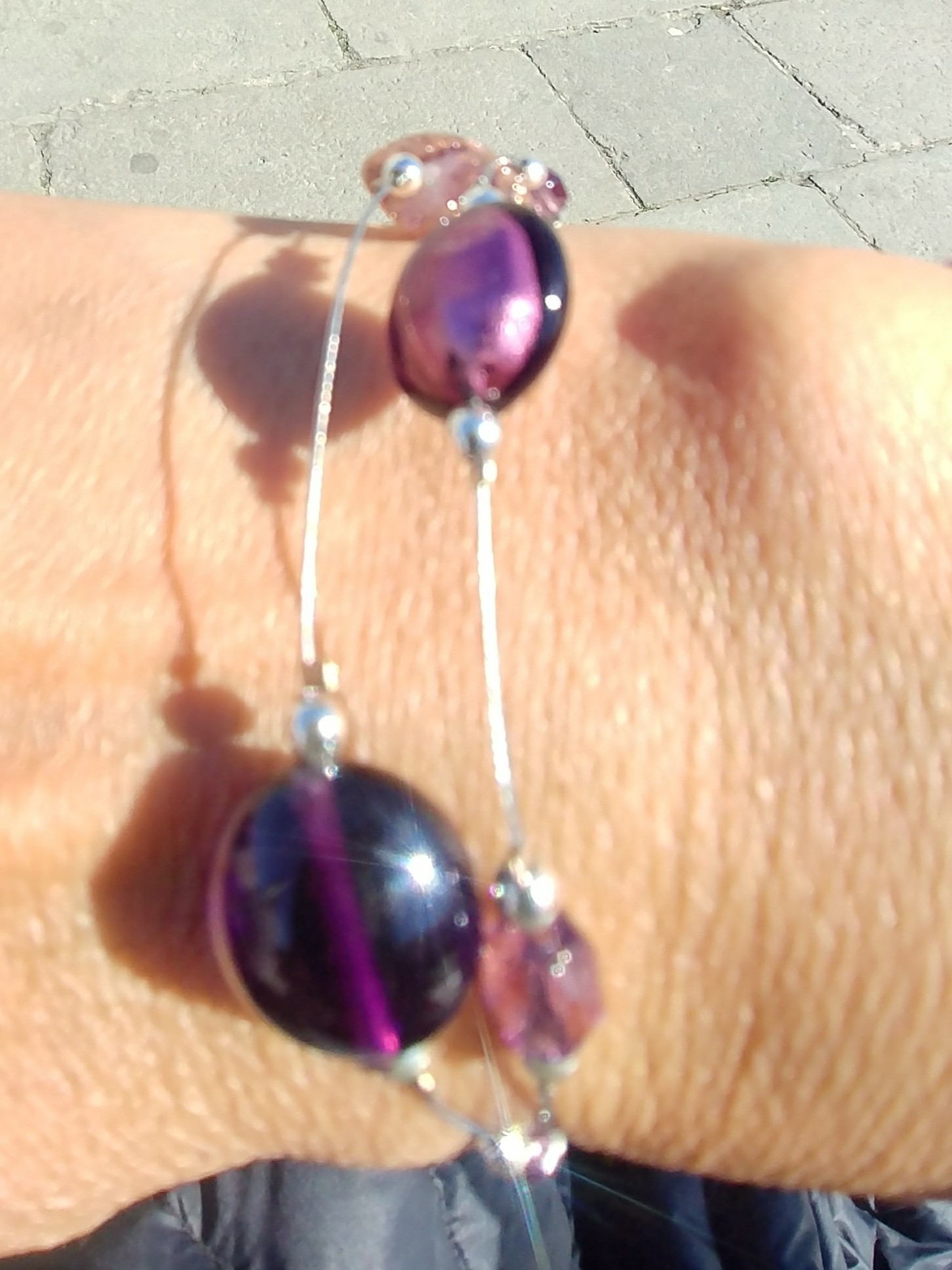
We toyed with the idea of purchasing a unique piece for our display cabinet at home but after considering the logistics around packaging and transporting this piece, we decided it was too delicate and fragile to risk. I was however spoiled with a beautiful Murano glass bead bracelet complete with it’s authentication certificate.

It’s important to ask for the authentication certificate when purchasing Murano glass in Venice. I was surprised to learn that many of the shops in and around the touristy part of Venice was selling fake Murano products which were made in China.

Featured

When in Venice, eat like an Italian.

I have a philosophy when I travel which I learnt from my father. He says when you visit a new city, spend of what you’ve earned with an open heart. You see he has a belief that earnings/wealth is given to us by our Creator so that we can not only have for ourselves but also to share with others. And the more we are prepared to share with others, the more we will receive. This philosophy has worked for him and it’s working for me too.

So when I travel I try not to focus too much on how much something cost but instead I stay present to how I feel about spending my earnings in a particular establishment. If it feels right, I go for it with an open heart. Almost 100% of the time I’m not disappointed with my purchase.

There is no place where I needed to use this philosophy more than in Venice. The city of canals is essentially a tourist city which means that prices are quite high. If you want to eat good authentic Italian food you have to be prepared to pay.

Keeping this philosophy in mind, we decided to treat ourselves to a good Italian pasta, pizza and dessert at least once during our stay in Venice. Here are the restaurants I recommend you try if you want to have a real Italian experience.

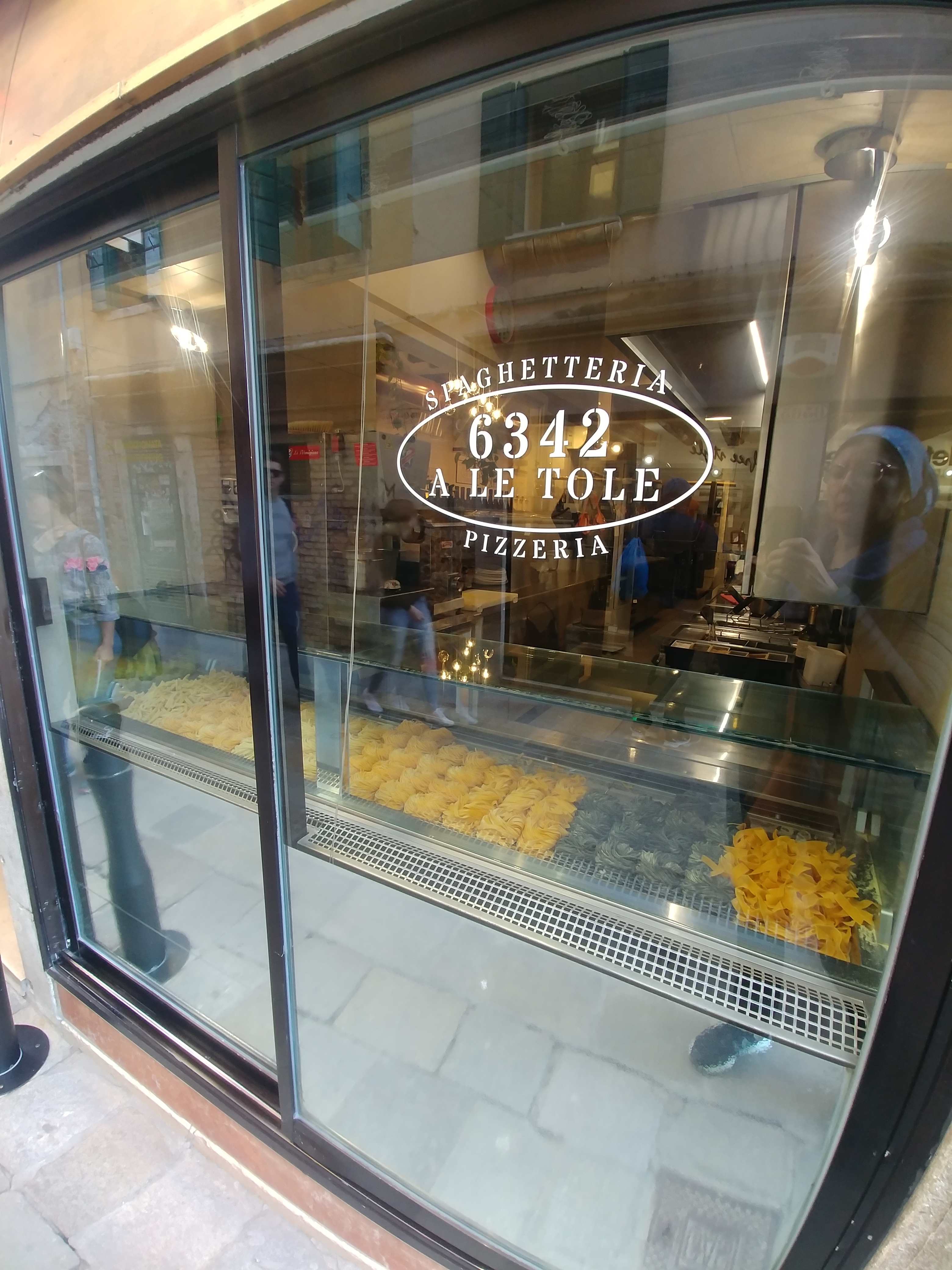
Spagetteria 6342 A Le Tole

Our host, Riccardo, marked this on the map for us and said, if you want to eat fresh pasta, this is your place. Armed with the map we set off on the Friday late afternoon to find Restaurant 6342 http://www.6342aletole.it/.

My husband is quite a good navigator so I really just had to follow as he meandered through narrow passages checking the map occasionally. We arrived at the restaurant only to be told that this branch was not opening until much later the evening. But, they do have another branch which operates during the day and closes in a few hours. We were lead there by a pleasant Italian waiter.

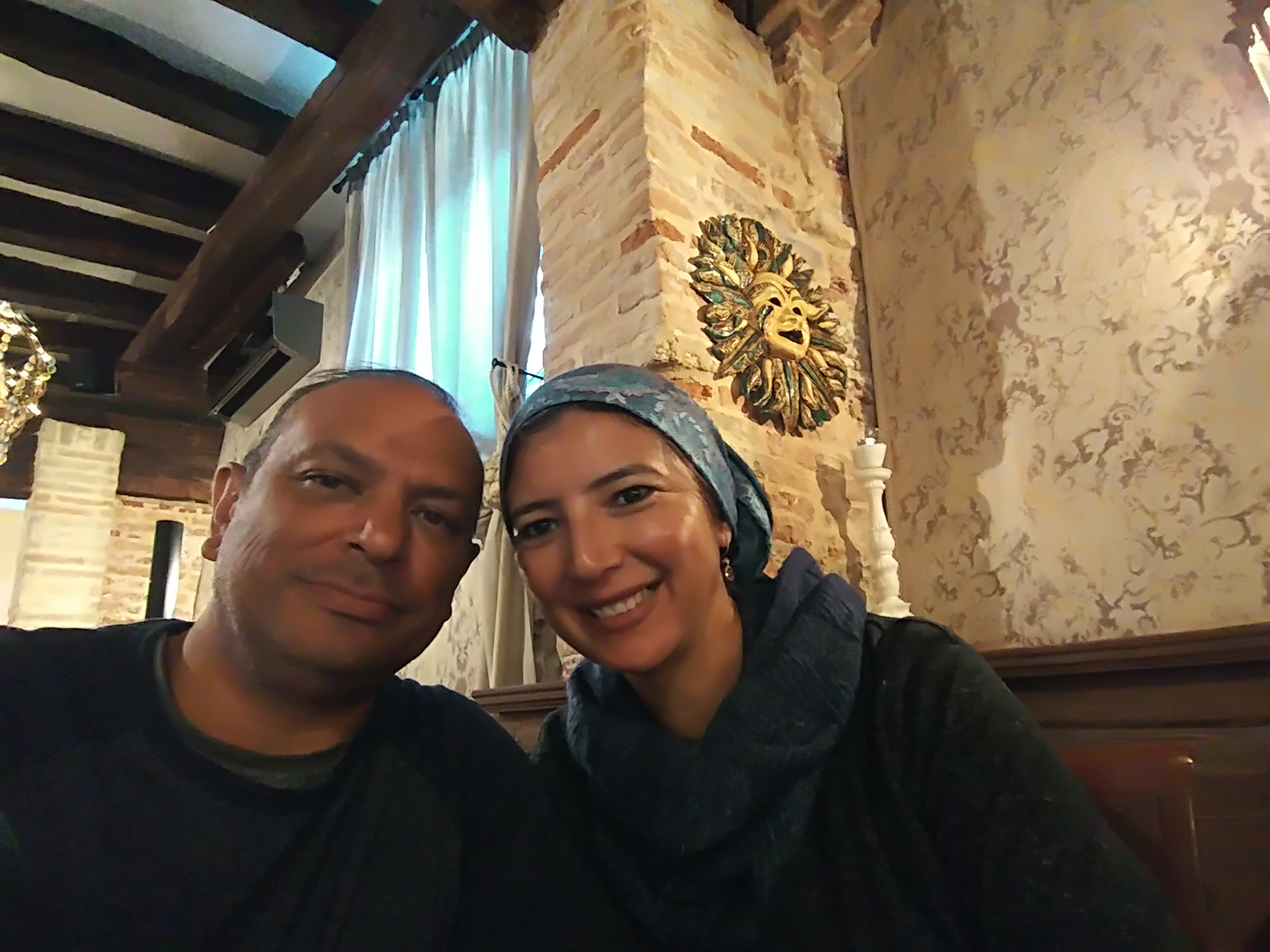
The restaurant is warm with pretty Venetian masks on the walls and soft music playing in the background creating a cosy relaxing ambience. We were surprised to find that we were the only diners in the restaurant. It seems that Venetians and tourist alike prefer to have dinner after the sun has set.

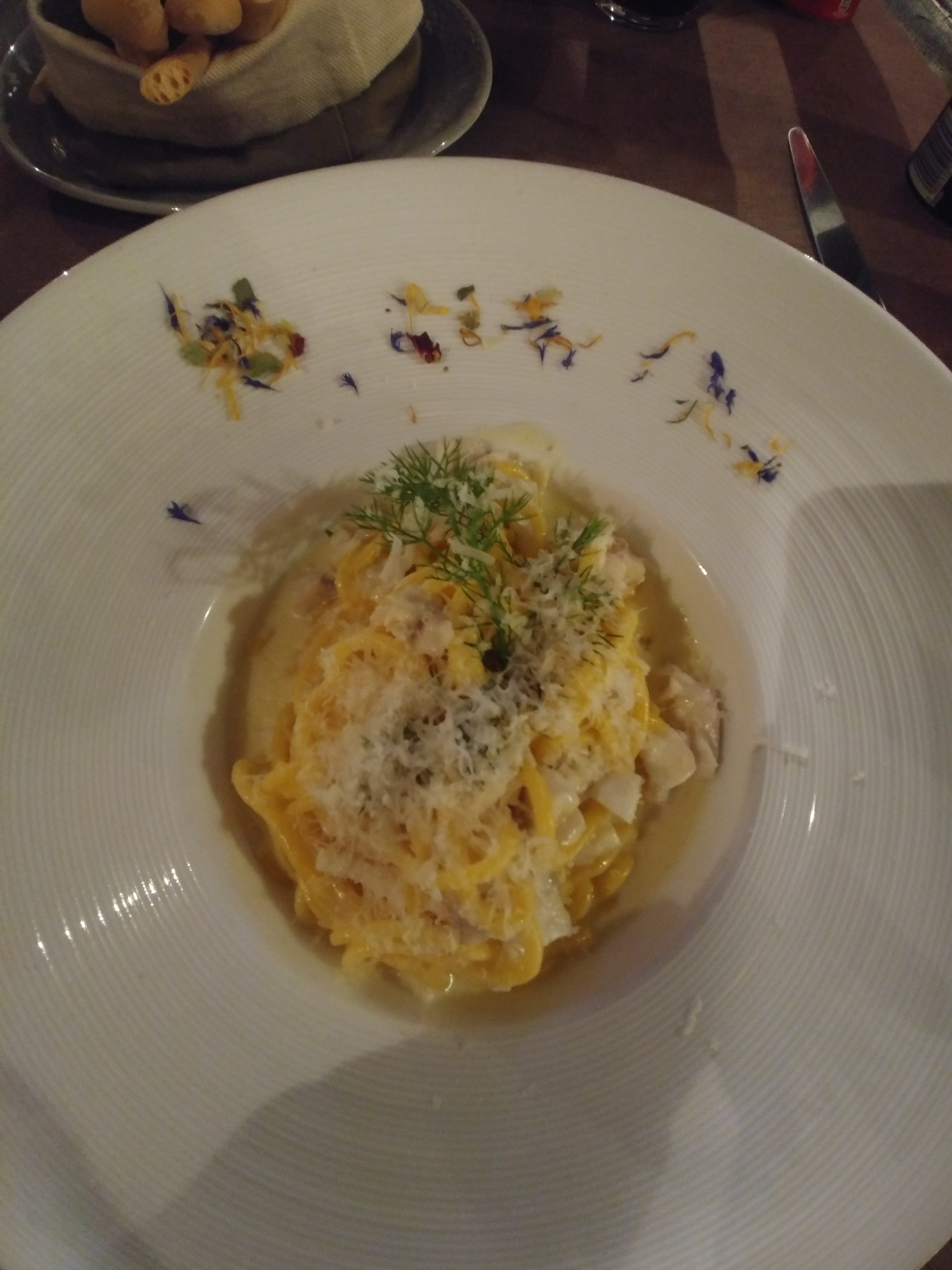
The menu gives you an extensive selection of pastas and pizzas to choose from. I decided to go with a Tagliatelle pasta prepared in a creamy sauce with Seabass. The combination of fish and pasta sounded good. As soon as I put the first forkful into my mouth I could taste the difference between authentic pasta, made today, and the pasta I am used to eating which comes out of a box in my kitchen pantry. I savoured every mouthful and tried to taste each ingredient in this simple but tasty dish.

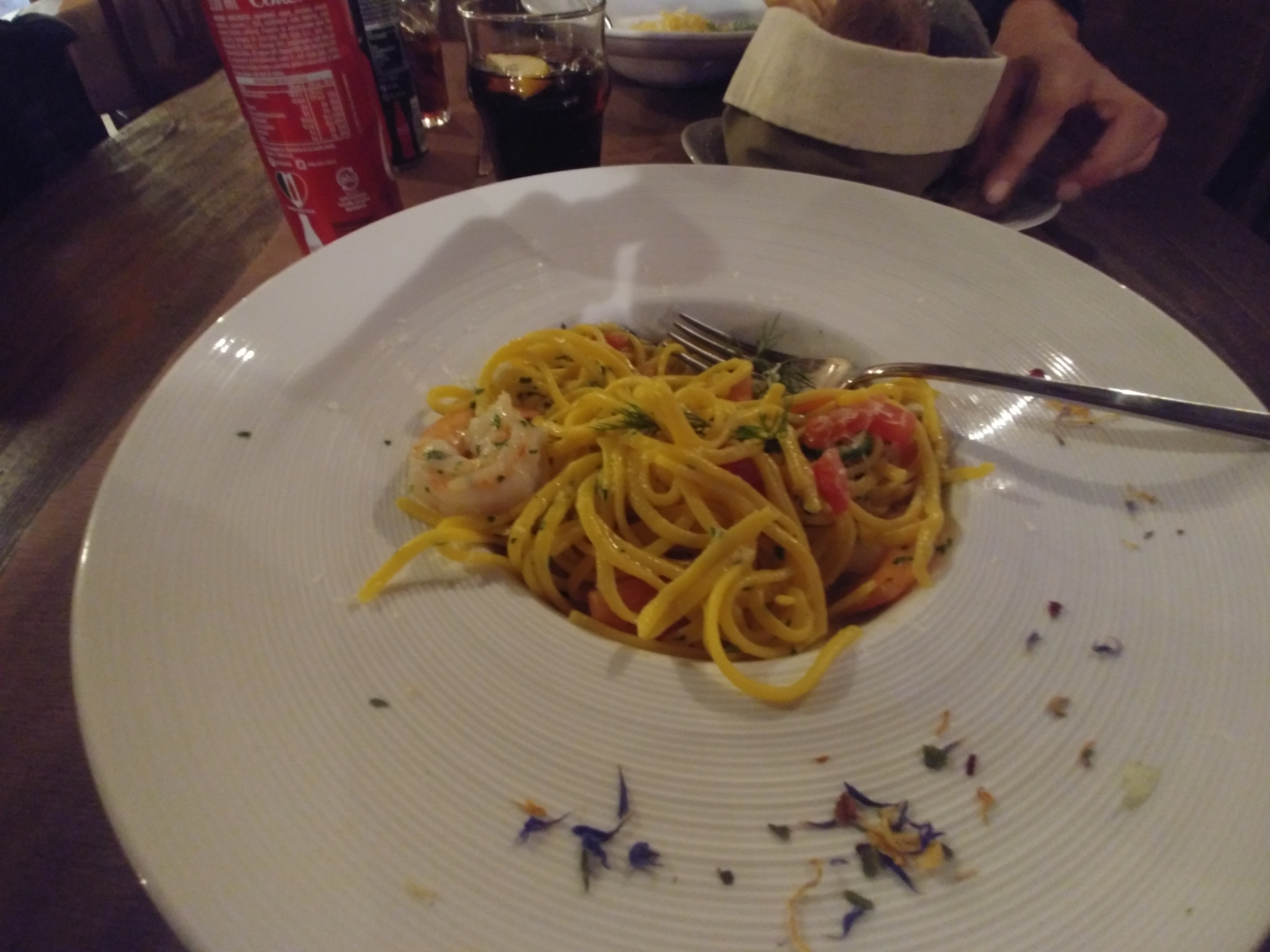
My husband chose a Spaghetti pasta with shrimp and vegetables. We both agreed that you could immediately taste the freshness and the firmness of the pasta.

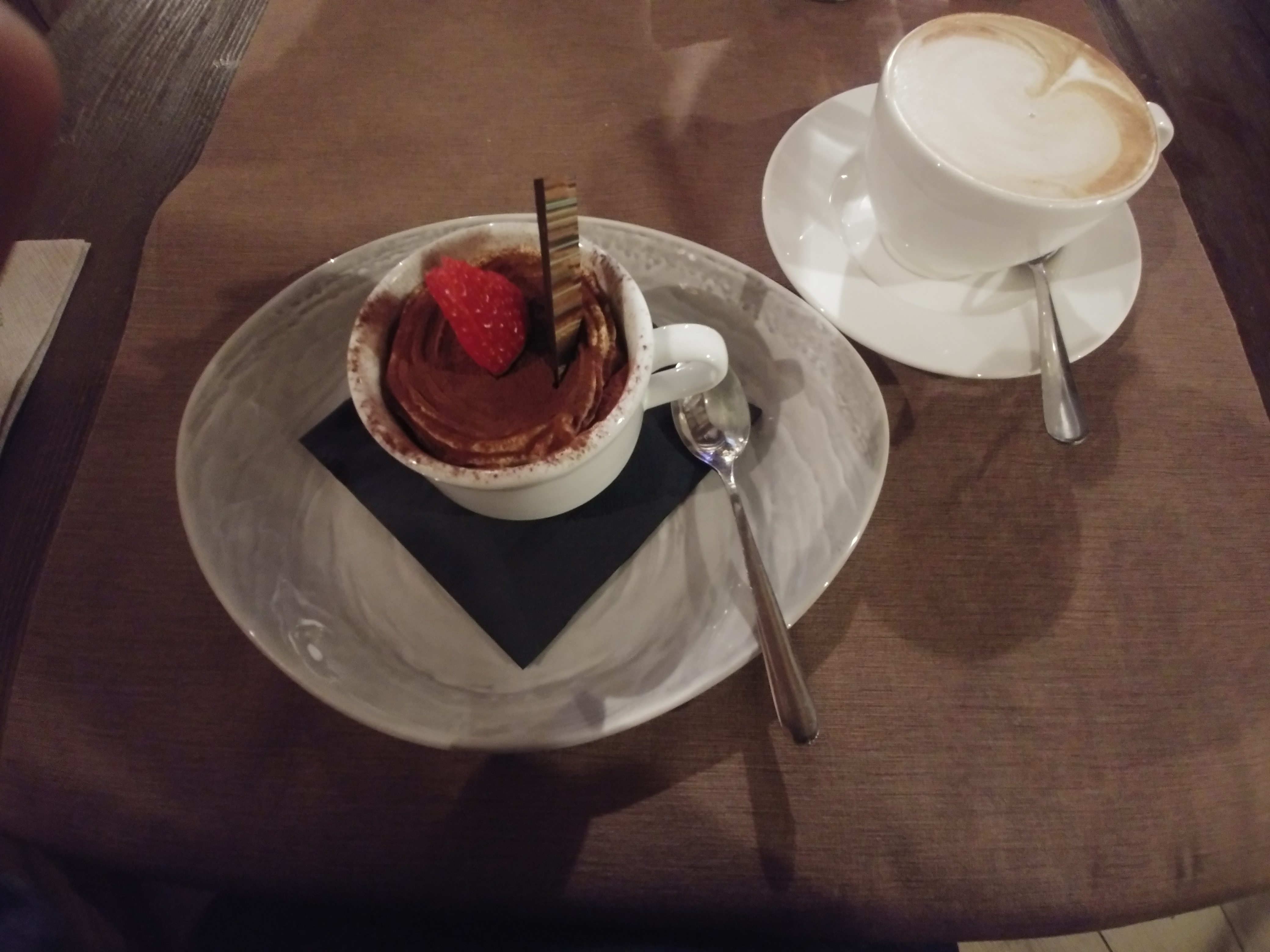
What’s a good meal without a good dessert? We decided to end off the meal with a classic Italian dessert. I guess you can say tiramisu will never taste the same to me. The smooth and creamy textures of the mascarpone cheese and the espresso coffee combined to make this dessert a taste sensation to savour with every mouthful. If you find yourself in Venice, a meal at this restaurant will not disappoint. Try it, you will thank me.

Pizzeria La Rossa Rossa

Even the name says you are about to have a true Italian experience, right? Well that’s absolutely true! If you want to eat good pizza prepared from scratch by good looking Italian chefs, then this is your place to go.

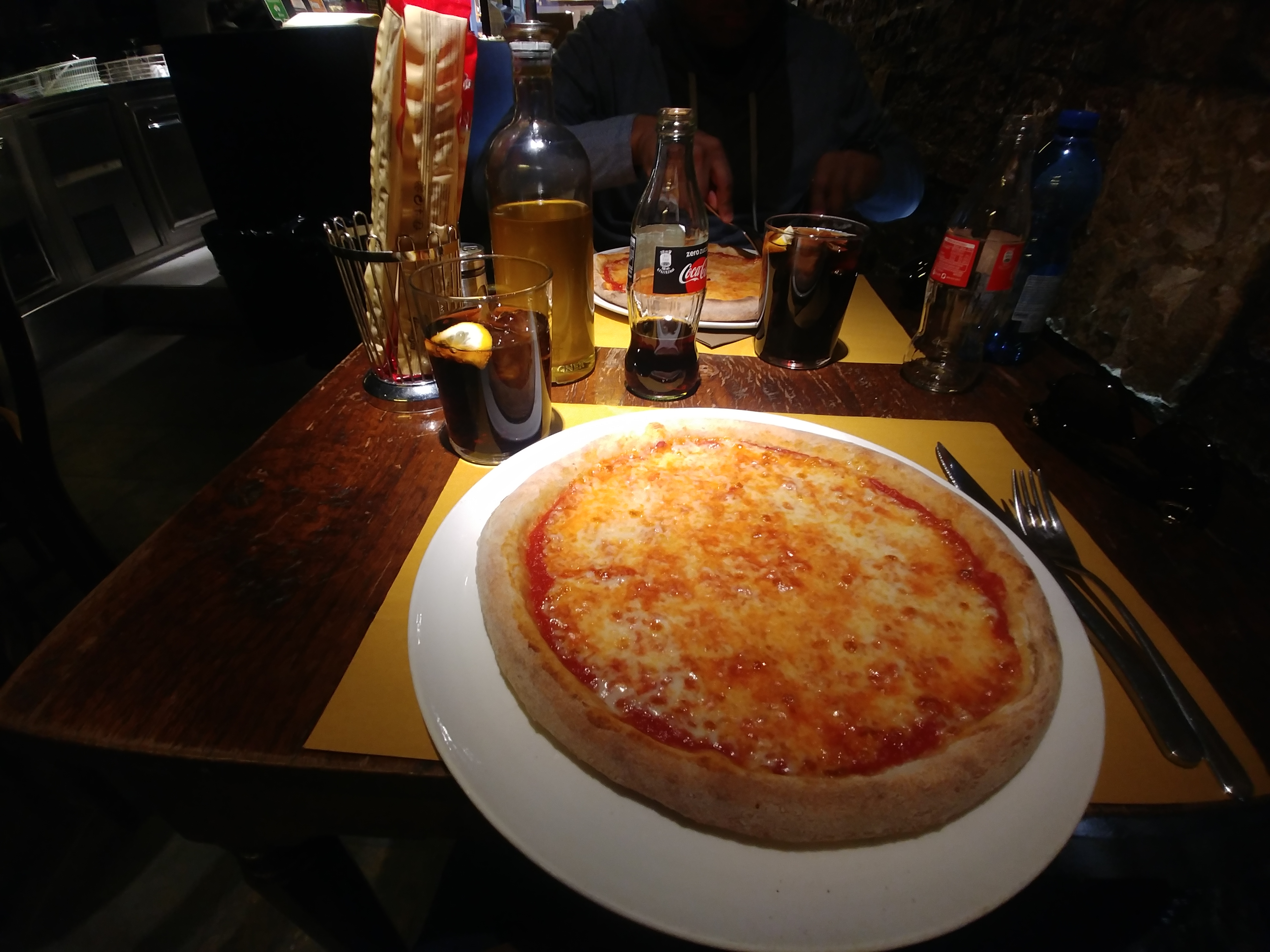
Pizzerria La Rossa Rossa turned out to be just as Riccardo described it. When you enter this restaurant you have to wonder if the electricity is out or if its just your eyes deceiving you. I’m not sure if it’s part of the look and feel they are trying to create but the lighting in here is not good. Riccardo had given us the heads up to expect this, so we were not put off by it. Instead we settled in and prepared ourselves for a pizza treat second to none. And I am pleased to say we were not disappointed.

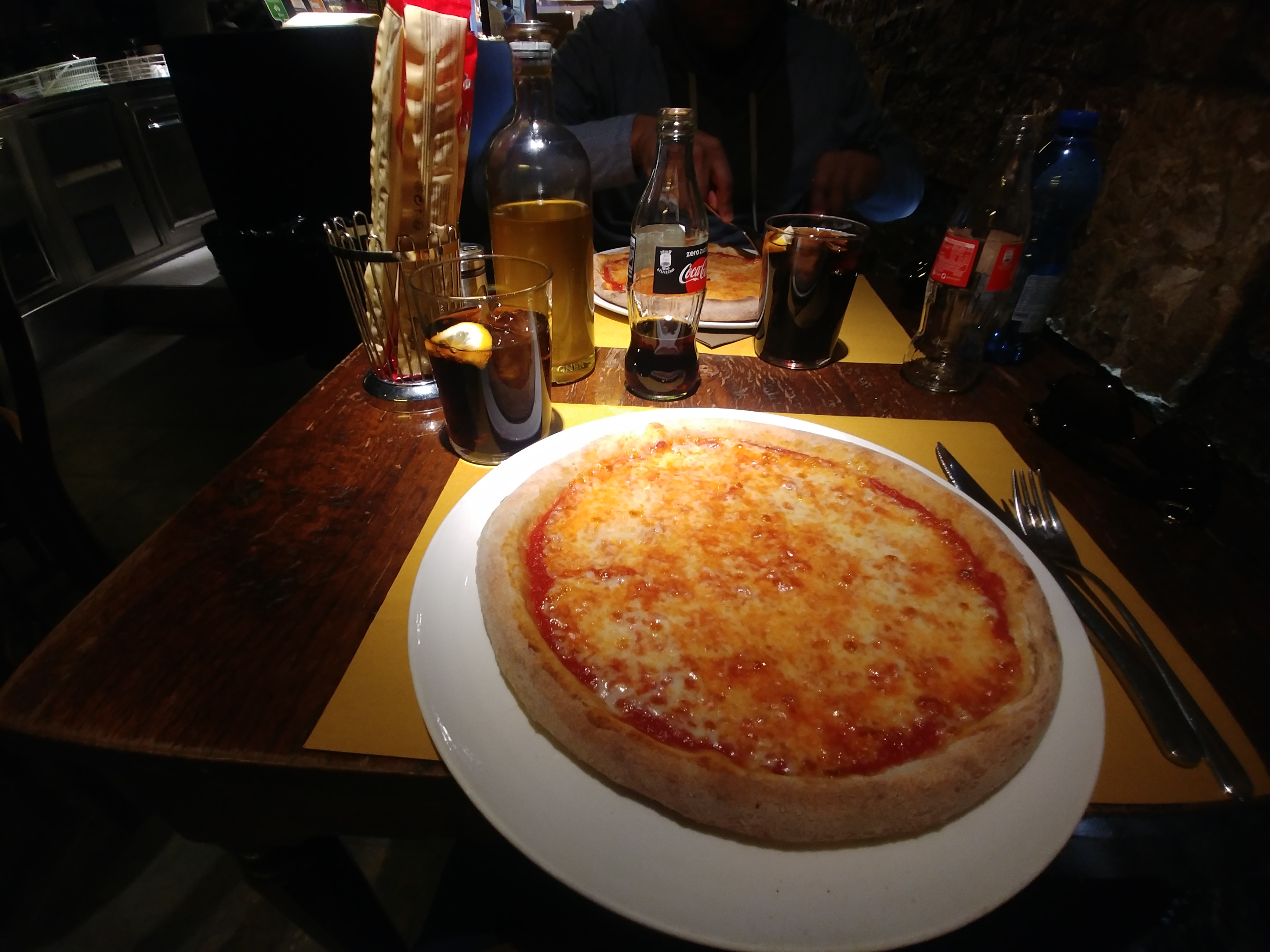
We opted for Magheritta and waited in anticipation. You know you have a good pizza when the base is not all thick and bready nor thin and flimsy. This pizza base was just right. The cheese melted in your mouth and the base just dissolved as you chewed. Pizza is one of my hubby’s favorites, so he was in heaven. This restaurant is a must do. Let me know what you thought once you’ve been.

Gelati Nico

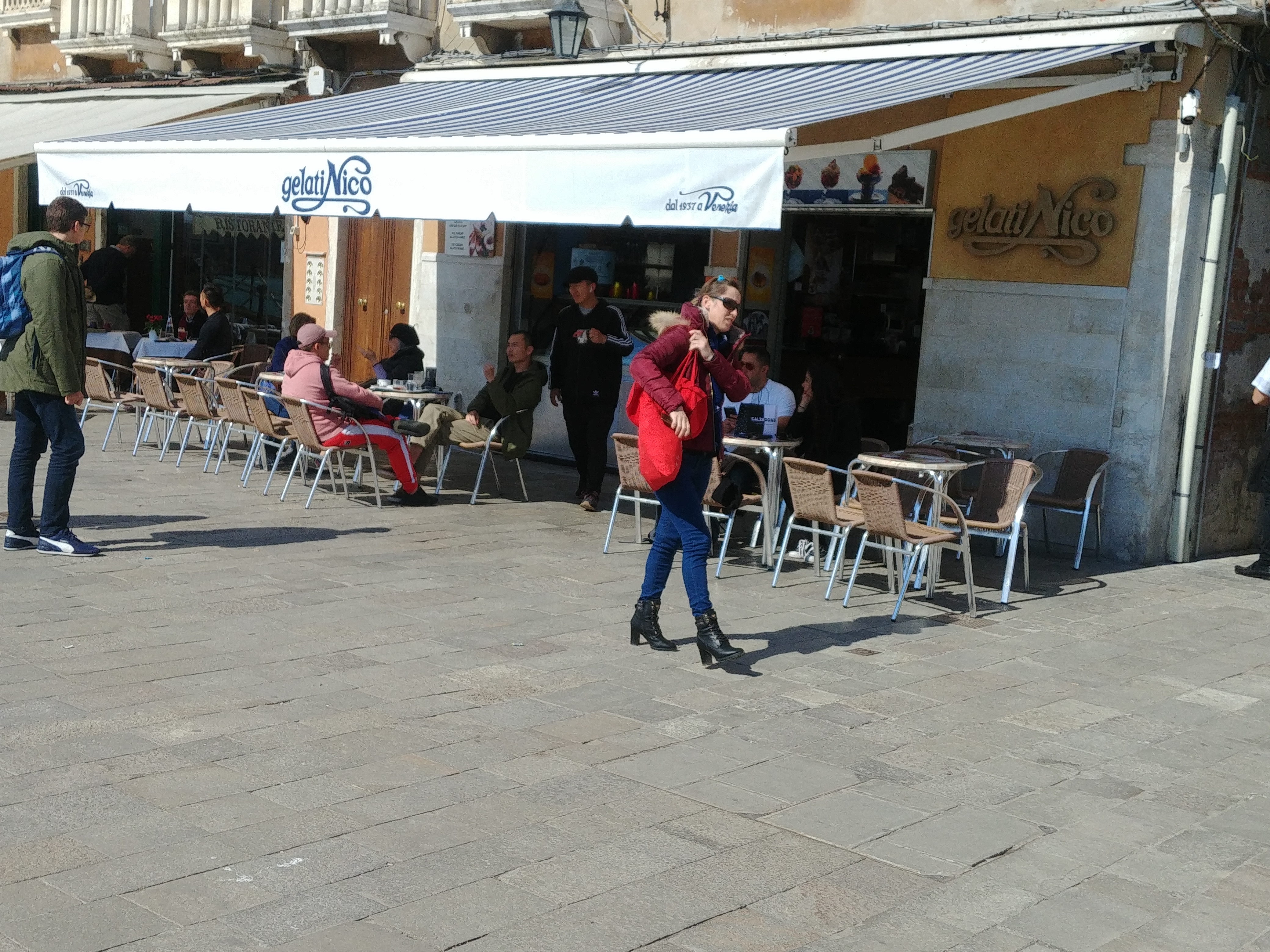
Walking around Venice you will see many ice cream shops with the most exquisite display of gelato ice cream. Do not be distracted or impressed by the displays. If you want to experience real gelato ice cream I suggest you walk right past all those enticing displays and make your way towards Gelati Nico http://www.gelaterianico.com/.

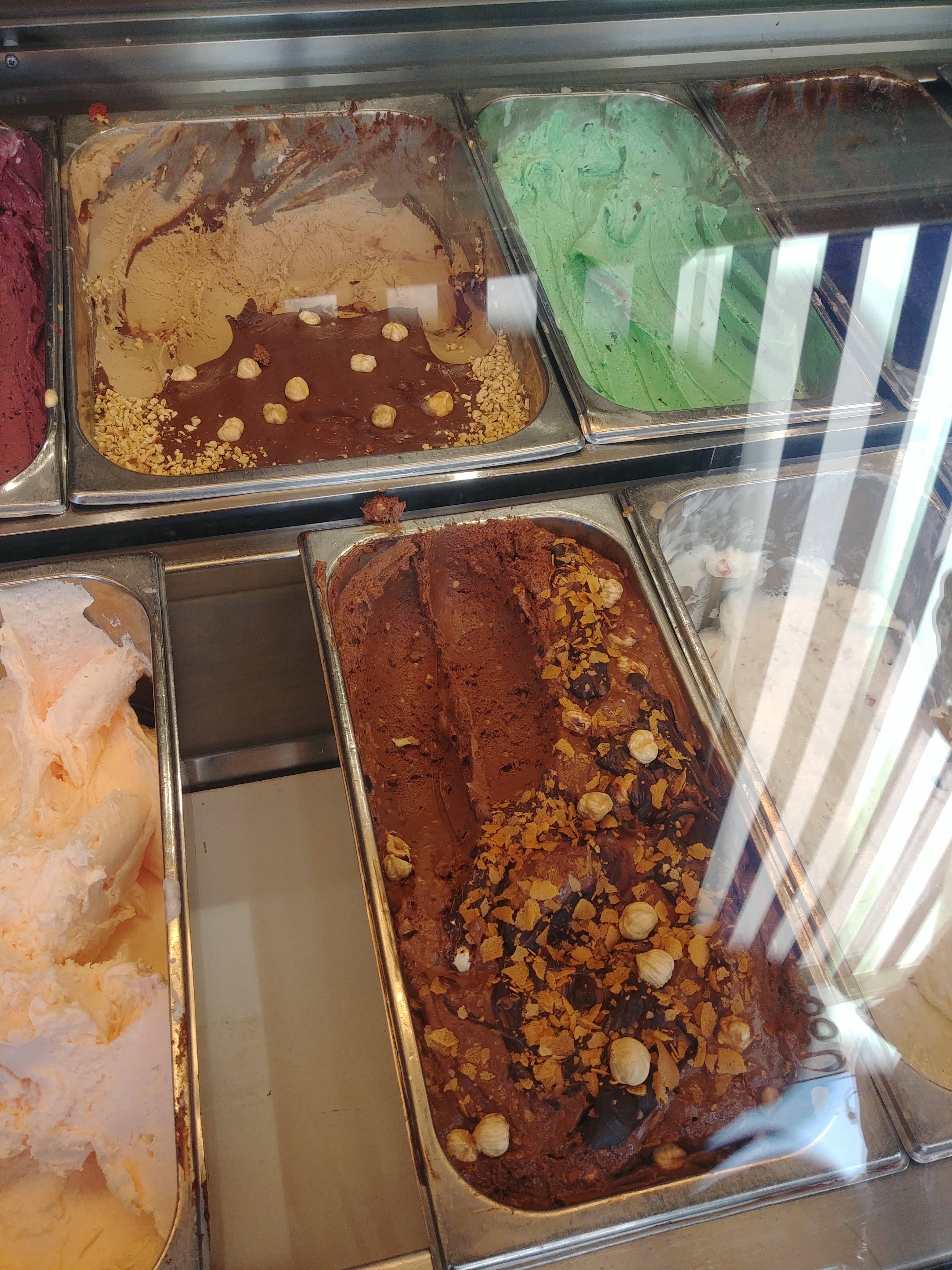
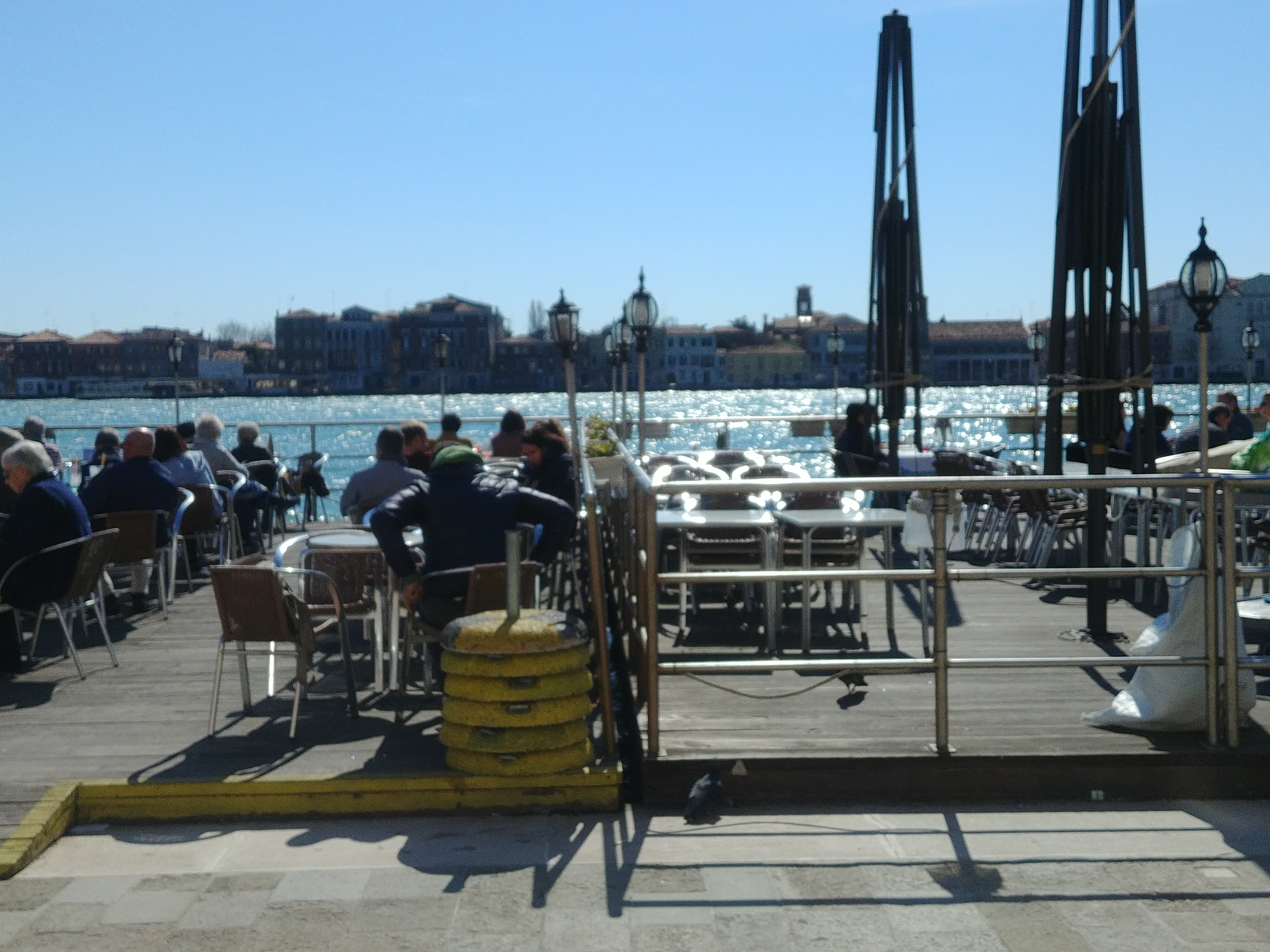
This restaurant is situated on the Waterfront quite close to Zattere water bus stop. We opted to walk there instead of taking the water bus. By the time we arrived we had worked up a good appetite. There is quite a variety of flavours to choose from so you may take a while to decide. Each flavour seems to be screaming out to you, “pick me”.  We opted for Ferrero Roche flavour.

I loved the chocolatey nutty texture and the fullness of cream that I tasted as I swirled the ice cream around in my mouth to savour it before it slid down my throat. The combination of the beautiful location and the mouth-watering ice cream makes Gelati Nico one of the best places to visit in Venice.

Gibran

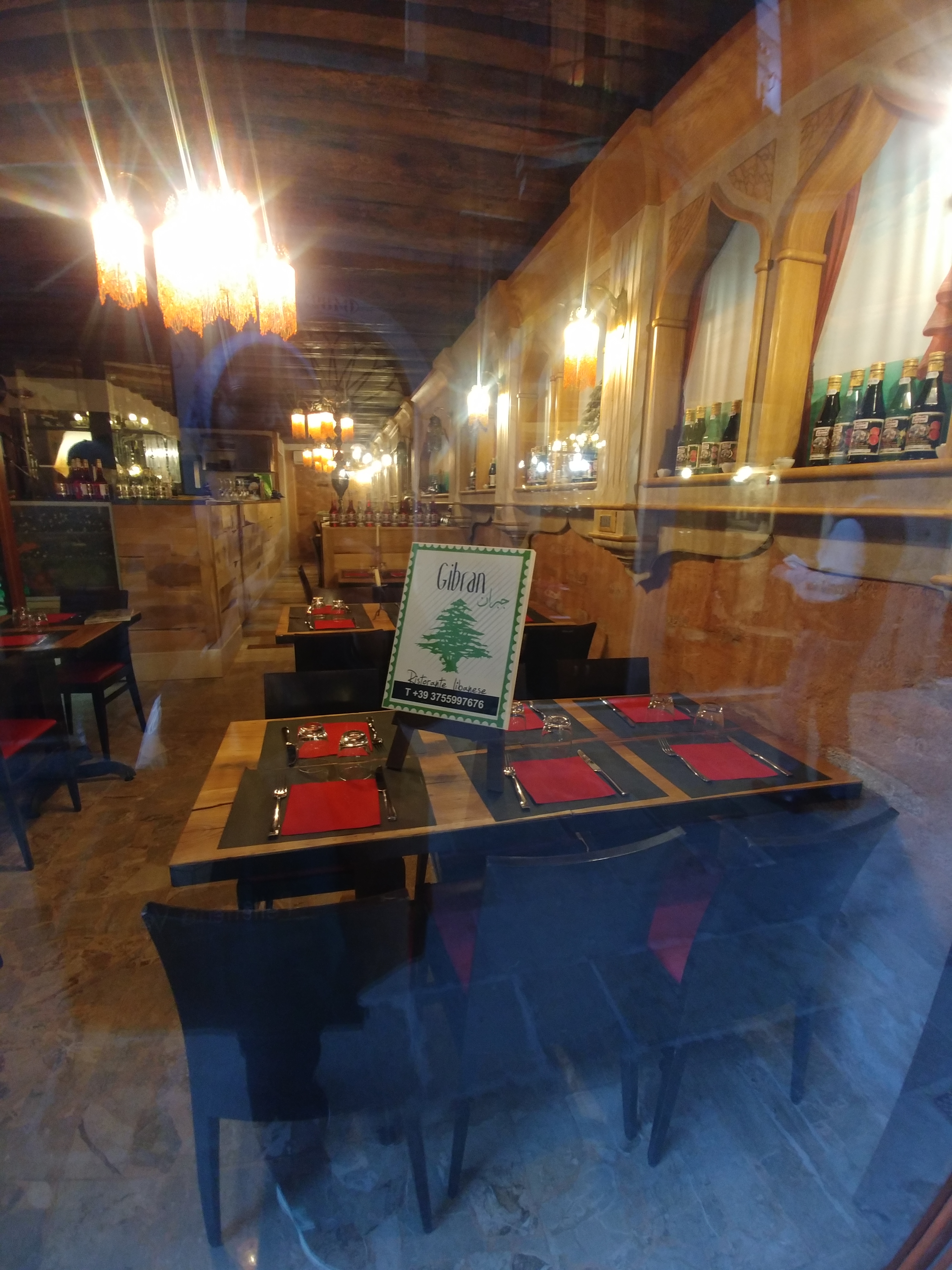
There is only so much pizza you can eat before your palette craves for something different. If you looking for something different but still authentic, why not try this Lebanese Restaurant .  

Gibran is situated in the district of Castello in, where the local Italians live.  The restaurant is only open at night and is a sit down restaurant. They are also more than willing to prepare a take away dish for you if you prefer to have your dinner at your apartment.

Featured

What I discovered I didn’t know about Venice

When my hubby and I travel to a new city I do my research and I make a mental note of the sights I would like to see and how much of the city I want to explore. When you have limited time, you have to be selective and you must have some sort of a plan.

Armed with “sort of a plan”, we normally head out first day and allow the city to lead us on our path. Most times we end up at the exact places we intended to see, effortlessly. It just works out that way when you have a clear intention.

Having done all the research I can, I am normally still surprised to learn that there are a number of seemingly insignificant facts I didn’t know. Here are my top 5 things I discovered about Venice that is useful to know before you go:

Marco Polo Airport Venice is NOT located in the city of Venice.

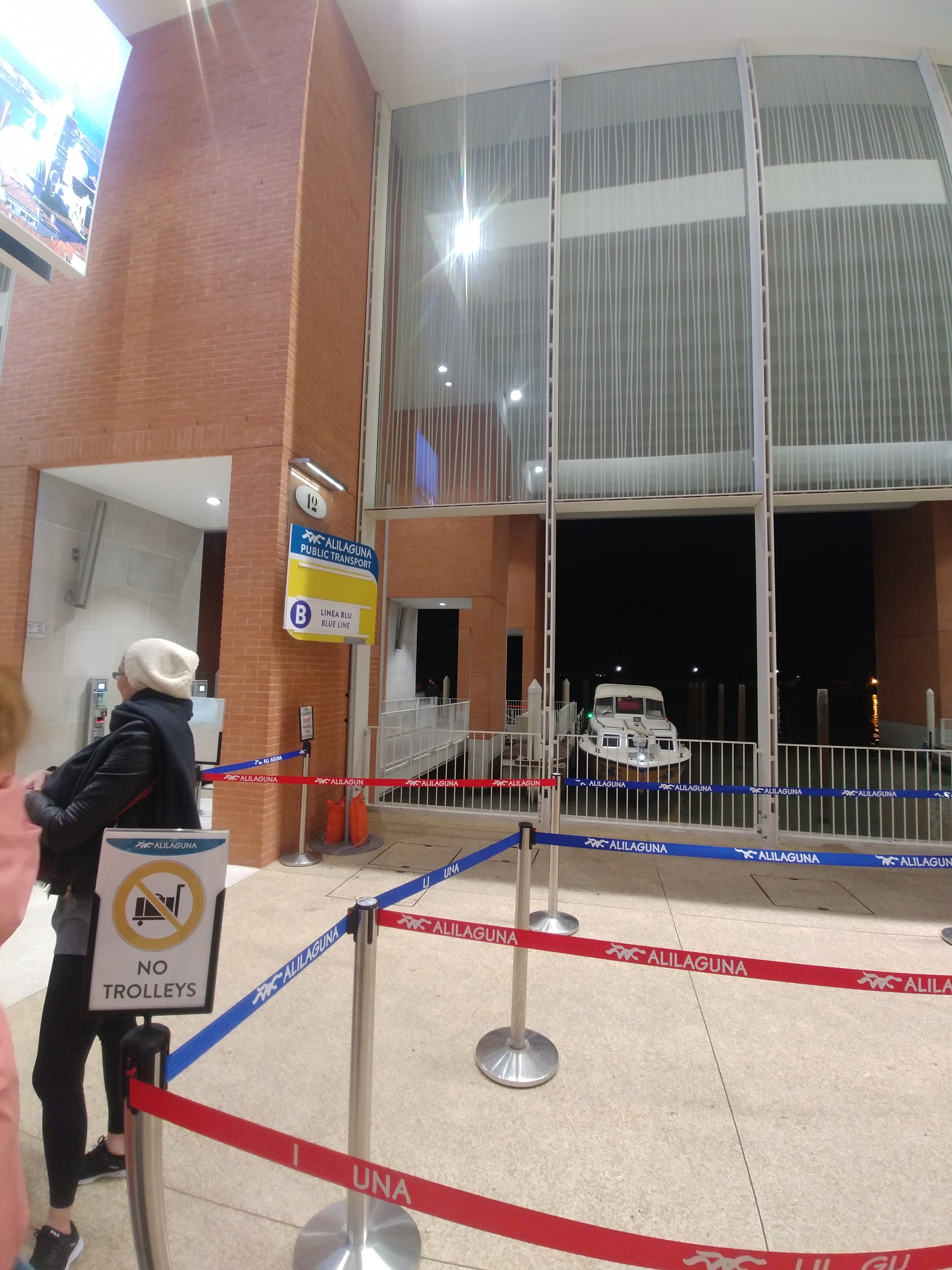
To get to the city of Venice you have to take a Vaporetto from the airport which is located 12.4km from Venice by road and 10km from Venice by water, in a city called Tessera. Arriving late at night we travelled this 10km by water only by the light of the motorboat. It took us about one hour twenty minutes to arrive at Arsenale bus stop. It was only on our next trip in daylight that we understood the way the water bus systems works in Venice.

The streets of Venice are mostly empty at night.

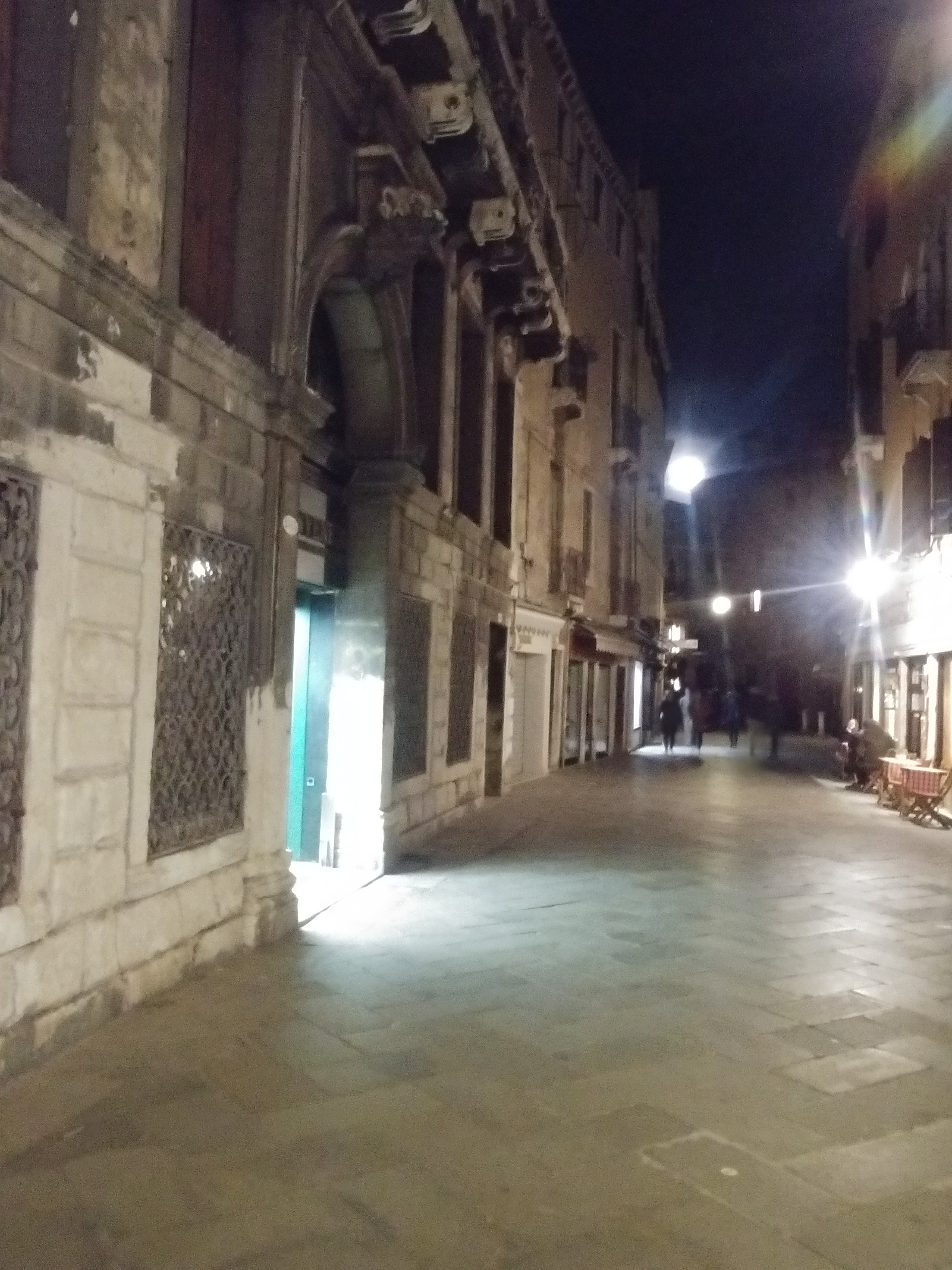
If clubbing or wild loud restaurant parties are your idea of a night out, then Venice is not the place to go. As the day draws to an end, you will find the busy streets of Venice seems to quiet down to a hush. This is when couples come out to walk, hand in hand under the beautiful Venice moon.

The endless bridges can be difficult to navigate with luggage or prams.

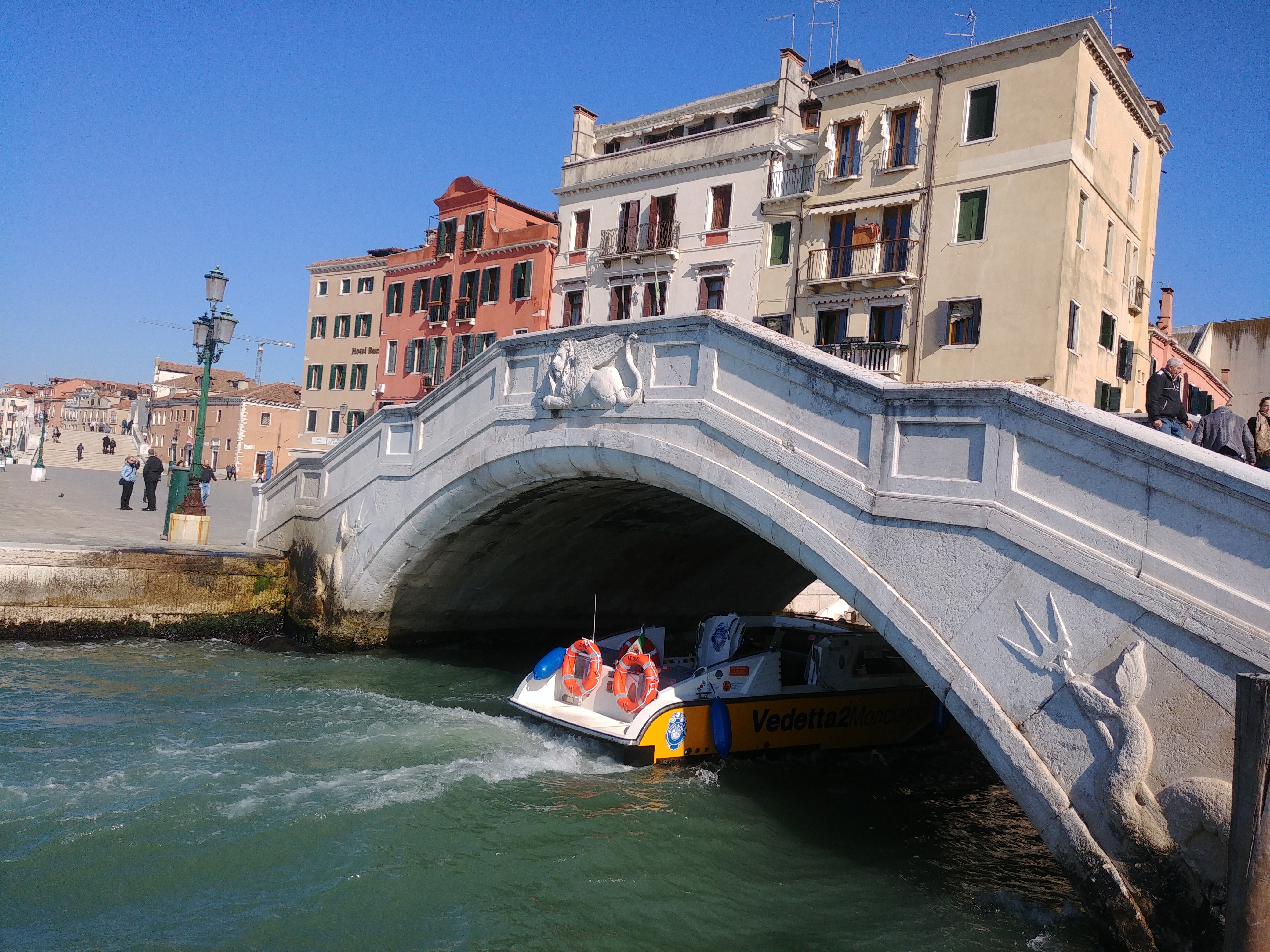
Pack light and if you are travelling with a baby or toddler, make sure his/her pram is able to move easily up and down stairs. There is no way to get around Venice without crossing at least 10 bridges in the space of 10 mins.

Just because it looks like a pizza doesn’t mean it is a pizza.

The first night we arrived in Venice our host Ricardo sat us down and gave us some solid advice. About Italian food he said, there are some really good Italian restaurants in Venice where you can find authentic Italian pasta & pizza but most of the restaurants in the touristy part of Venice is not Italian. So be careful when you see a pizza on the menu. There are quite a few Chinese owned restaurants in Venice.

Not all gelato ice creams are created equal.

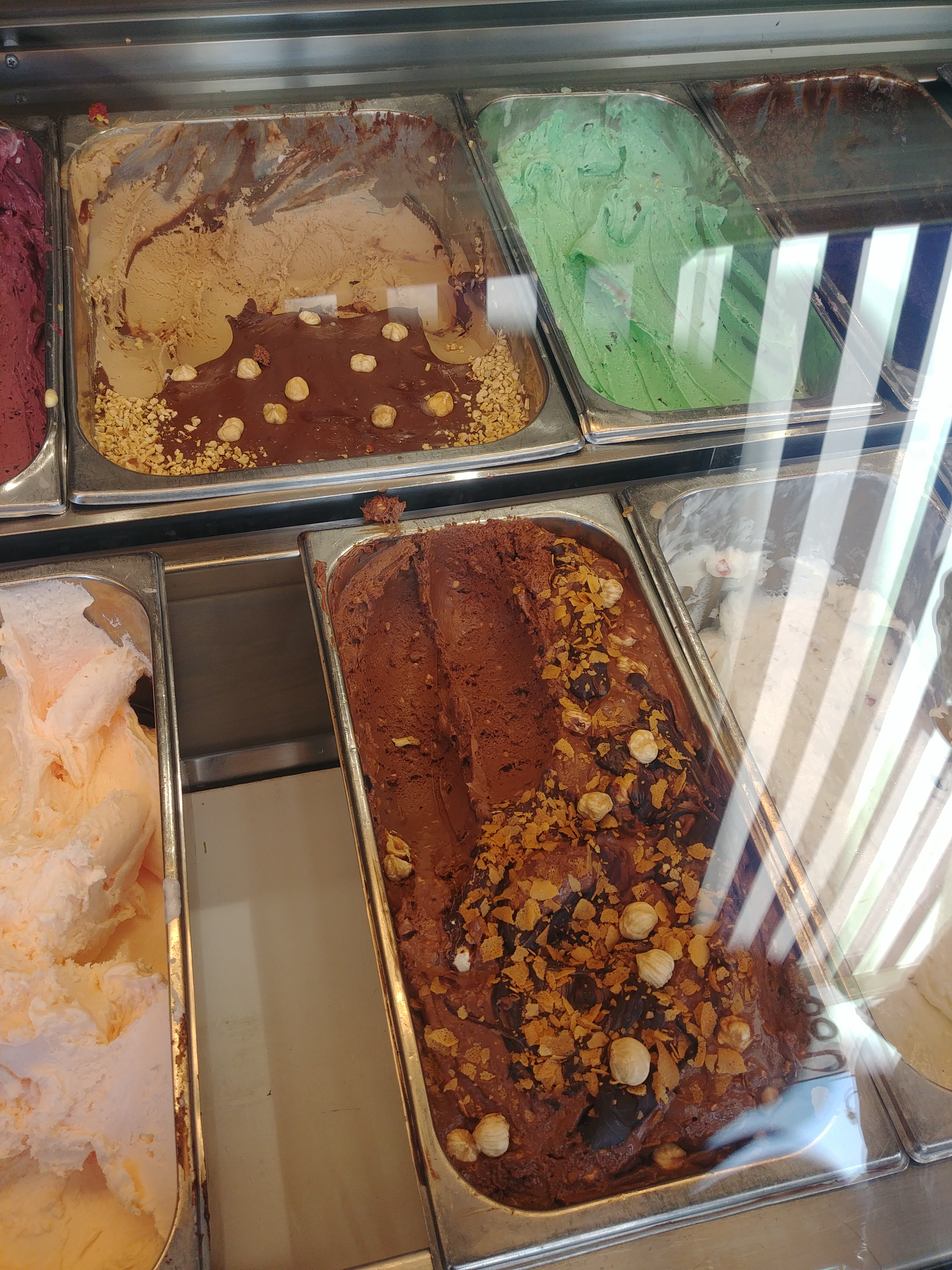
The rule is if it has this creamy swirl on the top of it, chances are it’s not real. Genuine gelato ice cream is not displayed with all the swirly stuff. The proof is in the taste. Here is a pic of genuine authentic gelato ice cream Yum!