My first taste of Europe was on a visit to Istanbul in the summer of 2015. Prior to this, I had not really been interested in travelling to Europe. Looking back now, I think the decision to make Istanbul my maiden European experience, was a smart one.
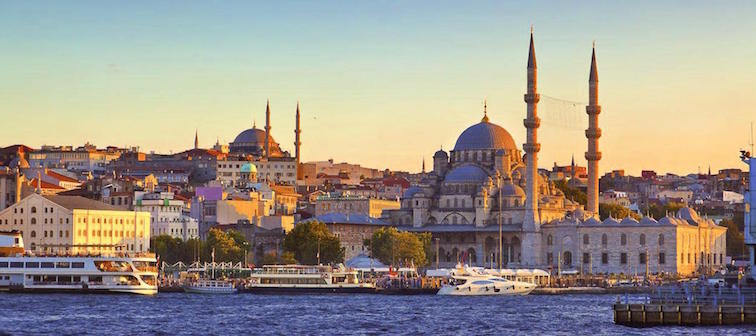
Istanbul Skyline
With one foot in Asia and another in Europe, one has the pleasure of experiencing the best of two continents on your visit to Istanbul. The city straddles two continents separated only by a short ferry ride.
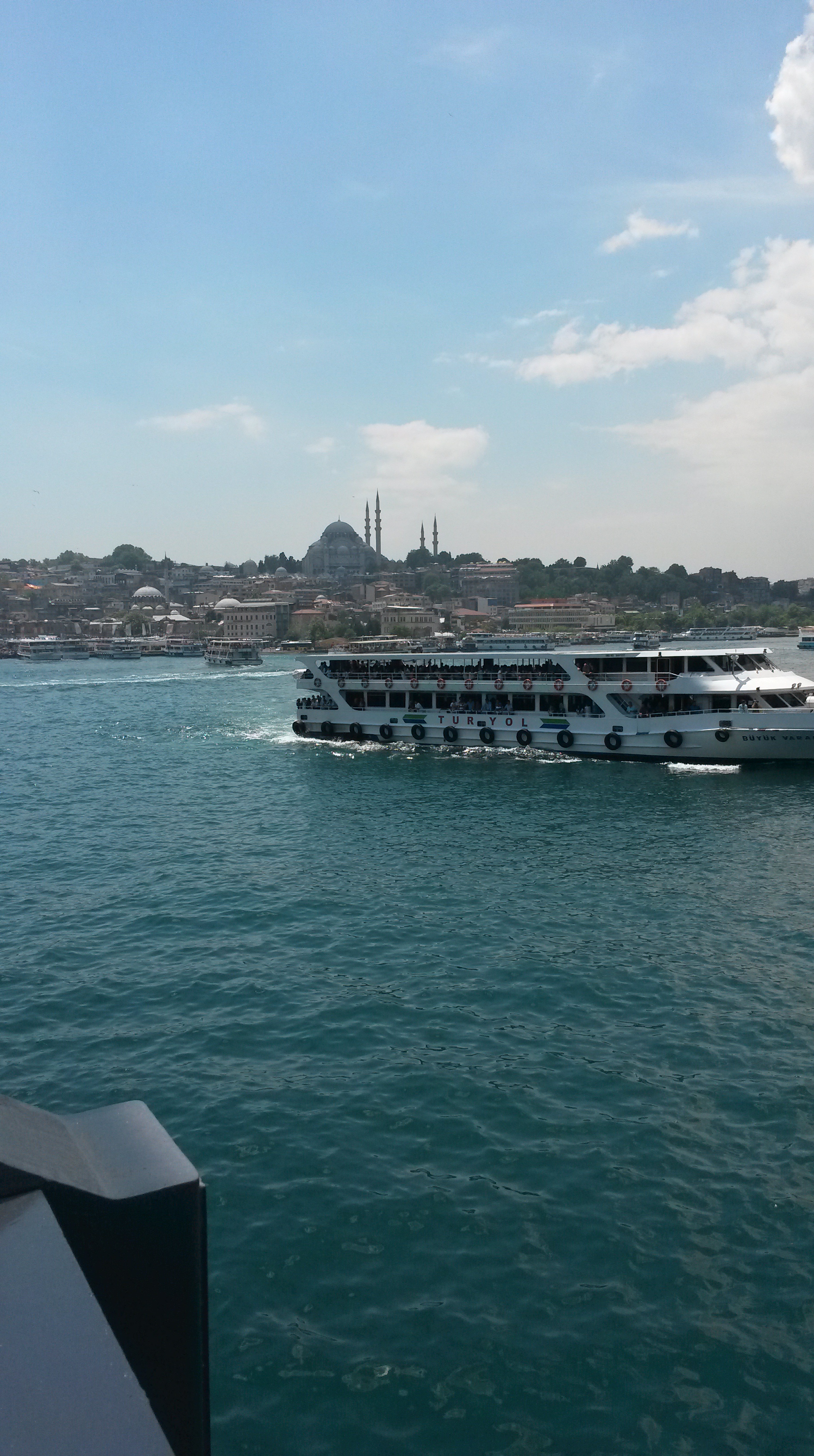
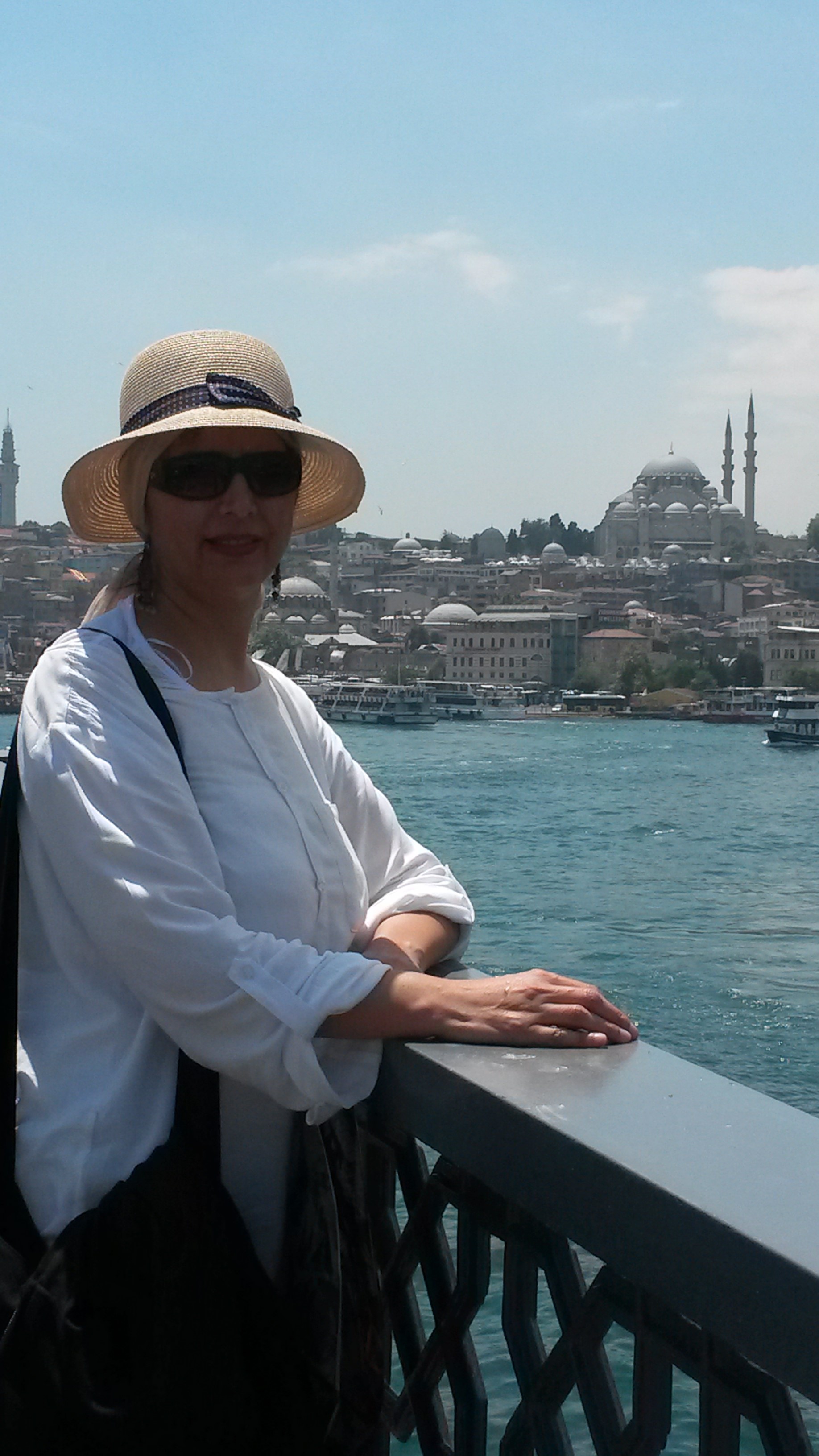
On the European side of the city, there is a further distinction which makes this city so unique and fascinating.
The North bank of the Golden Horn (major urban waterway and the primary inlet of the Bosphorus in Istanbul) tends to be more modern, especially around Taksim area (new city). To the west, you will find Sultanahmet (old city), the historical heart of the city, and what was previously known as Constantinople.
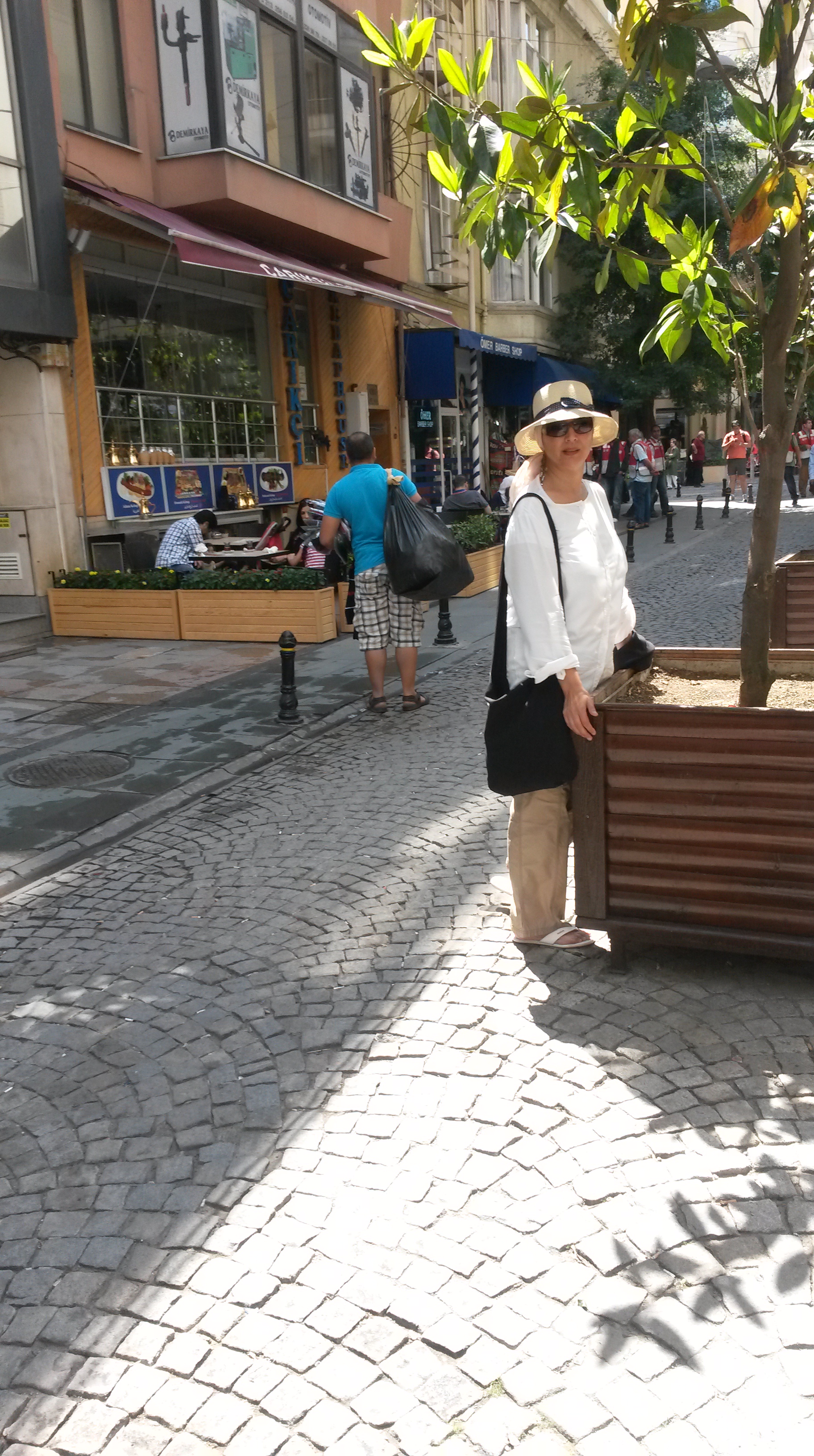
New City – Taksim 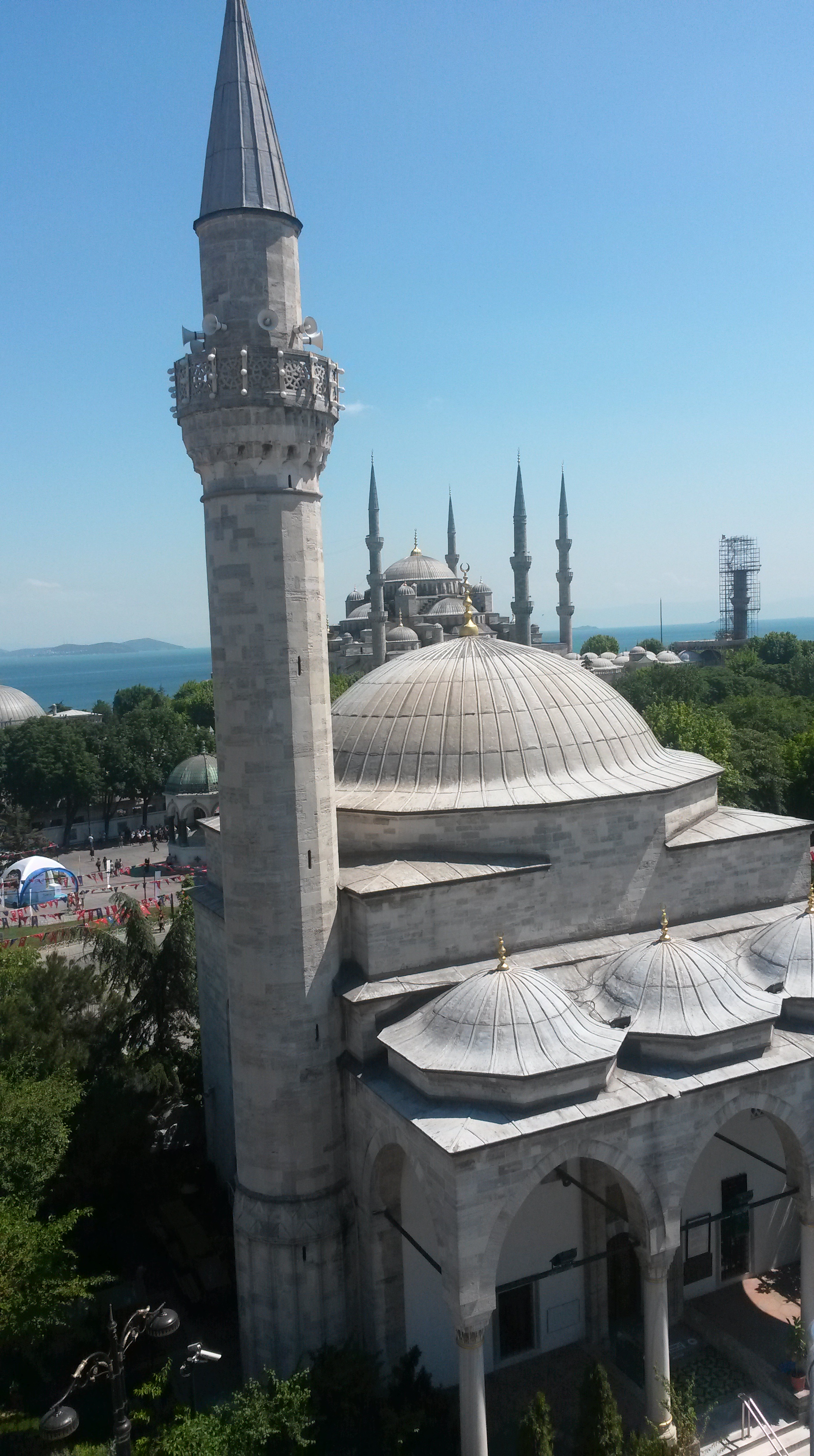
Old City – Sultanahmet
Whilst there are a few touristy things to do in Taksim, in this blog I’de like to share with you some of my tips for your visit to the old city, Sultanahment.
Choose your location wisely
We were fortunate enough to be travelling with family who had previously been to Istanbul and could give us good advice when deciding on hotels in Taksim and Sultanahmet.
Although the old city is relatively small and most historic sites are situated close to each other, if you wanting to be close to the history, culture, transport and the vibe, then I suggest you try The Ambassador Hotel http://www.hotelambassador.co
The Ambassador is a boutique hotel with only five floors and approximately 20 rooms. If you are able to get a room on the fifth floor you will be just one flight of stairs away from the rooftop restaurant where breakfast, lunch and dinner is served.
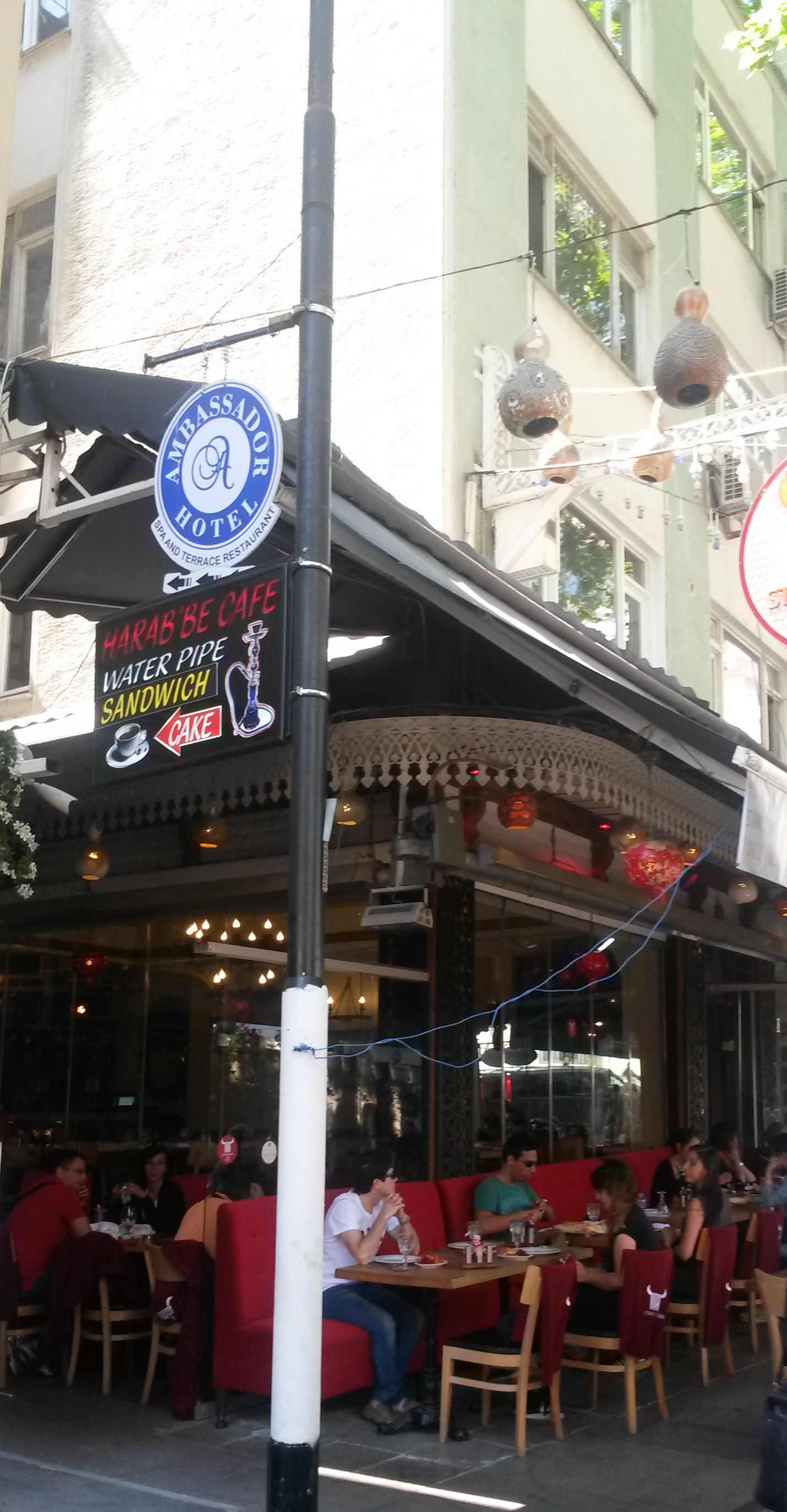
Ambassador Hotel entrance
From the rooftop you will have a spectacular view of the Blue Mosque , Hagia Sofia and the Bosphorus river in the background.
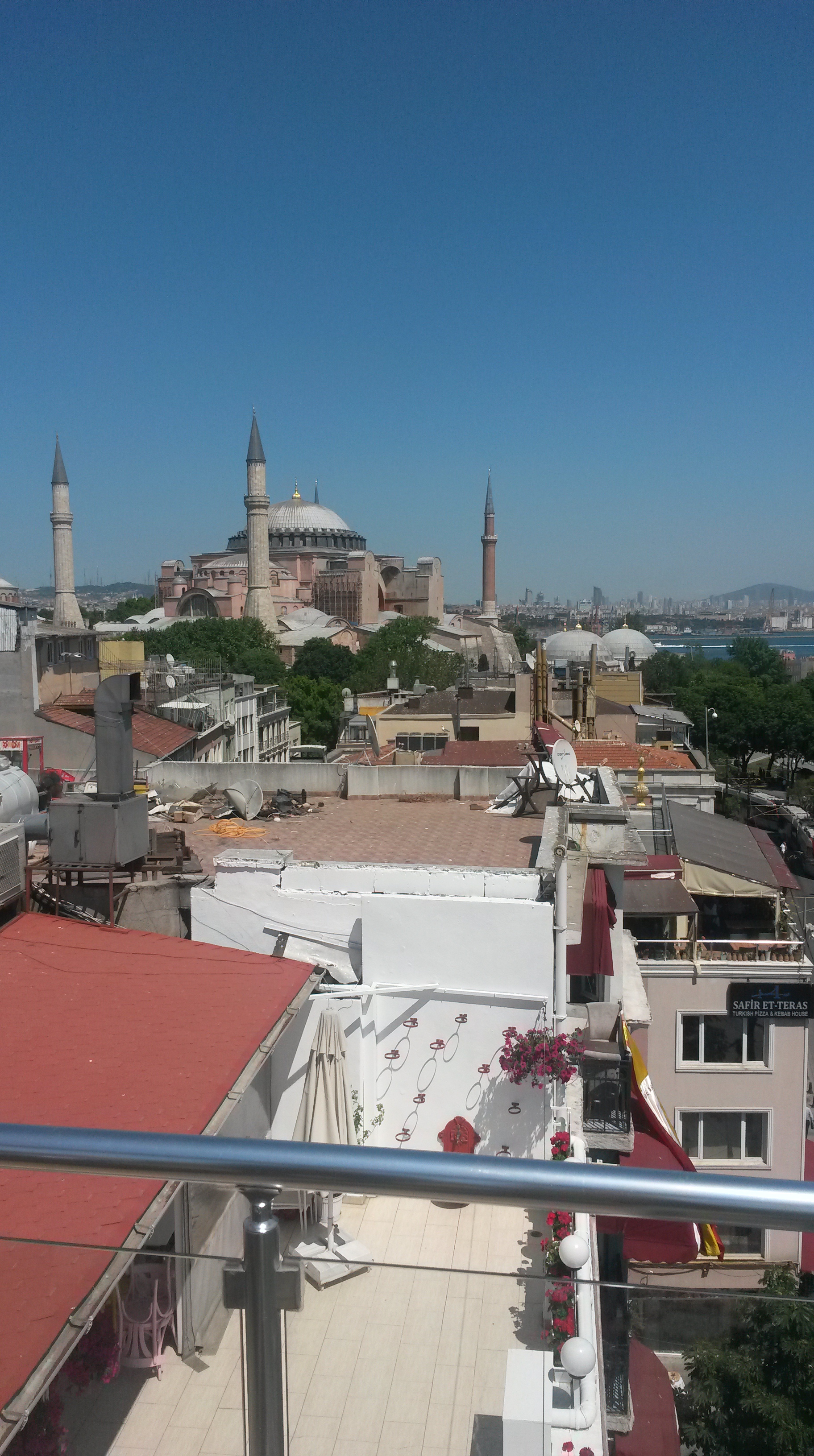
View of the Hagia Sofia from rooftop 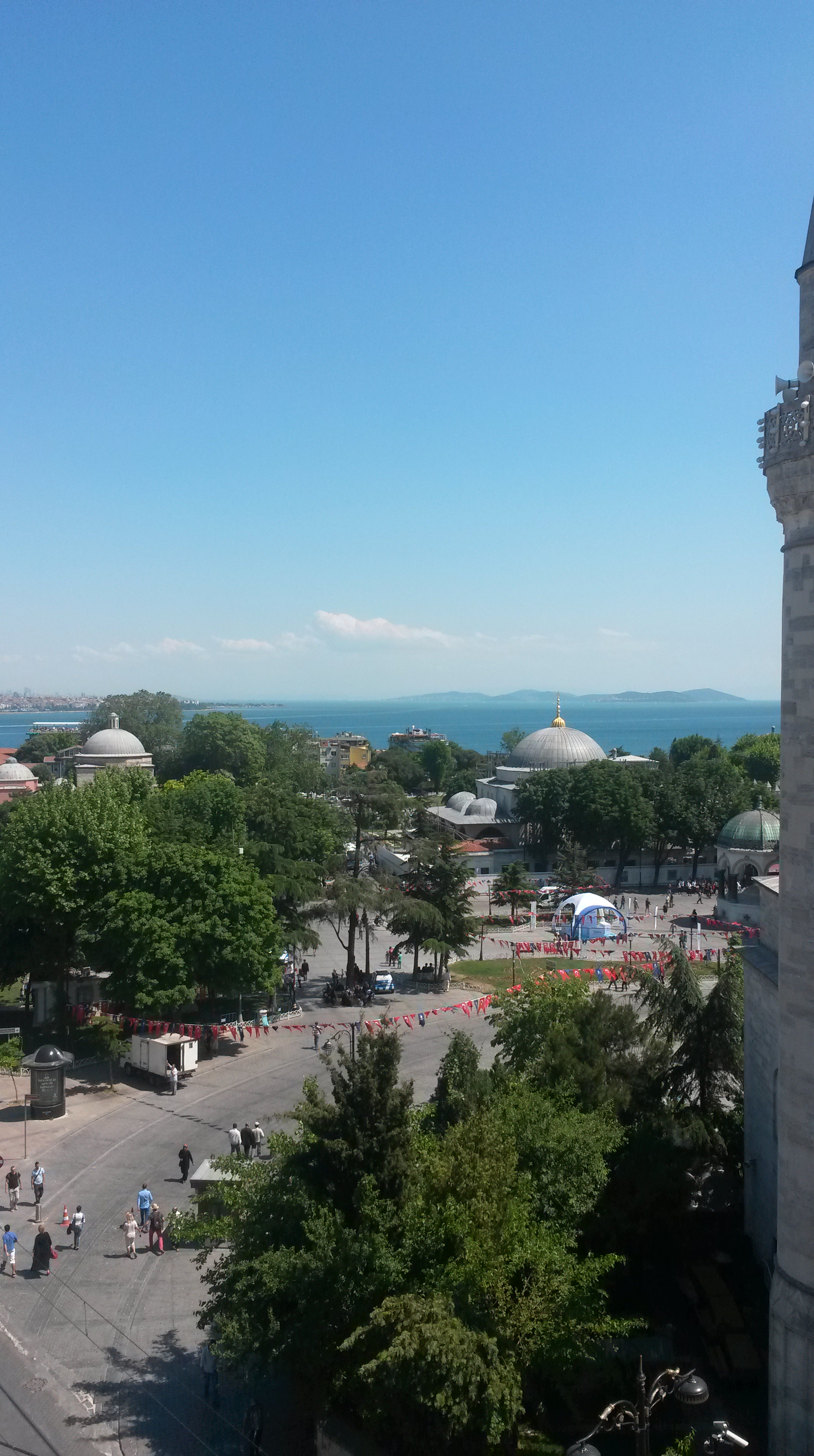
Blue Mosque area and Boshporus in the background
Plan your visit to the Blue Mosque carefully
Built in the 1600’s the Blue Mosque is the only mosque in the country with six minarets. The mosque was designed and built as an imperial show of strength to compliment the Hagia Sofia which faces it across the Sultanahmet Square.
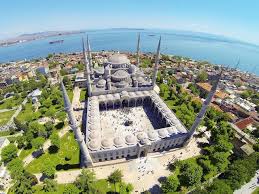
Aerial view of the Blue Mosque
Even though it is considered to be one of the world’s most visited tourist attractions, it is still an active mosque and is therefore closed to visitors and tourists for approximately 30min during the five daily prayers.
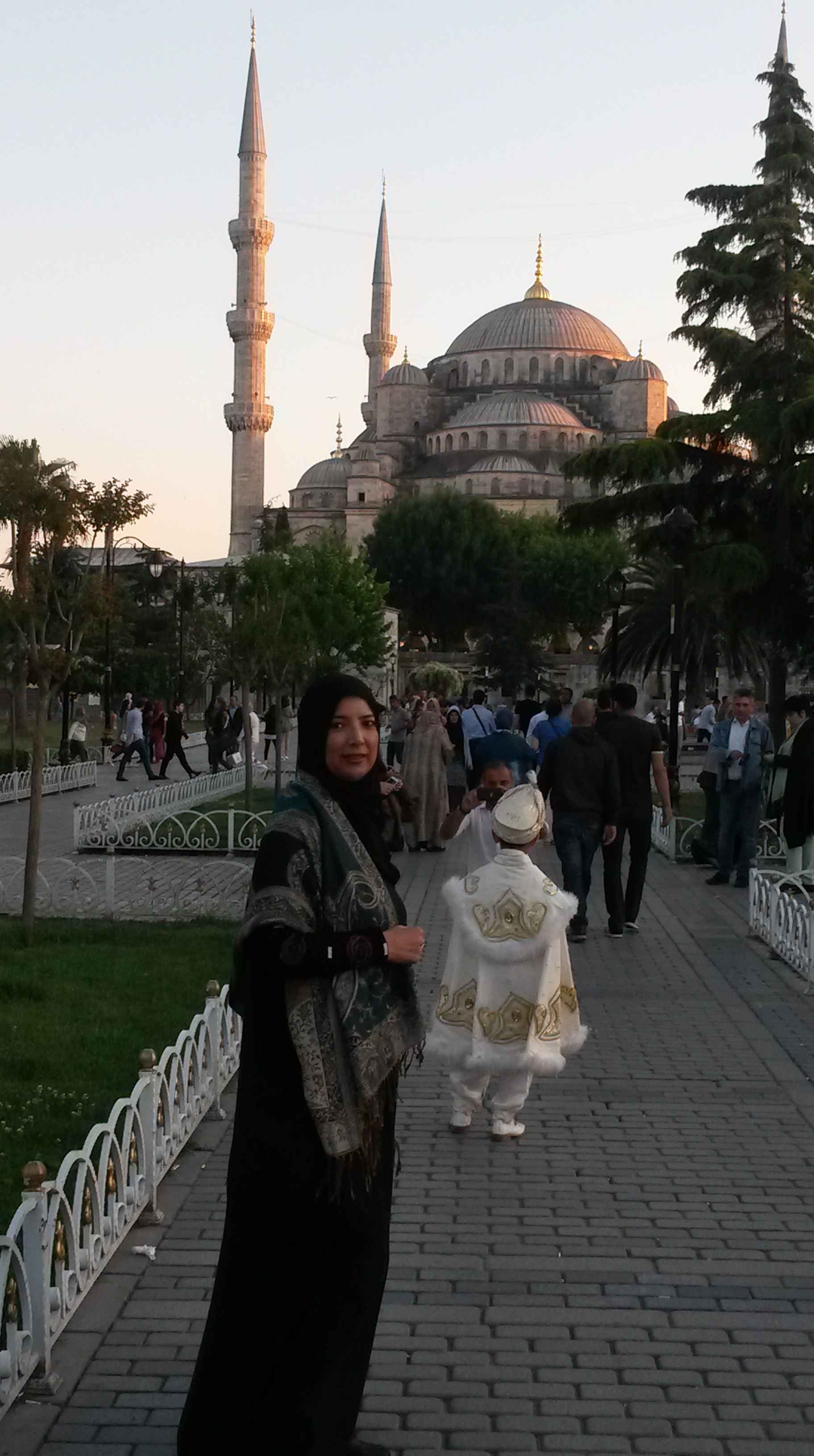
Evening prayer at the Blue Mosque
The best time to visit the mosque as a tourist is after sunrise and before the midday prayers. Worshippers can pray the five daily prayers and do the tourist walk-about between congregational prayers.
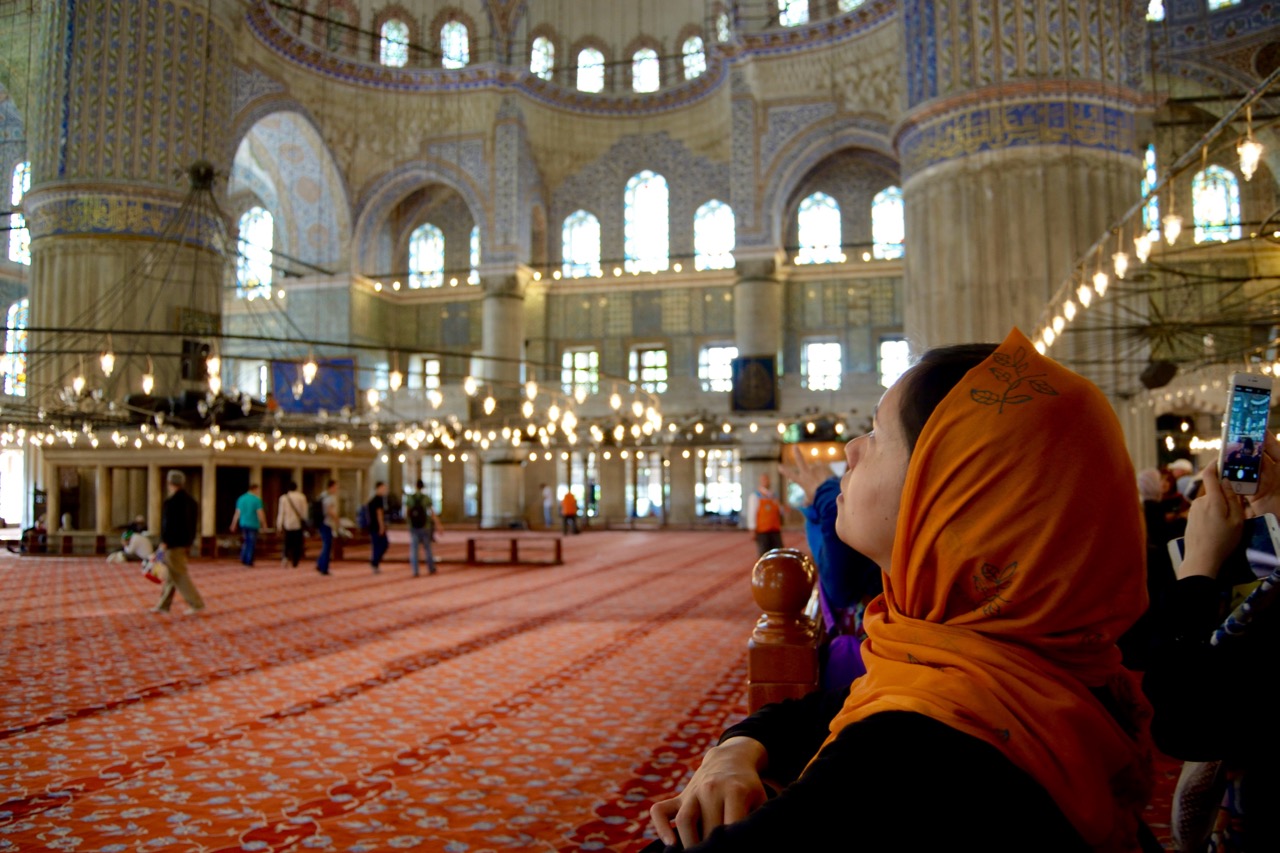
Tourists doing the walk -around
The exterior of this mosque is mesmerising and attractive. It is one of the most significant examples of Turkish Architecture and Islamic Art. The 20000 blue tiles decorating the dome ceiling along with the blue hand drawings will be the first thing that catches your attention as you enter the mosque. The mosque is officially known as the Sultan Ahmet Mosque but is commonly referred to as the Blue Mosque because of the amount of blue tiles used in the decoration of the interior.
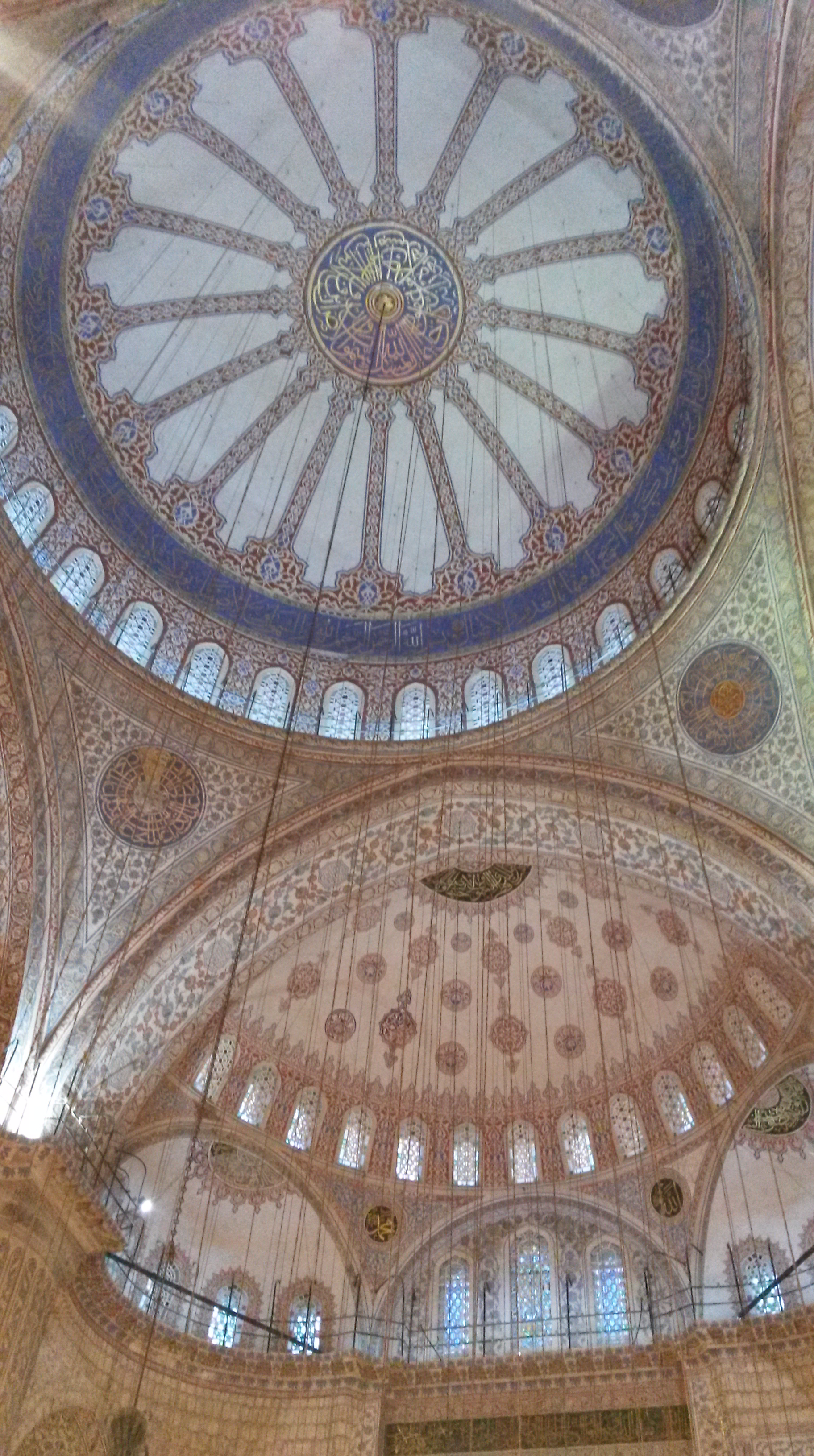
Dome ceiling tiled with blue tiles 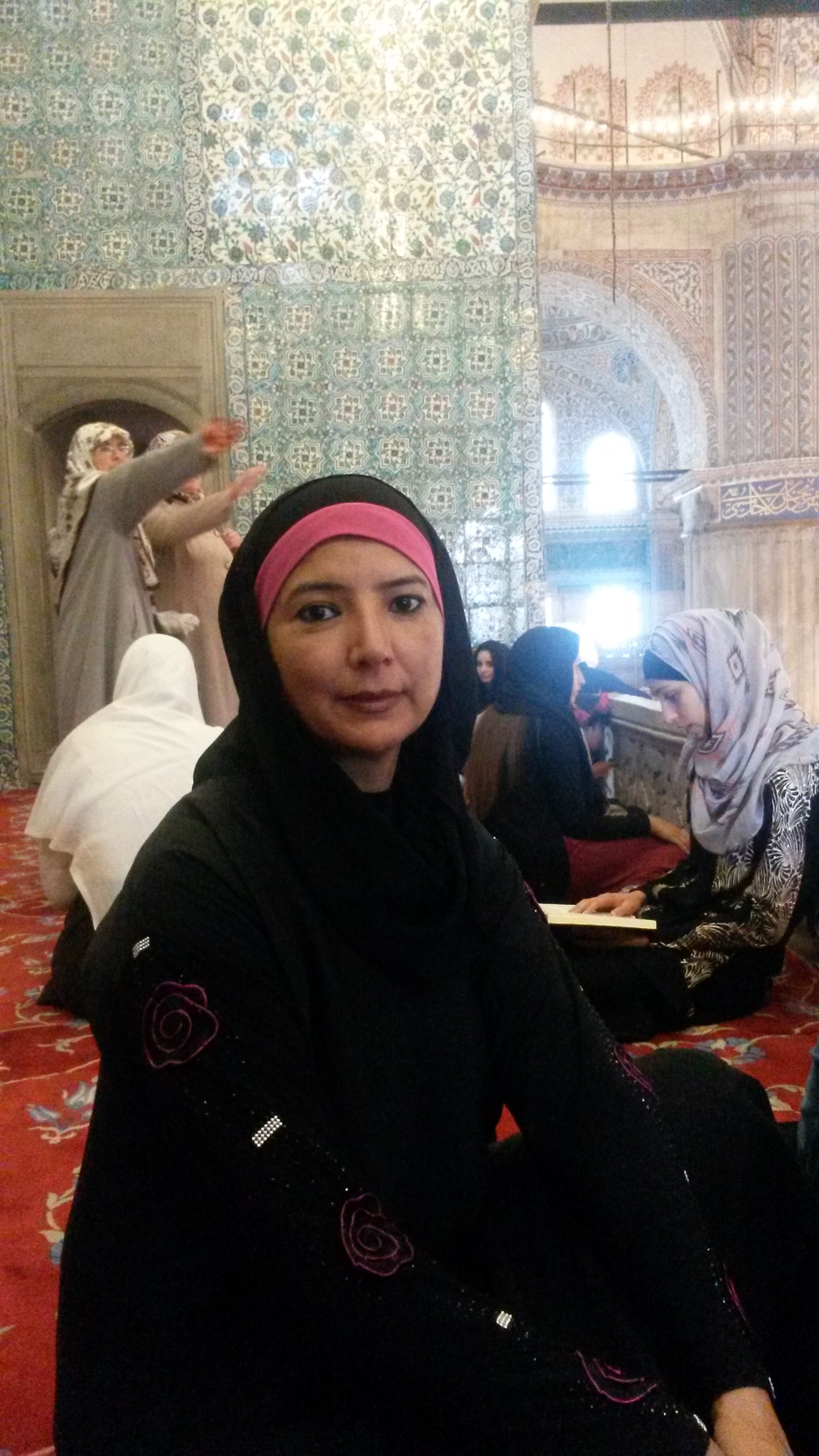
More blue tiles on the walls in the background
Take along some water when visiting the Hagia Sofia
Also known as the Ayasofya in Turkish and Sancta Sofia in Latin, the Hagia Sofia was first built in AD360. The original structure and the second one built was destroyed by fire. The current structure was constructed and built in the 6th century as a Greek Orthodox Church.
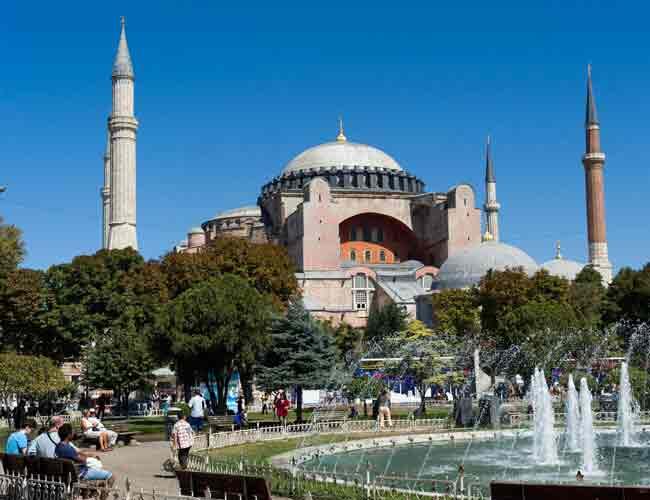
View from the Sultanahmet Square
With the arrival of the Ottoman’s in the 15th century it was converted into a mosque. During this time the minarets were added and the apse was changed to face the Qibla (direction which Muslims face in prayer) in Mecca. In 1935 the building was declared a Museum and remains one to this day.
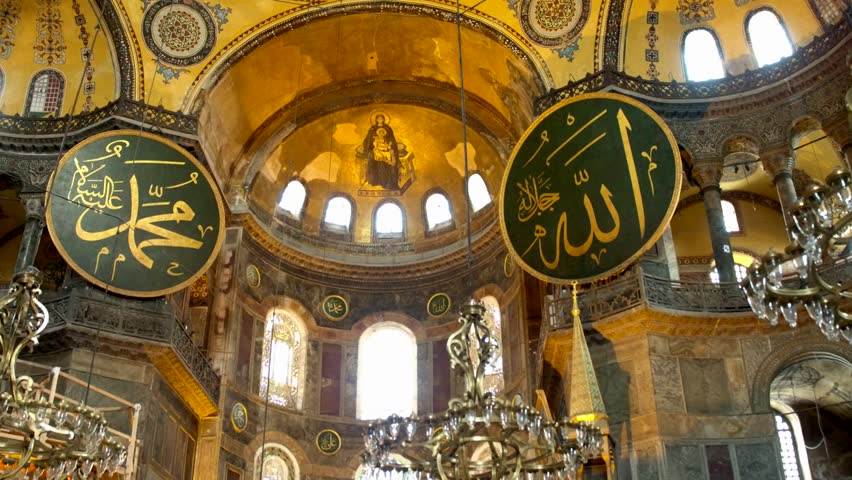
Inside the Hagia Sofia 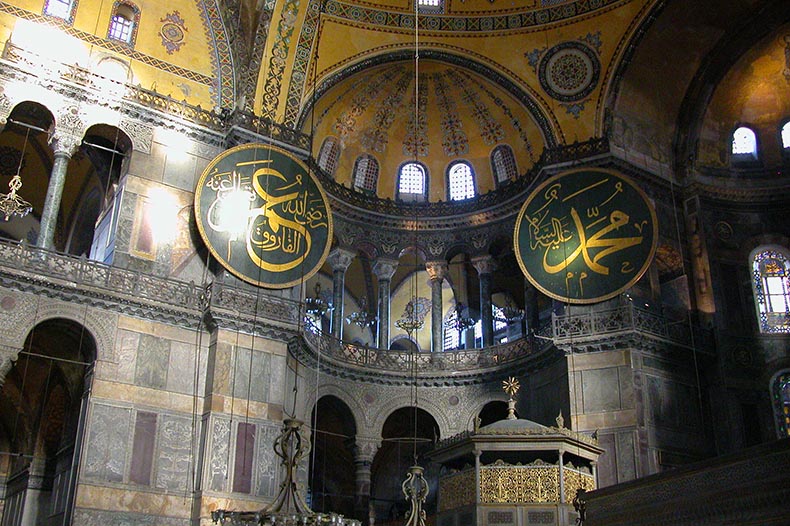
Another angle of the dome
The Hagia Sofia was the world’s largest cathedral for more than one thousand years until the Seville Cathedral was completed in 1520.
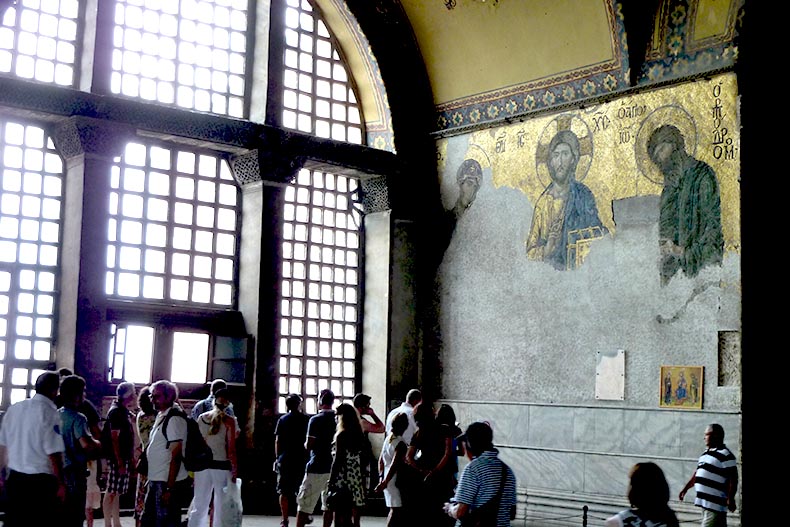
Needless to say, this museum is one of the biggest and busiest tourist attractions in Istanbul. It therefore goes without saying that you will find queues of people trying to buy tickets and enter the museum daily. So make sure you take along a bottle of water and something to shade you from the sun if you are visiting during the warmer months.
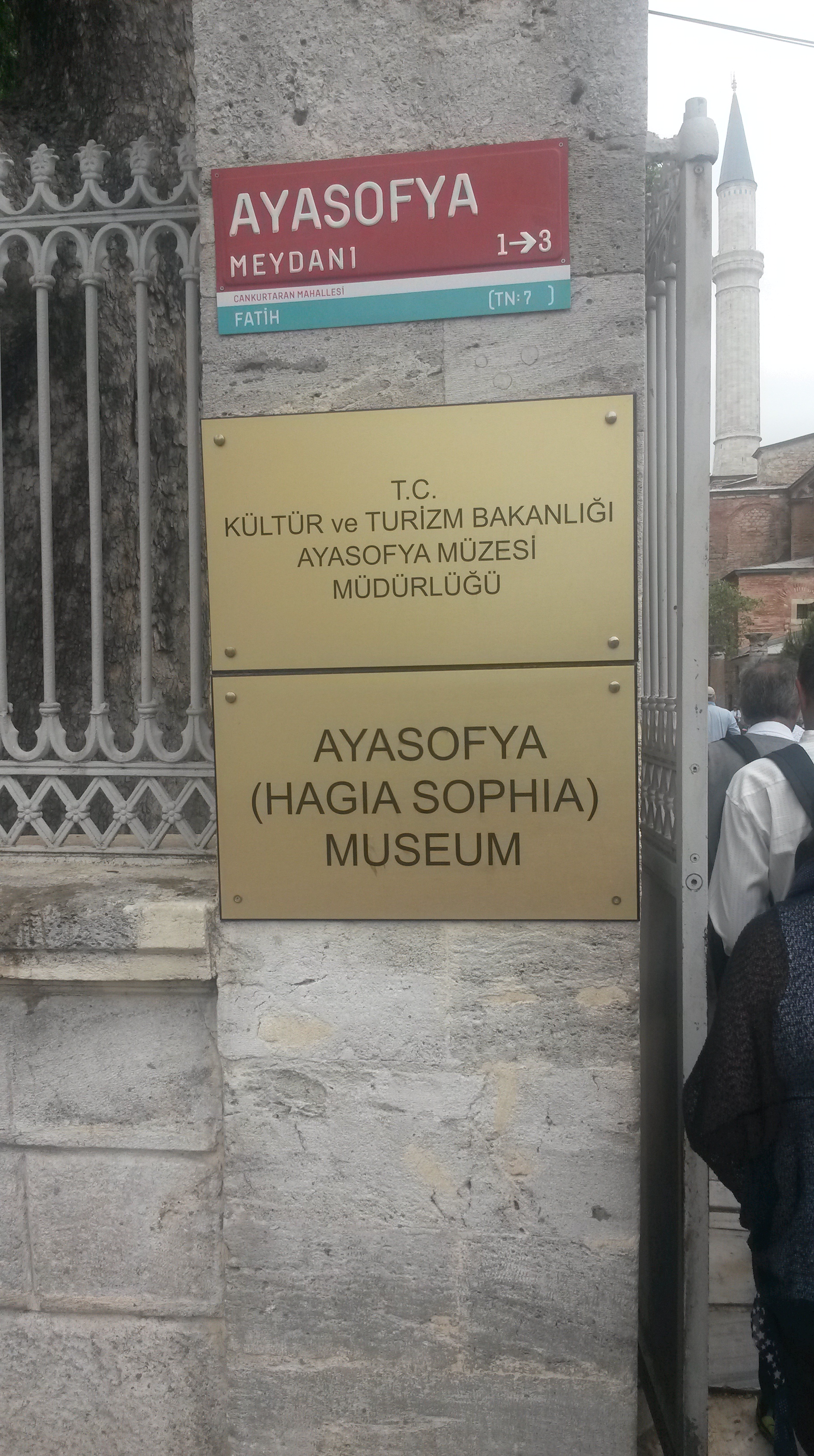
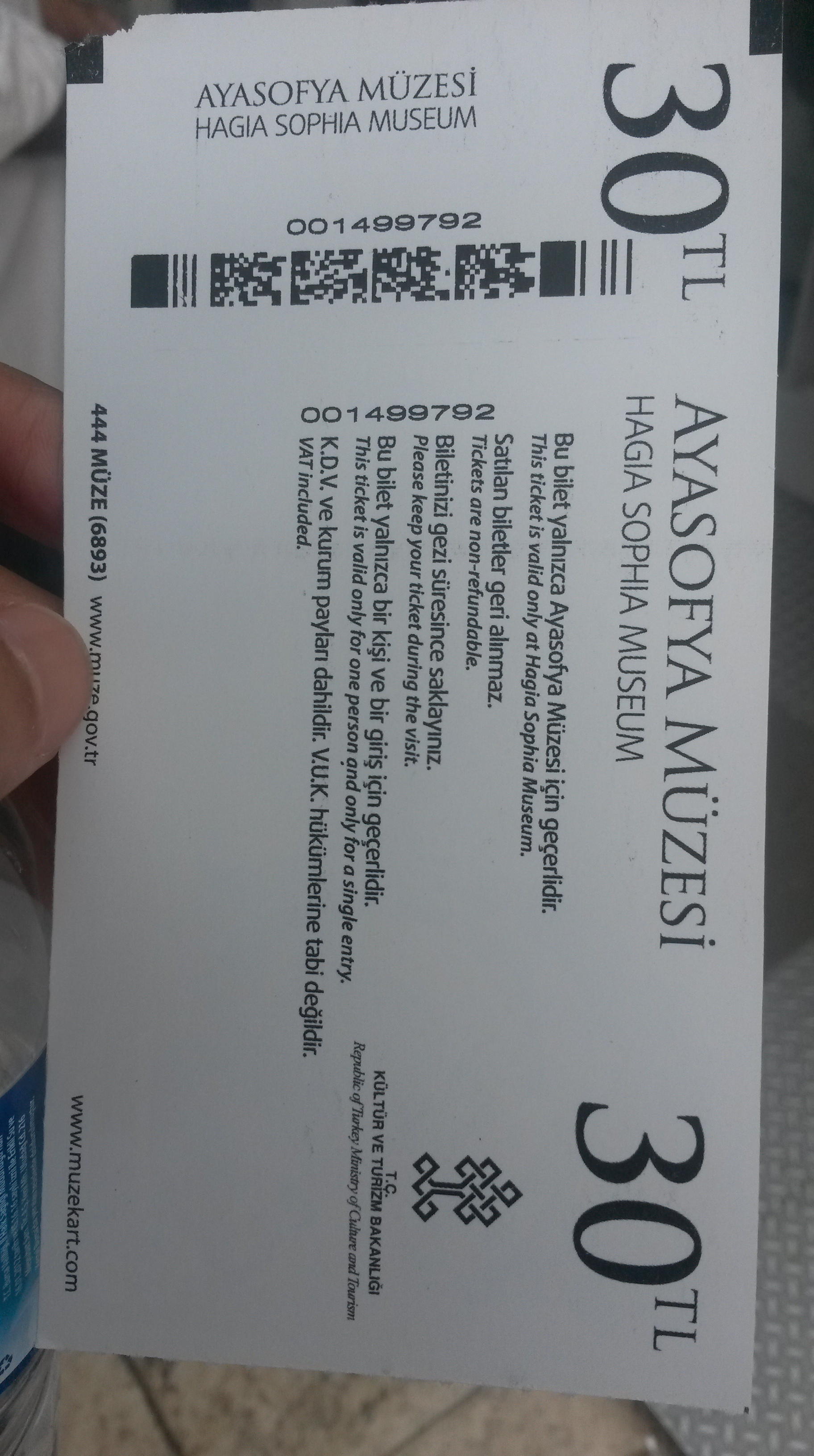
Recommendation : To avoid wasting too much time in the queues at the ticket office, you could purchase your tickets the day before just before the ticket office closes. This way you will be able to proceed directly to the entrance on arrival the next day.
Allocate enough time for visit to the Topkapi Palace Museum
If you are a keen historian or just enjoy enchanting and interesting stories that involve Sultans and Palaces, then you will want to make sure your visit to the Topkapi Palace is not rushed.
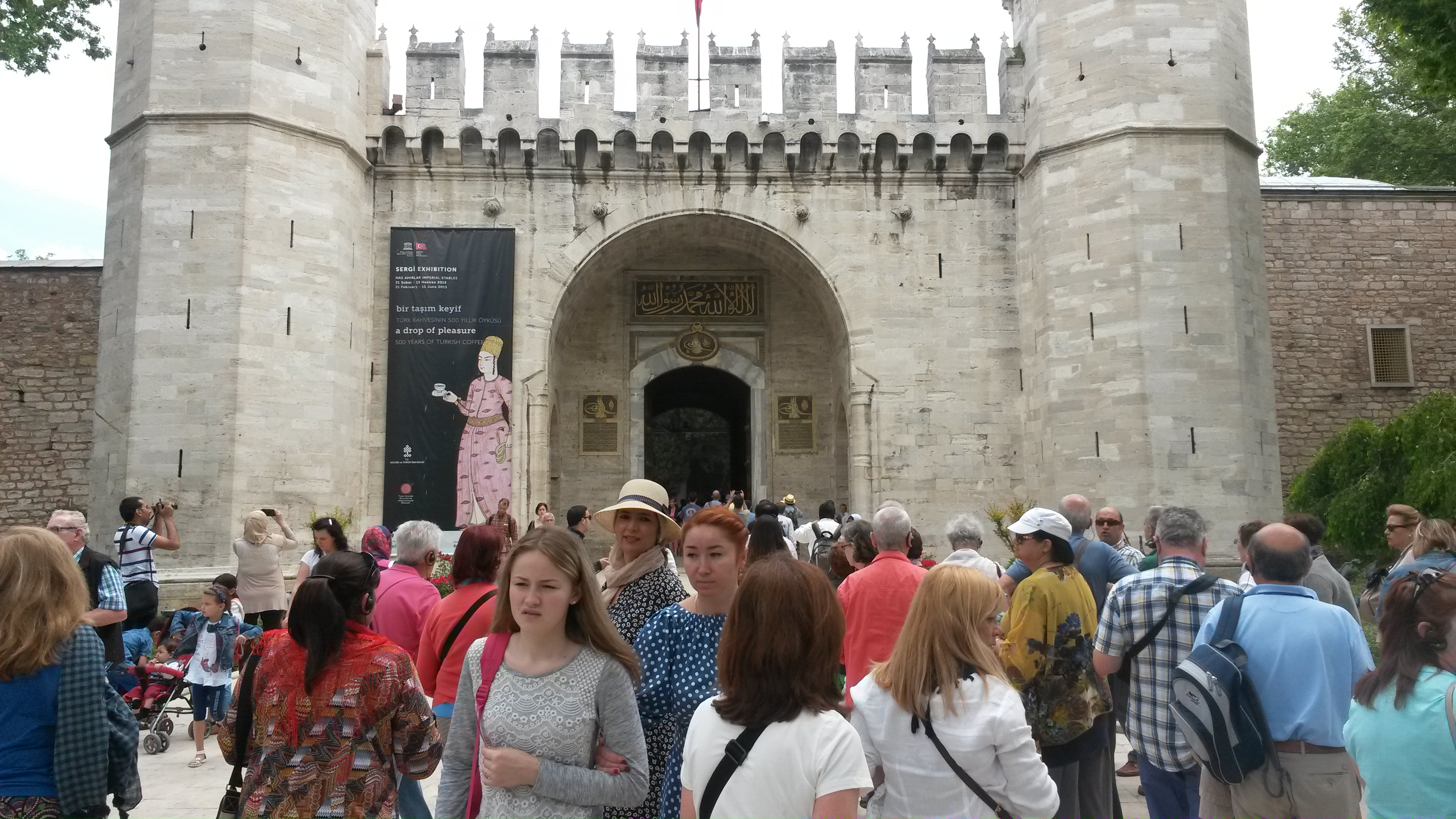
Entrance to the Topkapi Palace
About 30 Sultans ruled from the Topkapi Palace for nearly four centuries during the Ottoman Empire’s 600 year reign. Starting with Sultan Mehmed II who took up residence at the Palace in 1478. After his death the Palace was renovated and partly reconstructed three times to accommodate different Sultan’s requests. In total the building can house between 1000 – 4000 inhabitants in the main palace and a further 300 in the Harem.
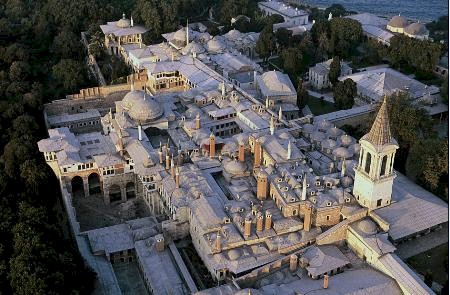
Aerial view of the Palace Museum
The size of this building and the interesting history which unfolded within these walls, requires time and attention. Dedicate at least half a day to get the most out of your visit to the Topkapi.
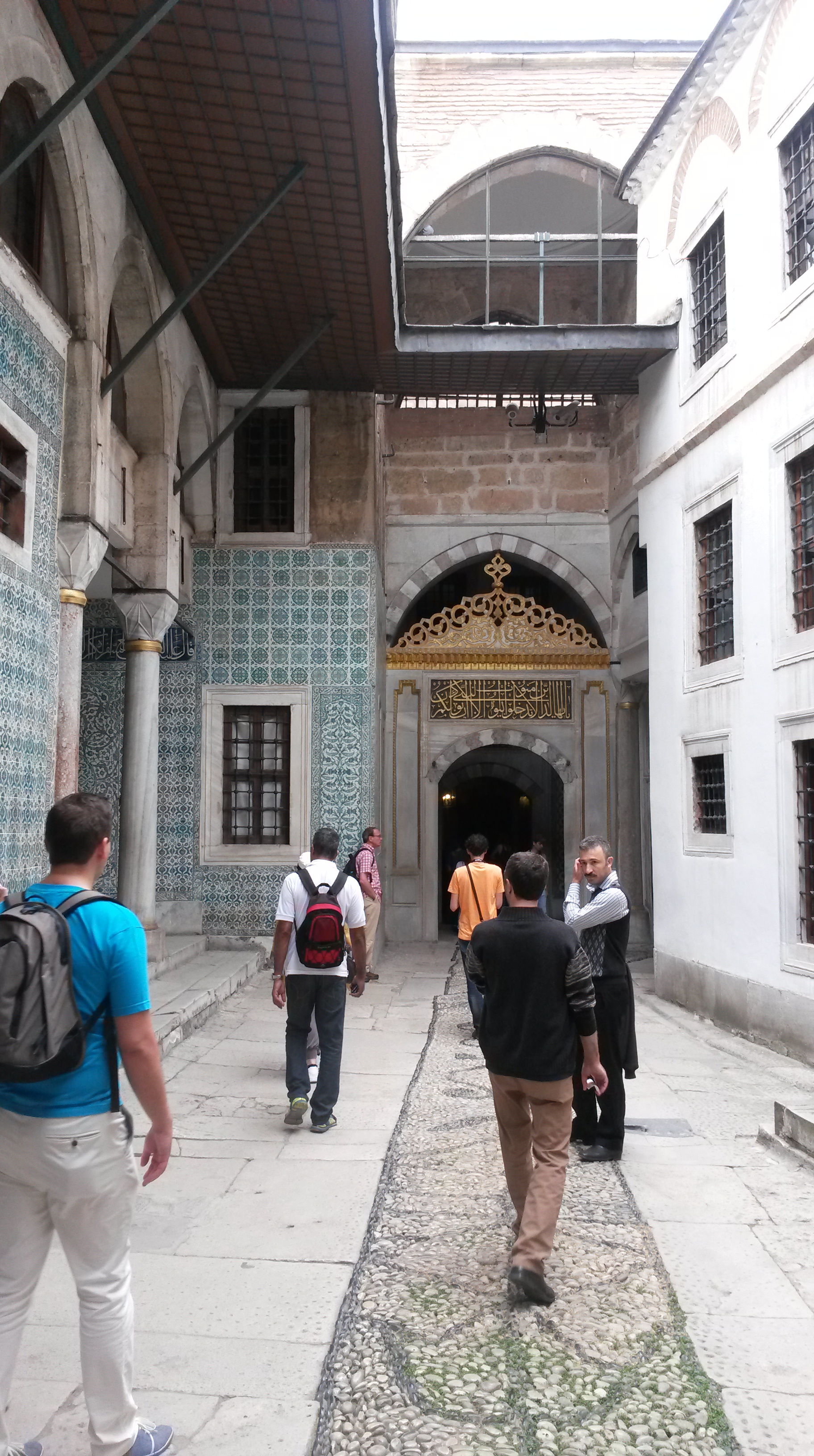
Inside the Palace 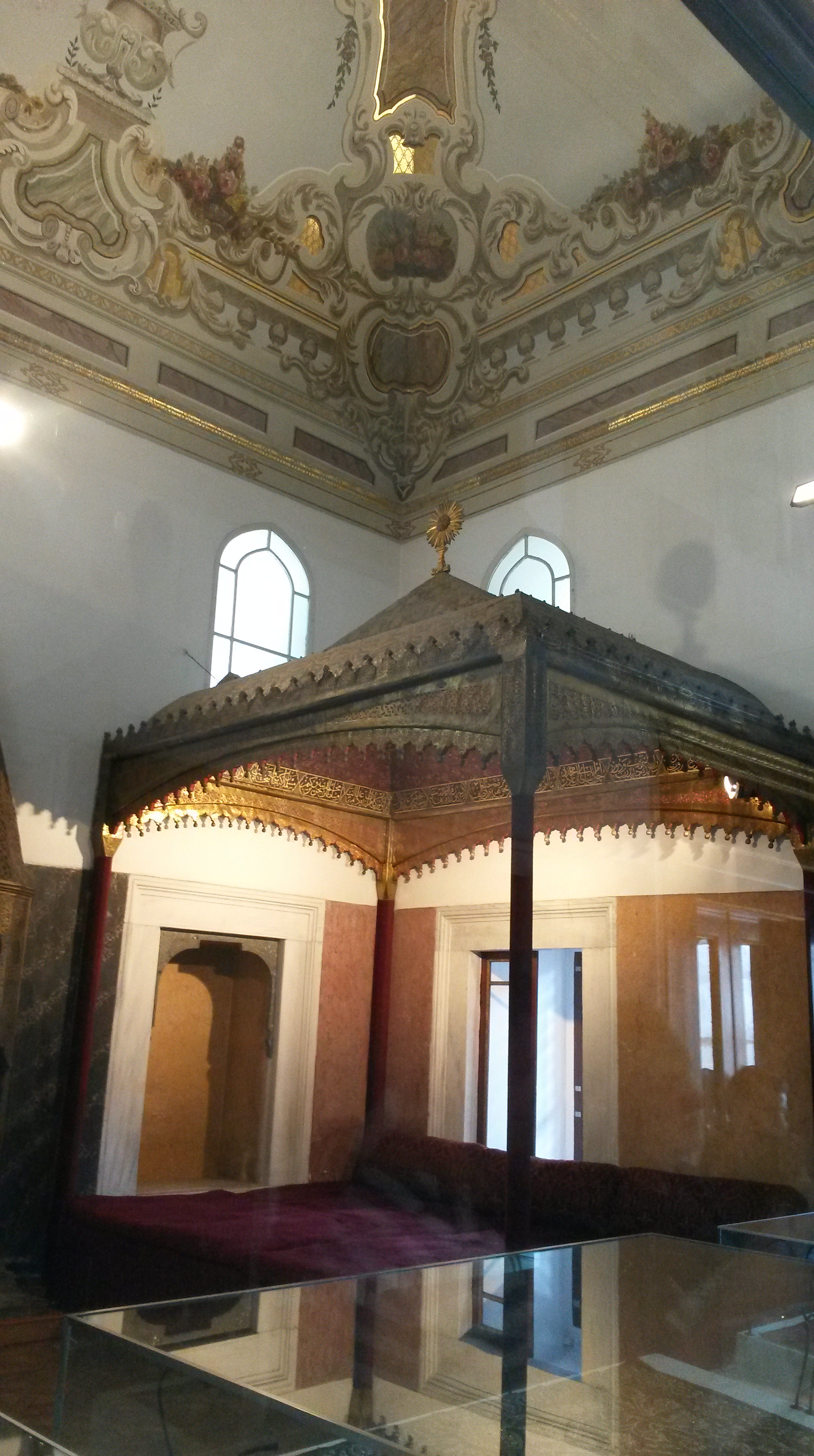
One of the rooms
Even though it is one building, the entrance to the Main Palace and the entrance to the Harem is separate. Visitors can choose to either purchase a ticket to the Main Palace and/or a ticket to the Harem.
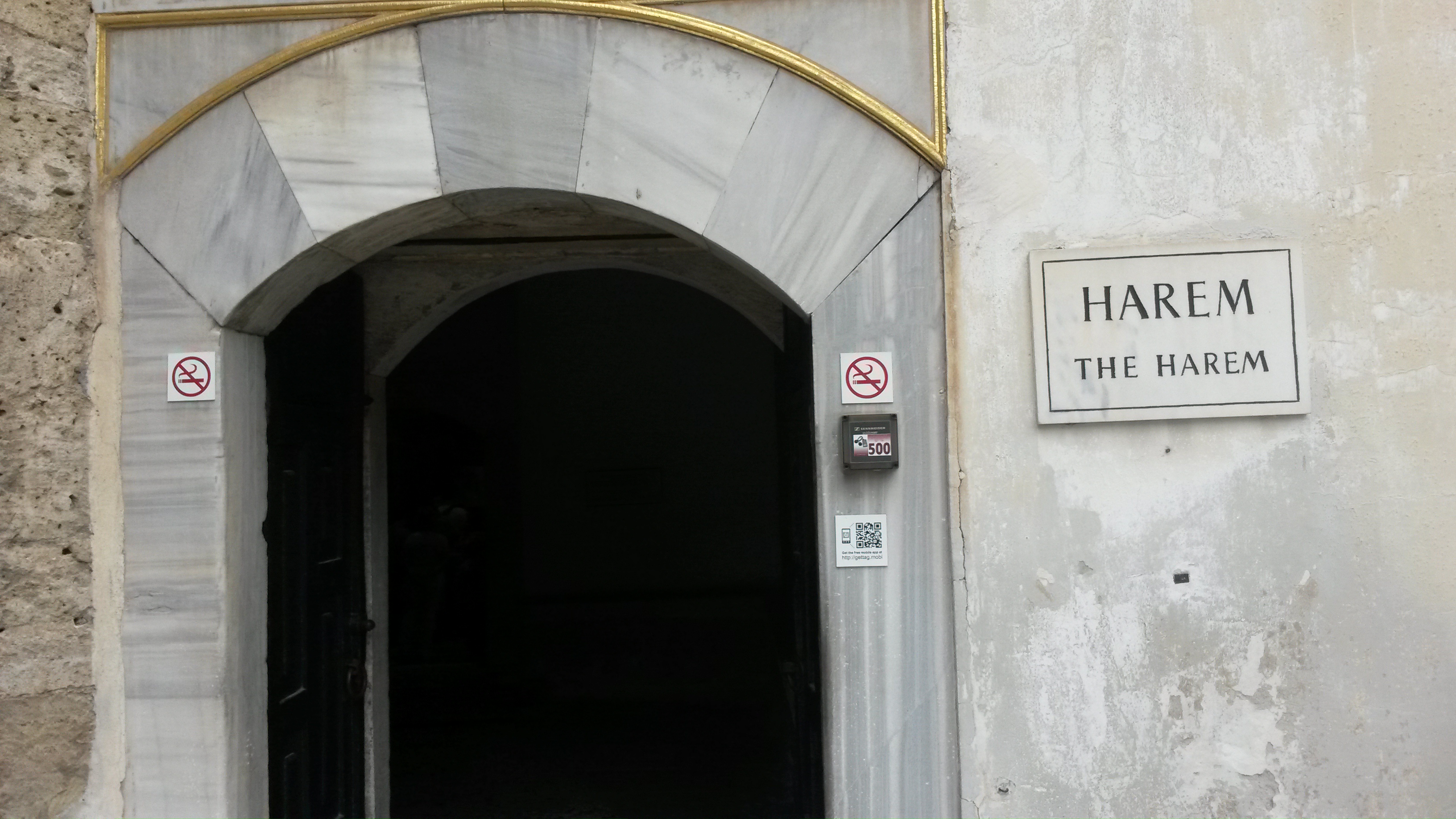
If you are visiting during peak season i suspect that the queues can get quite long. Don’t let this deter you though, it really is well worth the wait to see how the Sultans lived during their reign of power.
Basilica Cistern will take just 30 mins
Personally I skipped the visit to the Basilica Cistern even though it would probably only take about 30 mins to do a quick tour.
This is how Mark Twain described it in his book The Innocents Abroad:
‘’You’re 40 feet underground, and in the midst of a perfect wilderness of tall, slender, granite columns of Byzantine Architecture. Stand where you would, or change your position as often as you pleased, you were always a centre from which radiated a dozen long archways and colonnades that last themselves in distance and the somber twilight of the place.’’
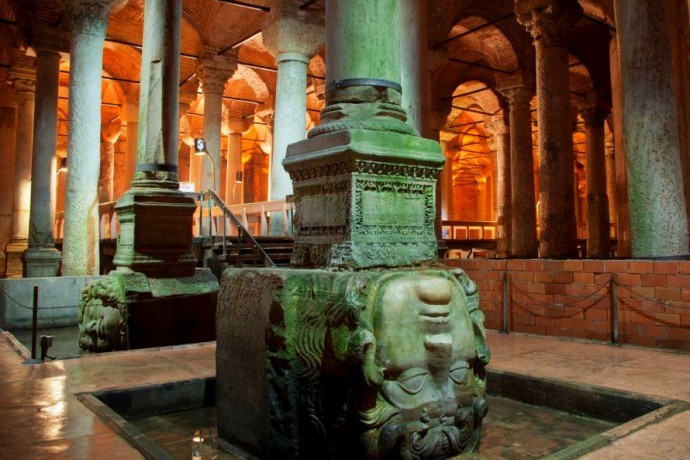
Picture courtesy of Google
Amazingly preserved despite centuries of conflict and siege, the cistern was built in 532 AD by the Byzantine Emperor to store fresh water for the palace and nearby buildings.
 My Best Travels