On your visit to Spain be sure to include a few days in the Andalucia territory in the South. This is where you will be able to see first hand the remnants of a time when Muslims, Christians and Jews lived in harmony and peace in small cities like Cordoba and Granada.
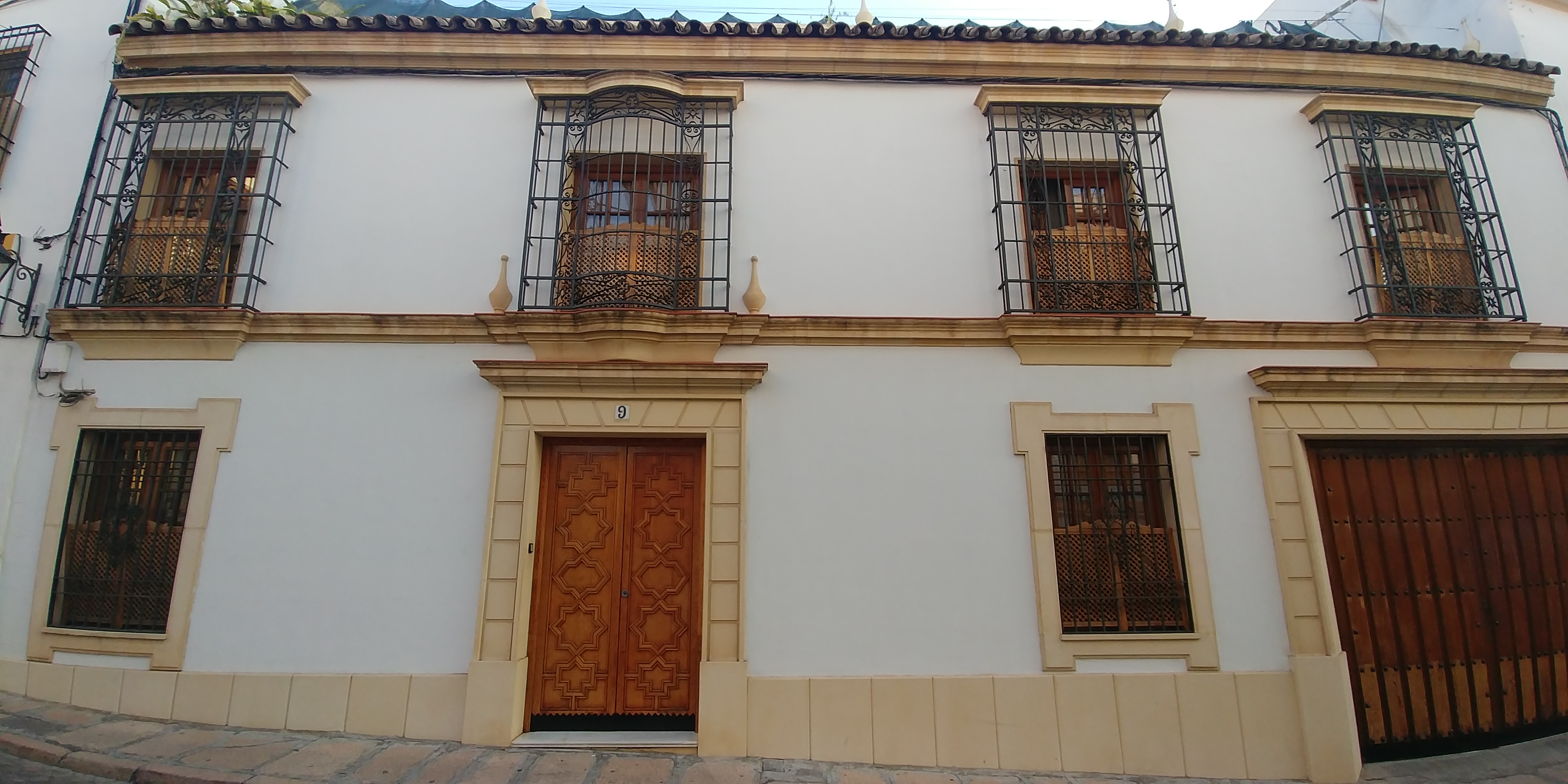
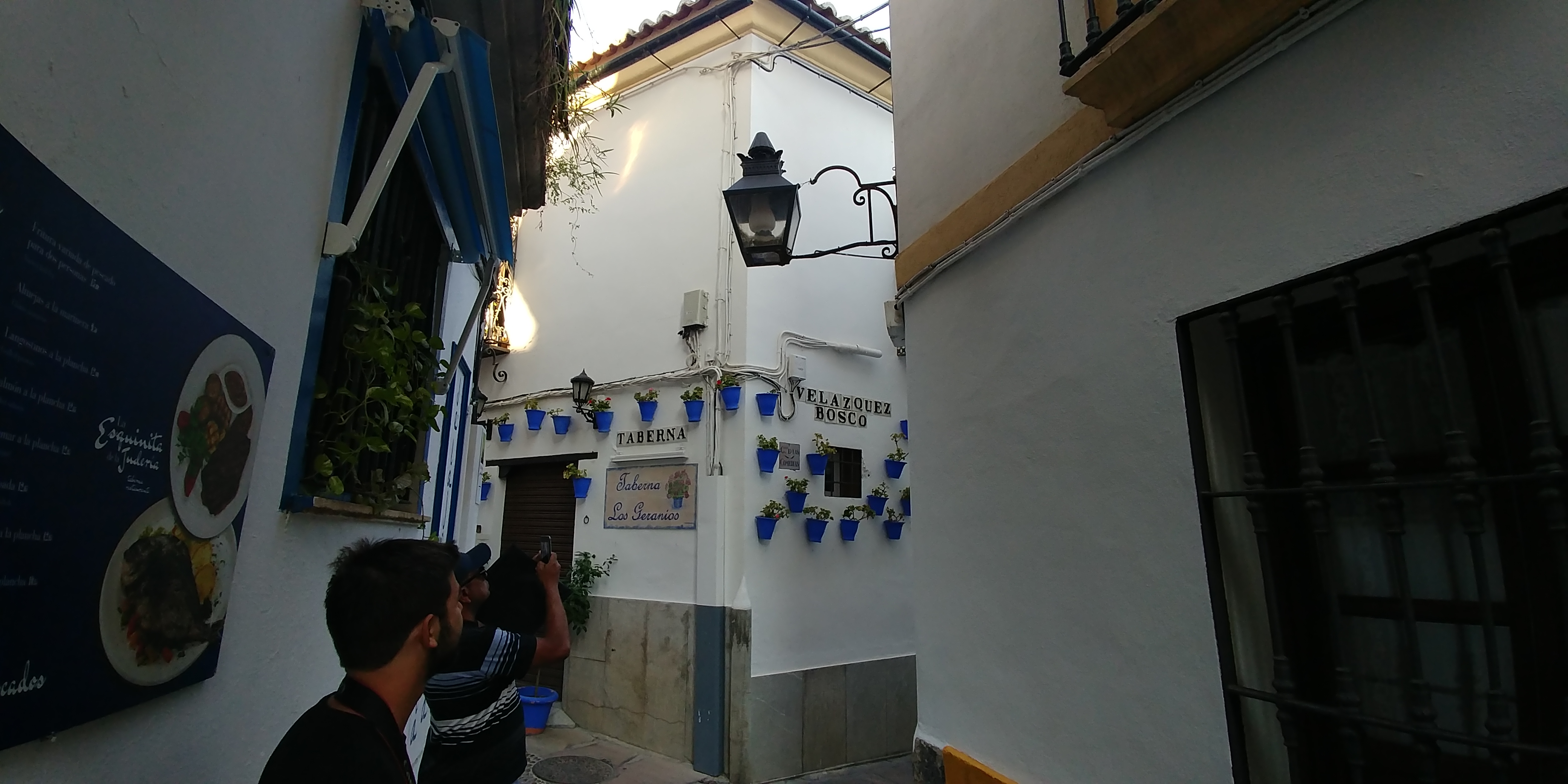
White washed houses in the Juderia
I visited Cordoba in September 2017. Here are some fun things to do while visiting Cordoba:
See the city on a bicycle
If you are the adventurous type and like to see more than the usual guided tour on the Red Hop on Hop off Bus, then why not try a bicycle ride. The city centre of Cordoba is compact, making it easy to complete a tour of the city and its outskirts within a few hours by bicycle. We rented bicycles at a rental shop not far from our hotel in Cordoba.
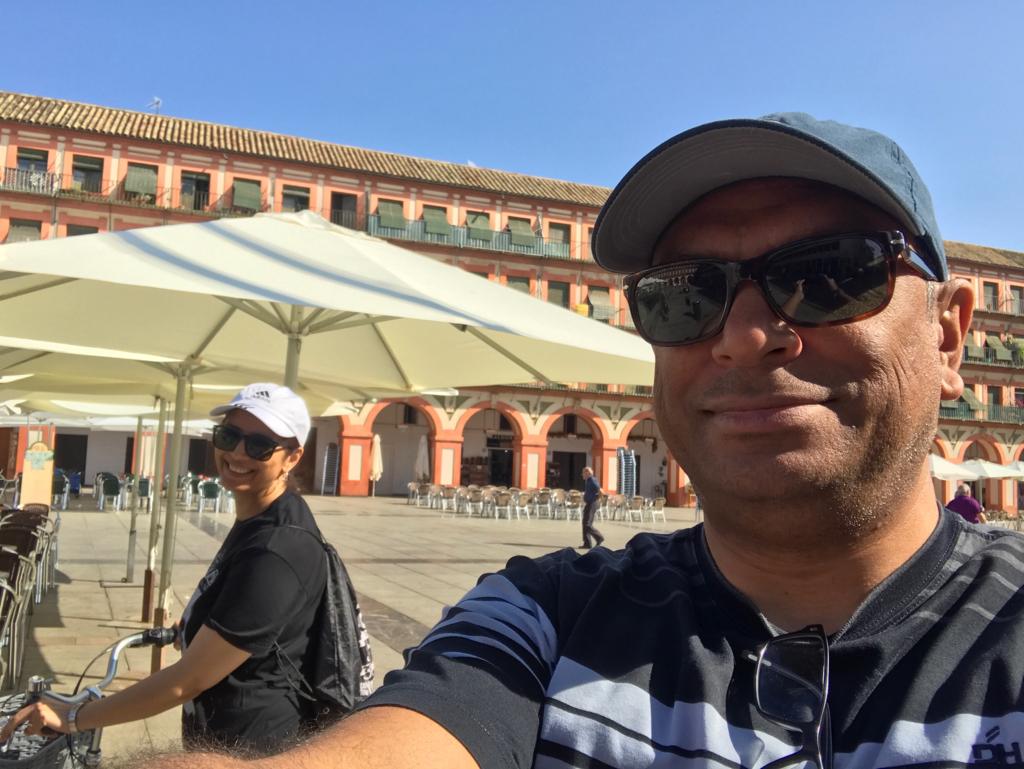
On our bicycles at the Plaza de la Corredela
On our scenic ride we stumbled upon this huge model aeroplane on the outskirts of the town.

Somewhere on the outskirts of Cordoba
As we looked across the field we saw this breath-taking view of the Grand Mosque of Cordoba – La Mezquita.
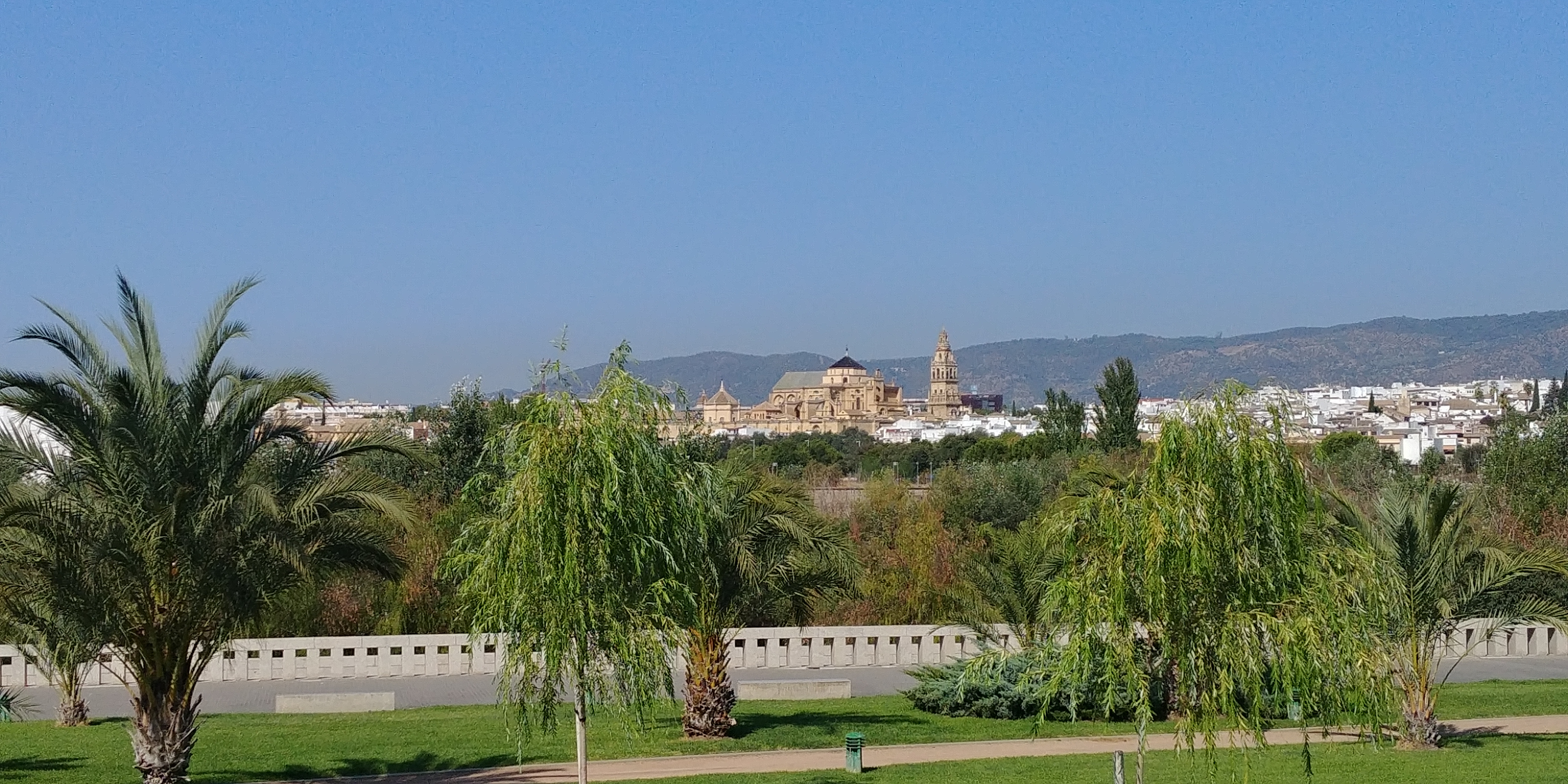
Across the field the magnificent Le Mezquita rises
What better way to cross the famous Roman Bridge than by bike while stopping to look back and take in the back drop of the Mosque- Cathedral. A memory captured in the heart and mind, and if you lucky to have someone with you, in a picture as well.
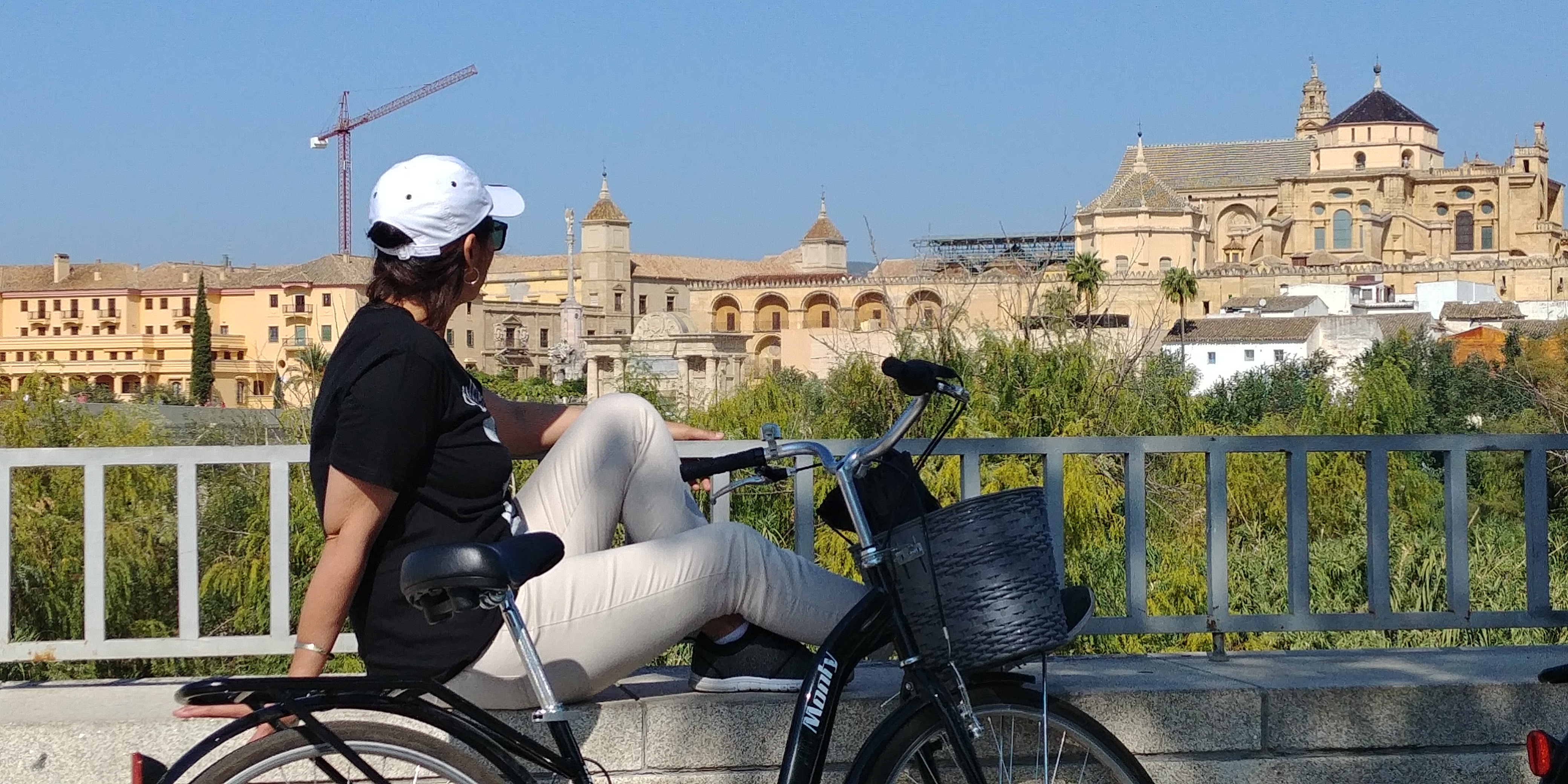
Speaking about Roman Bridges, another must do I recommend.
Take a night walk across the Roman Bridge
Built in the first century by the Roman’s and rebuilt a few times, most of the current structures that remain of the Roman Bridge dates back to the Moorish reconstruction in the eighth century. The bridge is best seen during the day to fully comprehend it’s structural magnificence.
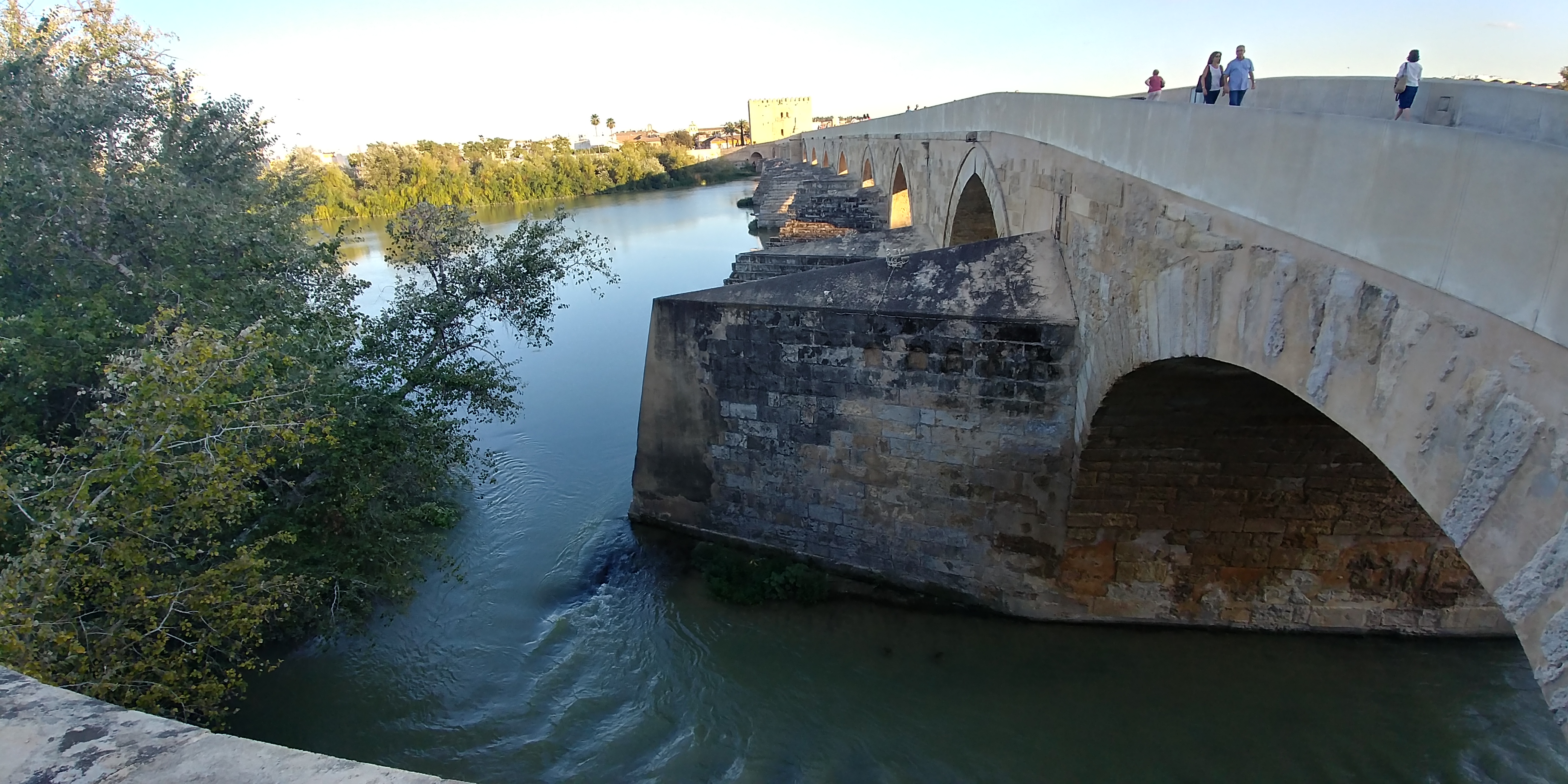
The Roman Bridge – Cordoba
But your visit would be incomplete without a romantic night stroll across the bridge. With the river glistening in the night sky and the Mezquita lit up in the background, the walk across this bridge sets the tone and mood for a very romantic evening.
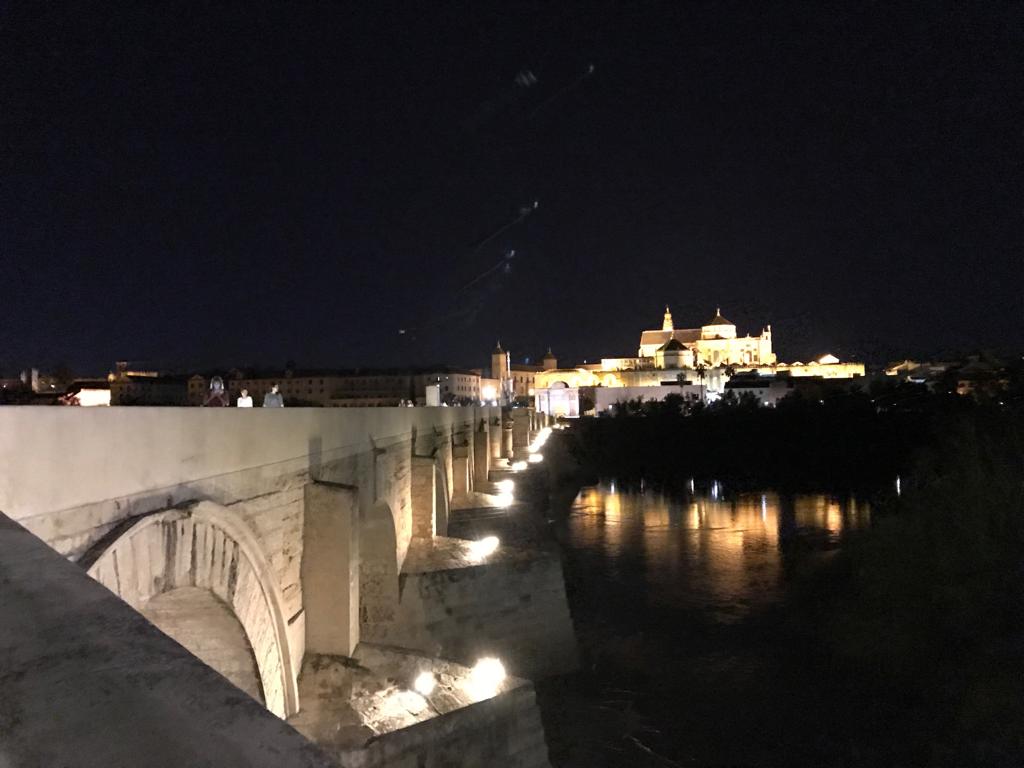
The Roman Bridge at night (with Le Mezquita at the far end)
Flamenco Dancing & Dining
If you ask some of the locals in Madrid, where is the best place to see a Flamenco show, they will tell you that authentic Flamenco dancing can only be seen in the South of Spain, where the dance originated.
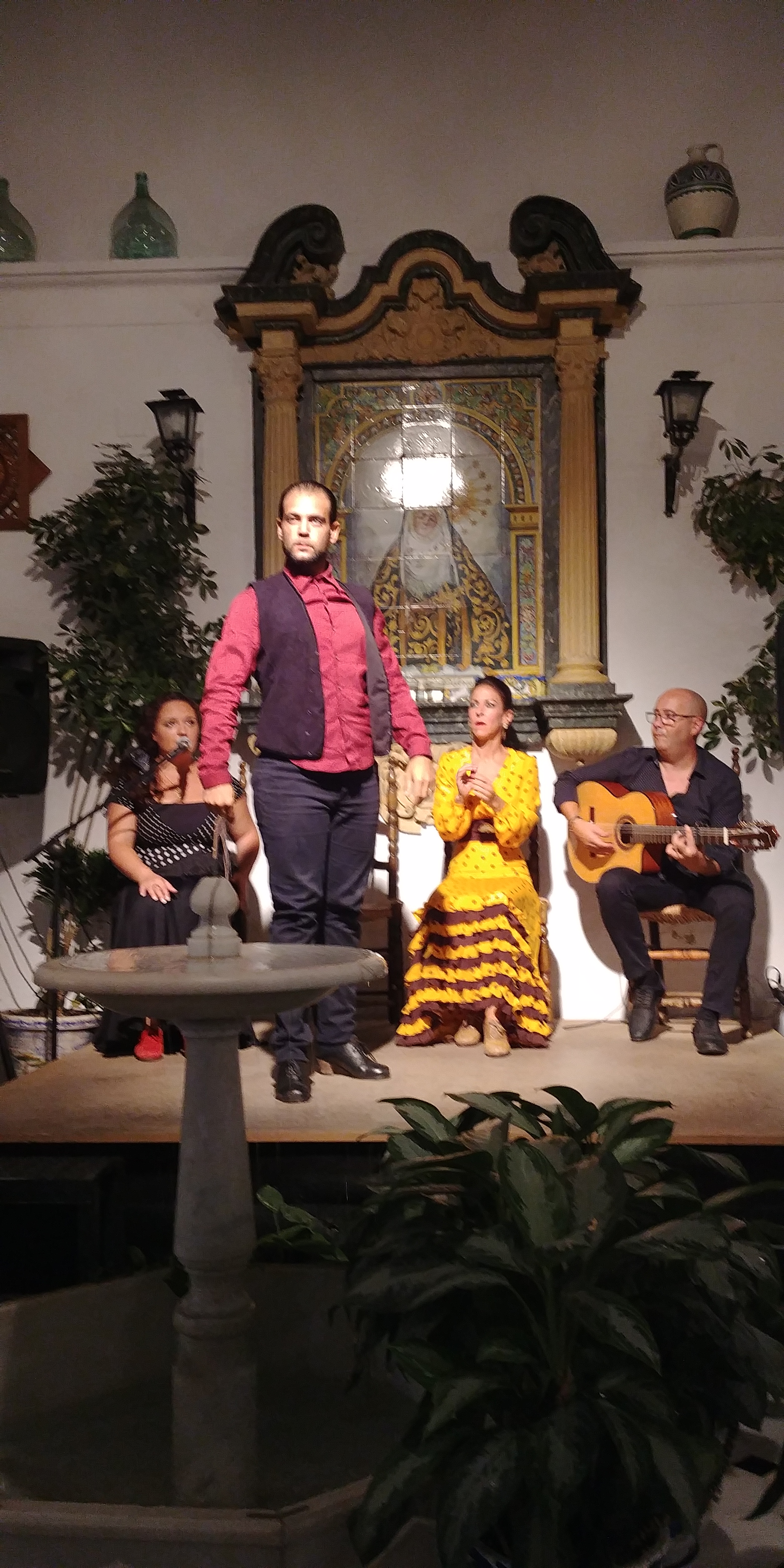
Flamenco dancing at Patio de la Juderia Restaurant
The Flamenco is not so much about the dance but more about the passion and emotion which plays itself out in an energetic movement of hips, clicking of castanets, clapping of hands and stamping of feet. Add to this the music, the strumming of the guitar and some powerful and demanding singing and you are witnessing an art form which dates back centuries and was perfected by the Gypsies of Andalucia.
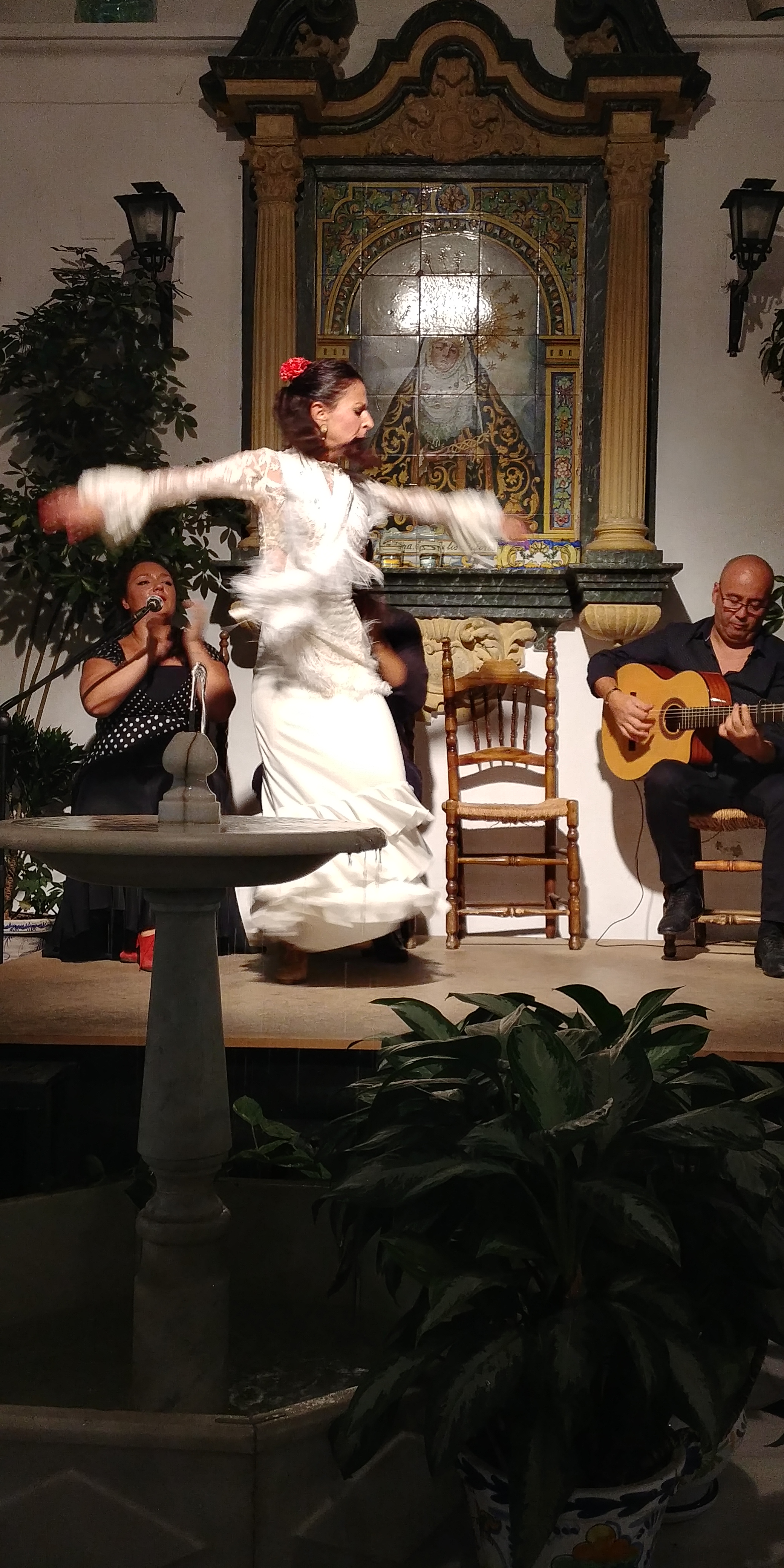
Flamenco dancing is passionate and emotionally charged
In the area surrounding the Mezquita, you will find a variety of restaurants offering a Flamenco show with their evening dinner. We were told to make a reservation rather than just pitch up, since these restaurants get booked up a day or two in advance.
I decided to play dress up and went to dinner in my custom-made Spanish outfit matched with my newly bought hat. To experience authentic Flamenco dance while enjoying a delicious meal try this restaurant https://patiodelajuderia.com/wp/
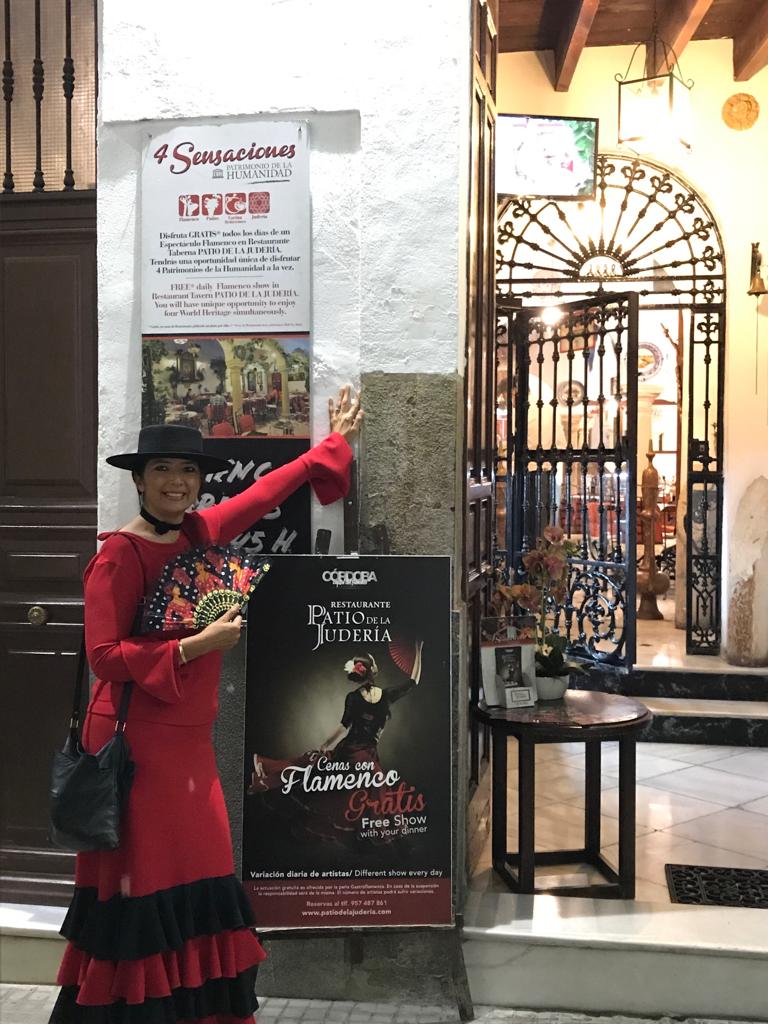
My Spanish dress up for dinner
What a night to remember. The passion and energy with which the dancers move, leaves one feeling breathless and emotionally charged.
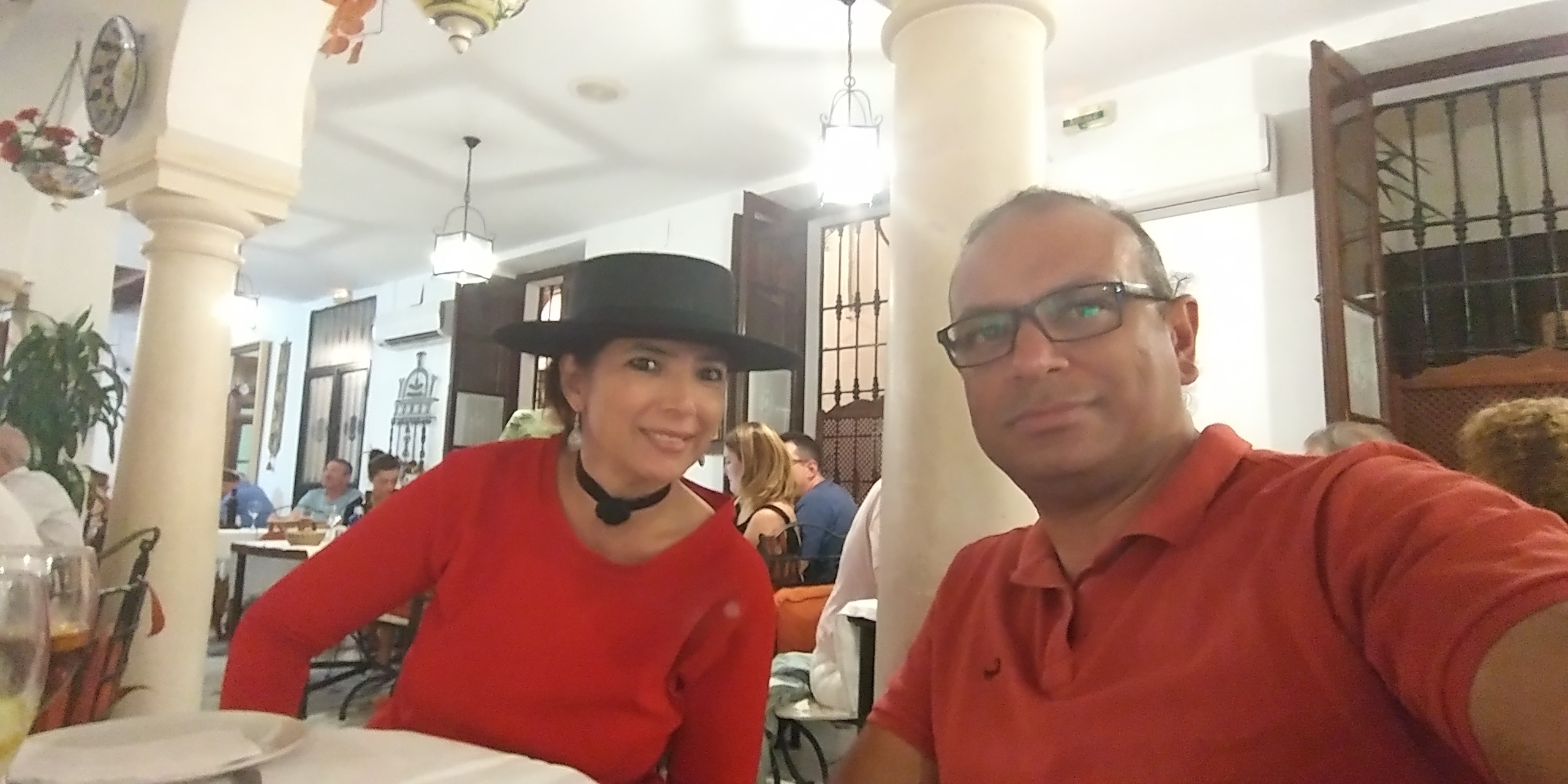
Dinner at Patio De la Juderia Restaurant
Wander the Juderia
With it’s narrow cobbled streets and its white-washed buildings the old Jewish Quarters called the Juderia is best explored by foot. A long time ago, the city of Cordoba was called the city of three cultures because of the harmonious nature of the relationships between Muslims, Christians and Jews who lived side by side in this little city.
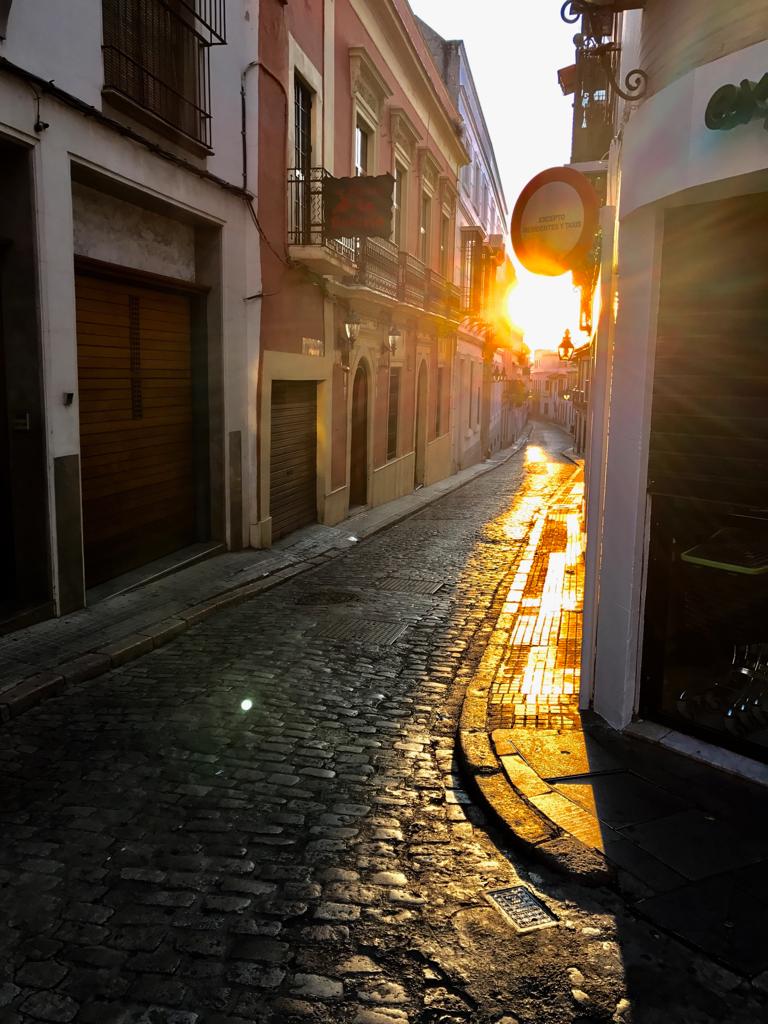
Sunrise in the Juderia
Today most of the Jews and Muslims have left Cordoba. The streets referred to as the Juderia is where the Jewish people once lived and remains a beautiful and attractive part of Cordoba. You will be charmed by the picturesque streets filled with flower-covered walls and patios.
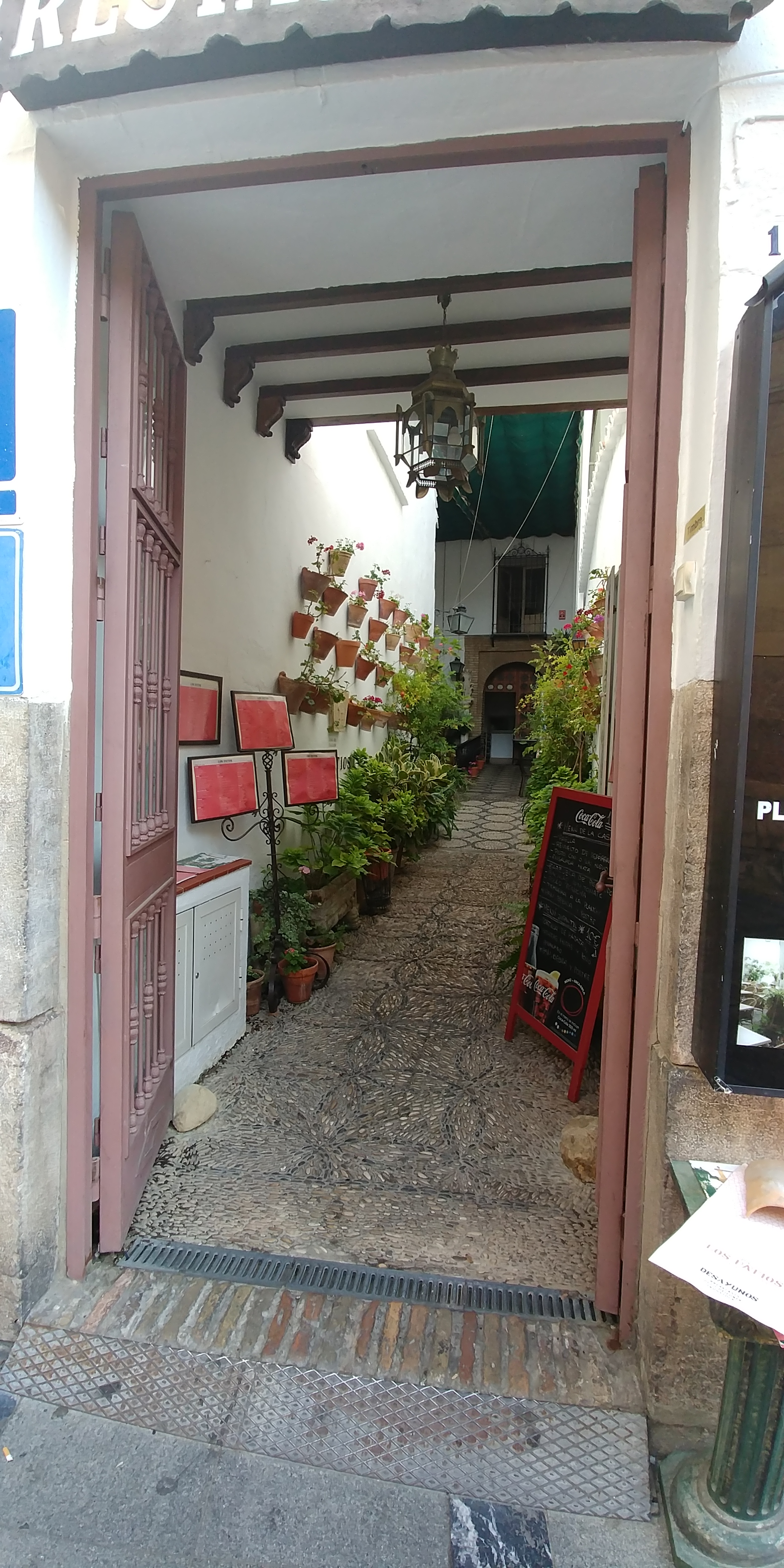
Take a pic at the Calleja de las Flores
While walking around the Juderia, be sure to look out for this street – Calleja de la Flores – the street of flowers. . You may be confused by the many similar streets in the area but do not despair.
A good landmark to keep in mind is that you will be able to see the Minaret of the Mezquita peeping through in the background. Another is ofcourse the blue flower pots hanging down the walls on either side filled with brightly coloured flowers.
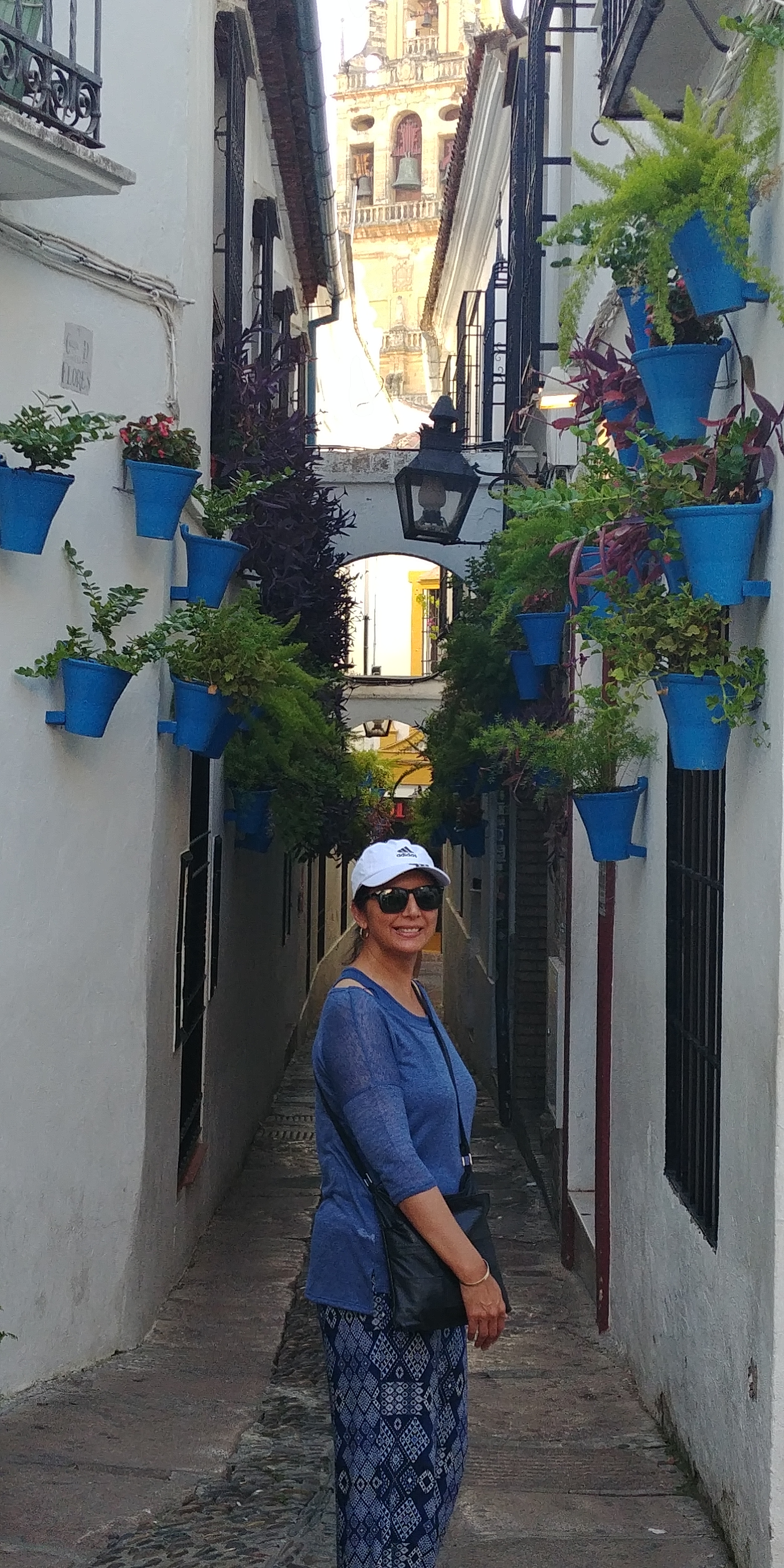
There are many tourist wanting to take their perfect Instagram pic in this street so timing is important if you want to take a good pic.
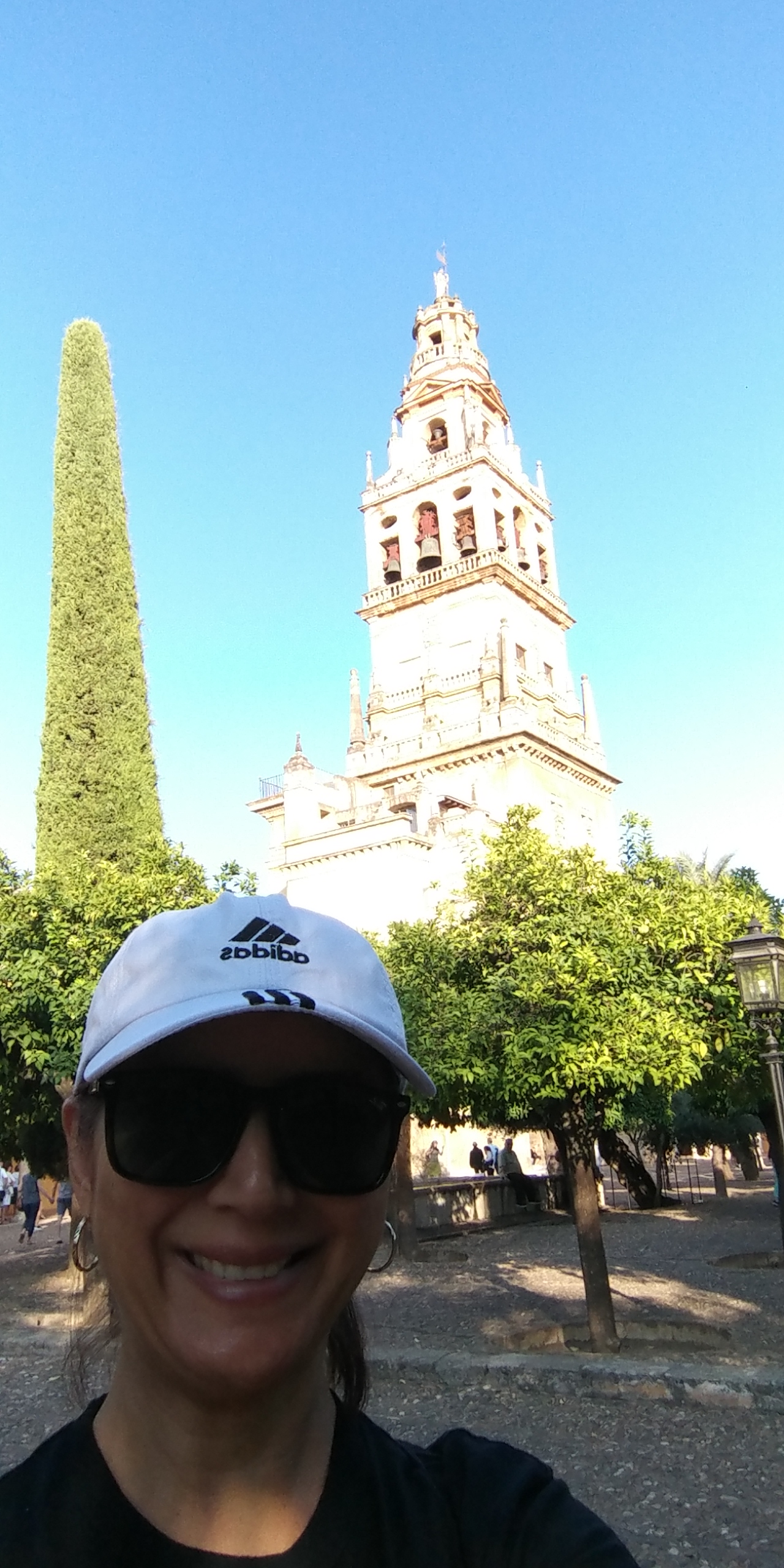
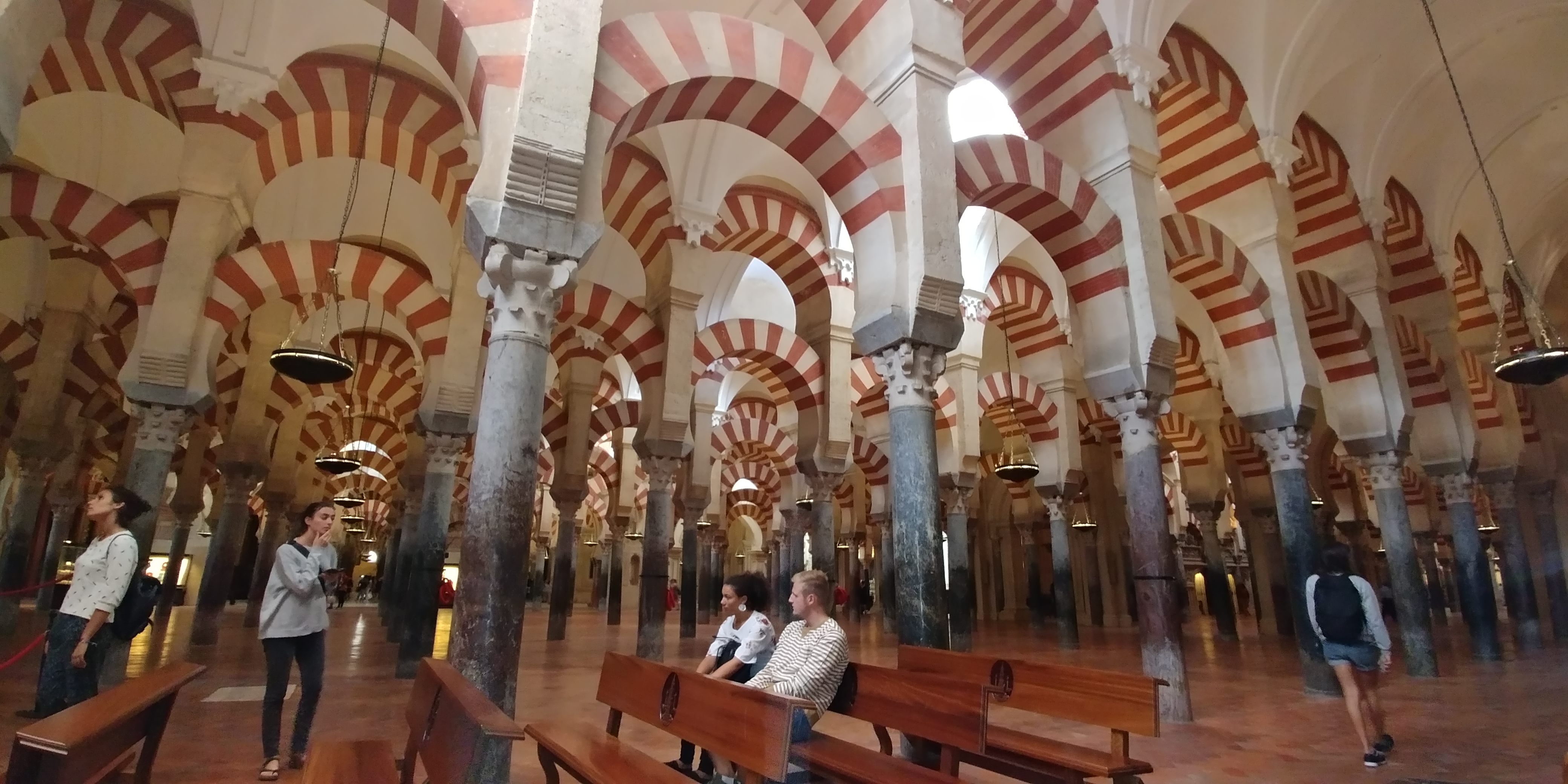
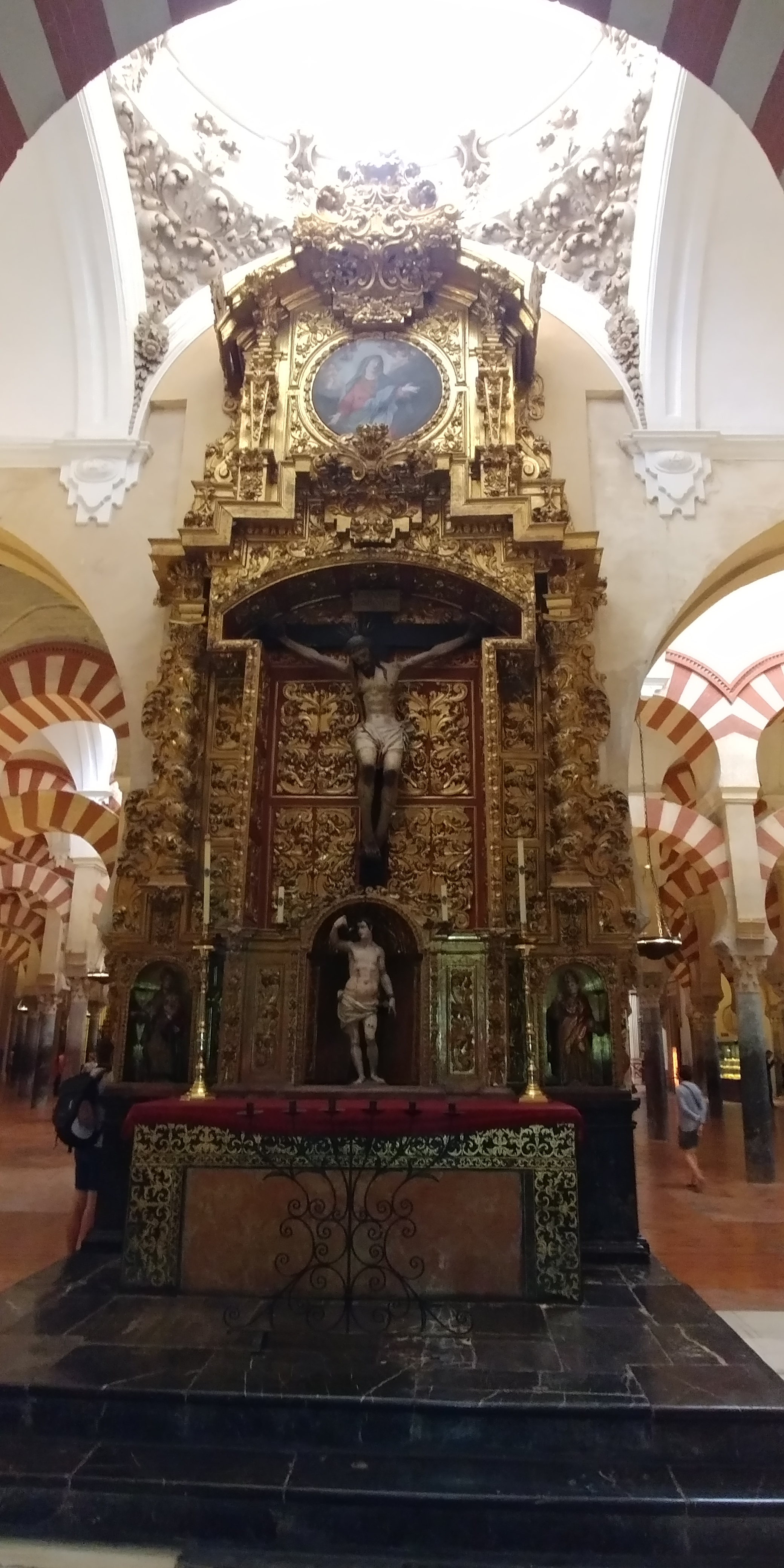
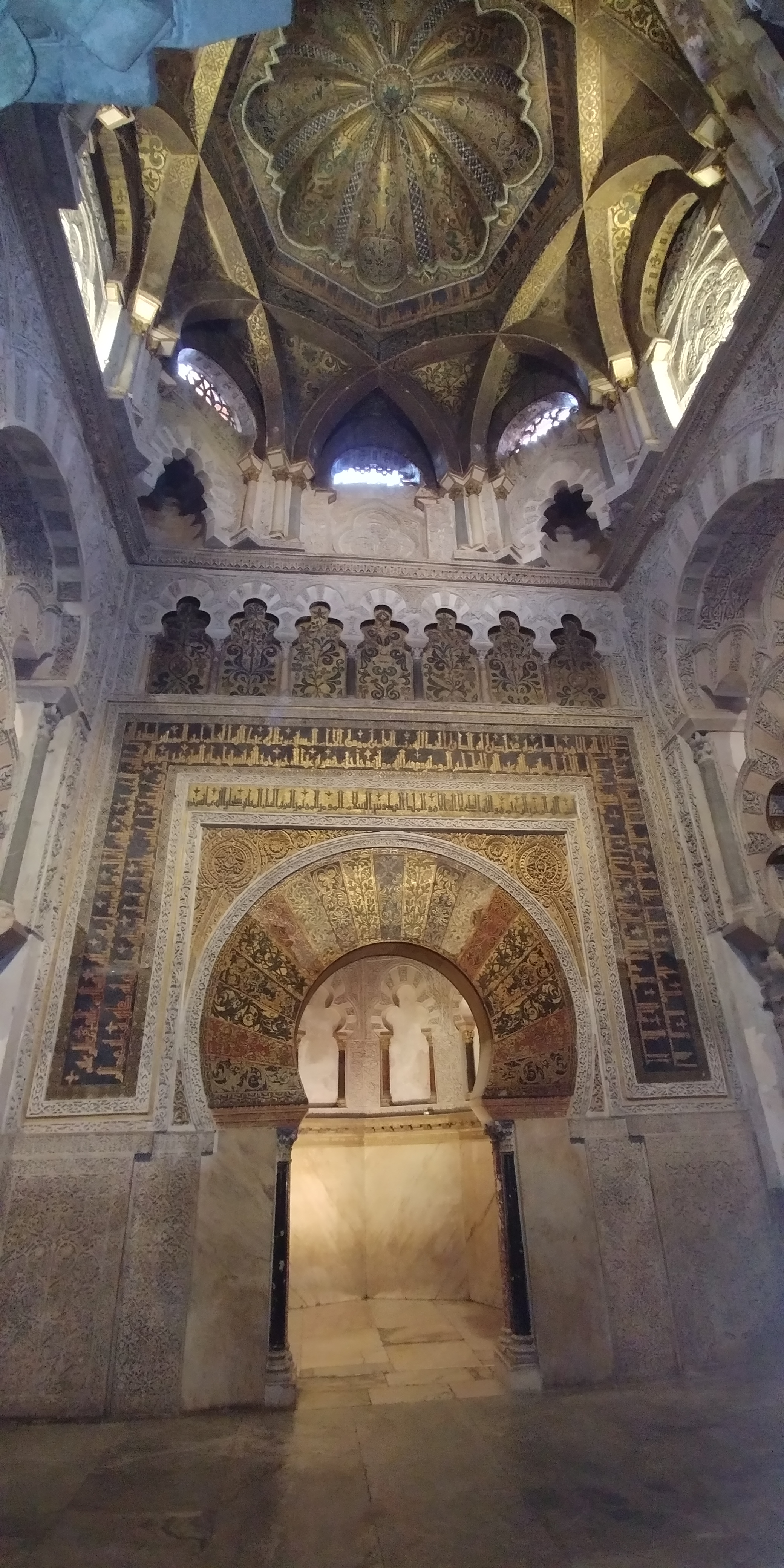
One other “must see” while in Cordoba is ofcourse a visit to La Mezquita, the Mosque-Cathedral of Cordoba. I’ve written a complete blog on my visit. You can read it here: https://withnarriman.travel.blog/2019/05/06/fall-in-love-with-cordoba-spain/
If you are enjoying my blog posts and find it to be interesting and useful, please leave a comment.
 My Best Travels